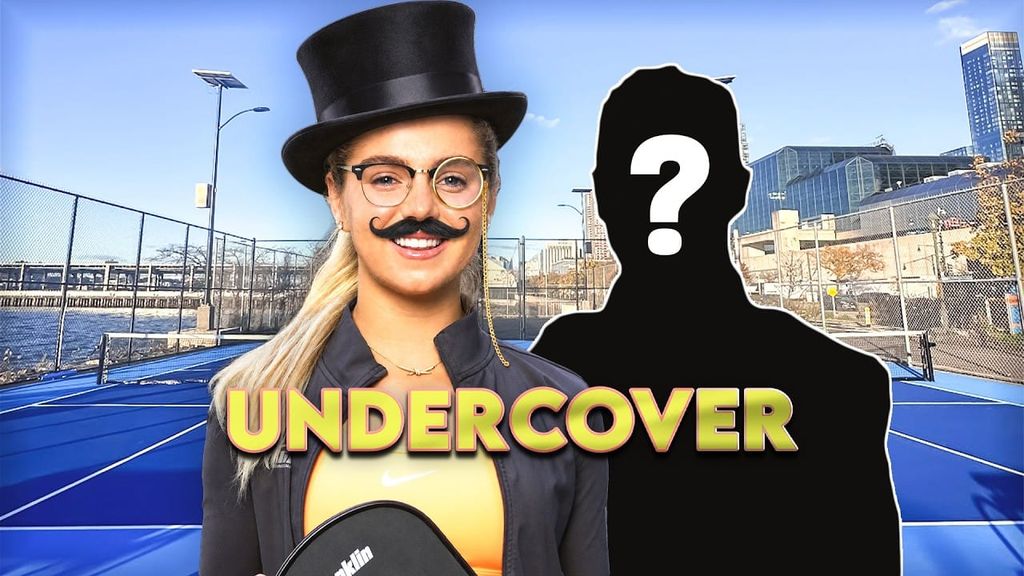
What Happens When a Pro Goes Undercover at a Public Pickleball Court
Anna Leigh Waters tried to hide her identity at a public pickleball court in New York City by playing left-handed. The experiment revealed something surprising about how rec players recognize elite skill.
You've probably stepped onto a public pickleball court and sized up your competition before the ball even dropped.
Most rec players do it. You look at how someone warms up, how they hold the paddle, whether they move with purpose or wander into position.
Now flip that around.
What happens when one of the best players in the world tries to blend in at a public court, playing left-handed, wearing sunglasses, and giving a fake name?
That's exactly what Anna Leigh Waters pulled off in New York City, and the results tell you a lot about what actually gives away elite skill, even when a pro is actively trying to hide it.
Love pickleball? Then you'll love our free newsletter. We send the latest news, tips, and highlights for free each week.
The Setup: Playing Lefty to Throw People Off
The plan was simple.
Show up at a local public court in New York City, play left-handed, and see how long it takes for anyone to recognize one of the top players in the world.
Waters described the strategy as trying to "gaslight" the players on court. She wasn't just hoping nobody would notice.
She was actively working to disguise her game by switching to her non-dominant hand and letting her play look sloppy enough to pass as a visiting recreational player.
She even gave a fake name. When asked, her companion Leigh suggested she go by "Rain." That detail alone should tell you how committed they were to the bit.
What Gave Her Away First?
Here's where it gets interesting for anyone who cares about skill development. The paddle gave her away before her footwork did.
Players were pulling up photos on their phones, trying to confirm the suspicion.
One person reportedly said "it's not her, it just looks like her because she's playing lefty and doesn't really know how to play."
Then the paddle was identified. Then the sunglasses. Then Waters stopped holding back.
What does that tell you? Equipment stands out at public courts.
Show up with a pro-level paddle and people notice, often before technique gets a chance to reveal itself.
What Rec Players Actually Look For When Sizing Up Opponents
This experiment is a useful window into how recreational players judge skill. It's not always what you'd expect.
Here's what rec players tend to clock immediately when a new player walks onto a public pickleball court:
- The paddle brand and shape: A high-end paddle signals either a serious player or someone who spent money without knowing why. Either way, people notice.
- The warm-up routine: How you move before the game starts tells experienced players almost everything. A structured warm-up routine that looks deliberate raises eyebrows.
- Grip and stance at the kitchen line: Even casual players spot someone who looks comfortable at the non-volley zone. It's the most visible tell of real experience.
- How they react to a speed-up: At the rec level, most players flinch or swing late. A pro's reflex response to a fast ball is almost impossible to fake, even on the wrong hand.
- Court awareness: Where you position yourself between shots, how you track your partner, whether you shade middle or crash the line.
Waters managed to suppress most of these signals by playing lefty. But the instincts still leaked through once the rallies got competitive.
 The Dink Media Team
Why Playing Left-Handed Is Harder Than It Sounds for a Pro
There's a common assumption that a pro playing with their non-dominant hand is still going to destroy most recreational players.
Sometimes that's true. But playing lefty genuinely changes the game, even for elite athletes.
Footwork patterns shift. Your dominant side drives how you load, rotate, and transfer weight.
Switching hands throws off everything that's been trained thousands of times.
Waters admitted that she was noticeably worse than normal, and that the awkwardness was real, not completely performed.
The challenge of shots that separate skill levels becomes obvious the moment you try to execute them on the wrong side.
Touch shots, resets, and anything requiring fine motor control suffer the most.
That said, the reading of the game doesn't change. Waters still knew where to be. She still knew what shot was coming.
Her eyes and her brain were still operating at a professional level, even if her left hand couldn't execute what her mind was seeing.
 The Dink Media Team
What This Tells You About Your Own Rec Game
Here's the honest takeaway for anyone who plays at a public pickleball court regularly: the things that make a pro unrecognizable are physical execution, not decision-making.
When Waters played cautiously with the wrong hand, people doubted it was her. The moment she went all out, the disguise collapsed.
Elite decision-making is nearly impossible to hide.
The gap between a 3.5 and a 4.5 is not about hitting harder. It's about making better reads, faster.
- At the rec level there's a half-second delay between seeing a ball and choosing a shot.
- At the pro level, that delay is nearly gone, and smart shot selection beats power every single time.
Consider how a pro handles pressure. They stay patient, and they don't reach for low-percentage attacks when a reset is the right call.
If you're not sure what that looks like in practice, staying patient during a long rally is the skill that separates casual players from competitive ones at every level.
 The Dink Media Team
Can You Actually Learn Anything From Playing With Your Non-Dominant Hand?
Yes, and it's more useful than most players think. Playing lefty forces you to slow down and think about mechanics you normally run on autopilot.
Here's what switching hands teaches you about your own game:
- You realize how much you rely on muscle memory. When that memory is gone, you see which parts of your technique are actually understood versus just repeated.
- Your footwork gets exposed. Most players don't realize how much their dominant hand compensates for poor foot positioning. Remove that compensation and the footwork problems become obvious. A closer look at pickleball footwork fixes will help you understand what's actually happening.
- You build empathy for newer players. When Waters looked uncertain, the rec players around her started to relax, which is the exact dynamic a beginner faces every time they step on court with better players.
- Touch shots require real understanding, not just repetition. You can't fake a good reset with your off-hand. Either you understand the mechanics of resetting after a missed put-away or you don't.
If you want that kind of intention in your own game, start at the net. Dinking with intention is what separates players who rally from players who construct points.
 The Dink Media Team
What Does an Elite Player Look Like When They Stop Hiding?
The moment Waters decided to go all out, the game changed completely. Players who had been questioning whether it was really her got their answer fast.
The speed of decision-making becomes visible immediately.
At the rec level, there's a half-second delay between seeing a ball and choosing a shot. At the pro level, that delay is nearly gone.
The ability to read an opponent's weak side is another thing that becomes obvious when a pro stops sandbagging.
Every shot has intention behind it. Every dink placement is chosen, not accidental.
If you want to see this kind of intentional play in your own game, start with how you approach the kitchen line.
Dinking with intention is the foundation that separates players who rally from players who construct points.
 The Dink Media Team
The NYC Public Court Scene Is Real
New York City has become a genuine hub for pickleball. Courts fill up fast, competition is real, and the culture is nothing like suburban club play.
A public pickleball court attracts a wide range of skill levels, which is exactly what made this experiment work.
Nobody expects Anna Leigh Waters to walk onto a court in Manhattan and ask for a game.
That mix is also why knowing how to handle a more skilled opponent matters so much. You never know who's about to pick up a paddle next to you.
The New York crowd handled the reveal with genuine excitement.
Waters made clear she had a great time playing with local New Yorkers, which says something about the culture the sport has built at the grassroots level.
 Alex E. Weaver
The Bigger Lesson From This Experiment
A pro hiding in plain sight at a public pickleball court is funny. But it also shows you something real about how skill actually works.
The physical tools can be masked, at least temporarily.
The mental game cannot. Playing aggressively without taking bad risks is a habit that runs so deep in elite players that it shows up even when they're trying to look casual.
If you want to build that kind of instinctive decision-making, the reps need to be intentional.
Practice drills built for your skill level are the fastest way to close that gap.
And understanding what each skill level actually requires helps you target the right habits instead of just logging more hours on court.
The paddle might reveal who you are before the first ball is struck. But it's the decisions you make in the rally that prove it beyond any doubt.
Frequently Asked Questions
Can a professional pickleball player really hide their skill at a public court?
Only temporarily, and only with deliberate effort like playing with the non-dominant hand. Elite decision-making, court positioning, and reflexes are extremely hard to suppress once rallies get competitive. Anna Leigh Waters managed to create doubt by playing lefty, but the moment she went all out, the disguise collapsed immediately.
What is the biggest tell that someone is a high-level pickleball player?
The most immediate tells are paddle quality, warm-up habits, and how they react to a fast ball. At the rec level, players respond to speed-ups with hesitation. A trained player's reflex response is nearly instant and nearly impossible to fake even on the wrong hand.
Is playing with your non-dominant hand good practice for pickleball?
It's genuinely useful for exposing mechanics you normally run on autopilot. When your dominant hand is removed from the equation, footwork problems and technique gaps become visible fast. It also builds real empathy for how newer players experience the game.
How do rec players at a public pickleball court typically judge a new player's skill?
Rec players look at paddle brand, warm-up behavior, kitchen line comfort, and how the new player responds to the first few rallies. Equipment is often the first signal, which is exactly what happened when Waters showed up with a recognizable pro-level paddle.
What is the skill gap between a 3.5 and a pro pickleball player?
The gap is less about power and more about decision speed and shot selection. A 3.5 player chooses shots reactively, often going for attacks when a reset is the smarter play. A pro has internalized thousands of pattern repetitions that make the right shot feel automatic even under pressure.

Love Pickleball? Join 100k+ readers for free weekly tips, news & gear deals.
Subscribe to The Dink