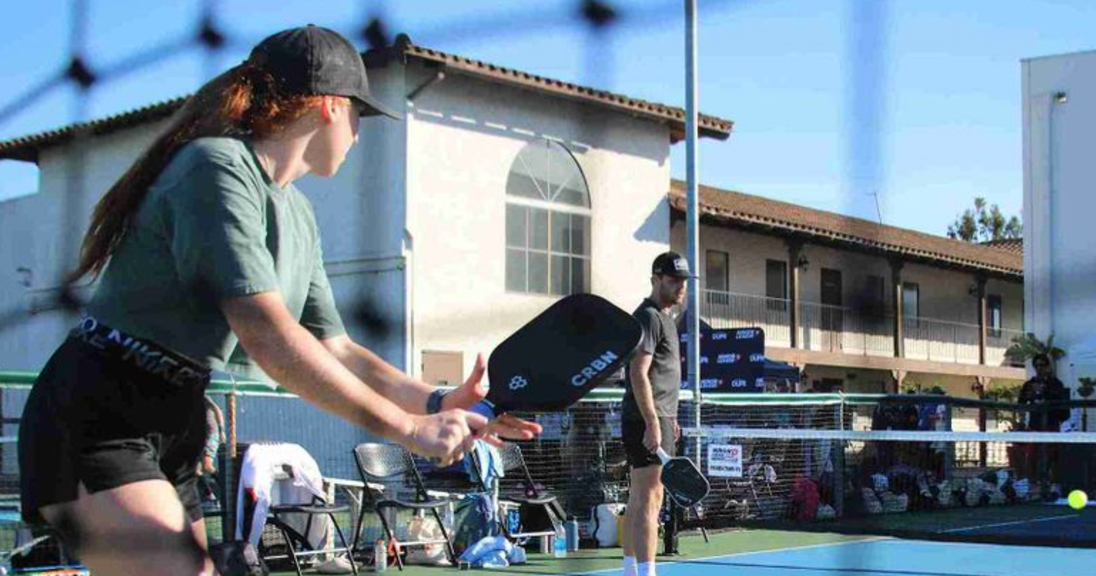
Pickleball Strategy: Playing Aggressively Without Taking Bad Risks
Playing aggressively without taking bad risks comes down to one thing: attacking only the balls that are actually attackable. This guide breaks down the contact-point rule, the three targets worth hitting, and the drill that trains the habit.
Playing aggressively without taking bad risks is the single biggest separator between a 3.5 who fires at everything and a 4.5 who fires at almost nothing and wins anyway.
Watch any pro match and count the speed-ups. You'll be shocked how few there are.
The best players aren't passive; they're patient, and those are two completely different things.
Aggressive play wins points in modern pickleball. Reckless aggression just donates them.
Love pickleball? Then you'll love our free newsletter. We send the latest news, tips, and highlights for free each week.
What Does Playing Aggressively Without Taking Bad Risks Actually Mean?
It means attacking only when the ball, your body, and the court all say yes at the same time. That's it.
Everyone talks about controlled aggression like it's a vibe you tap into. It isn't. It's a filter you run before every swing.
Definition: A "bad risk" in pickleball is any aggressive shot where the odds of winning the point are worse than the odds of losing it immediately.
Rolling a ball at your opponent's hip from above net height is a good risk. Flicking a ball off your shoelaces at the same target is a bad one.
Same intent, same target, wildly different math.
The distinction matters because most players don't have an aggression problem. They have a shot selection problem.
They've been told to be assertive, so they attack the first ball that feels close enough, and then they wonder why their hands battles keep ending in the net.
Here's the thing: this framing isn't unique to pickleball.
Researchers studying online poker found that the players who win most consistently combine tight hand selection with heavy aggression once they commit, a profile the literature calls tight-aggressive (Beyond Chance? The Persistence of Performance in Online Poker, 2015).
Different game, identical logic. Fewer attempts, more conviction on each one.
Why Does Ball Height Decide Everything?
Because a ball below the net can't be hit down, and a ball you can't hit down can't be hit hard.
That's physics, not opinion, and it's why strategy mistakes usually trace back to contact point rather than technique.
The rule is simple enough to run mid-rally: if your contact point is above the top of the net, you can attack. If it's below, you reset.
That single line is most of what playing aggressively without taking bad risks comes down to in a live rally, and it holds up in every format, from rec doubles to advanced doubles strategy.
Trying to generate pace from a low contact means lifting the ball, which gives your opponent a floating target at the kitchen line.
You just built them the exact shot you were trying to avoid giving up.
Pros build their entire attack-vs-reset decision around this one variable. Ben Johns doesn't look faster than you because his hands are faster.
He looks faster because he's already decided what he's doing before the ball arrives, using height as the trigger. If you want the full checklist version,
The Dink's breakdown of ball height and court positioning is the closest thing to a cheat sheet.
And when the ball is low? Get good at the reset. Not as a retreat, as a reload.
The Three-Second Check for Playing Aggressively Without Taking Bad Risks
Before you swing at anything, run three questions. They take less time to answer than they do to read.
- Is my contact above the net? If no, reset. The conversation ends there.
- Are my feet set, or am I still moving? Attacking while drifting backward through the transition zone is how you spray balls four feet long.
- Is my partner in position to cover the counter? If your partner is still recovering from a wide dink, your speed-up is a two-person problem.
Three yeses, fire away. One no, and you dink again.
Honestly, most players could cut their unforced errors from the midcourt by a third just by running question one. That filter is the whole job.
 The Dink Media Team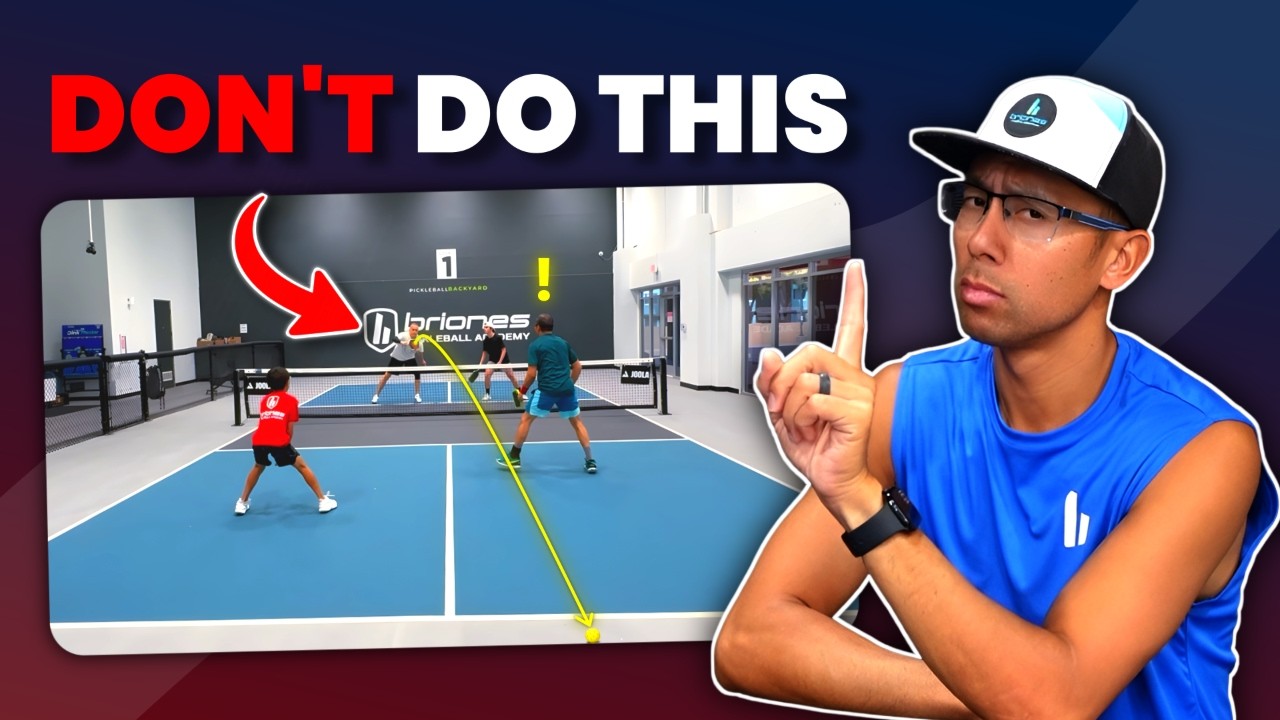
How Do You Attack Without Handing Over the Point?
By aiming at bodies and gaps instead of lines. Attacking the sideline gives you maybe four inches of margin.
Attacking your opponent's right hip gives you a target the size of a dinner plate that also jams their paddle.
Playing aggressively without taking bad risks means your target list should be short and boring.
These are the three highest-percentage aggressive targets in doubles, and they're the same ones pros lean on when beating bangers:
- The dominant-side hip. Jams the paddle, kills the counterattack, and almost never goes out.
- The shoulder of the player who just moved. Momentum is your friend here.
- The middle seam, especially against teams that haven't sorted out who takes it.
That's the short version of what The Dink covers in target practice for attacking the right spots, and it pairs with knowing the dos and don'ts of attacking before you commit.
Notice what's missing from that list: the ankles, the lines, and the spectacular angle you saw on Instagram.
The same filter applies to poaching.
Poaching is aggressive by definition, but a poach on a floating dink is a good risk and a poach on a hard crosscourt drive is a coin flip that leaves half the court open.
 The Dink Media Team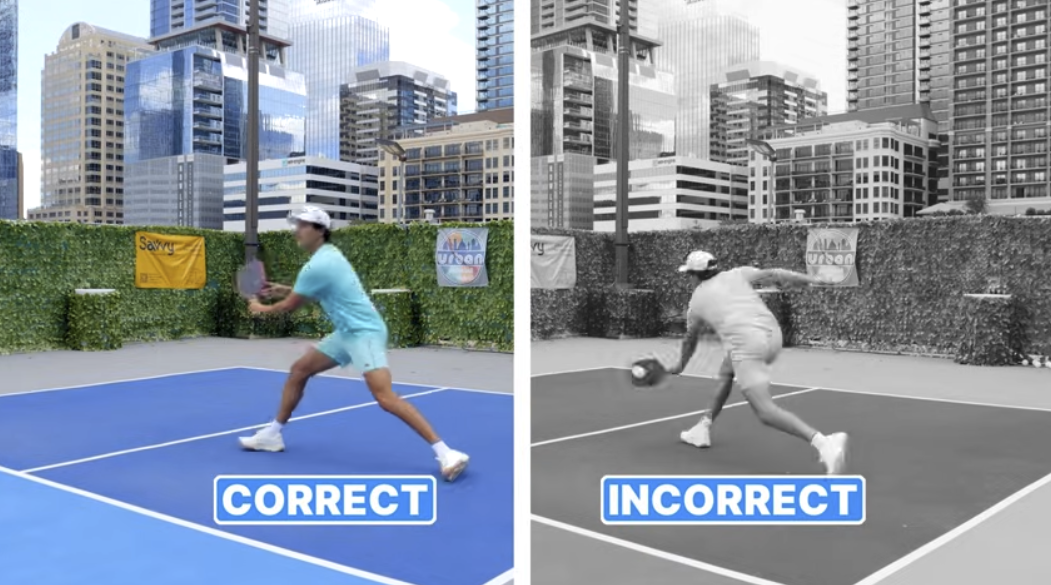
Playing Aggressively Without Taking Bad Risks Starts With Your Feet
Position creates attackable balls; swing speed doesn't.
If you're standing two feet off the kitchen line, every dink that lands at your toes becomes a low contact, and you've eliminated your own ability to attack before the rally even developed.
Get to the line. Stay low. Keep the paddle up.
That posture is the whole premise behind becoming unattackable, and the bonus is that the same stance that stops their attacks manufactures yours.
Teams that hold the line generate more above-the-net balls, which is exactly why aggressive teams win more in the current meta.
This is also where power stops winning at 4.0. At lower levels, aggressive play works because opponents can't block a hard ball.
At 4.0 and up, every hard ball you hit from a bad position comes back faster than it left.
 The Dink Media Team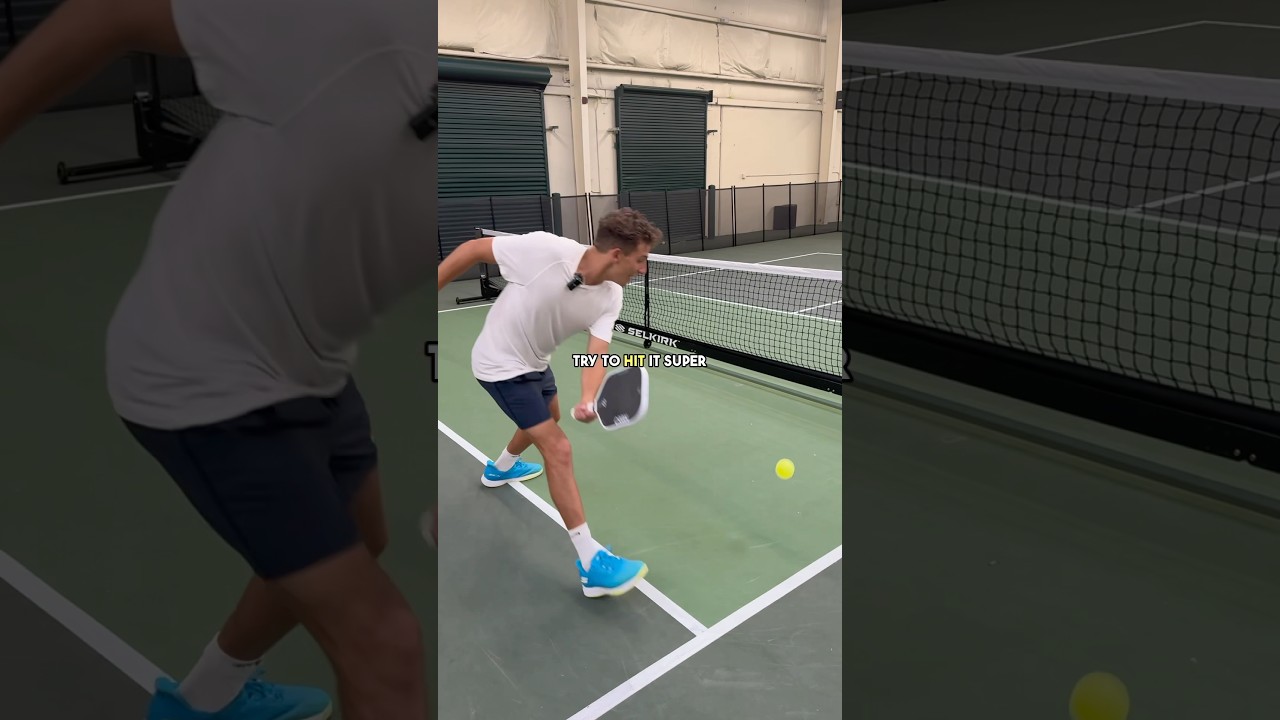
Why Do Good Players Fire Less and Win More?
Because they're building toward the attack instead of hunting for it.
A 4.5 doesn't speed up to win the point; they speed up because the three dinks before it already pulled someone out of position.
That's the whole idea behind attack patterns and the multi-shot patterns top pros use.
You hit two dinks wide to drag your opponent off the court, then attack the middle they just abandoned. The speed-up isn't the strategy. It's the punctuation.
Even your third shot works this way.
An aggressive third shot drop is still a drop. It's just a drop with intent, landing tight to the net so you get to the line with options instead of surviving the point.
 The Dink Media Team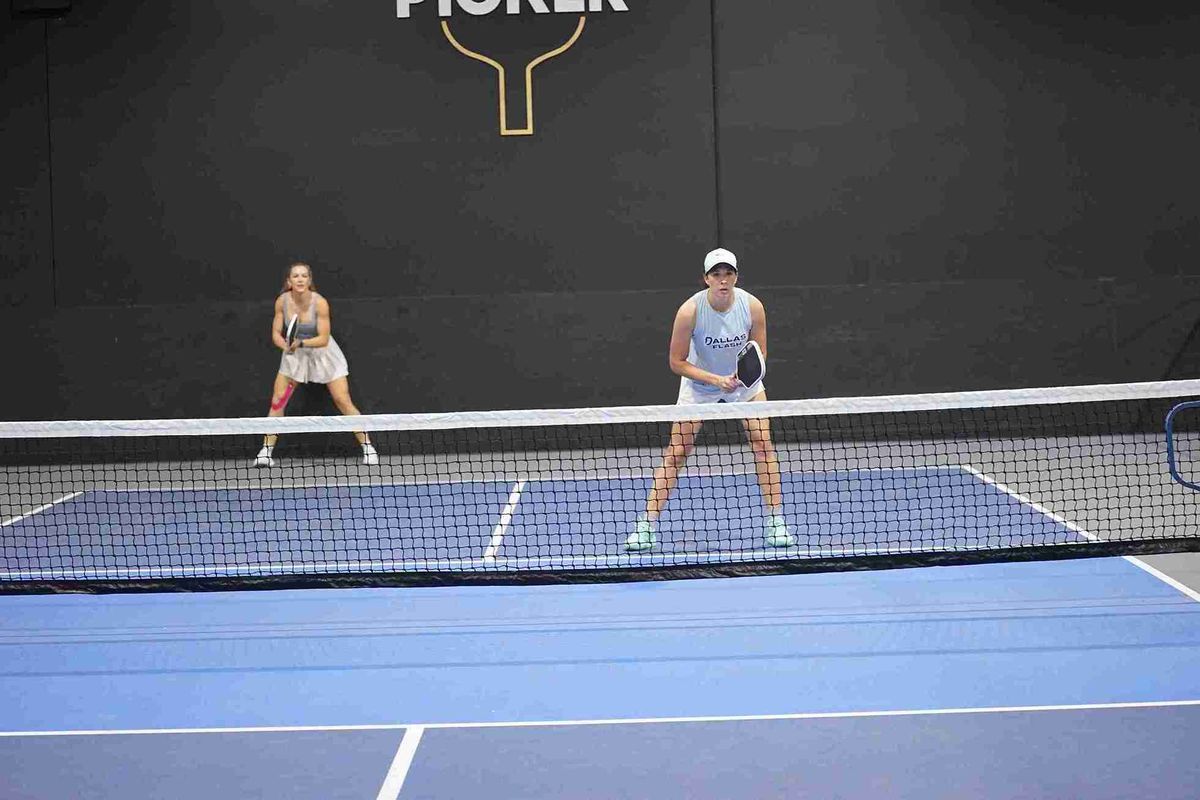
The Drill That Trains This Habit
Here's the one that works: play a dink rally where only balls contacted above net height can be attacked, and every attack must go at a body.
Your partner's job is to feed a mix of low dinks and sloppy high ones. You attack maybe one ball in eight.
It feels tedious for about four minutes. Then it feels like shot selection training, because that's what it is.
Add a counterattack layer once the filter is automatic, and when you do pick the wrong ball, use the six-second mental reset trick and move on.
Dwelling on one bad speed-up usually produces a second one.
 The Dink Media Team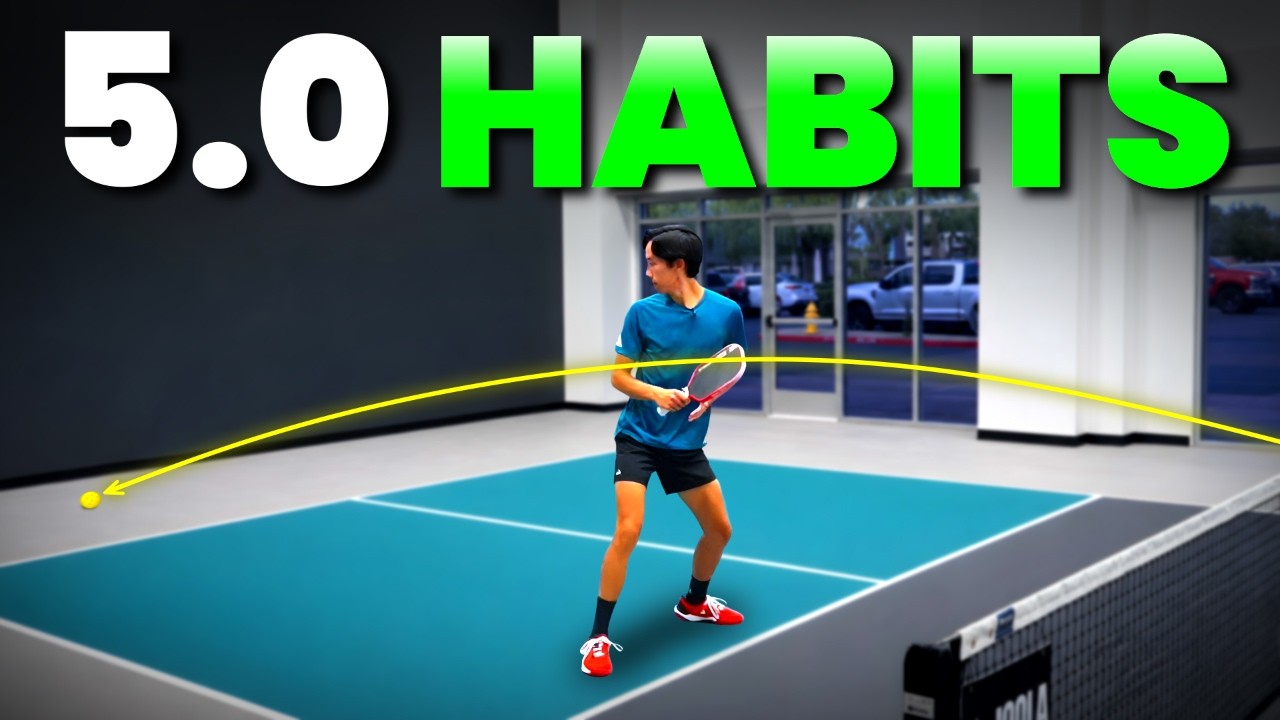
Key Takeaways
- Playing aggressively without taking bad risks means attacking only when your contact point is above the top of the net.
- Run a three-question check: contact height, feet set, partner covered.
- Aim at hips, shoulders, and the middle seam. Not lines.
- Court position creates attackable balls, so hold the kitchen line and stay low.
- Patterns beat impulses. Build the attack with two or three shots before you fire.
- Done right, playing aggressively without taking bad risks looks calm from the sideline and feels relentless from across the net.
Frequently Asked Questions
What is the difference between aggressive and reckless pickleball?
Aggressive play attacks balls that are above net height from a balanced position. Reckless play attacks whatever is nearby. The shot can look identical from the sideline; the difference is whether the contact point and body position supported it. Plenty of quick tips help, but none of them matter if the contact point is wrong.
Can beginners get away with playing aggressively without taking bad risks?
Yes, and they should start early. The ball-height rule works at every level and costs nothing to apply. Beginners who learn it at 3.0 avoid years of the habit most players spend their 4.0 season trying to break, and it pairs well with early work on kitchen line skills.
How often should I speed up in a pickleball rally?
Far less than you think. Most strong doubles players attack roughly one in six to one in eight kitchen exchanges, and only when a ball floats high. If you're speeding up multiple times per rally, you're guessing.
Does hitting harder make me more aggressive?
No. Aggression is about shot selection and timing, not paddle speed. A firm roll at an opponent's hip from above the net wins more points than a full swing at a low ball, every single time. Sharper speed-up technique helps, but only after the selection is right.
What should I do when the ball is below the net?
Reset it. Take pace off, land it soft in the kitchen, and wait for the next ball. A clean midcourt reset buys you the high ball you actually wanted. Giving up on the attack for one shot is not passive, it's how you earn a better attack two shots later.

Love Pickleball? Join 100k+ readers for free weekly tips, news & gear deals.
Subscribe to The Dink