
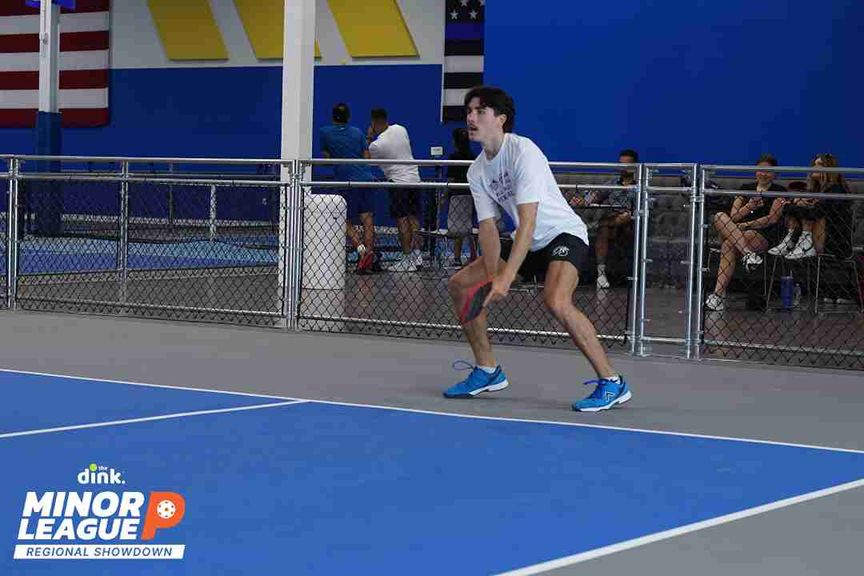
Reading your opponent's weak side is the fastest free upgrade in pickleball, and it starts before the first serve. Here are three ways to find the soft spot, confirm it, and attack it without burning the pattern too early.
Reading your opponent's weak side is the cheapest upgrade available in pickleball, because it costs nothing but attention.
No new paddle. No lesson. No 6 a.m. drilling session.
Just the willingness to watch what's actually happening across the net instead of staring at the ball like it owes you money.
Here's the thing most 3.5s get wrong.
They assume the weak side is always the backhand, they hammer it for two games, and they lose to someone with a two-handed backhand that's better than their forehand.
Reading your opponent's weak side means finding out, not assuming.
Love pickleball? Then you'll love our free newsletter. We send the latest news, tips, and highlights for free each week.
What Exactly Counts as a "Weak Side"?
A weak side is any location, height, or shot type where your opponent's success rate drops noticeably. That's broader than "their backhand."
It might be the backhand. It might also be the shot at their right hip, the ball above their shoulder, anything soft at their feet, or the dink they have to reach wide for.
Four different players can have four different weak sides, which is why generic tips only get you so far.
Your job is identifying which one you're facing today, not reciting the default. Strong players build their whole attack patterns around that answer.
The classic assumption isn't baseless.
In competitive tennis, backhand strokes are played less often than forehands, and players serve to the backhand more frequently under pressure because it's treated as the weaker wing.
That's tennis, not pickleball, and the paddle game's compressed court changes plenty.
Treat it as a starting hypothesis, not a law, and make them hit the harder shot either way. (Let's face it, backhands still suck for a lot of players.)
Way 1: Reading Your Opponent's Weak Side Starts in the Warmup
Reading your opponent's weak side starts before the first serve. Most players treat warmups as a chance to loosen their shoulder.
You should treat them as an open-book quiz.
Hit a few balls to each wing and watch three things: how early they prepare, whether their grip changes, and where the ball lands.
A player who shuffles around every backhand to hit a forehand just told you everything.
So did the one whose backhand dinks keep popping two inches too high.
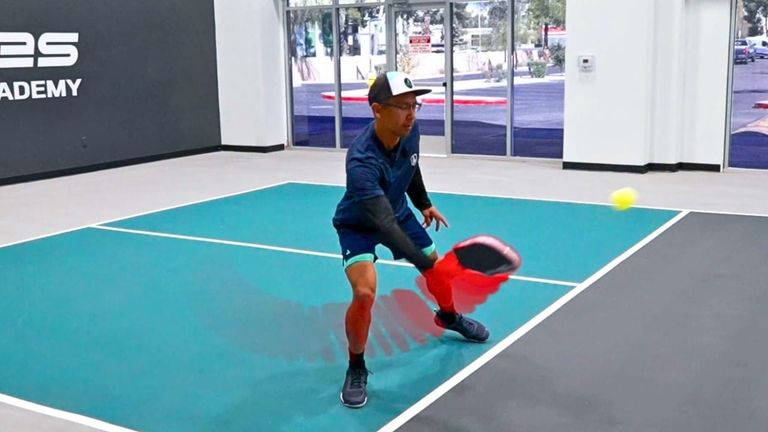
Then watch their ready position. If the paddle sits low and off to one side, that's the wing they're protecting and the wing they're leaving open.
A paddle parked on the forehand hip means the backhand needs an extra beat to arrive.
How Fast Can You Confirm It?
Three points. Honestly, four if they're hiding it well.
Serve one deep ball to each side, watch the return quality, and you'll have a working read before anyone has broken a sweat.
Deep returns are the tell: a player who can only chip a short return off one wing has shown you the soft spot.
Don't overthink the warmup read. You're not building a scouting report.
You're forming one hypothesis you'll test in live play, which is the entire point of the next step.
Way 2: Probe on Purpose, Not by Accident
The second method is deliberate testing: hit specific balls to specific places and track the results.
Random shot selection gives you random information, and random information loses matches.
Pick four probes and cycle them in the first game:
- Deep to the backhand corner. Does the return come back deep, or does it float?
- At the right hip (for a righty). Jammed body shots expose slow paddle hands faster than anything else, which is why targeting the right spots beats hitting harder.
- Soft at the feet in the transition zone. Players who panic in the transition zone will pop it up every time.
- One speed-up to each shoulder. A well-timed speed-up is a diagnostic tool, not just a weapon.
Track the results honestly. If they handle the backhand corner fine but melt on anything at their feet, your weak side isn't a wing at all.
It's a height. That distinction changes your whole pickleball strategy for the rest of the match.
Why Does Reading Your Opponent's Weak Side Fail Against Better Players?
Because 4.5s know you're watching. They'll shade early to hide the wing, or they'll cover with footwork so clean you never see a late paddle.
Against those opponents, stop reading the wing and start reading the pattern. Where do they go when they're rushed?
Cross-court, almost always, because it's the safest ball in the sport.
Tennis charting data shows players aim roughly 53% of backhand-corner shots cross-court, and pickleball players lean the same direction for the same reason: more net clearance, more court.
Sit on that cross-court tendency and you'll poach more balls.
 The Dink Media Team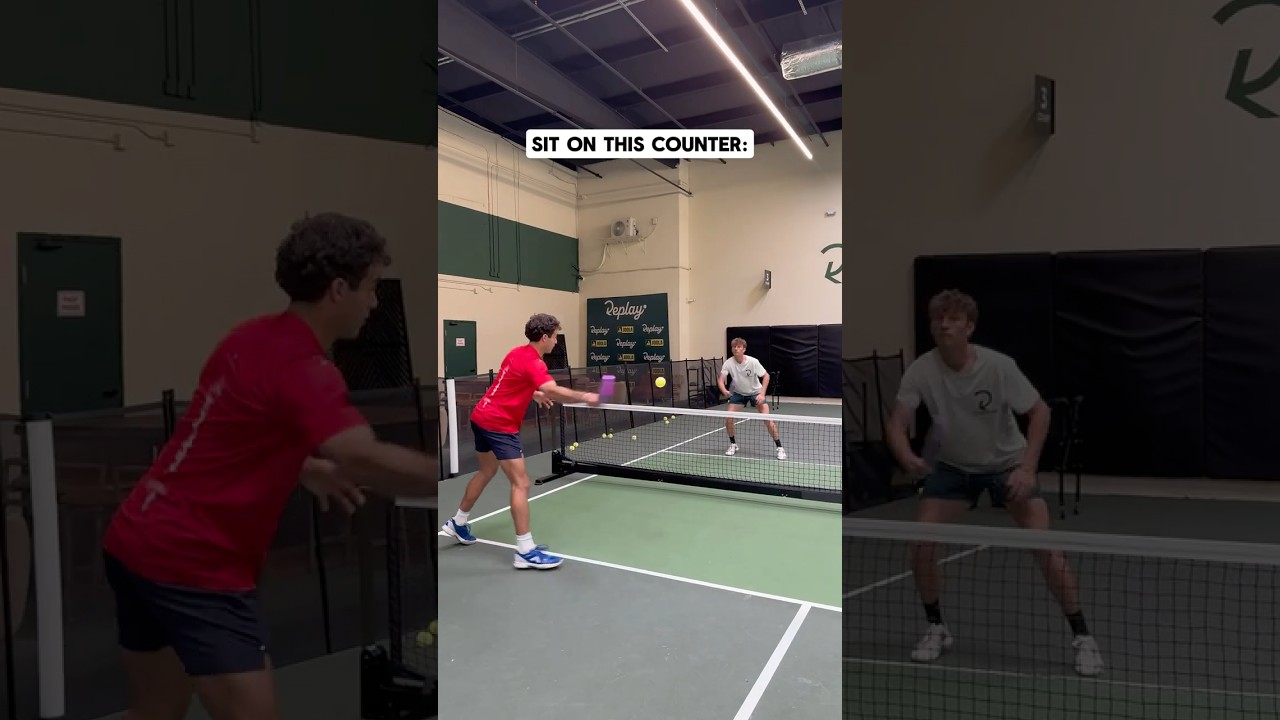
Way 3: Read the Body, Not the Ball
The third way is in-rally reading: paddle position, shoulder turn, and feet tell you where the ball is going before contact.
This is the skill that separates players who react from players who already moved.
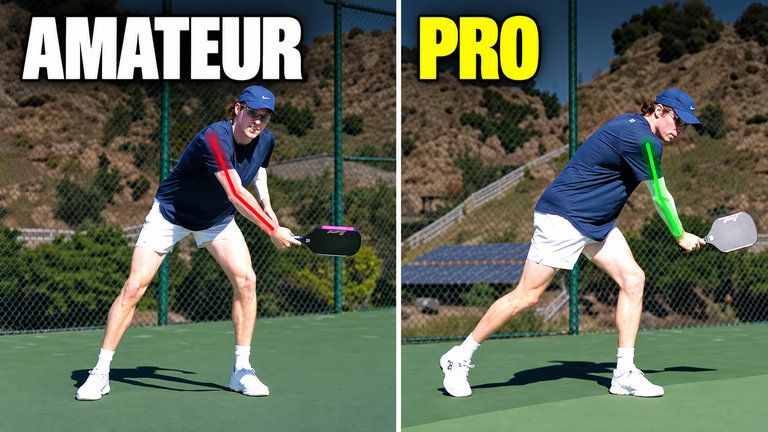
Watch the paddle face at the top of their backswing. Watch whether their shoulders rotate or stay square. Watch the front foot.
A player stepping across their body is going cross-court; a player who stays open is going line or middle. Opponent body language is loud if you're actually looking.
Reading your opponent's weak side at this level also means noticing what they avoid. The guy who never once hits a backhand roll isn't being patient.
He can't hit it. The woman who takes every ball above her waist with a forehand has told you exactly where to put the next dink.
Reading your opponent is mostly an exercise in cataloging absences.
What Should You Do Once You've Found It?
Attack it, but not every ball. Reading your opponent's weak side is worth less if you burn the read in game one.
Use it on the points that decide games: side out situations, game point, and any rally where you've already pulled them off balance.
Mix in enough neutral balls that they never get comfortable guessing.
There's also a real argument for occasionally targeting their strength just to keep them honest, which sounds backwards until you watch a 5.0 do it.
And in doubles, share the read with your partner between points. Two players hunting the same weak side is a system. One player hunting it alone is a liability.
 The Dink Media Team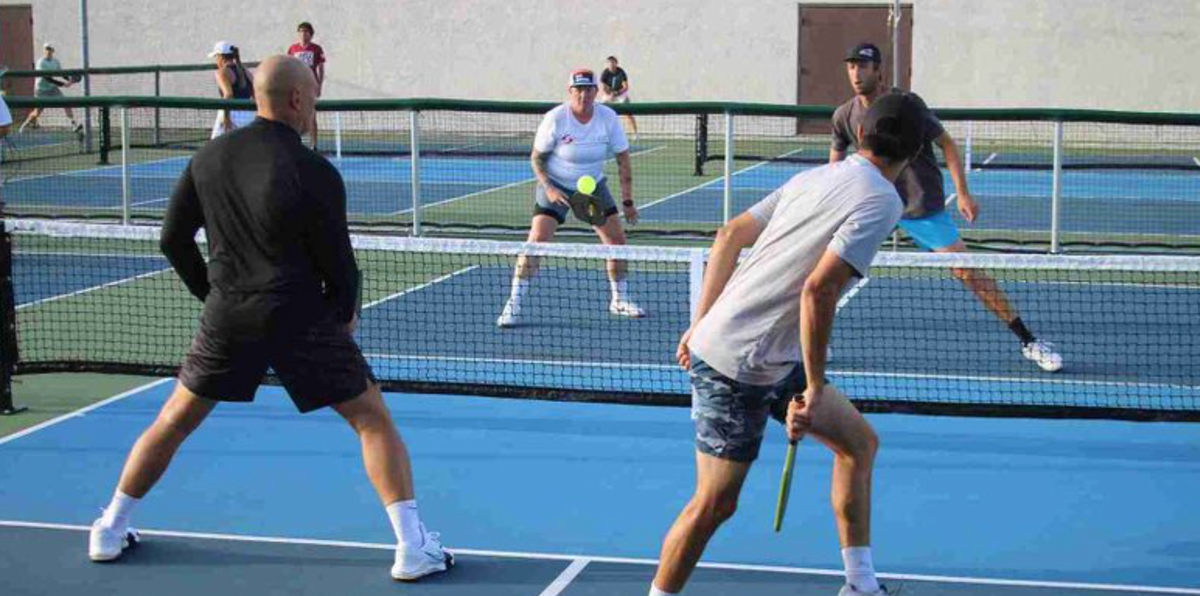
Where Reading Your Opponent's Weak Side Goes Wrong
Most players find the weak side and then immediately waste it. Three ways that happens.
They attack it from bad court position, turning a smart target into a low-percentage shot.
They attack it so relentlessly the opponent adjusts by the third game.
Or they commit to the read and never update it, which matters because weak sides change as players warm up, tire out, or get rattled.
Reading your opponent's weak side is a running process, not a one-time scan.
The player who was popping up backhand dinks at 2-2 might be fine by 8-8, and the forehand that looked solid early can fall apart once the legs go.
Keep checking. That ongoing attention is what pickleball IQ actually means, and it's why shot selection beats raw power above 4.0.
One more trap: reading your opponent's weak side doesn't help if your own execution can't hit the target.
If you can't reliably place a dink cross-court to a specific hip, the best read in the world is theoretical. Build the placement first, then the reads pay off.
 The Dink Media Team
Key Takeaways
- Reading your opponent's weak side starts in the warmup, not at 5-5 in the third.
- A weak side can be a wing, a height, a speed, or a body location. Don't default to "backhand."
- Probe deliberately with four test shots, then track what actually comes back.
- Against stronger opponents, read tendencies and patterns instead of wings.
- Attack the weak side on the points that decide games, not every single ball.
- Re-check your read every few points, because weak sides shift during a match. The same logic applies when you're playing with a weaker partner.
Frequently Asked Questions
How do I find my opponent's weak side quickly?
Serve deep to both sides in the first three points and watch the quality of the return. A short, floating, or defensive return off one wing is your answer. The warmup gives you the same information for free if you're paying attention.
Is the backhand always the weak side in pickleball?
No. Two-handed backhands are common in pickleball, and they're in pickleball, and plenty of players have a better backhand than forehand, especially former tennis players. Test it before you commit. The real weak side is often a height or a body position rather than a wing.
Should I attack the weak side on every point?
No. Hitting the same target repeatedly lets your opponent adjust and groove the shot. Use the read on important points and mix in enough variety that they can't anticipate. Roughly two-thirds pressure, one-third misdirection is a reasonable split.
How do I hide my own weak side from a good opponent?
Keep your paddle in a neutral ready position so you're not advertising which wing you're protecting, and avoid running around the same shot every time. Reset the ball rather than forcing a low-percentage attack. If one wing is genuinely weak, drill it instead of hiding it forever.
Does reading your opponent's weak side work in singles too?
Yes, and arguably better. Singles gives you a whole court to move one person around, so a known weak side turns into repeatable geometry. Serve wide, pull them off the court with singles-specific patterns, then attack the side they're slowest to recover to.
Love Pickleball? Join 100k+ readers for free weekly tips, news & gear deals.
Subscribe to The Dink