Why Your Pickleball Drive Is Too Fast (And What to Do Instead)
Most players think a faster pickleball drive is a better drive. The truth is the opposite, and once you understand why, your whole attack game changes.
You rear back, rip a drive down the line, and feel great about it. Then your partner tells you it was too fast. Too fast?
That feels wrong.
But here is the reality: pickleball drive speed is one of the most misunderstood concepts in the recreational game.
More pace does not mean more pressure. Most of the time, it means less control and less time to recover.
This breakdown covers exactly why slowing down your drive wins more points, what pros actually do differently, and how you can start applying it in your next match.
Love pickleball? Then you'll love our free newsletter. We send the latest news, tips, and highlights for free each week.
The Myth of the Hard Drive
Here is the belief most players carry onto the court: hit it harder and you win the rally faster. It sounds logical. It is almost always wrong.
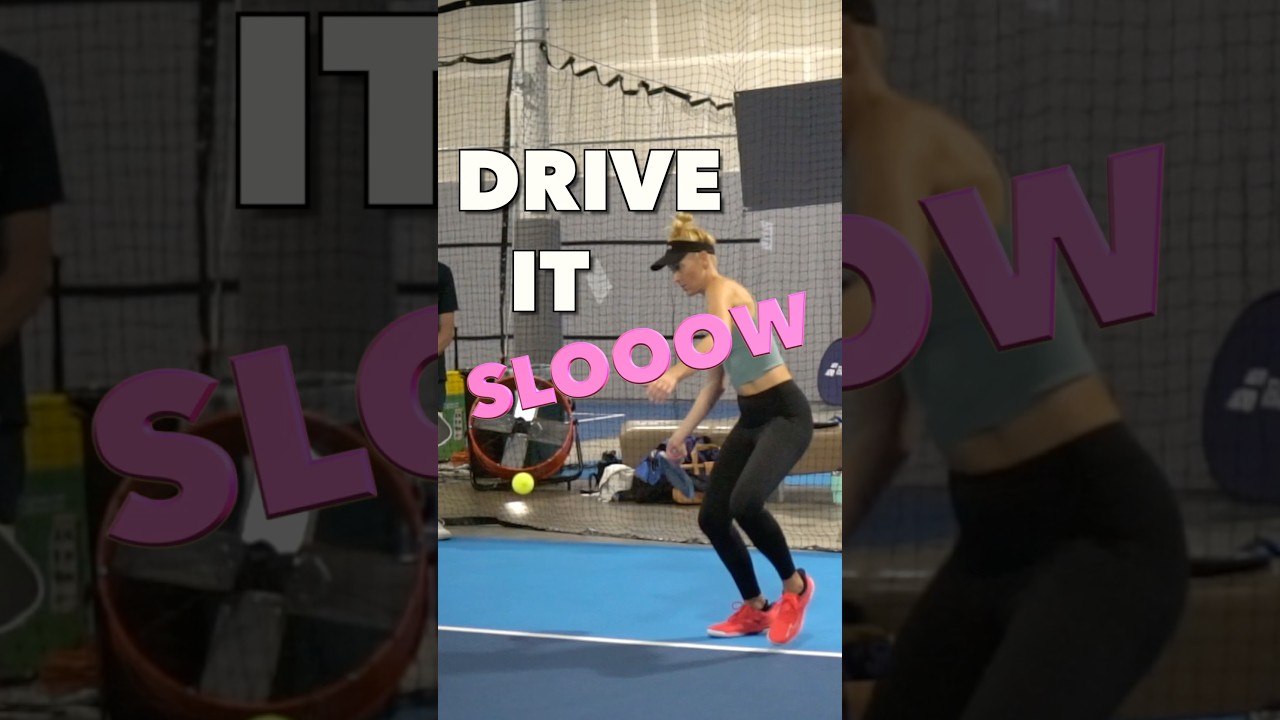
Jilly B Pickleball on YouTube breaks this down in a way that cuts right to the point.
She played alongside Connor Garnett, Jaime Martinez, and Vikas, and even those high-level doubles partners gave her the same feedback: your drive is too fast.
Her response was the same one most players have. "Too fast? Come on, I'm hitting the heck out of it." But that instinct is exactly the problem.
When you drive with maximum pace, you are racing against yourself.
The ball gets there before you do. You have no time to read the return, no time to reset your position, and no time to build on the shot you just hit.
A slower, controlled drive gives you something a ripped ball never can: time.
What Does "Driving Slow" Actually Mean?
Slow is relative. You are not lobbing the ball or pushing it over the net.
You are taking intentional pace off and keeping the ball low, penetrating, and difficult to attack.
Think of it as a drip. That is the word Jill uses, and it is the right one.
A drive that drips off your paddle stays low, skims the net, and forces your opponent into an uncomfortable position without giving them a predictable ball to rip back.
The goal of a drive is not to win the point outright with pace.
That works maybe 5% of the time. The other 95% of the time, the drive is a setup shot, a pressure tool, a way to buy time and create opportunity.
If you are driving to win the rally immediately, you are playing the wrong game. If you are driving to create a better next shot, you are thinking correctly.
Why Slower Drive Speed Gives You More Control
When Jill demonstrates the slower drive in the video, she says something important: "I have all the time in the world." That is the whole point.
Here is what happens mechanically when you take pace off your drive:
- Your swing becomes more compact and repeatable
- You make cleaner contact because you are not over-swinging
- The ball stays lower and harder to attack
- You finish in a better ready position for the next exchange
- Your opponent gets a ball that is tougher to read and time
A ball hit at 70% pace with great placement is more dangerous than a ball hit at 100% pace that floats or pops up. Every time.
This connects directly to why overswinging kills your game. When you try to crush a drive, your mechanics fall apart.
Your contact point drifts, your paddle face opens, and the ball goes up instead of through.
 The Dink Media Team
Is There Ever a Time to Rip a Drive?
Yes. Rarely, but yes.
Jill admits she hit a full-pace ripped drive exactly once across three matches. Once. And it worked because it was unexpected, not because pace alone won the point.
The occasional hard drive has value specifically because you have been dripping slower ones.
Your opponent adjusts to the speed you have been giving them. Then you go through them with something different.
That contrast is what creates the surprise, not the pace itself.
If you are ripping hard drives constantly, you have no contrast. Your opponent adjusts and starts timing your ball. You have handed them the answer key.
Understanding how to scale shot selection is one of the fastest ways to start winning more rallies without changing your technique at all.
 The Dink Media Team
What the Drip Drive Looks Like in Practice
The drip drive is an off-speed shot that still has purpose and direction. It is not soft because you are nervous. It is controlled because you are smart.
Here is how to build it into your game:
- Start with your swing speed, not your contact speed. Slow your arm down by 30%. Focus on clean, flat contact rather than generating maximum spin or pace.
- Target the middle of the court or the opponent's hip. Low and through the middle leaves fewer angles for a counter-attack. Body shots force awkward returns.
- Finish with your paddle up and your feet ready. A slower drive means you will arrive at the next position in time. Use that time. Do not watch the ball.
- Watch what they give you back. The slower drive tends to produce a floaty or uncomfortable return. That is your setup. Be ready to attack it.
Fixing your forehand drive mechanics will make this adjustment easier because the fundamentals of a clean swing apply at every speed.
 The Dink Media Team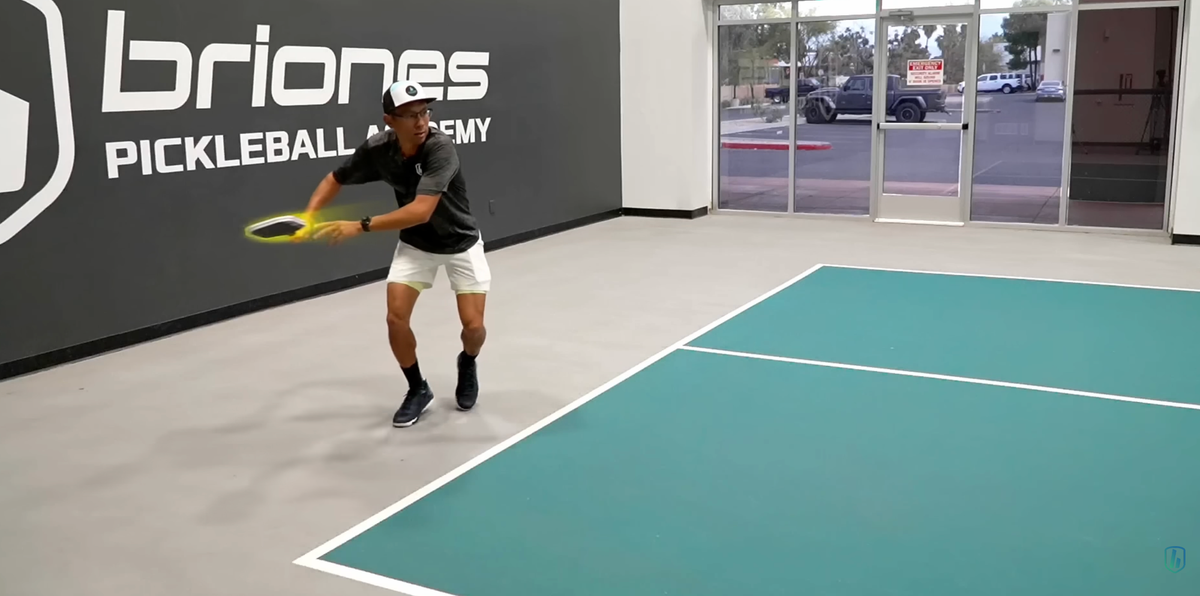
How Does This Relate to What Pros Like Molly Do?
Jill specifically calls out Molly as someone who executes the off-speed drip drive consistently and effectively.
It is not just a cute nickname for a soft shot. It is a weapon.
At the pro level, speed-up shots and drives are often slower than recreational players expect.
The power comes from placement, disguise, and timing, not from raw pace.
Watch how top players approach the kitchen line and use speed-ups off the bounce. You will notice the ball does not always scream off the paddle.
Often it is a controlled, penetrating shot that catches opponents off-balance because of where it goes, not how fast it arrives.
That is the real model. Not pace. Precision and control with enough speed to prevent a comfortable return.
 The Dink Media Team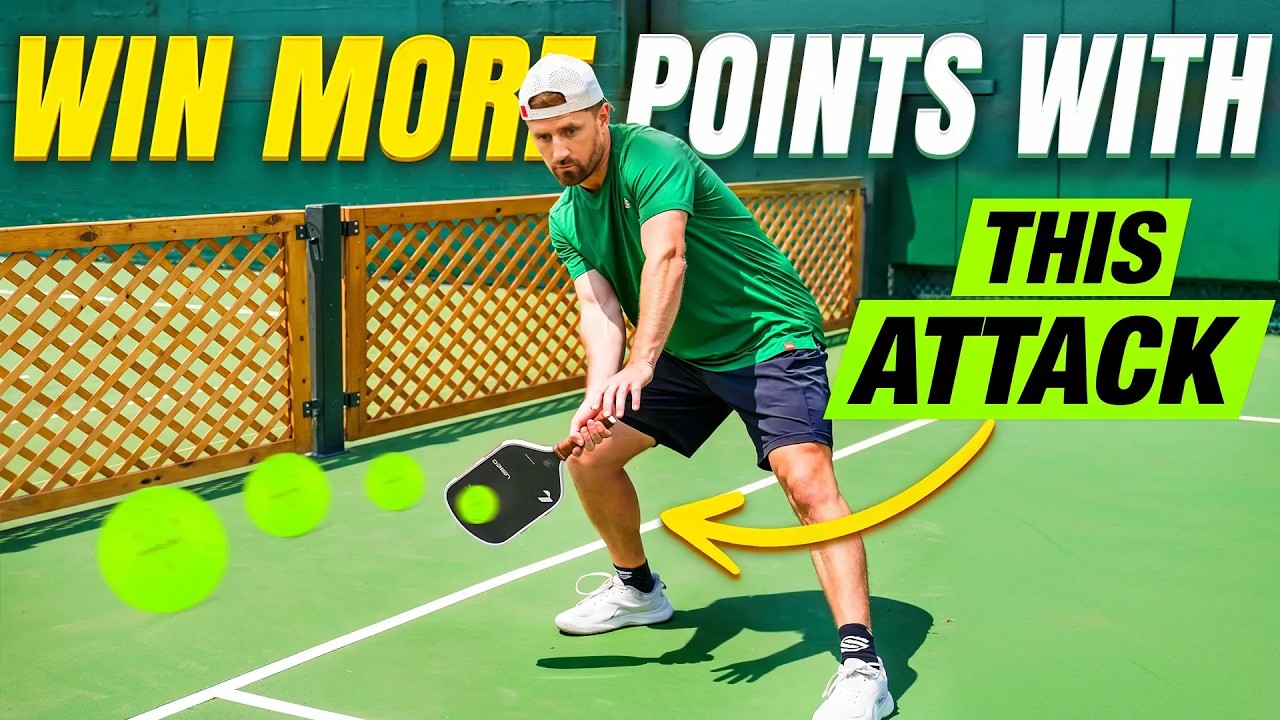
Why Most Recreational Players Drive Too Hard
The answer is simple: it feels good. Hitting a ball hard gives you a physical and emotional reward in the moment.
Your body says you did something powerful. Your brain agrees.
But feeling good about a shot and the shot actually working are two different things.
Mistaking effort for effectiveness is one of the most common mistakes in recreational pickleball.
The players who improve fastest are the ones who learn to separate those two feelings.
They ask: did that shot create a problem for my opponent, or did it just feel good to me?
If your opponent is consistently resetting your drives cleanly or attacking them back, that is your answer.
Your drive speed is not creating a problem. It is creating a pattern they can read and punish.
 The Dink Media Team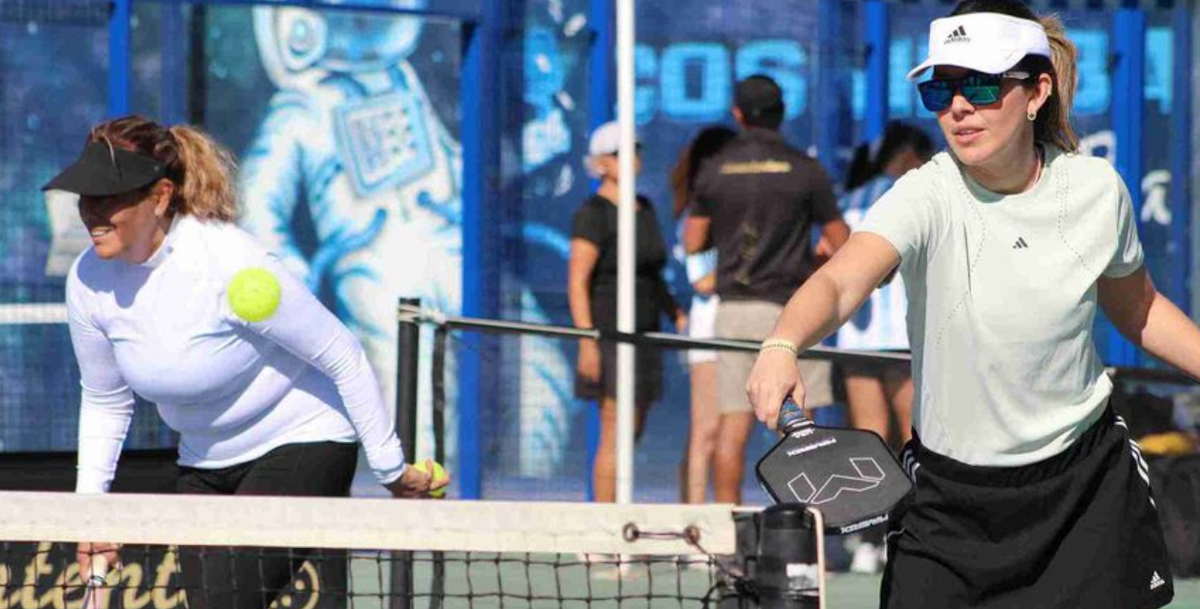
The Common Overswing That Ruins Drives
Most bad drives come from the same mistake: the player tries to generate pace from the arm instead of the unit turn.
They reach back, swing hard, and make contact late or out in front with an open paddle face.
The result is a ball that pops up, goes wide, or floats at shoulder height. None of those outcomes are useful.
A compact swing, a solid unit turn from the hips and shoulders, and a flat contact point will produce a more dangerous drive at 70% effort than any arm-only swing at 100%.
If you want to handle drives and use the right ready position, getting your setup right before contact is everything. Speed is the last variable, not the first.
 The Dink Media Team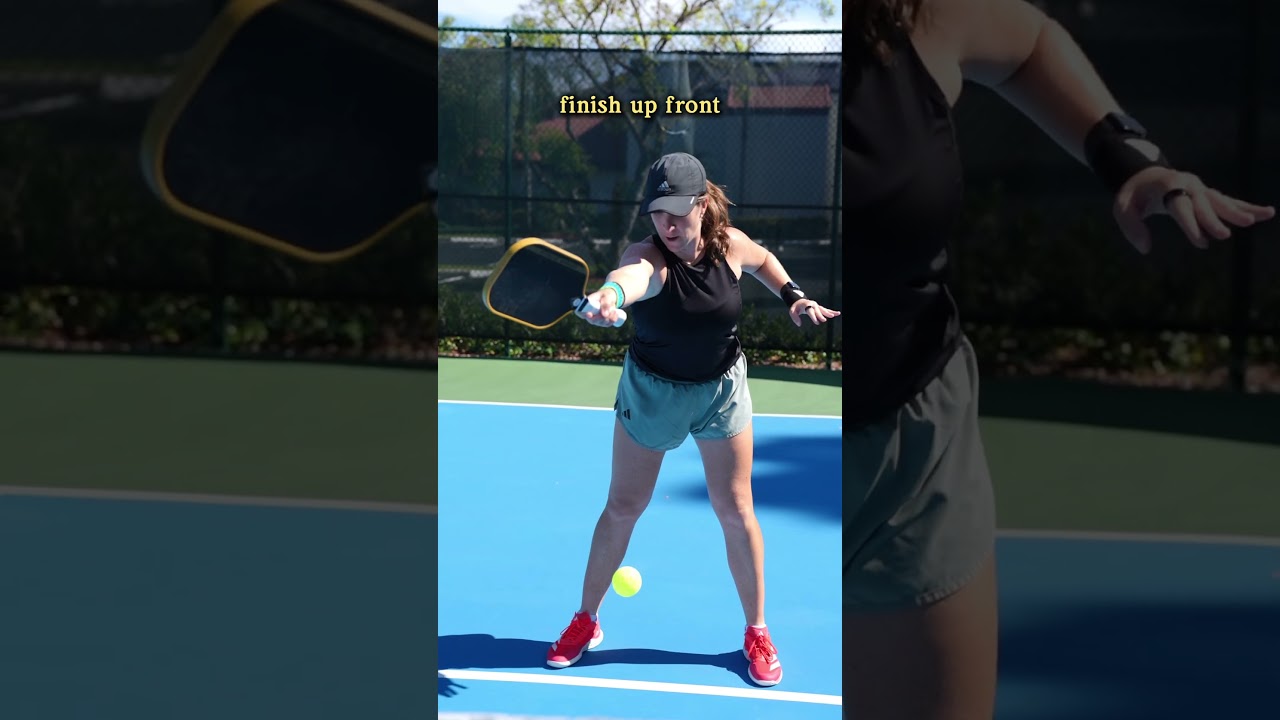
How to Practice the Drip Drive
You cannot fix this in a game if you have never trained it deliberately. Here is a simple practice structure:
- Hit drives at 50% pace from the baseline and focus entirely on keeping the ball below net height at the opponent's side
- Gradually increase to 70%, maintaining that low trajectory
- Once you can control placement consistently, add one hard drive every 10 reps as the contrast shot
- Practice recovering to a ready position after every drive, not watching to see where it lands
This kind of deliberate work is what separates players who understand drive strategy from those who just grip and rip.
A smarter practice plan builds this kind of intentional repetition into every session.
The goal in practice is never to hit impressive shots. The goal is to build a reliable shot you can access under pressure in a real match.
 The Dink Media Team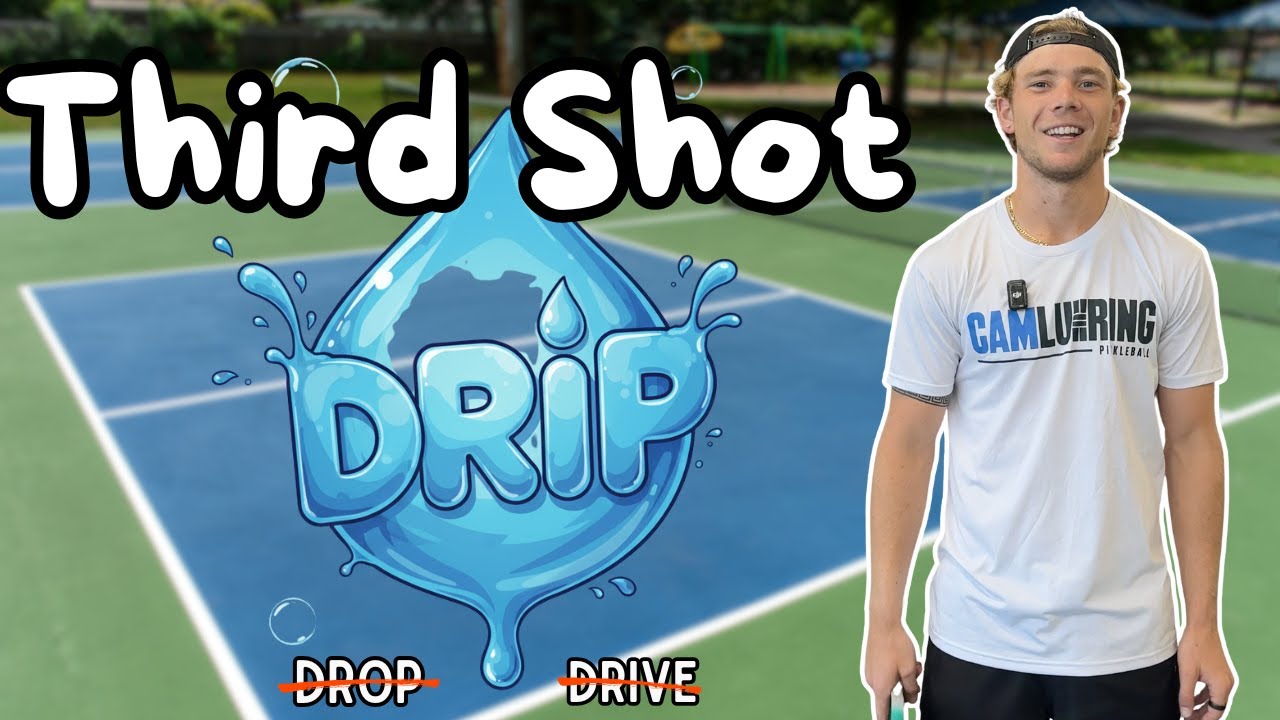
Putting It Together: Drive Strategy That Actually Works
The perfect drive speed is not maximum pace.
It is the speed that gives you the most control, keeps the ball low, creates discomfort for your opponent, and leaves you in position to finish the point.
For most players, that is somewhere around 60 to 70% of their max effort. It feels underwhelming at first. It works immediately.
Add the occasional full-pace drive as a change-up, not as your default. That contrast makes both shots more effective.
Learning to disguise your shots makes the contrast even harder to read.
Remember what Jill said after hitting it slower: "I have all the time in the world."
That feeling is the goal. When your drive gives you time instead of stealing it, you are driving correctly.
Pro players do a lot of things differently from recreational players, and drive speed is near the top of the list. Start there and watch your results change fast.
Frequently Asked Questions
What is the ideal speed for a pickleball drive?
The ideal pickleball drive speed is roughly 60 to 70% of your maximum effort, not full pace. That range gives you control, low ball flight, and enough time to recover and read the return. A drive that keeps you in position is almost always better than one that wins the point outright.
Why does driving too hard hurt my game?
A drive hit at full pace usually reaches your opponent before you are ready for what comes next, leaving you out of position. It also tends to produce overhit balls that pop up or go wide, giving your opponent an easy ball to attack. The faster the drive, the less margin you have for error on contact.
What is the drip drive in pickleball?
The drip drive is an off-speed, controlled drive that stays low and skims through the court without maximum pace. It is designed to create an uncomfortable return for your opponent while keeping the hitter in good position. Think of it as a tool for setting up the next shot, not ending the rally instantly.
When should I use a hard drive in pickleball?
A full-pace hard drive works best as a surprise shot after you have been consistently hitting slower drip drives. The contrast is what makes it effective, not the pace alone. If you are ripping hard drives on every ball, your opponent adjusts and the shot loses its impact entirely.
How do I stop overswinging on my pickleball drive?
Focus on generating power from your hip and shoulder rotation instead of your arm. Keep your swing compact and make contact in front of your body with a flat paddle face. Slowing your swing speed to 70% and prioritizing clean contact will produce a more consistent and dangerous drive than going all out.

Love Pickleball? Join 100k+ readers for free weekly tips, news & gear deals.
Subscribe to The Dink