
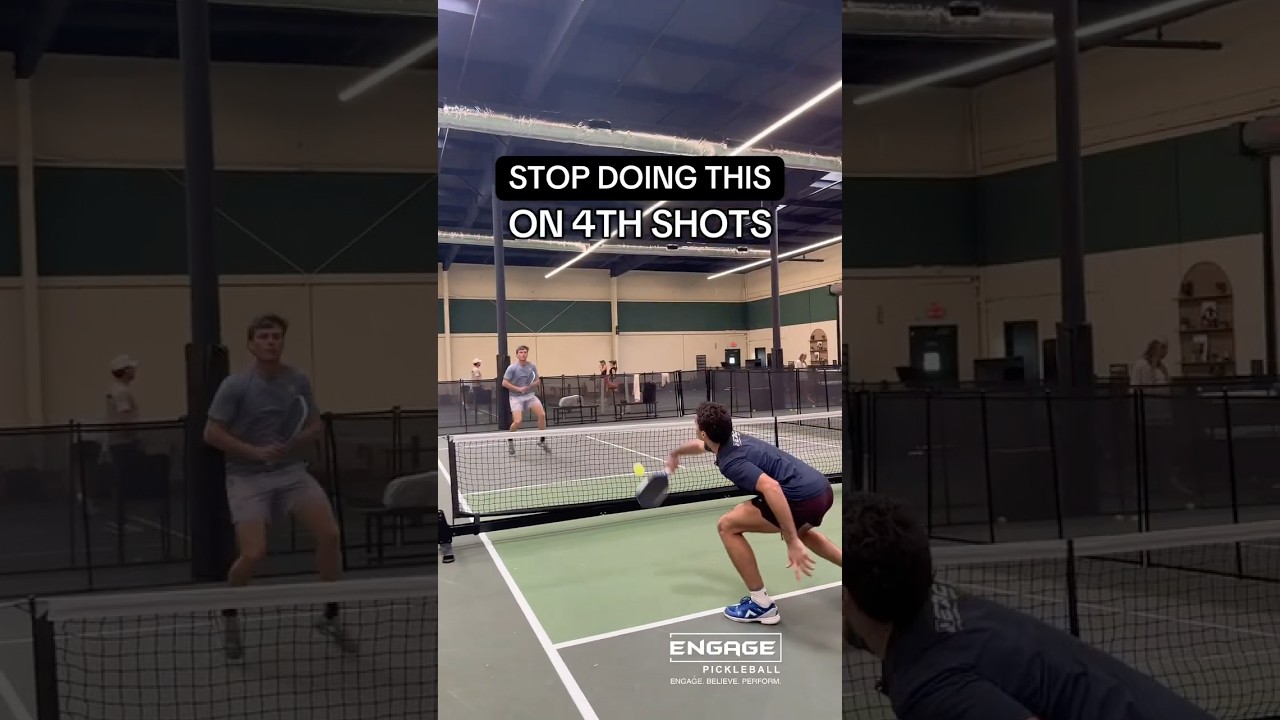
Why You're Attacking Balls at Your Feet Wrong (And What to Do Instead)
When a ball lands right at your feet with topspin, attacking it is almost always the wrong call. Learn when to concede the net in pickleball and neutralize the play instead of handing your opponent a free point.
When a ball lands at your feet in pickleball, your instinct screams to attack it. That instinct is costing you points.
This is one of the most common errors across all skill levels.
Players try to speed up or drive a ball that is physically below their control window, and they hand the rally to their opponent for free.
This breakdown covers exactly when to stop attacking, what to do instead, and how the right response actually puts you back in control of the point.
The concept comes straight from Richard Pickleball on YouTube, who demonstrates this mistake and the fix in real rally situations.
Love pickleball? Then you'll love our free newsletter. We send the latest news, tips, and highlights for free each week.
A Low Ball in Pickleball Is Not an Attack Opportunity
Let's be direct. A low ball in pickleball is a defensive situation, not an offensive one.
When your opponent hits a quality third with topspin that drops onto your feet, they have executed a good shot. Your job is to survive it, not punish it.
Too many players read that heavy ball and immediately think "speed up."
What actually happens is the paddle face angle is compromised, the contact point is wrong, and the ball either dumps into the net or pops straight up for a put-away.
This is shot selection based on ball height going wrong.
The height of the ball dictates the shot, and below your knees means you are not in an attacking position.
What Does "Conceding the Net" Actually Mean?
Conceding the net means accepting that you cannot win this exchange at the kitchen line right now, and choosing a response that resets the point instead of gambling on a low-percentage attack.
It does not mean giving up the rally. It means giving up position temporarily so you do not give up the point entirely.
Think of it this way: your opponent earned a small advantage with their shot.
Conceding the net is you refusing to compound the problem by swinging at a ball you have no business attacking.
Players who struggle here often also battle the frustrated speed-up, where emotion pushes them into attacking out of desperation rather than strategy.
Why Topspin at Your Feet Is Especially Dangerous
Topspin accelerates downward after the bounce, which drives the ball even lower into your strike zone.
A flat ball at your feet is hard enough. A topspin ball at your feet is almost impossible to attack cleanly.
Here is what topspin does to your mechanics:
- It pushes the ball down faster after the bounce, shortening your reaction window
- It creates an awkward, rising contact point if you try to take it out of the air
- It widens the margin for error on your paddle, making it far easier to dump or pop up
- It loads your return with pace that works against you when you try to redirect aggressively
This is exactly why a heavy third shot drop or drive with topspin is such an effective play. It forces this exact dilemma on the receiving team.
 The Dink Media Team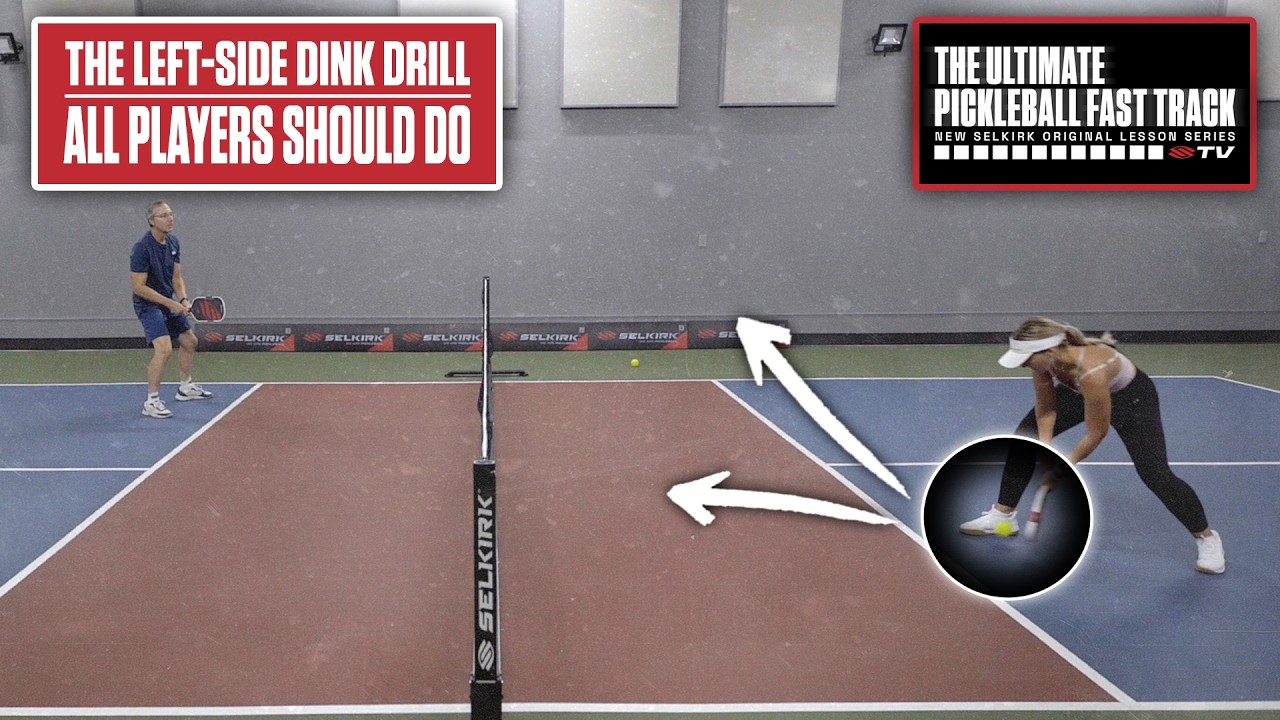
So What Should You Actually Do?
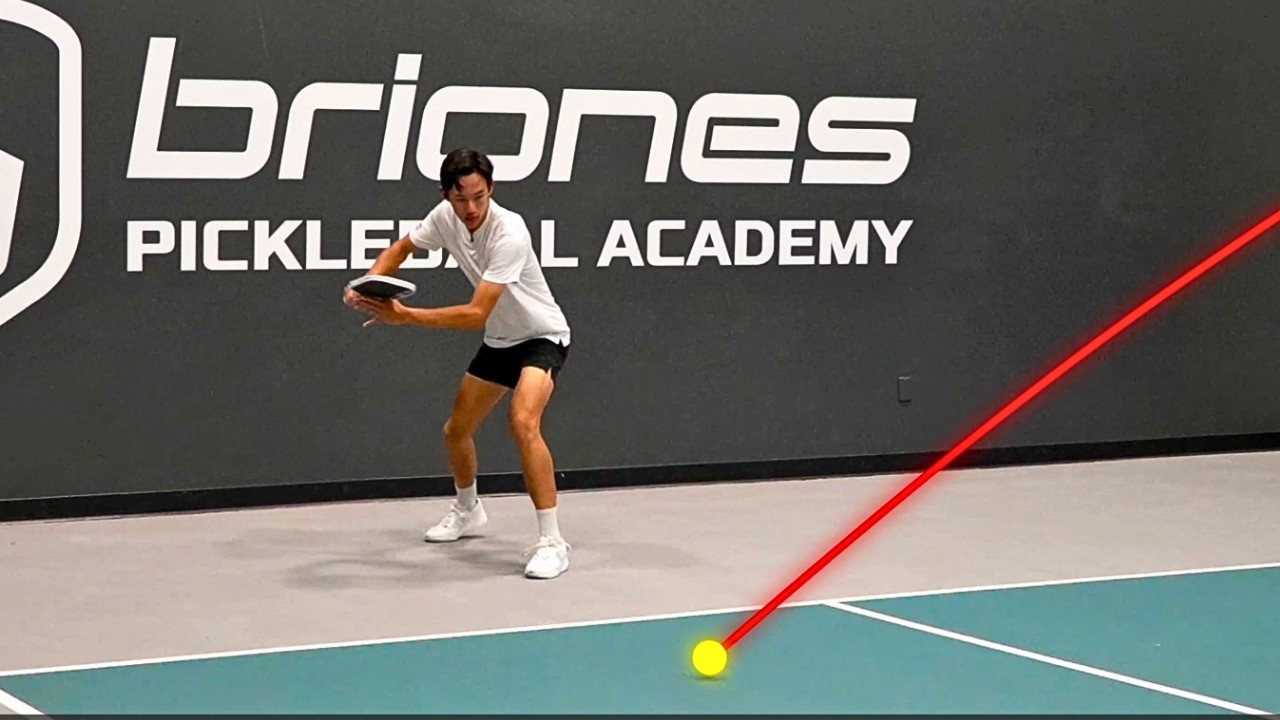
The correct response is to take the ball cross-court, either out of the air on a short hop or just after the bounce, and neutralize the rally.
This is the play Richard Pickleball demonstrates, and it works because it removes the aggression from your opponent's shot without requiring you to generate pace from a compromised position.
Here is the step-by-step breakdown of the correct response:
- Read the ball early. The moment you see a topspin third coming low and heavy toward your feet, shift your mindset from "attack" to "neutralize."
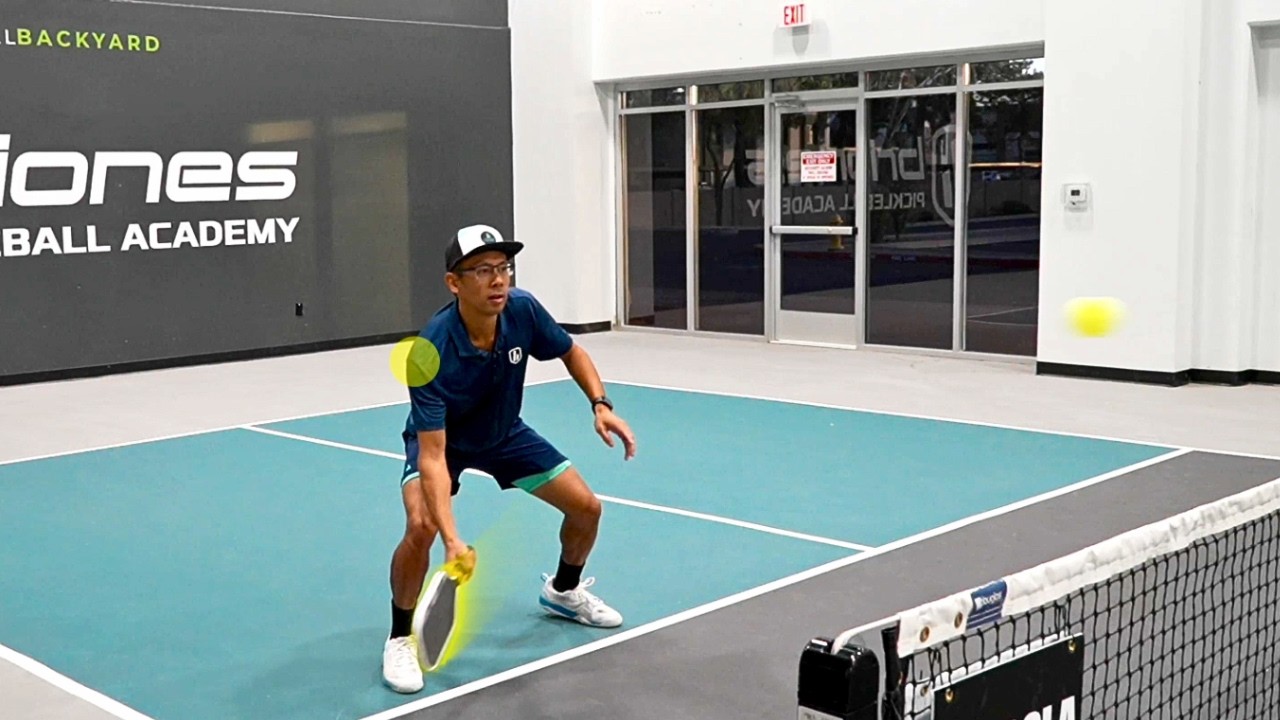
- Get low. Bend your knees, drop your center of gravity, and get your paddle under the ball. Do not reach down with your arm while staying upright.
- Choose your contact point. Either catch it out of the air before it bounces (short hop) or take it just after the bounce at its lowest point. Both work. The short hop gives you more control.
- Send it cross-court. Cross-court gives you the most net clearance and the longest distance to work with. This is not the time for a down-the-line flick.
- Aim for depth, not pace. You are not trying to win the point here. You are trying to reset the rally to a neutral state and reestablish your position.
Understanding the short hop technique is critical here.
Taking the ball on a short hop gives you far more control than letting it rise, which is counterintuitive to players who are used to waiting for the ball to come to them.
 The Dink Media Team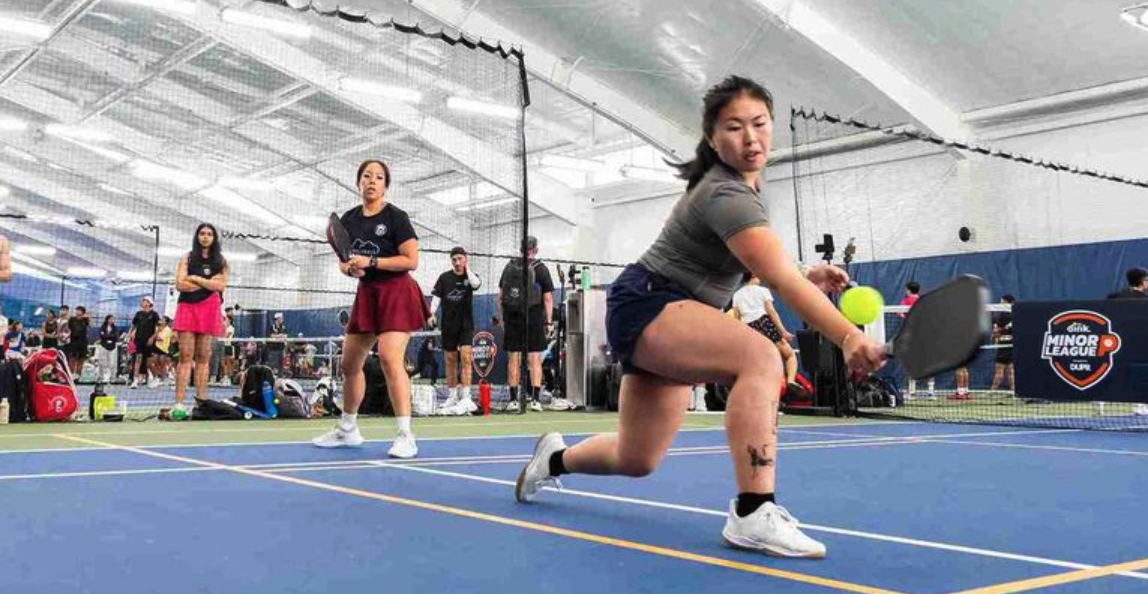
Why Do Players Keep Attacking These Balls?
The honest answer is ego. When someone hits a low ball in pickleball right at your feet, your brain reads it as an insult and you want to punish the shot.
But your opponent did not make a mistake. They made a good shot, and you are not punishing them by attacking. You are punishing yourself.
This connects directly to common mistakes that kill your game, specifically the pattern of forcing offense from a position that does not support it.
Players at 4.0 and below almost universally attack low balls too often. Players at 5.0 and above almost universally know when to back off.
That gap in decision-making is one of the biggest separators between those levels.
 The Dink Media Team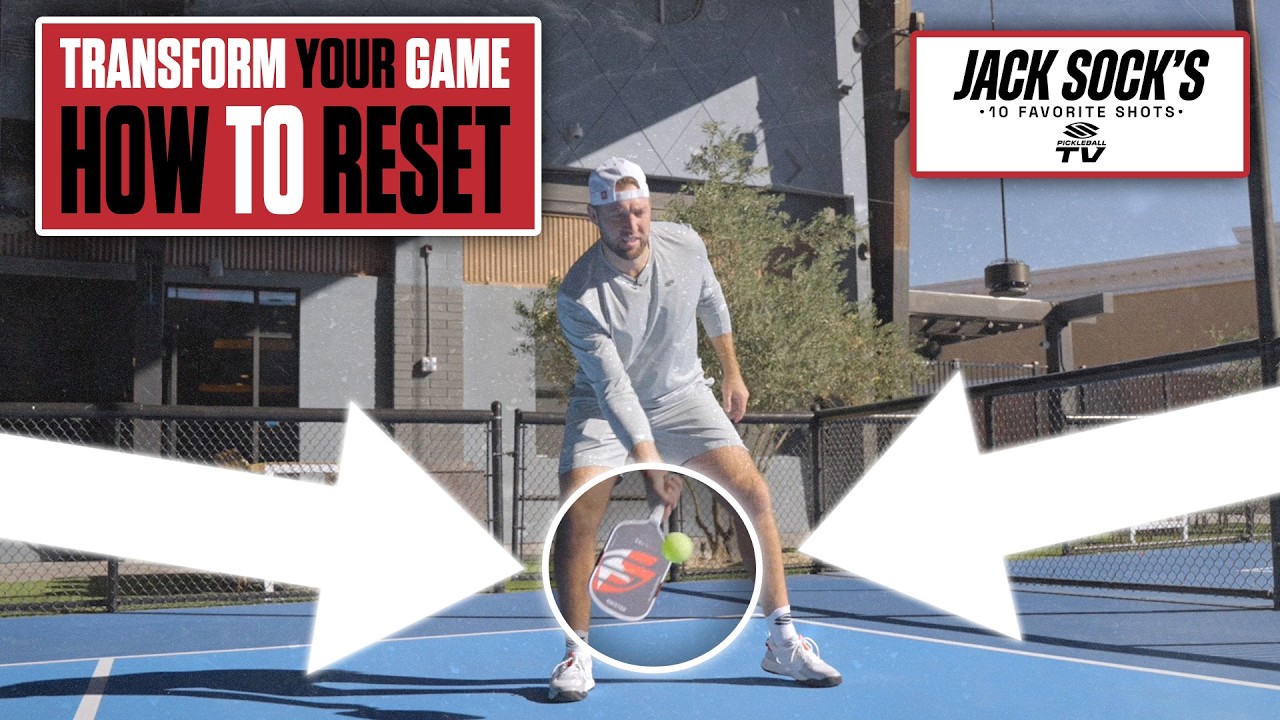
How Does Conceding the Net Help You Win the Point?
Conceding the net resets the point to neutral, which strips your opponent of the positional advantage they just earned.
When you hit a clean cross-court neutralizer, three things happen.
Your opponent cannot attack a response that is low and angled. You buy yourself time to reset your feet and position.
And the rally continues from a balanced state where neither team has an edge.
Compare that to forcing the attack: you pop the ball up, your opponent puts it away, and the point ends in two more shots.
The aggressive choice is almost always the losing choice here.
This is the mindset shift that fixes multiple problems at once.
When you stop trying to win every exchange aggressively, you start to win more rallies overall.
 The Dink Media Team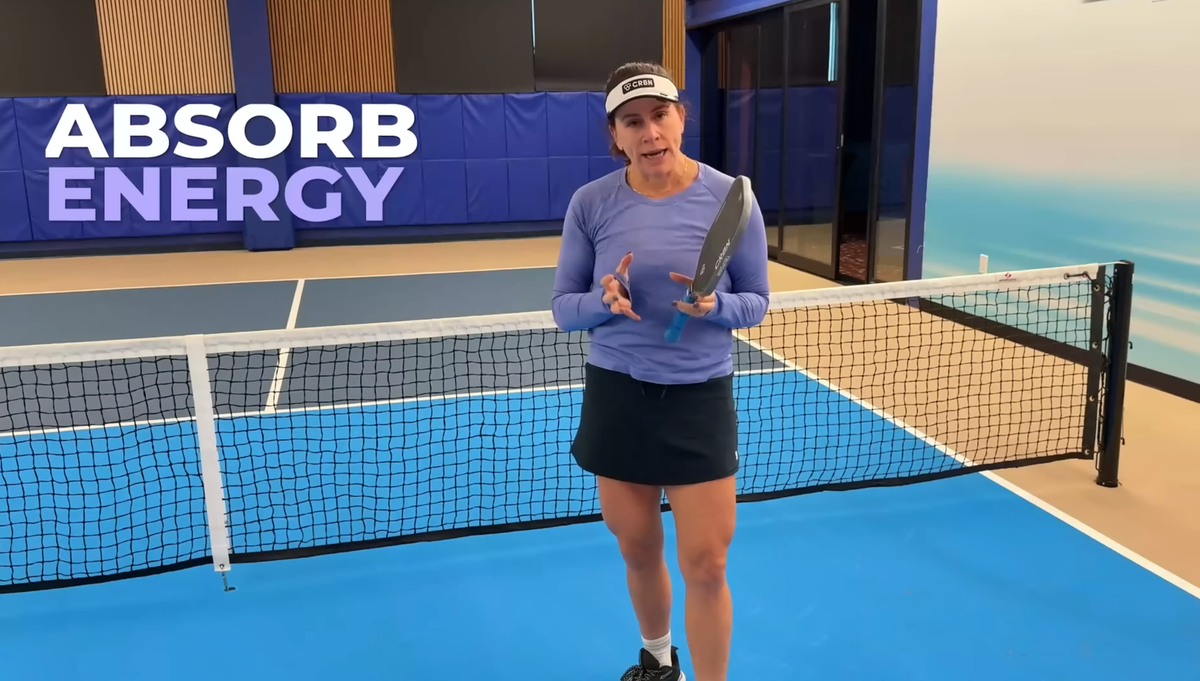
What About Taking It Out of the Air?
Taking a low ball out of the air before it bounces is a smart play when you can catch it early enough to control the angle.
The key word is "control." If you are lunging forward and swiping at a ball below your knees, you are not in a controlled position.
But if you can get low and meet the ball cleanly before it drops further, the volley gives you more options than waiting for the bounce.
The short hop after the bounce is the safer option for most players. It gives you a moment to read the ball, adjust your paddle, and make clean contact.
Either way, the destination is cross-court and the goal is depth, not pace.
Players who want to sharpen this skill should also look at how to deaden pace and spin at your feet, which covers the mechanics of absorbing a heavy ball without giving away a pop-up.
 The Dink Media Team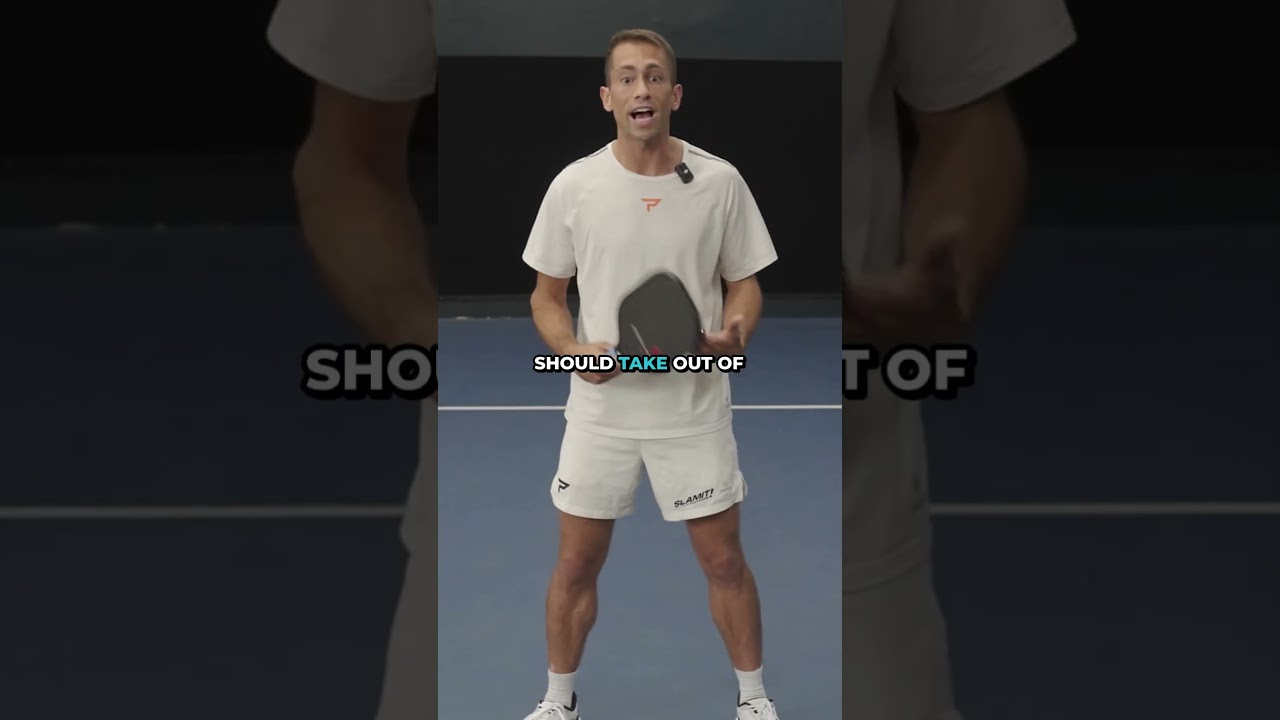
Is This the Same as a Reset?
Not exactly, but they are related.
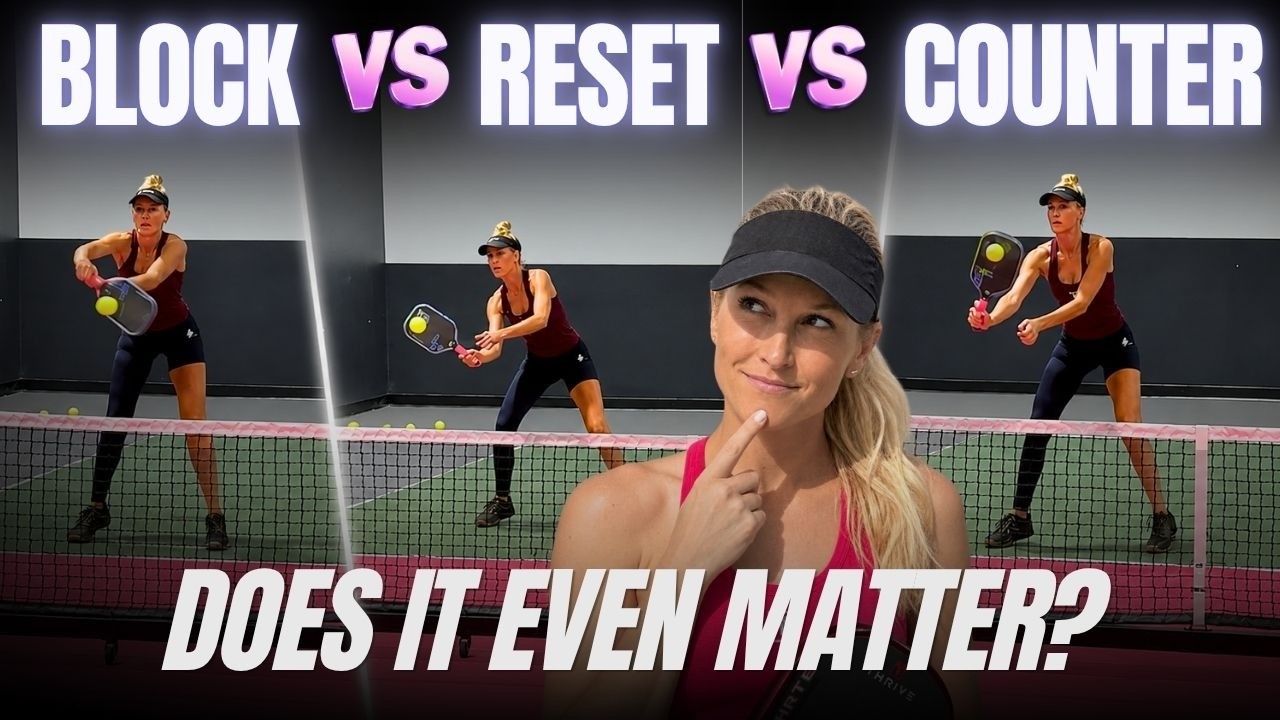
A reset is a soft shot that brings a heated exchange back to neutral. Conceding the net is the decision that comes before the shot.
When you concede after a low ball in pickleball, you might well be resetting the rally with your hands.
But the bigger call is recognizing you should not attack at all.
If you want to sharpen that skill under pressure, understanding why your reset fails is a great place to start.
Players who want to go deeper should also look at how to deaden pace and spin at your feet.
 The Dink Media Team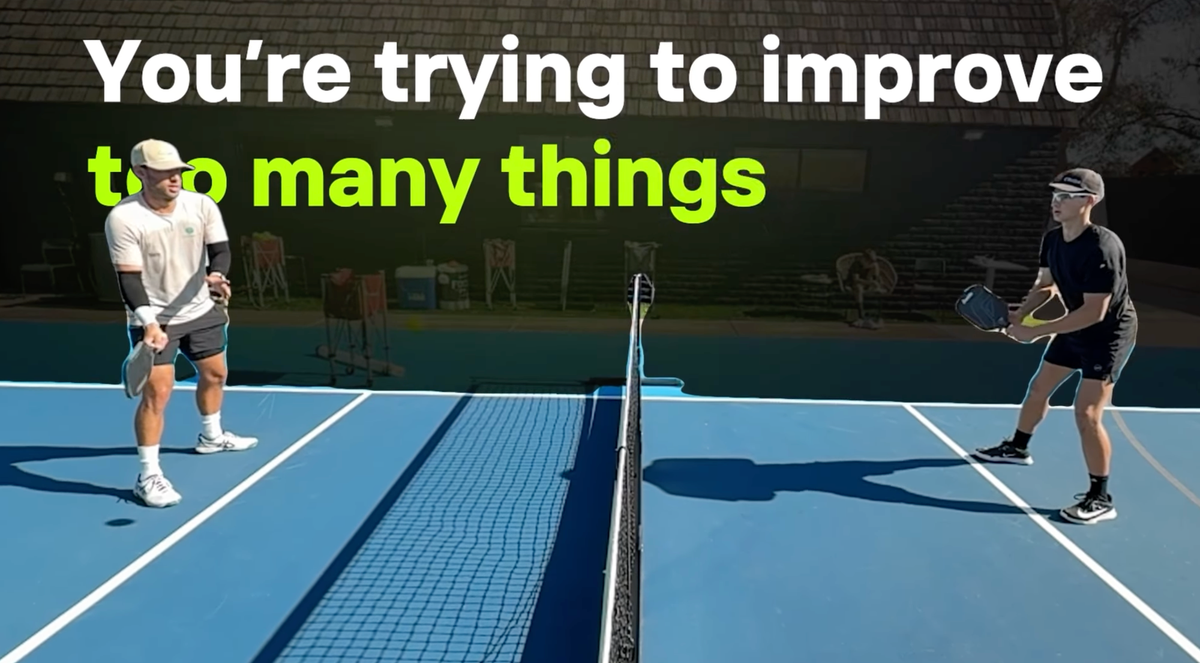
Building This Into Your Game
The best way to build this habit is to start recognizing the situation before you swing. Here is a simple decision framework:
- Ball above your waist: Attack options are open
- Ball between your waist and knees: Selective attack, depends on your position and the spin
- Ball at or below your knees with topspin: Concede, neutralize cross-court, reset the point
If you drill this framework before you get into match play, the decision will start to feel automatic.
The goal is to remove hesitation so you are not standing there mid-rally deciding whether to attack or reset.
That hesitation is exactly what causes the worst outcome: a half-committed swing that goes neither fully soft nor fully hard, resulting in a floated ball your opponent can easily put away.
Cleaning up your shot selection using a clear scale is one of the fastest ways to stop giving away free points on balls that were never meant to be attacked.
Commit to the right shot before you swing, and your error rate will drop immediately.
For additional context on how the best players handle defensive situations, studying what pro pickleball players do differently shows a consistent pattern: they absorb pressure cleanly instead of forcing offense from bad positions.
The players who win the most rallies are not always the ones hitting the hardest.
They are the ones who know which shot to hit and when, and that starts with knowing when NOT to attack.
Frequently Asked Questions
When should you concede the net in pickleball?
You should concede the net when your opponent hits a low, heavy ball (especially with topspin) that lands at or below your knees, making a clean attack nearly impossible. Trying to speed up that ball almost always results in a pop-up or an error. The smart play is a controlled cross-court return that resets the rally to neutral.
What does it mean to neutralize a shot in pickleball?
Neutralizing a shot means removing your opponent's positional or pace advantage without trying to win the point outright. In the context of a ball at your feet, neutralizing means returning it low and cross-court so your opponent cannot immediately attack your response. It is a survival play that brings the rally back to even.
Is it always wrong to speed up a ball at your feet?
Almost always, yes. The geometry of a ball below your knees makes it extremely difficult to generate a clean, controlled attack. You are swinging upward into a ball that is below net height, which means the margin for error is tiny and the risk of a pop-up is high.
What is a short hop in pickleball and when should you use it?
A short hop is when you take the ball very shortly after it bounces, before it rises to a comfortable height. On a low topspin ball at your feet, catching it on a short hop gives you more control than letting it rise because the ball has less time to accelerate away from you. It is a smart skill to practice specifically for balls that are designed to jam you.
How do I stop popping up balls at my feet in pickleball?
The main fix is to stop trying to attack those balls entirely and instead commit to a soft, cross-court return with an open paddle face. Most pop-ups on low balls happen because a player swings too hard from a compromised position. Slowing the swing, getting low, and aiming cross-court will dramatically reduce the pop-up rate.

Love Pickleball? Join 100k+ readers for free weekly tips, news & gear deals.
Subscribe to The Dink