The One Habit That Exposes Every Mistake in Your Pickleball Game
Filming yourself playing pickleball is the fastest way to spot flaws you'd never notice mid-match. Here's exactly how to set it up and what to watch for.
You can spend hours drilling, but filming yourself playing pickleball will show you more in one session than months of repetition ever will.
The problem is simple: you cannot see yourself while you play.
You feel like your footwork is solid, your positioning looks right in your head, and you think you're making smart shot choices.
Then you watch the video back and realize almost none of that is true.
This piece covers why self-recording is the most underused improvement tool in recreational pickleball, what you actually see when you watch yourself, and how to set it up without a partner or a cameraman.
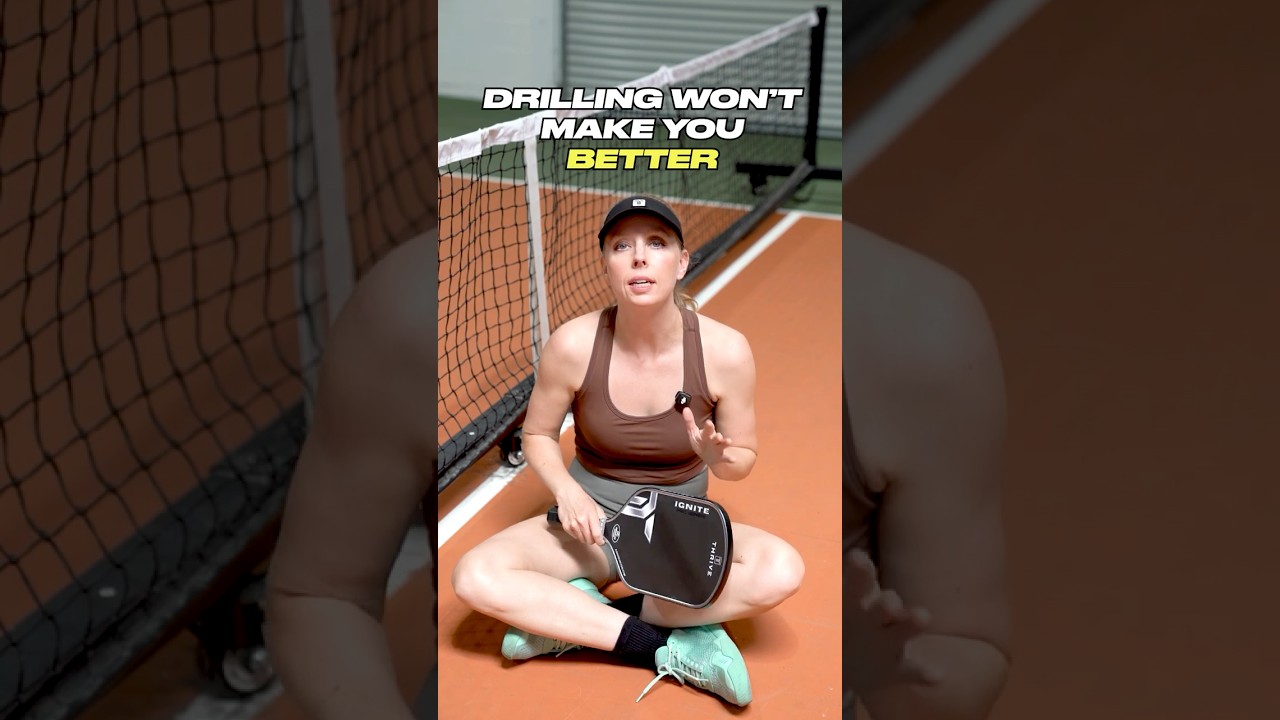
The ideas here come directly from Cori Elliott, who has been making this case on YouTube with evidence from her own match footage.
Love pickleball? Then you'll love our free newsletter. We send the latest news, tips, and highlights for free each week.
Why Drilling Alone Won't Get You There
Drilling builds patterns. It conditions your hands and trains your muscle memory on specific shots in controlled conditions.
But drilling cannot tell you that you're standing two feet behind where you should be at the kitchen line.
It cannot show you that you're speeding up balls from a neutral position and losing those exchanges every time.
It cannot reveal that your split step is happening too late, or not at all.
Your brain fills in gaps when you play. You feel like you moved well on that point, so you remember moving well.
The video has no memory and no ego. It shows exactly what happened, not what you think happened.
This is why bad pickleball habits you don't know you have are so hard to fix without footage. You genuinely don't know they exist.
What Does the Video Actually Show You?
When you watch yourself play for the first time, plan to be uncomfortable. That is a good sign. It means you're seeing real information.
Here is what players most commonly notice when they first review their own footage:
- Footwork problems: shuffling instead of stepping, flat-footed contact, no split step before the opponent hits
- Late kitchen arrival: hanging back after the third shot instead of pressing forward
- Forced speed-ups: attacking balls from below the net when a reset was the right call
- Court positioning gaps: drifting too wide, leaving the middle open, not covering the correct zone
- Missed opportunities: attackable balls that you dink softly out of habit rather than recognition
- Shot patterns: always going cross-court on the dink, always popping up on the fourth shot
You will not spot all of these by feel during a game. Your attention is on the ball, your opponent, and the score. The camera catches what your brain skips.
If your fourth shot pop-up keeps happening and you can't figure out why, footage will usually show you the exact moment where the breakdown starts, whether that's your contact point, your swing path, or your body position at impact.
How Do You Actually Set This Up?
The most common reason players don't film themselves is logistics. They don't want to ask someone to stand there and hold a phone for two hours.
You don't need that. A tripod behind the baseline with your phone is enough to get started. Set it up, press record, and forget about it.
Even a static wide shot gives you more data than playing without any footage at all.
If you want automatic tracking, Cori Elliott uses the Insta360 Flow 2 Pro, which follows you around the court using AI tracking.
You can attach it to a throw pod or use its built-in tripod stand.
It removes all friction from the setup process, which means you'll actually do it consistently instead of skipping it because setup feels like a hassle.
The tool matters less than the habit. Start with what you have. Your phone propped against a fence gets you 80 percent of the way there.
 The Dink Media Team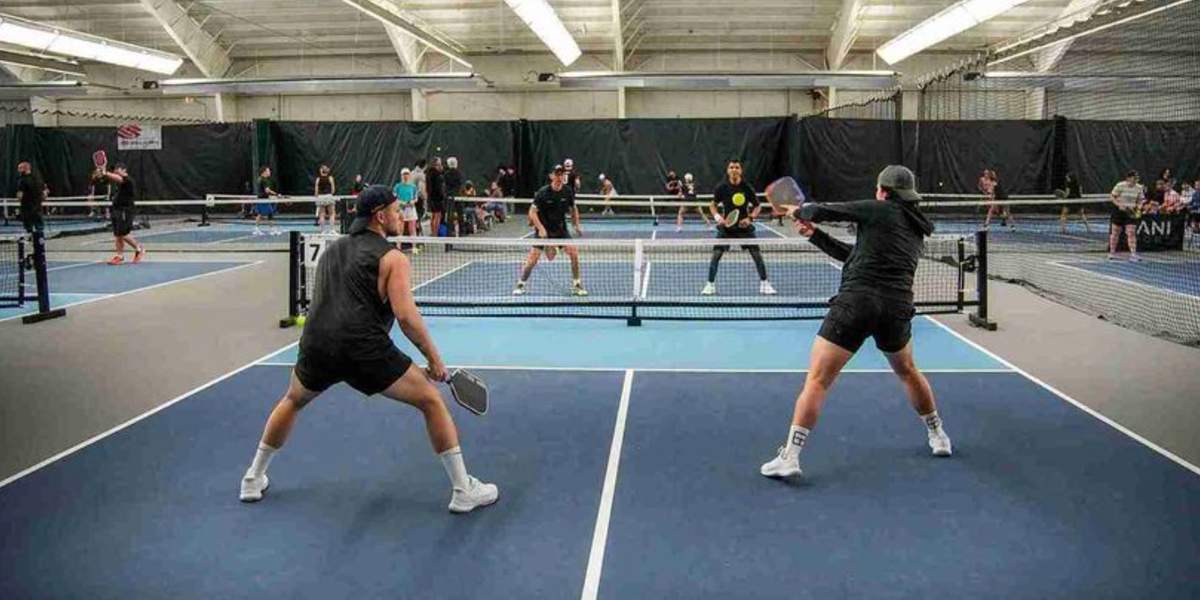
What Should You Look For When You Watch Back?
Don't just watch the video passively. Give yourself a specific focus for each review session.
Here is a simple framework for breaking down your footage:
- Watch only your feet for one full point sequence. Are you moving before or after the ball? Is your weight going forward or backward at contact?
- Watch only your position at the kitchen line. Are you actually at the line, or two steps back? Does your partner end up covering extra court because you're out of position?
- Watch your shot selection on high balls. Every time you get a ball above the net, note what you did. Did you attack, reset, or let it land when you should have taken it out of the air?
- Watch what happens right after you serve or return. Are you moving toward the kitchen immediately, or standing still and waiting?
One focused question per session beats trying to fix everything at once. Pick one and study it for ten minutes. You'll find more than you expect.
 The Dink Media Team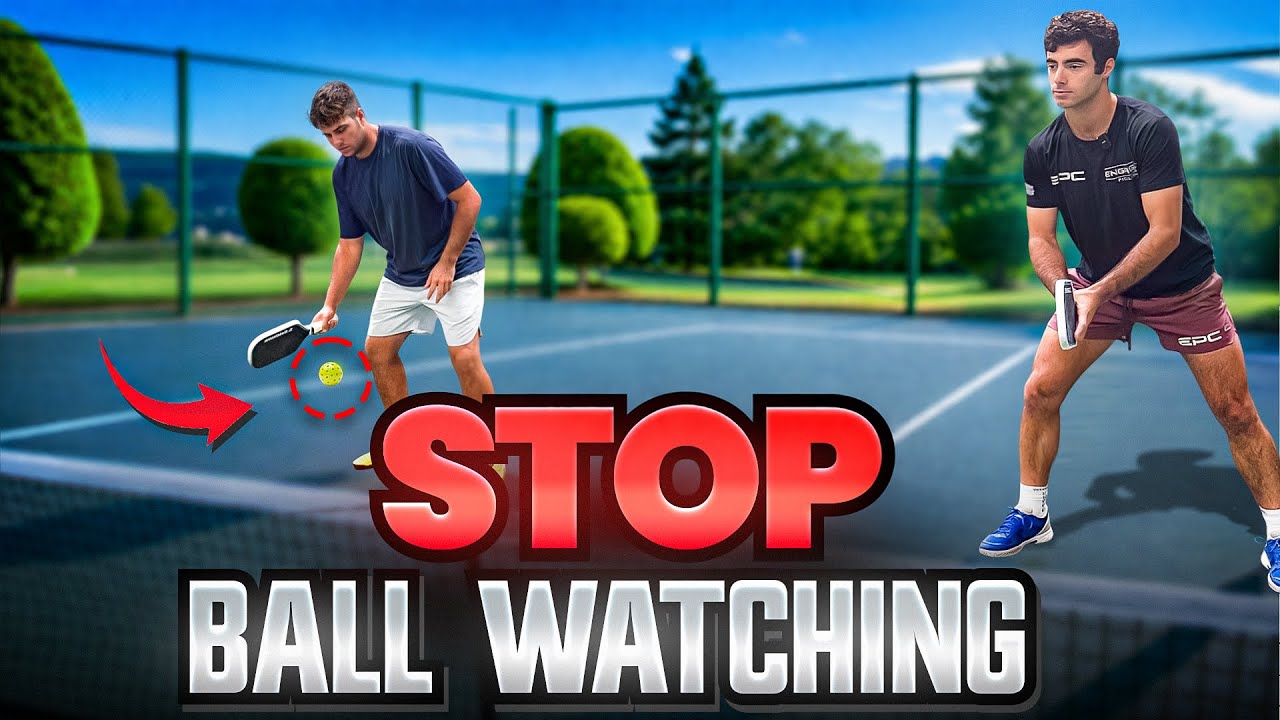
Why Is This So Hard to Do Without Video?
The honest answer is that your proprioception, your body's sense of where it is in space, is unreliable under pressure.
When you're in a hard rally, your brain is not storing detailed information about your elbow angle or your court position.
It's solving the immediate problem of returning the ball. That means your post-point memory of what happened is more of a reconstruction than a recording.
This is why even experienced players carry in-game pickleball mistakes they're making right now for years without knowing it.
The feedback loop is broken. You hit a bad shot, you vaguely feel something was off, and then the next point starts.
Video closes that loop. It hands you specific, repeatable evidence you can study at normal speed, slow motion, or frame by frame.
 The Dink Media Team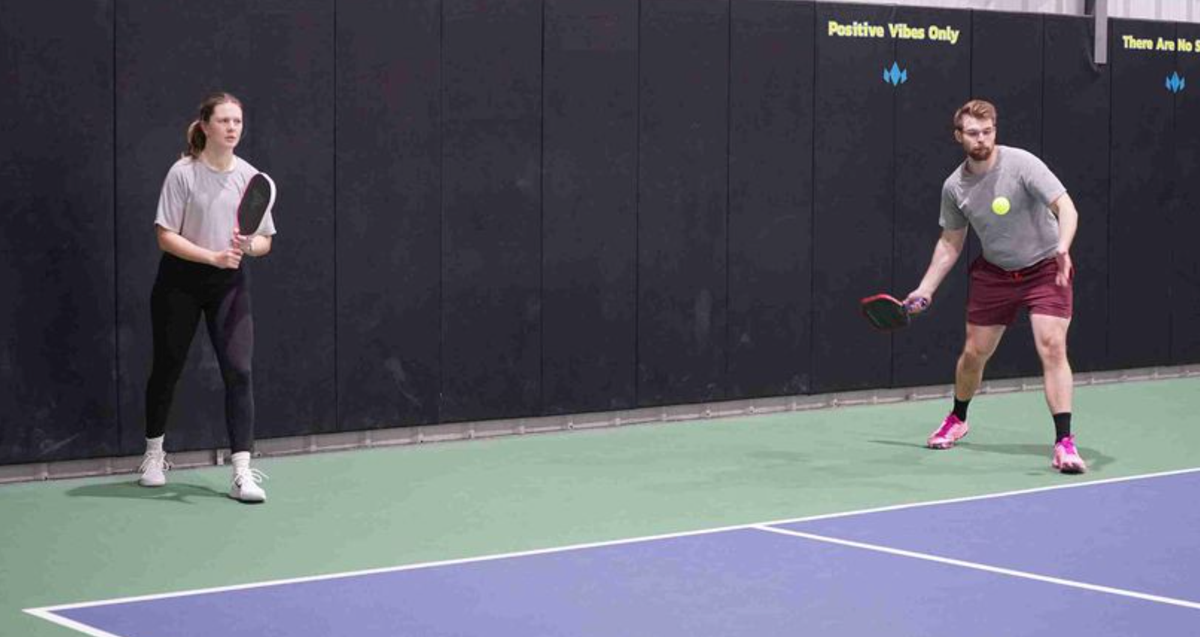
How Often Should You Record Yourself?
Record every time you play, at least for a month. You don't need to watch all of it back immediately.
Even watching fifteen minutes of footage after each session will shift your awareness significantly.
You'll start noticing on the court things you saw yourself doing wrong on video. That self-awareness accelerates improvement faster than additional drilling will.
If you want to track whether you're actually getting better, improving at pickleball in the right skill order matters.
Video helps you confirm you're working on the right thing at the right time, not just grinding at something that isn't your actual limiting factor.
 The Dink Media Team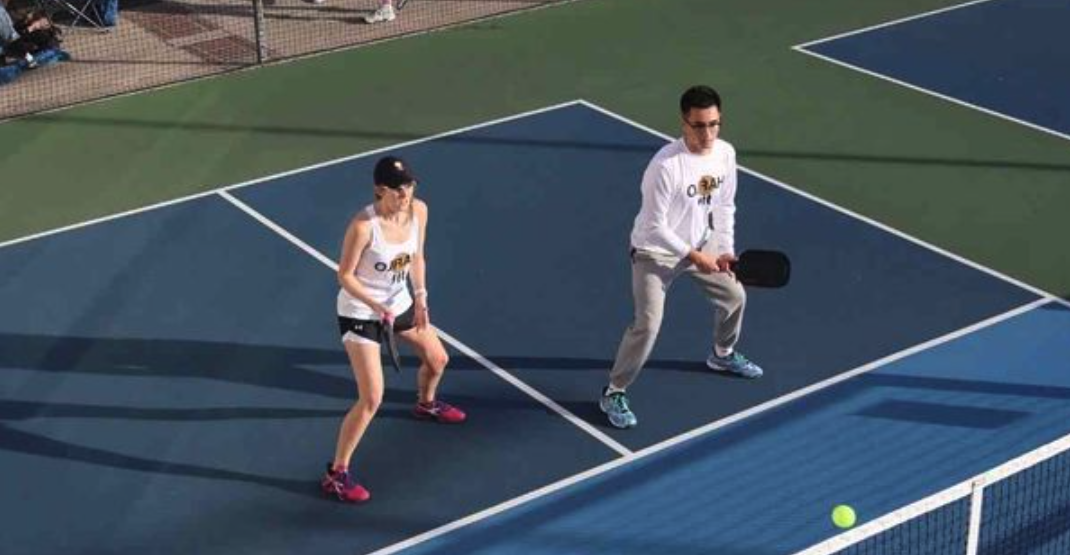
Is There a Right Way to Review Your Footage?
Yes. Watch without judging yourself for the first pass. Just observe.
The goal in the first watch is pattern recognition, not self-criticism. Note what you see without reacting to it.
"I'm consistently late arriving at the kitchen" is useful information. "I'm terrible at this" is noise that doesn't help you improve.
After that first neutral pass, pick one pattern to address in your next session.
If your footwork is the issue, go drill that specifically. If your reset is failing, work on that. The video tells you where to direct your effort.
This approach is exactly what separates players who improve quickly from players who plateau.
The ones who plateau are usually working hard at the wrong things because they don't have accurate feedback on what's actually costing them points.
 The Dink Media Team
What If Watching Yourself Is Genuinely Painful?
It will be. Almost everyone finds it uncomfortable the first few times.
That discomfort is valuable. It means your self-image and reality are misaligned, and now you can start fixing that gap.
Players who avoid watching themselves because it's uncomfortable are choosing comfort over improvement.
Treat the footage like data, not a performance review. You're not watching to evaluate your worth as a player.
You're watching to collect information that helps you build the kind of court awareness that separates 6.0 players from 4.0 players.
That awareness starts with seeing yourself accurately.
If you genuinely cannot watch your own footage without getting discouraged, try this: watch one point where you did something well first.
Get a reference point for what good looks like in your own game, then look for the breakdowns.
 The Dink Media Team
The Fastest Path to Fixing Real Problems
Drilling and playing are both necessary. But they only work well when you know what you're actually fixing.
Without footage, you're guessing. You're going off feel, off your opponent's reaction, off what your partner tells you after the point. All of that information is filtered and incomplete.
Video is objective. It doesn't tell you what it thinks happened. It shows you.
That's why filming yourself playing pickleball is the single most effective and most ignored improvement habit in recreational play.
Set up the camera before your next session. Watch it back that night. Do it again next session.
Within two weeks, you'll have better information about your game than you've collected in the past two years of drilling and playing without footage.
To get more out of every session you record, it also helps to understand why your pickleball drilling isn't working and how to structure practice more effectively around what the video reveals.
And if you find that your footage shows consistent problems with shot selection, start with the 1 to 10 scale for pickleball shot selection to build a clearer decision framework for every ball you face.
You cannot fix what you cannot see. So start seeing it.
Frequently Asked Questions
How do I film myself playing pickleball without a partner?
A phone on a tripod behind the baseline is all you need to get started. Position it wide enough to capture the full court, press record, and let it run. If you want automatic tracking, a gimbal device like the Insta360 Flow 2 Pro will follow your movement without any manual adjustment.
What angle should I use when filming pickleball matches?
Behind the baseline, centered on the court, gives you the best overall view of your movement, positioning, and shot selection. A slightly elevated position helps, but even a ground-level phone shot captures far more than playing with no footage at all.
How often should I watch my pickleball footage?
Watch at least fifteen minutes of footage after every session for the first month. You don't need to analyze everything, just pick one specific thing to focus on, like footwork or kitchen arrival, and study that pattern across multiple points.
What are the most common mistakes players see when they film themselves for the first time?
Late arrival at the kitchen line, no split step before the opponent contacts the ball, and forcing speed-ups from positions below the net are the three most common issues players spot immediately. Most players have no idea these things are happening because everything feels fast and reactive during play.
Can filming yourself replace working with a pickleball coach?
Filming yourself gives you raw data, but a coach helps you interpret it and prioritize what to fix first. The two work best together: the video shows you what's happening, and a coach explains why and how to address it. If you don't have regular access to coaching, footage at least ensures you're practicing with accurate information about your actual game.

Love Pickleball? Join 100k+ readers for free weekly tips, news & gear deals.
Subscribe to The Dink