Most players botch the backhand counter by using too much wrist and swinging too big. Here is exactly how to fix your punch and counter mechanics at the kitchen line.
The backhand counter in pickleball is one of the most misunderstood shots at the kitchen line.
Most players either swing too big, flip their wrist, or mix up three different shots into one awkward hybrid that does none of them well.
If you come from a ping pong or tennis background, this problem is even worse.
The instinct to roll the ball or flick your wrist feels natural, but it is actively working against you in fast hands exchanges.
This breakdown covers exactly what coach Cori Elliott worked through with student Sukumar in a real coaching session, fixing his backhand punch, his backhand counter, and his through counter from the ground up.
This is the exact backhand counter breakdown most intermediate players are missing.
Love pickleball? Then you'll love our free newsletter. We send the latest news, tips, and highlights for free each week.
The Real Problem: You Are Mixing Three Shots Into One
Here is the core issue Cori identified immediately with Sukumar. He was hybridizing a roll, a flick, and a backhand volley all at once.
That means he was using too much wrist, swinging too wide, and losing control of the paddle face at the point of contact.
The result is inconsistency, even when the mechanics feel like they should work.
The fix is not about adding more. It is about stripping back to the essentials and owning one clean movement at a time.
Backhand volley mechanics at the kitchen demand simplicity, not creativity.
Every fix from here forward is built to simplify your backhand counter, not complicate it further.
What Is the Difference Between a Punch and a Counter?
These two shots often get confused, but they serve different purposes in a fast hands exchange.
The punch is a compact, accelerated strike used when the ball is at or above the net tape, typically when you are being sped up at shoulder height or the chest.
It is short, fast, and meant to shock your opponent.
The counter, sometimes called the through counter, is used when you want to redirect pace back through the court. T
he paddle angle is slightly more parallel to the net, and the motion is an extension forward rather than a punch through.
Knowing which one to use comes down to ball height and position.
Handling hard shots in pickleball starts with reading the incoming ball and committing to the right response before it arrives.
This punch vs counter pickleball decision is exactly what separates intermediate players from advanced ones.
How to Fix the Through Counter
The through counter is where most players start going wrong. Here is what Cori taught Sukumar step by step.
- Start with your paddle parallel to the net with a slight tilt. You are not angling it down aggressively. Think of the face as a flat wall that will redirect the ball forward.
- Lock your wrist. Stop letting it rotate or break at contact. The wrist should stay firm through the entire swing.
- Extend through the ball, not around it. Your job is to push the paddle face forward, not manipulate it. The motion comes from your arm extending, not your wrist snapping.
- Use your non-paddle arm for balance. Extending the left arm slightly (for right-handed players) helps generate controlled power without overswinging.
- Wait for the ball to reach your paddle. Sukumar was extending early, which is extremely common. Let the ball come to you before initiating the motion.
- Drop the paddle head slightly. Tilting the head of the paddle down a little helps you get through the ball with better angle and control.
The goal is not to muscle the shot. You are using paddle face contact to generate pace, not wrist action or a big swing.
 The Dink Media Team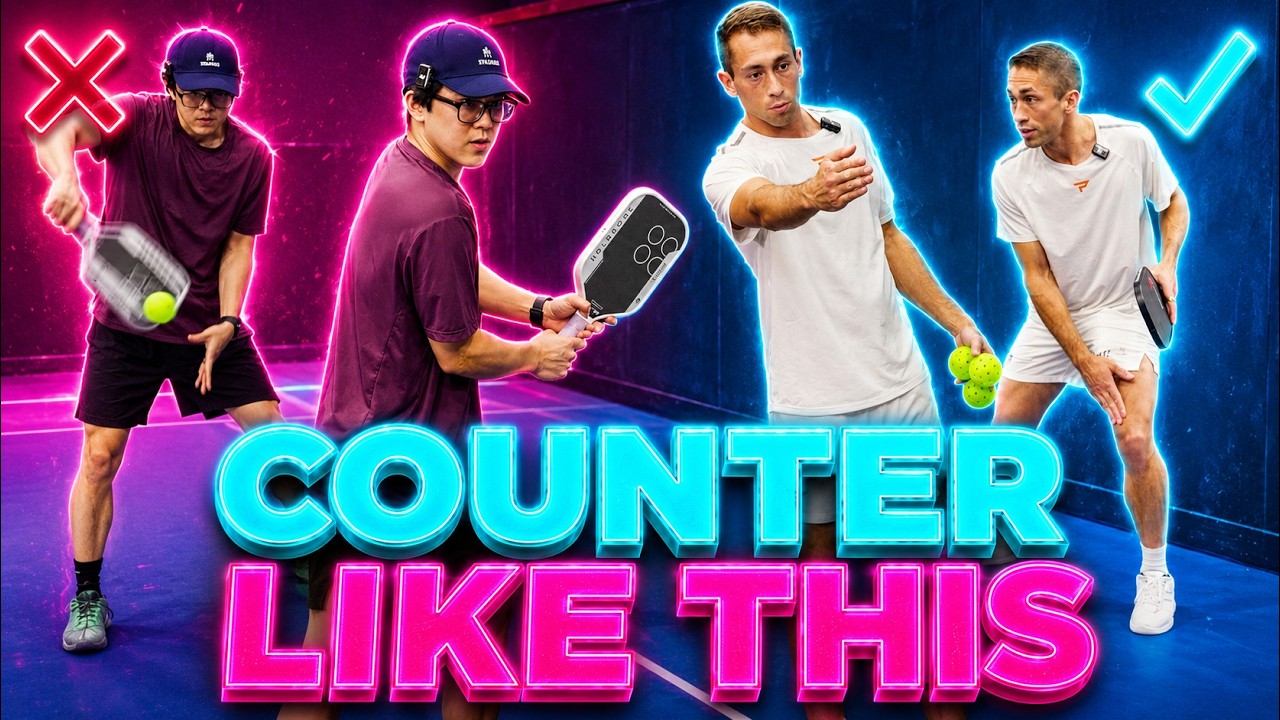
Why Is Your Timing Always Off?
Timing issues at the kitchen almost always come from one of two places: you are initiating the swing too early, or your body position is not ready to receive the ball.
Cori cued Sukumar to get on his toes and make sure his shoulders were over his knees.
That athletic ready position is what lets you react to fast balls without lunging or reaching.
If you are flat-footed or standing upright, your first move will always be late. Positioning mistakes at the kitchen cost you more points than poor technique does.
Being on your toes also lets you absorb pace and redirect it without needing a big swing. That compact response is exactly what fast hands exchanges demand.
 The Dink Media Team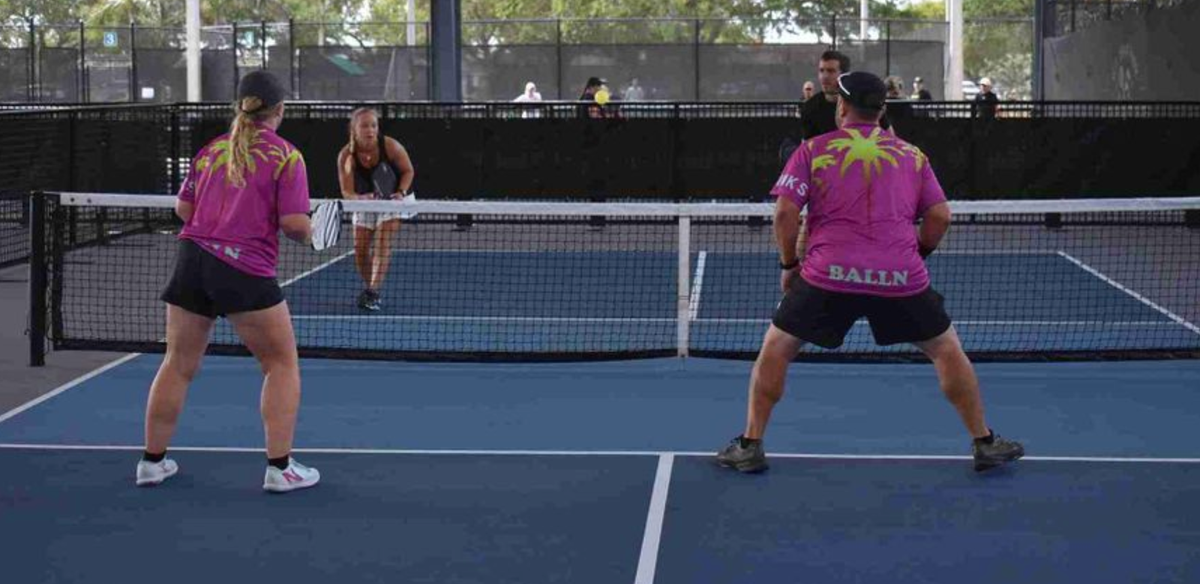
How to Hit the Punch Shot Correctly
The punch is a different animal. It needs to be fast, compact, and shocking to your opponent. A wide, looping swing gives everything away before it arrives.
Here is how Cori broke it down:
- Keep the swing extremely short. The acceleration window is small, from just behind the contact point to just past it. Think of it as a burst, not a swing.
- Stop the paddle face before it flips over. This was Sukumar's biggest mistake on the punch. The face was rolling through contact, killing the shot's effectiveness. There should be an imaginary wall that stops your paddle after contact.
- Drive from here to here. Cori physically showed the compact range of motion. The paddle comes forward and stops, it does not continue up or around.
- Match the swing to the ball's distance. Balls further back can tolerate a slightly wider swing. Balls close to you need that fast, tight punch. Do not treat all incoming speeds the same way.
This shot is especially useful when you are being sped up at the body, whether at the chest, stomach, or shoulder.
It redirects pace back at your opponent without giving them time to reset.
 The Dink Media Team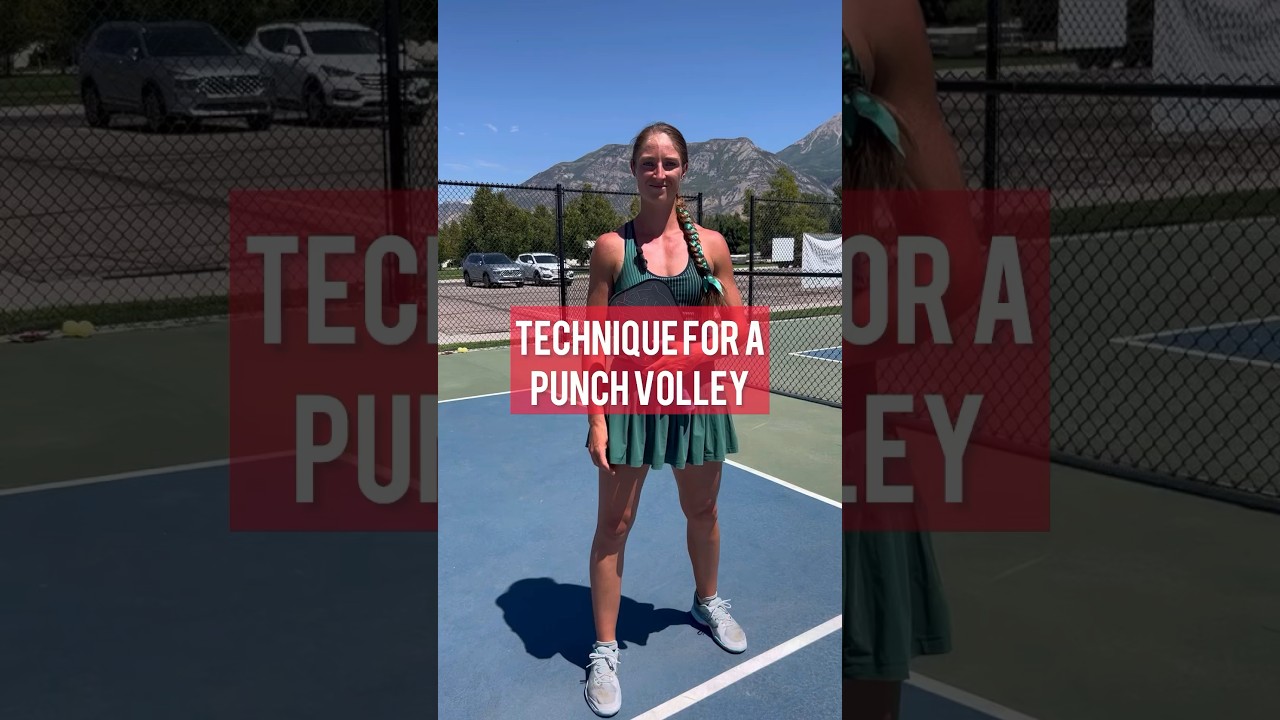
The Grip Change That Makes Both Shots Cleaner
Cori suggested a specific grip adjustment that made an immediate difference for Sukumar.
It is a continental grip with a slight finger spread, creating a small V-shape between the fingers.
This grip is better suited for fast hands exchanges because it keeps the paddle face stable through contact.
You are not fighting the natural angle of the paddle, you are working with it.
If you are using a grip that requires constant wrist adjustment to keep the face square, you will always be a half-second behind.
Grip and angle fixes are often the fastest path to better shot control.
 The Dink Media Team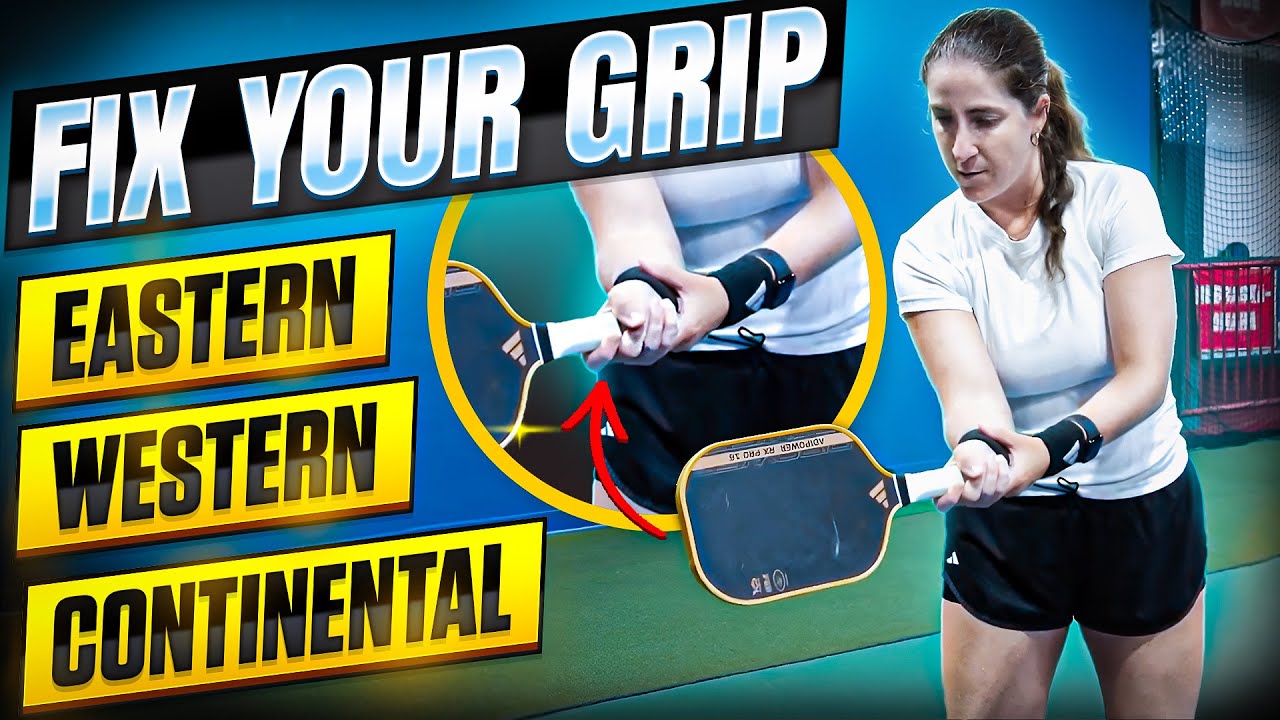
What Players From Racket Sport Backgrounds Get Wrong
If you played tennis or ping pong before pickleball, your instincts are actively working against you at the kitchen line.
In those sports, rolling the ball and using wrist is rewarded. In pickleball fast hands, it destroys your consistency.
The ball moves differently. The distances are shorter. The margins are tighter.
And the paddle does not flex the way a racket does, so wrist snap produces less predictable results.
Sukumar was caught in exactly this trap. He had solid athletic instincts but was applying them from the wrong sport.
Pickleball defense requires you to build new muscle memory, not borrow old patterns.
The good news is that once you strip out the wrist and simplify your swing, the transition is fast.
Your hand-eye coordination from other racket sports absolutely transfers. Your mechanics just need to be rebuilt for this game.
Building fast hands in pickleball is a structured process, not something that just happens with reps.
 Jason Flamm
Putting It Together: Punch vs Counter Decision Making
Knowing the mechanics is one thing. Knowing which shot to use in the moment is another. Here is a simple framework for deciding in real time.
- Ball at shoulder or above: Use the punch. Short, compact, and accelerated. Stop the paddle face before it flips.
- Ball coming through the court at body height: Use the through counter. Parallel paddle face, extend forward, no wrist manipulation.
- Ball at your feet: Neither the punch nor the counter is the right call. This is a reset situation, not a speed-up moment. Handling soft shots at your feet requires a completely different approach.
- Ball further back: A slightly wider swing on the punch or counter is acceptable here. But keep it controlled and compact as the ball gets closer to you.
The mistake most players make is using the same response for every incoming ball.
Reading the height and position of the ball before it arrives gives you a head start on choosing the right shot.
Your body position also plays a massive role. Tyra Black's kitchen line dominance is built on relentless preparation before the ball even arrives.
Get on your toes, stay over your knees, and commit to the shot before contact.
Once you stop trying to hybrid three shots together and pick one clean movement, everything gets sharper.
Stopping the pop-up at the kitchen is often a side effect of simplifying your swing, not working harder on it.
The session between Cori and Sukumar is a textbook example of what most intermediate players need: less complexity, not more.
Lock the wrist, shorten the swing, use the paddle face, and wait for the ball.
That is the whole formula. Speed-up fixes and counter mechanics live in the same place, which is controlled, compact simplicity.
Frequently Asked Questions
What is the difference between a punch and a counter in pickleball?
A punch is a short, accelerated strike used when the ball is at chest or shoulder height, designed to redirect pace back fast. A counter, or through counter, is used to extend through the ball and push it back through the court with a more parallel paddle face. The key difference is the ball height and the direction of your swing.
Why does my backhand counter keep popping up at the kitchen?
The most common cause is using too much wrist through contact, which causes the paddle face to open and send the ball upward. Locking your wrist and keeping the paddle face stable while extending forward will stop the pop-up. Your swing may also be too wide, which reduces your ability to control the face at contact.
What grip should I use for fast hands exchanges at the kitchen?
A continental grip with a slight finger spread, creating a small V-shape, gives you the most stable paddle face during fast exchanges. This grip keeps you from having to adjust the face mid-swing. It is the best starting point for both the punch and the through counter.
How do I stop using too much wrist on my backhand?
The fix is to consciously lock your wrist before contact and keep it locked through the swing. Think of your arm and paddle as one unit extending forward, not a whipping motion. Shortening your overall swing also reduces the opportunity for wrist rotation to sneak in.
When should I punch vs reset at the kitchen?
Punch when the ball is at body height or above and you have a good position to redirect it with pace. Reset when the ball is at your feet or below the net tape, where trying to counter will almost always produce a pop-up. Reading ball height before swinging is the fastest way to make better decisions in real time.

Love Pickleball? Join 100k+ readers for free weekly tips, news & gear deals.
Subscribe to The Dink