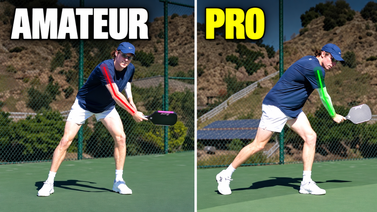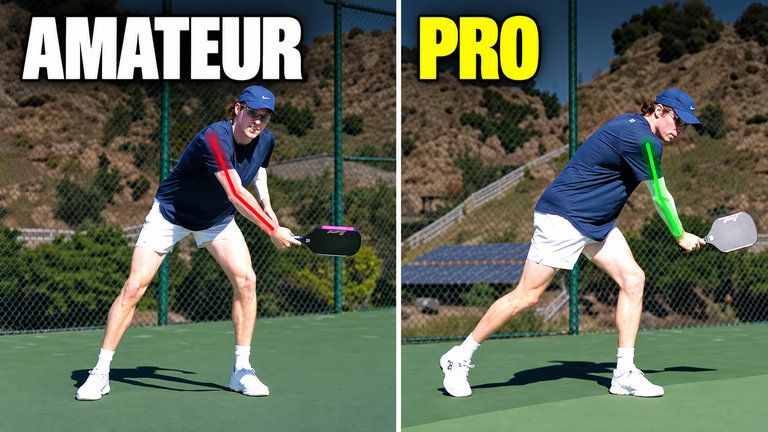

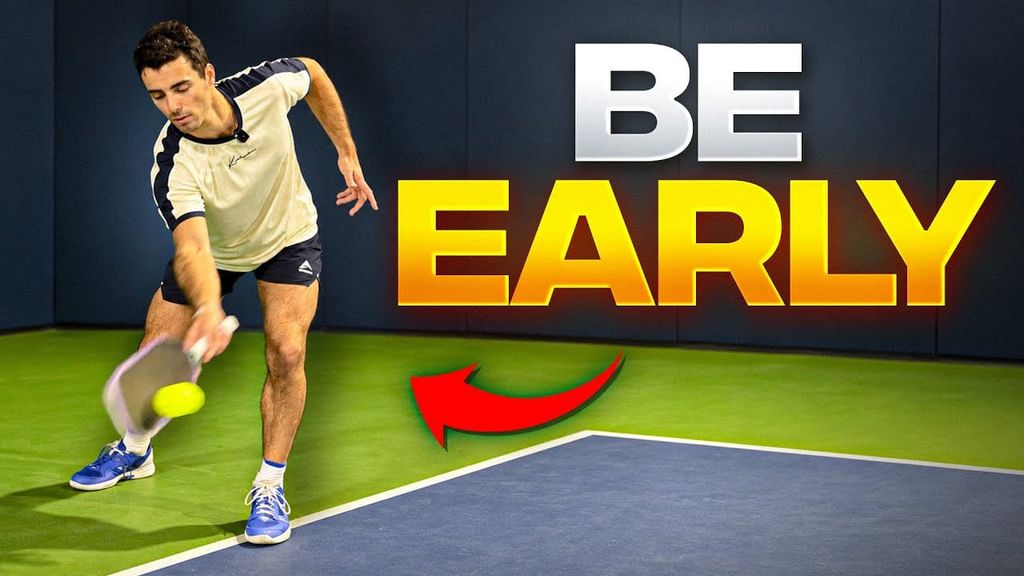
If your third shot drop keeps floating up and getting attacked, the problem is your contact point. Fix where you're meeting the ball and your opponents stop getting easy put-aways.
Your third shot drop is supposed to be a neutralizer. Instead, it keeps floating up and your opponents are crushing overheads while you scramble.
The problem is almost never your swing speed or your grip. It is where you are making contact with the ball.
Get that wrong and the shot will pop up no matter what else you do right.
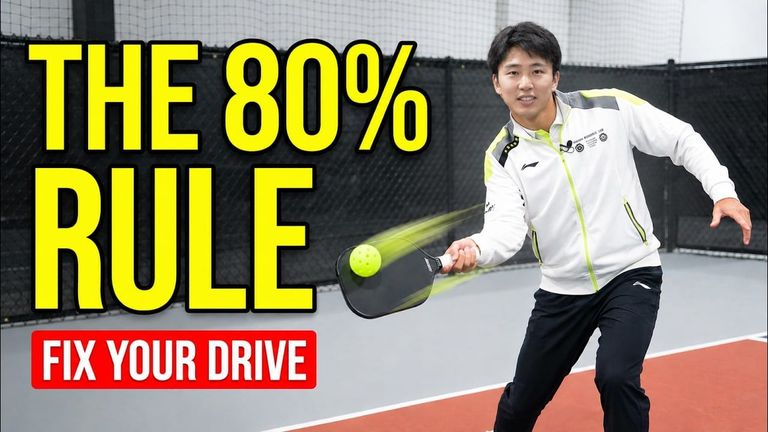
This breakdown comes from Richard Pickleball on YouTube, who walks through exactly why recreational players keep giving opponents easy attacks and what to change so your misses stop costing you points.
Love pickleball? Then you'll love our free newsletter. We send the latest news, tips, and highlights for free each week.
The Real Reason Your Drop Keeps Getting Attacked
Most players think a popped-up drop is a timing problem or a swing speed problem. It is not. It is a contact point problem.
When you let the ball get beside you or behind you, the paddle face opens automatically. An open face sends the ball up.
A ball that goes up gives your opponent a chest-high or shoulder-high ball they can put away at will.
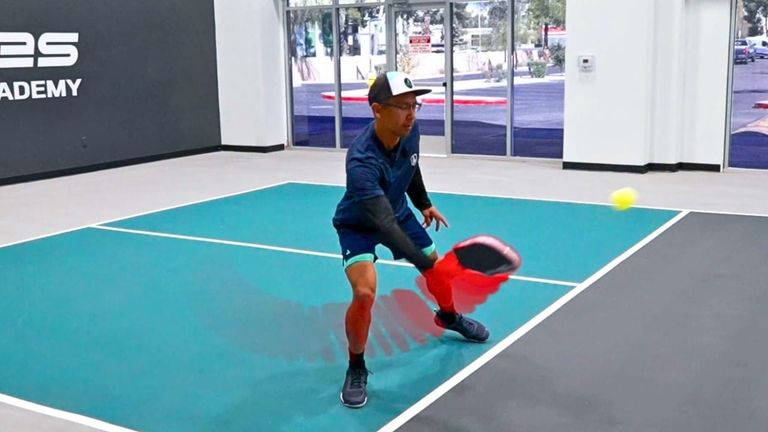
The fix is simple in concept but takes real focus to build: contact the ball in front of your body.
When the ball is out in front, you can keep the paddle face closed, drive through the shot, and produce a low, linear ball that gives your opponents nothing to attack.
This is what separates players who struggle to transition from players who can drop comfortably under pressure. It is not talent. It is contact point discipline.
What Does "Linear" Actually Mean for a Drop?
A linear drop is one that travels forward and low rather than arching high.
Think of it as a ball that hugs the net and lands deep rather than one that loops up and lands short. Linear drops do two things for you.
- First, they prevent overheads because the ball never gets high enough to punish.
- Second, even a bad linear drop gives your opponent a waist-high ball instead of a chest-high one, which means you get another chance to reset instead of digging out a put-away attempt.
This is the mindset shift worth making. Stop trying to land every drop perfectly in the kitchen. Start trying to miss deep and low instead of short and high.
A deep miss is recoverable. A high miss is not.
For a closer look at how this plays out shot by shot, this breakdown on why your third shot drop pops up covers the mechanics in full detail.
How Do You Actually Keep the Ball Low?
There are three components that work together to produce a low, linear drop. All three require you to be in front of the ball at contact.
- Contact in front of your body. The earlier you take the ball, the more closed your paddle face can stay. A closed face means the ball goes forward, not up.
- Follow through forward, not up. The direction your paddle travels after contact heavily influences where the ball goes. Most recreational players swing upward, which opens the face mid-swing and sends the ball skyward. Drive your paddle forward through the shot first. Then let the natural follow-through carry your hand up.
- Choose your drop style and commit to it. There are three types of drops that can all produce a linear ball. A push drop, a slice drop, and a roll drop. Pick one as your primary and build consistency before adding the others.
The push drop is the most beginner-friendly. You are simply extending your paddle forward and pushing through the ball with a controlled, medium-paced stroke.
It requires the least spin knowledge and is the easiest to repeat under pressure.
For more on why the push drop is worth mastering first, this article on the most consistent drop shot is worth reading.
 The Dink Media Team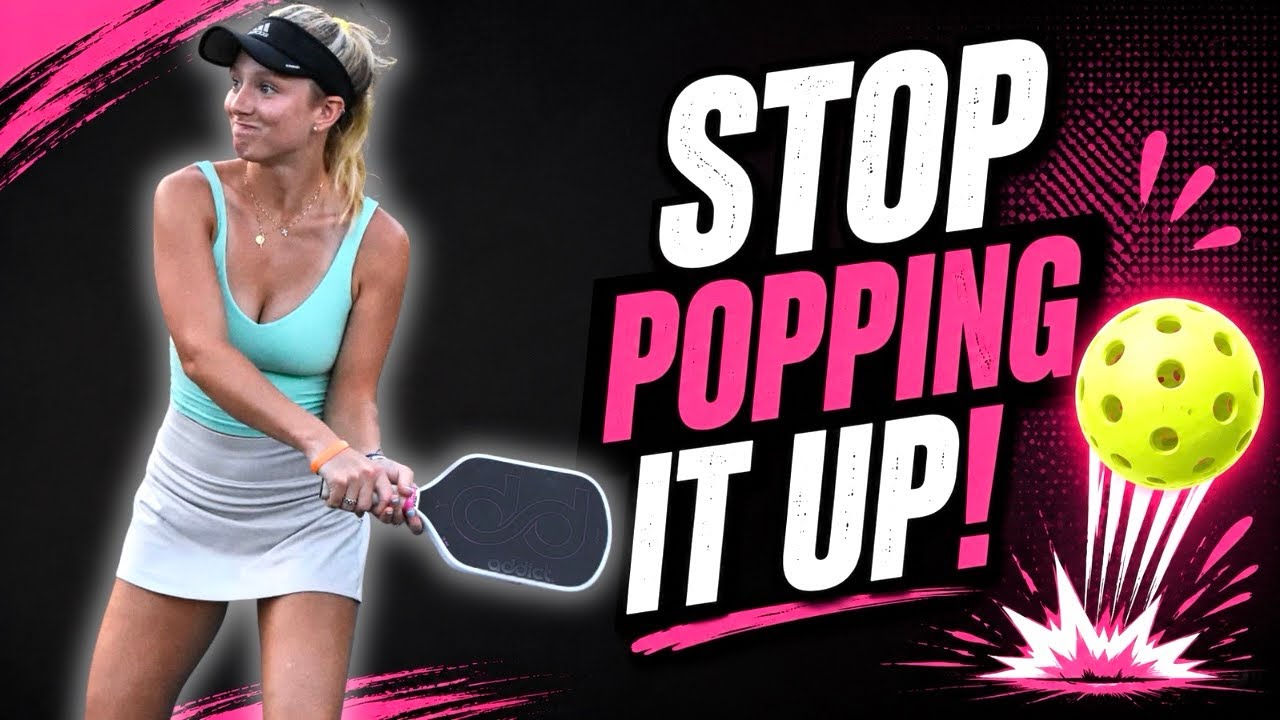
What About the Slice and the Roll?
The slice drop allows a slightly more open paddle face, but you still have to follow through forward. The slice is not a chop.
Players who chop at the ball lose all forward momentum and end up with a ball that either floats or dumps into the net.
Watch how Andre Daescu hits his forehand third. He drives through the ball like he is shoveling it forward.
The paddle goes through the contact zone aggressively, and the ball stays incredibly low as a result. That is what forward follow-through looks like at the professional level.
The roll drop gives you more topspin, which can help the ball dip into the kitchen faster. But the same rule applies.
The roll has to happen in front of your body or the paddle face opens and the ball goes high.
No matter which style you use, the contact point stays the same. In front, with a paddle face that is slightly closed, driving forward through the ball.
 The Dink Media Team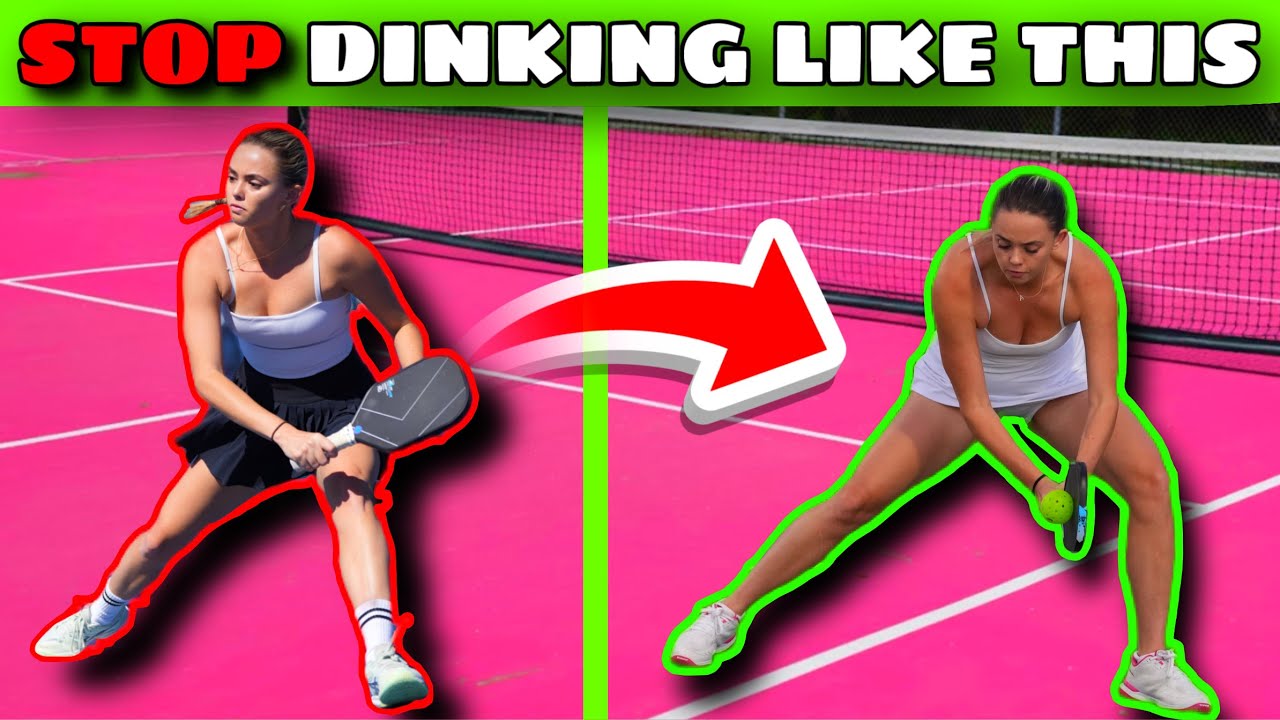
Does Court Position Change How You Drop?
Yes, and this is a detail most players completely ignore. Where you are on the court affects how much height you need on the drop.
From the middle of the court, you have less distance to work with.
The ball has to get up and down faster, so you add just a touch more height to your follow-through. Not a lot.
A small adjustment that lets the ball arc down before it reaches your opponents.
From the wide side of the court, you have more space.
That means you can keep the ball even lower over the net and follow through even more linearly. Use that extra space.
Drive the ball flat and low and let the distance do the work of getting it to land where you need it.
Being smart about this also affects your ability to follow the ball in. A linear drop on the wide side lets you move toward the kitchen line while the ball travels.
A high drop on the wide side pins you back while your opponent sets up to attack.
For more on moving well through the transition zone, this piece is directly relevant.
 Eric Roddy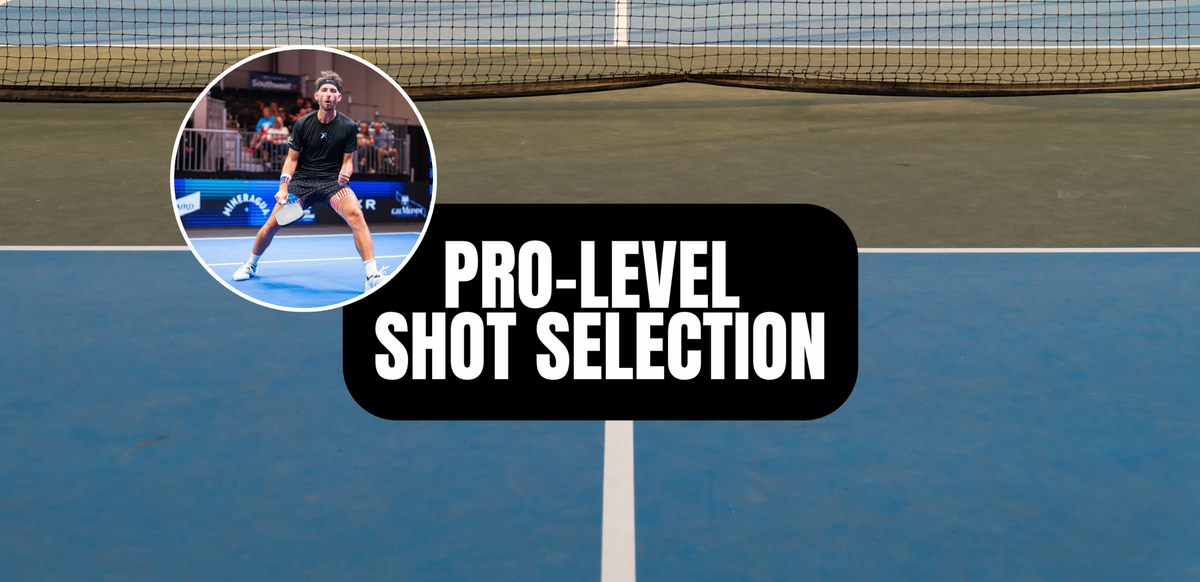
Why Are You Actually Late to the Ball?
Being late on your contact point is almost always a preparation issue, not a reaction issue.
Players wait too long to set their paddle and then rush the swing, which forces contact beside or behind the body.
The fix is to get your paddle ready early. As soon as your opponent strikes the ball, your paddle should already be moving into position.
You want to be set and waiting for the ball, not chasing it. Here is a short checklist for preparation before the drop:
- Paddle up and in front before the ball bounces
- Feet set or already stepping into the shot
- Eyes tracking the ball from your opponent's paddle, not the net
- Weight moving forward through contact, not backward
- Swing initiated early so the ball is met out in front
This kind of early preparation is what lets players like Ben Johns look unhurried on every shot. They are not faster than you. They are earlier.
Poor footwork is one of the most common reasons the third shot drop fails, and it all ties back to being late to the contact point.
 The Dink Media Team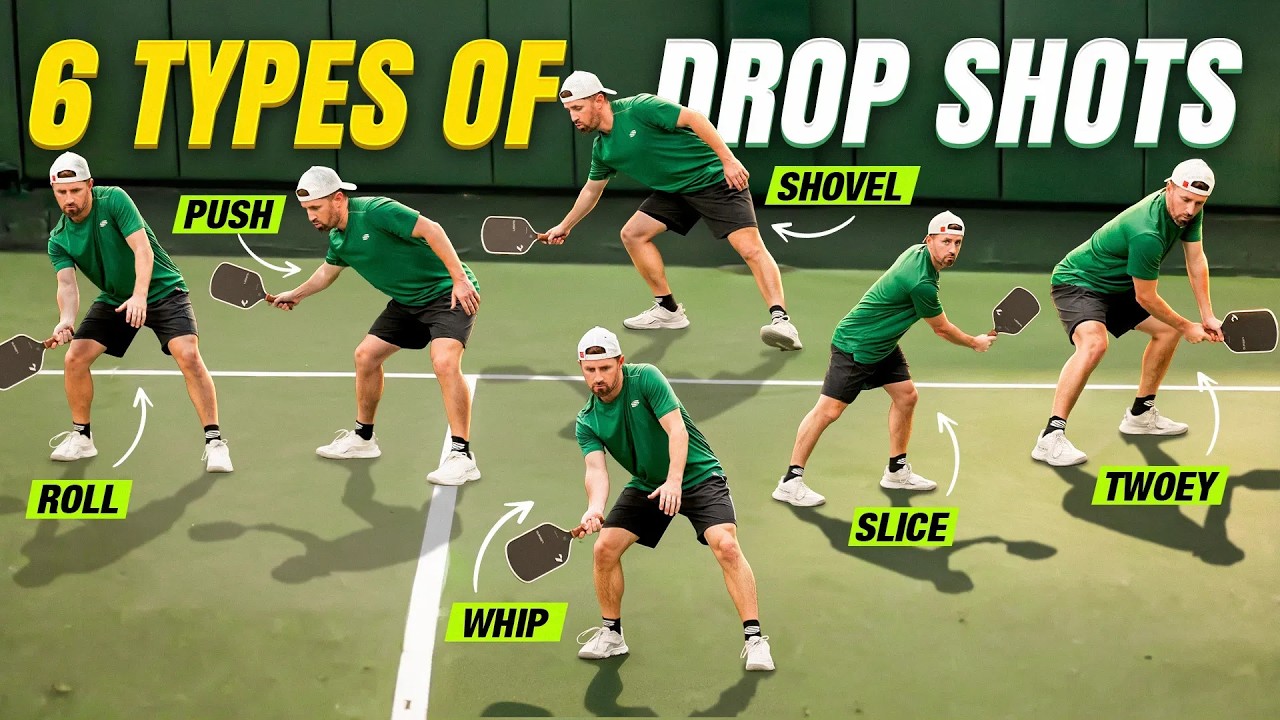
What Happens When You Miss the Right Way?
This is the part of the concept most players have never considered.
A good miss is a miss that lands deep and low. Your opponent can take it out of the air, but they are taking it at their waist, not their chest or shoulder.
- A waist-high ball, even when attacked, produces a manageable reset.
- A chest-high ball produces a shot you might not get a paddle on. So missing deep and low is not failure.
It is a strategic miss that keeps you in the point.
This is why chasing perfection on every drop is the wrong mindset. Mastering the reset after a bad drop is part of the same skill set.
- If your misses give your opponent a hip-high ball, you have a fighting chance.
- If your misses give them a shoulder-high ball, you are just surviving until the overhead lands.
 The Dink Media Team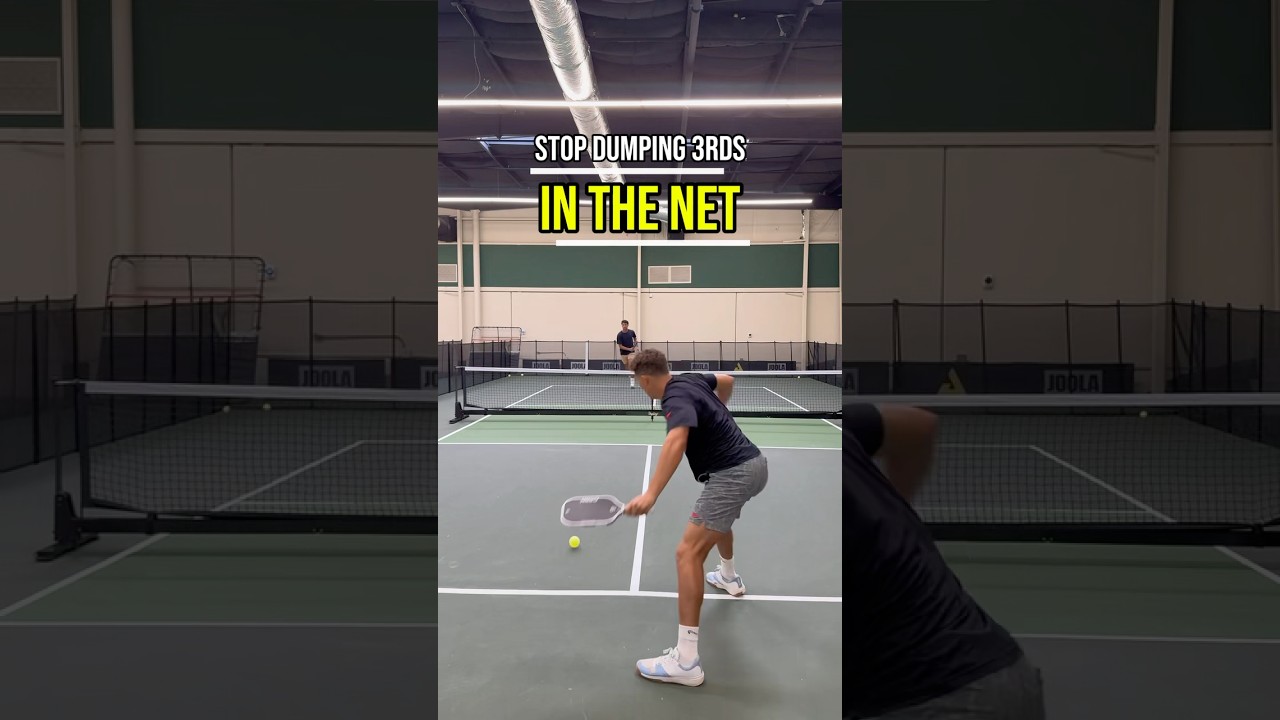
Three Drop Styles, One Contact Rule
To bring it all together, here is how each drop style applies the same fundamental rule:
- Push drop: Medium pace, paddle face slightly closed, extend forward through contact. This is the most repeatable option and the best starting point for any player struggling with pop-ups.
- Slice drop: Slightly more open face than the push, but still driving forward. The slice creates underspin that causes the ball to stay low after the bounce. Do not chop. Follow through forward.
- Roll drop: Topspin applied by brushing up the back of the ball, but still in front of the body. The topspin pulls the ball down into the kitchen faster, which is useful when you have less time to spare.
All three work. All three require the same contact discipline. In front, closed face, forward follow-through.
Stopping the chop habit is the single most important mechanical fix if you want all three to work consistently.
If you want to see how this connects to the rest of your transition game, this article on getting to the kitchen faster after your drop covers the movement side of the equation.
And if your drop has been inconsistent for a while, these placement tips for third shot drives will help you think about when to drop versus when to drive instead.
The ball contact rule does not change based on score, opponent, or pressure.
Get in front early, drive forward, and let your opponents deal with low balls instead of high ones.
That one adjustment will do more for your transition game than any grip change or swing speed tweak ever will.
For players working through the 3.5 to 4.0 transition specifically, these four fixes address exactly where the drop fits into the bigger picture of your development.
Frequently Asked Questions
Why does my third shot drop keep going into the net?
A drop that goes into the net is usually caused by closing the paddle face too much or making contact too far in front with too little forward drive. Focus on a medium-paced forward push rather than trying to flip the wrist at contact. If you are consistently netting it, try adding just a touch more height to your follow-through without changing the contact point.
What is the difference between a push drop and a roll drop?
A push drop uses a relatively flat paddle face and drives straight through the ball with minimal spin. A roll drop adds topspin by brushing up the back of the ball at contact, which causes the ball to dip down faster after clearing the net. The push drop is more consistent for beginners while the roll drop gives you more margin when you need the ball to drop quickly.
How do I stop popping up my third shot drop under pressure?
Pop-ups under pressure almost always trace back to being late to the contact point. Get your paddle ready before the ball bounces on your side of the court and step into the shot rather than swinging from a static position. Early preparation gives you time to be in front of the ball, which naturally closes the paddle face and keeps the shot low.
Should I always use a third shot drop or sometimes drive instead?
The drop is the safer option when you are out of position or when your opponent is already at the kitchen line. The drive makes more sense when your opponents are back or when you have a high, attackable ball. Combining the drive with a fifth shot drop is one of the most effective patterns at the 4.0 level and above.
Does the backhand third shot drop use the same mechanics?
Yes. The same contact point rule applies on the backhand. You need to get the paddle in front of your body before initiating the swing so the face stays closed through contact.
Many players actually find the backhand drop easier to keep linear because the natural backhand motion already drives more forward than the forehand tends to.

Love Pickleball? Join 100k+ readers for free weekly tips, news & gear deals.
Subscribe to The Dink