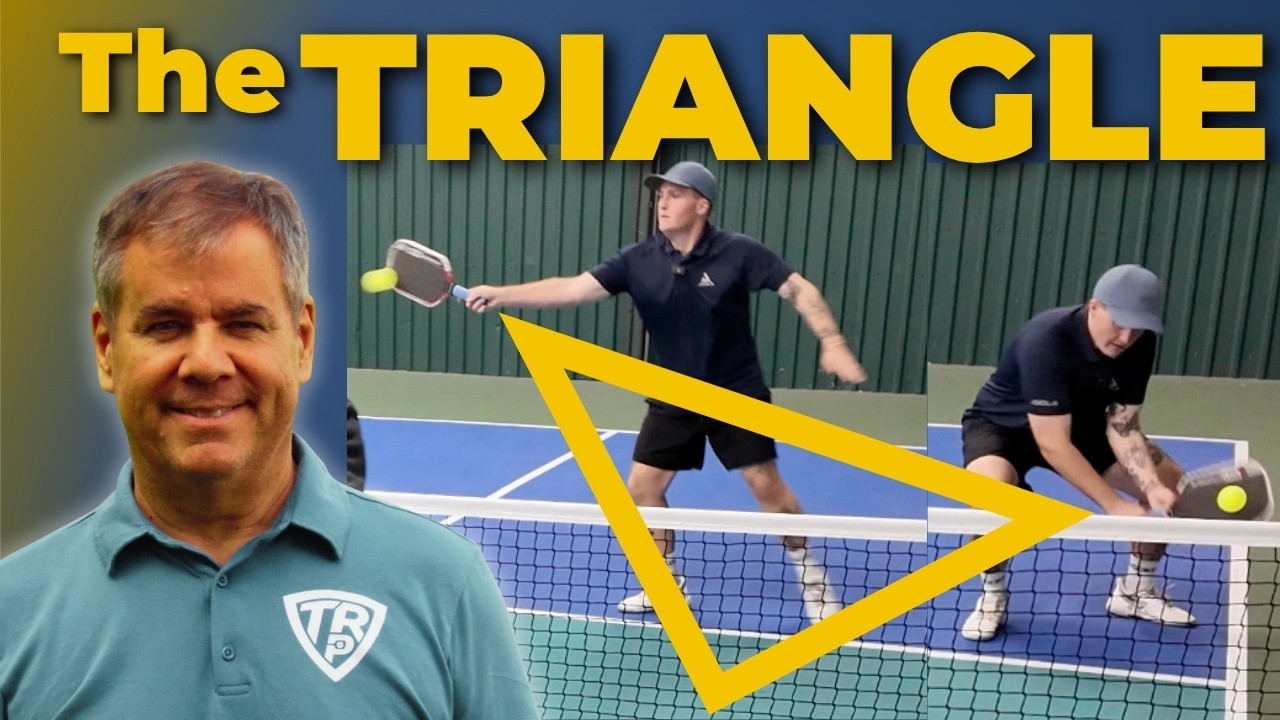
The Pickleball Triangle Attack Explained: Is It Right for Your Game?
The pickleball triangle attack is a pro-level offensive pattern that turns one speed-up into a setup and a put-away. Here is exactly who should use it and how to practice it the right way.
The pickleball triangle attack is one of those shots you see pros execute and wonder how they always seem to be in the right place for the second ball.
It looks like instinct. It's actually geometry.
This breakdown comes from Tony Roig Pickleball (formerly In2Pickle) on YouTube, filmed alongside Tampa-area coach and high-level player Sammy McNair, who brought the triangle concept to the session specifically because it rarely gets taught in detail.
Love pickleball? Then you'll love our free newsletter. We send the latest news, tips, and highlights for free each week.
What Is the Pickleball Triangle Attack?
The pickleball triangle attack is a two-shot offensive sequence where you initiate a speed-up in one direction and immediately prepare for the return ball to come back from the opposite side.
It is not a single shot. It is a pattern.
The name comes from the shape the ball traces: you attack cross-court or down the line, the opponent redirects it back, and the two ball paths form the two sides of a triangle with the net as the base.
Ben Johns is widely credited as the originator and best executor of this pattern in professional pickleball, and he is still the standard every attacker in the men's doubles field gets measured against.
When you watch him attack, he never resets to neutral after the first ball.
He follows his own follow-through and sits on the next shot before it even arrives. That anticipation is the entire point.
How Does the Triangle Pattern Actually Work?
Think of the wall in front of your opponent as a mirror. When you hit a ball into a mirror, it reflects back at the same angle from the opposite direction.
- If you speed up cross-court from your backhand to the right side, that ball is most likely coming back to your left.
- If you speed up down the line, expect it to return straight back at you.
Here is the core mechanic broken down:
- Attack cross-court (left to right): Follow through naturally to your right side. Your paddle and body will point where the ball is coming. Step and open your stance to the left to be ready for the next ball.
- Attack down the line: Follow through straight. The ball is likely coming straight back. Stay square and prepare for a central response.
- Attack right to left: Follow through left. The return is coming to your right side. Bring the paddle across and load up the forehand.
Your paddle follow-through is your signal. Wherever it ends up after your attack, that is where the next ball will most likely arrive.
This is not guessing. It is reading percentages and using your own shot information against your opponent, which is the same principle behind every modern winning strategy at the kitchen line.
Who Should Actually Be Using This Shot?
Here is where most coaches skip an important step: the triangle only works if you have already earned the right to attack in the first place.
Sammy McNair is direct about this. You need three things before the triangle becomes useful to you:
- Consistent kitchen arrival: Reliable third shot drops, solid resets, and enough transition zone skill to get to the non-volley zone regularly. If you are not getting there, the triangle is irrelevant.
- Consistent dinking: You have to be able to work a rally at the kitchen and create opportunities rather than forcing attacks. Forced attacks put you in bad positions for the second ball.
- The ability to identify attackable balls: A high ball out of the air (at or above net level where you are hitting across the ball, not up on it) or a high shallow ball off the bounce. Those are the triggers.
Tony's honest take: if you are not maximizing your serve-side game yet, wait on the triangle.
The general threshold is 4.0 and above, with 4.5 plus being the sweet spot where this starts paying real dividends.
For players still building fundamentals, the five shots you need to break 5.0 matter far more than a pro-level attack pattern.
Start with the essential shots to master instead.
 The Dink Media Team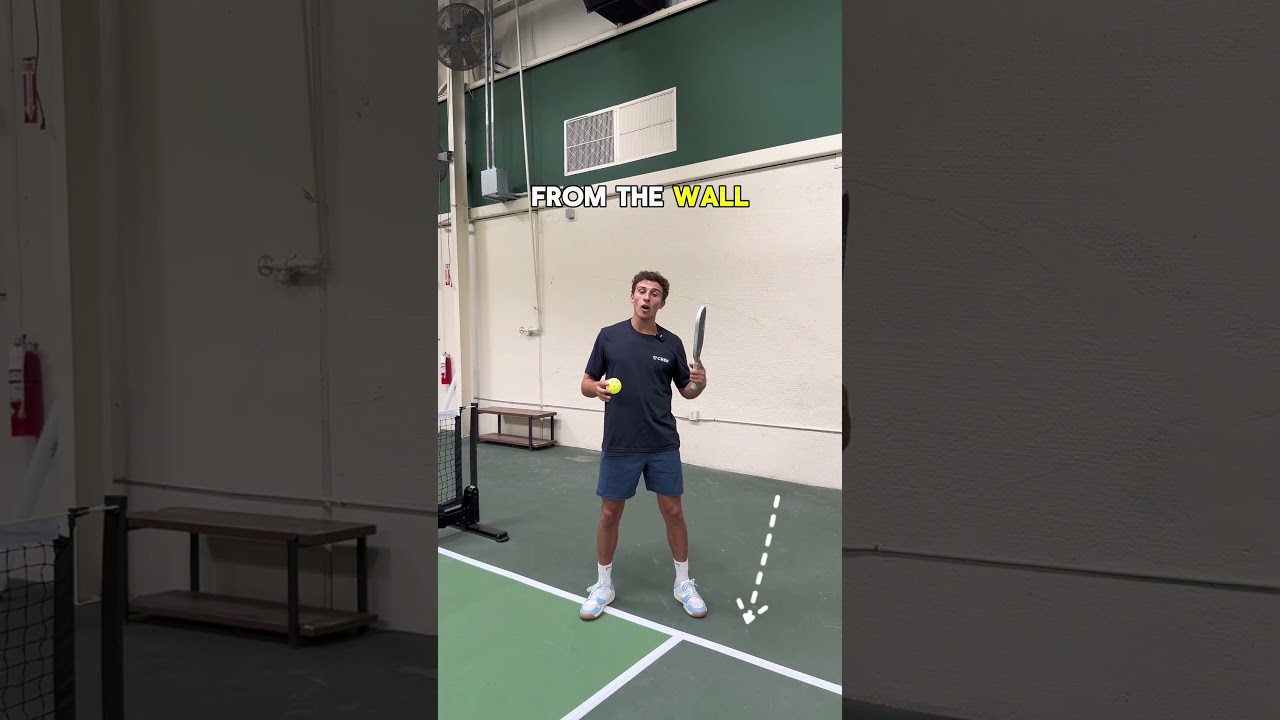
Why Does the First Attack Have to Be Earned?
This is the part most players get wrong. They see the triangle and think it is about being aggressive early.
It is not. It is about working the point until the right ball shows up.
Anna Bright said it well: the person who attacks first has the most information.
They know where they are sending the ball, and they know where the return is most likely to come.
That information advantage disappears the moment you force an attack from a bad position.
The ball is not in the right place, your body is not ready, and the follow-through tells you nothing useful about where to expect the next shot.
Wear down your opponent first. Work the rally at the kitchen, move them around, and wait for the ball that sits up. Then snap the triangle in.
Learning how to hit a speed up in pickleball off the bounce is directly connected to this idea, and a simple four-step system will get you the patient rally construction the triangle depends on.
 The Dink Media Team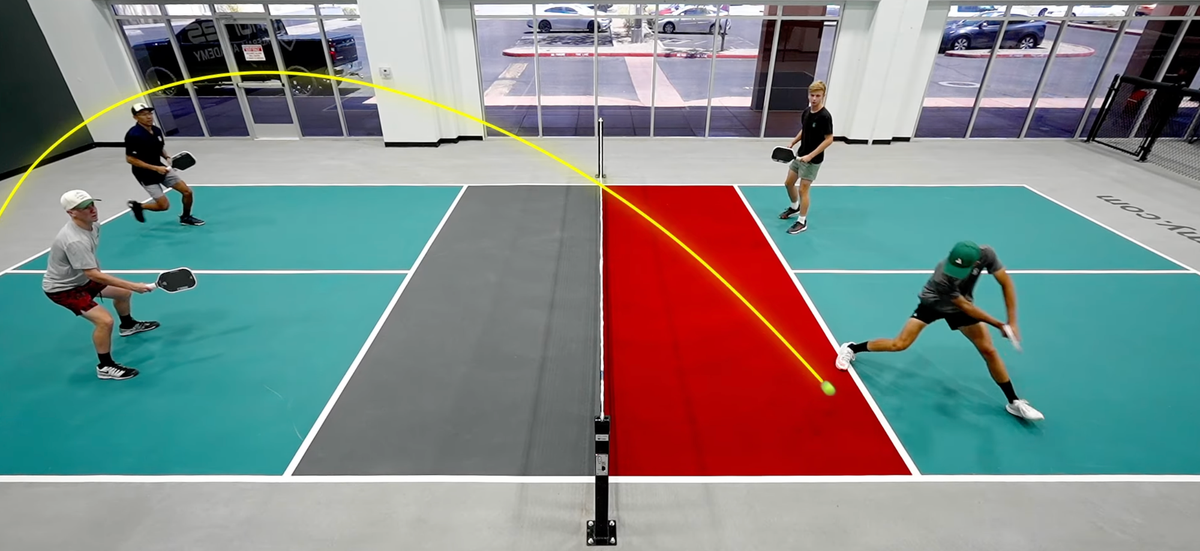
What Does a Triangle Sequence Look Like in a Real Match?
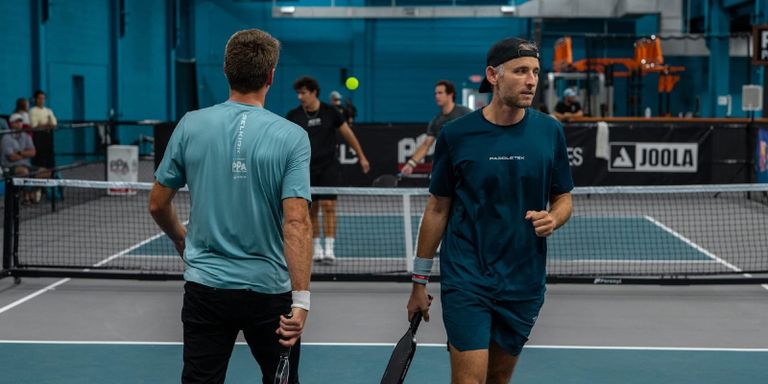
Tony reviewed the PPA Nationals quarterfinal between CJ Klinger, Will Howells, Ben Johns, and Gabe Tardio, and counted only a handful of true triangle sequences across three full games.
Even at the very top of the pro game, this is a situational weapon, not a constant strategy.
Most of the triangles in that match were actually between two players: one initiates cross-court, the other redirects it, and the first player closes with the put-away.
It is the same shift in shot selection driving why pros abandoned the slice in favor of higher-percentage patterns.
Knowing the pattern is valuable even if you are on the receiving end. If you play with a partner who loves to attack cross-court, that ball is coming to you.
Being ready for it before it arrives is the same principle working in your favor as the non-attacking player.
 Eric Roddy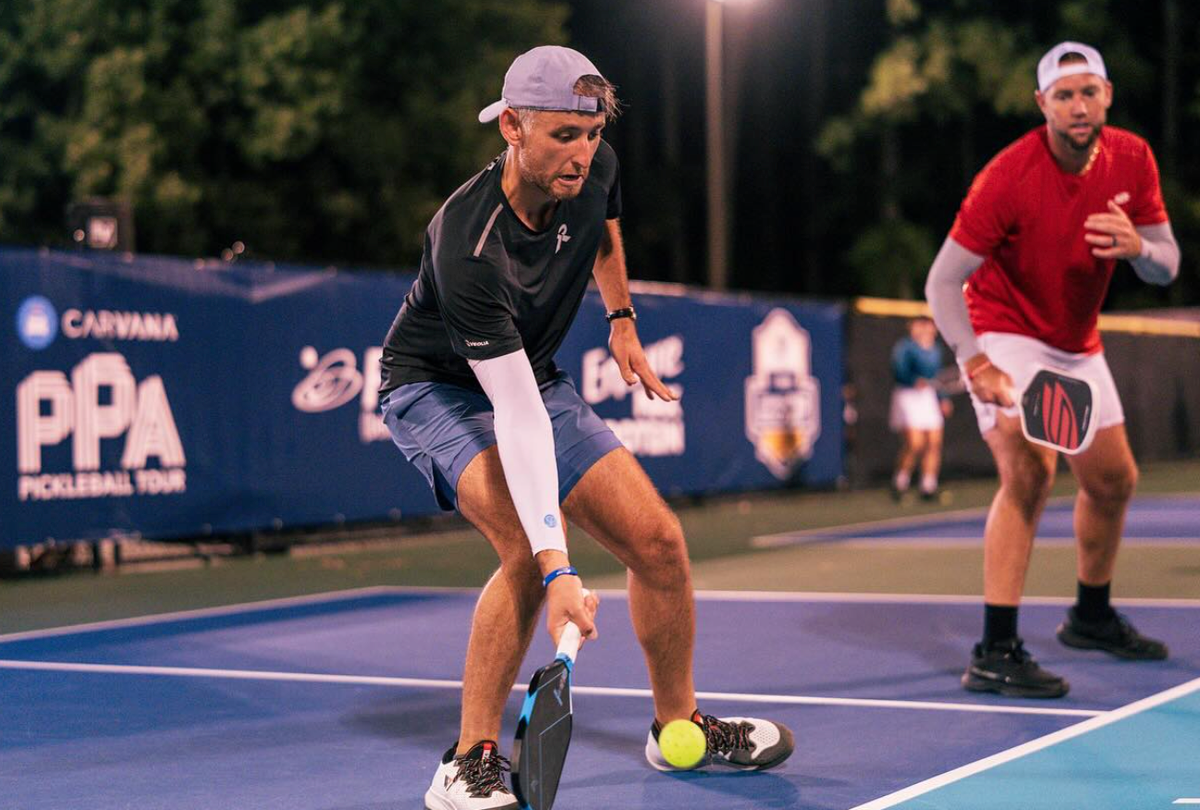
How Do You Practice the Triangle?
You do not need a court partner to start building this pattern. Here are two effective approaches:
Partner drill:
- Rally at the kitchen together and work the point naturally.
- When you see a high ball, initiate the speed-up in one direction.
- As soon as you hit it, continue your follow-through and move to position for the return.
- Your partner feeds you back based on where the ball realistically should go.
- Close out the point with the second shot.
Wall drill:
- Stand at kitchen distance from a wall.
- Speed up to the right side of the wall: your backhand return will come back to your left. Get ready there.
- Speed up to the left side: prepare on your right.
- Speed up straight at the wall: prepare for the ball to come straight back at you.
The wall is the mirror. It teaches you the same angles you will face in a real rally. There is a dedicated wall drill for the triangle pattern that builds this exact habit.
You can also supplement with general wall practice drills that sharpen your reaction to redirected pace.
The key mistake to avoid in drilling: after you hit the first ball, do not bring your paddle back to neutral.
Watch what Ben Johns does. He follows through, sits on the next ball, and closes. Going back to neutral is how you get caught late on that second shot.
If you want to sharpen the offensive mechanics that make the triangle work, these attack combo patterns are a strong complement to what you are learning here.
 The Dink Media Team
The Bigger Picture: Where the Triangle Fits in Your Game
The triangle is a finishing pattern, not an opening strategy. It belongs near the end of your development process, not the beginning.
If you are a 4.0 player, the triangle is worth understanding and starting to feel out in casual play.
If you are a 4.5 plus player with a reliable attack and consistent kitchen game, it is a legitimate weapon to sharpen.
For everyone else, the fundamentals that make the triangle possible deserve your full attention first. Understanding the right order to build pickleball skills will save you months of frustration.
Work your kitchen consistency. Build your dinking. Learn to identify attackable balls.
Then the triangle becomes something you can actually use instead of something you force.
And when you do start using it, trust your follow-through.
It tells you everything you need to know about where to be next. It also helps to know the rules changes shaping the season, because kitchen-line enforcement affects how aggressively you can close.
For the wider context on how attacking patterns took over the pro game, the biggest stories in pro pickleball connects directly to the mindset behind the triangle.
Frequently Asked Questions
What is the pickleball triangle attack?
The pickleball triangle attack is a two-shot offensive sequence where you initiate a speed-up in one direction and immediately anticipate the return ball coming from the opposite side. The two ball paths form a triangle shape with the net as the base. It is designed to set up a clean put-away on the second shot, not the first.
What skill level do you need to use the triangle attack?
The triangle attack is most effective for players at 4.0 and above who can consistently reach the kitchen and create genuine attack opportunities through dinking. Below that level, the prerequisite skills like third shot drops, resets, and kitchen consistency deserve your focus first.
How do you know where to expect the ball after your attack?
Follow your paddle follow-through. If you speed up cross-court from left to right, your follow-through ends on the right side and the return ball is most likely coming back to your left. Think of the opponent's side of the court as a mirror: the ball reflects back at the opposite angle from where you sent it.
Can you practice the triangle attack without a partner?
Yes. A wall works as the mirror in the triangle concept. Speed up to the right side of the wall and prepare for the ball to return to your left.
Speed up straight and prepare for it to come straight back. The angles are the same ones you will face in a real match.
Why is Ben Johns considered the best at the triangle attack?
Ben Johns is credited as the originator of the triangle attack at the pro level and is regarded as its best practitioner because of how he anticipates the second ball. Rather than returning to a neutral paddle position after his first attack, he follows his follow-through and loads up for the put-away before the return even arrives.


Love Pickleball? Join 100k+ readers for free weekly tips, news & gear deals.
Subscribe to The Dink