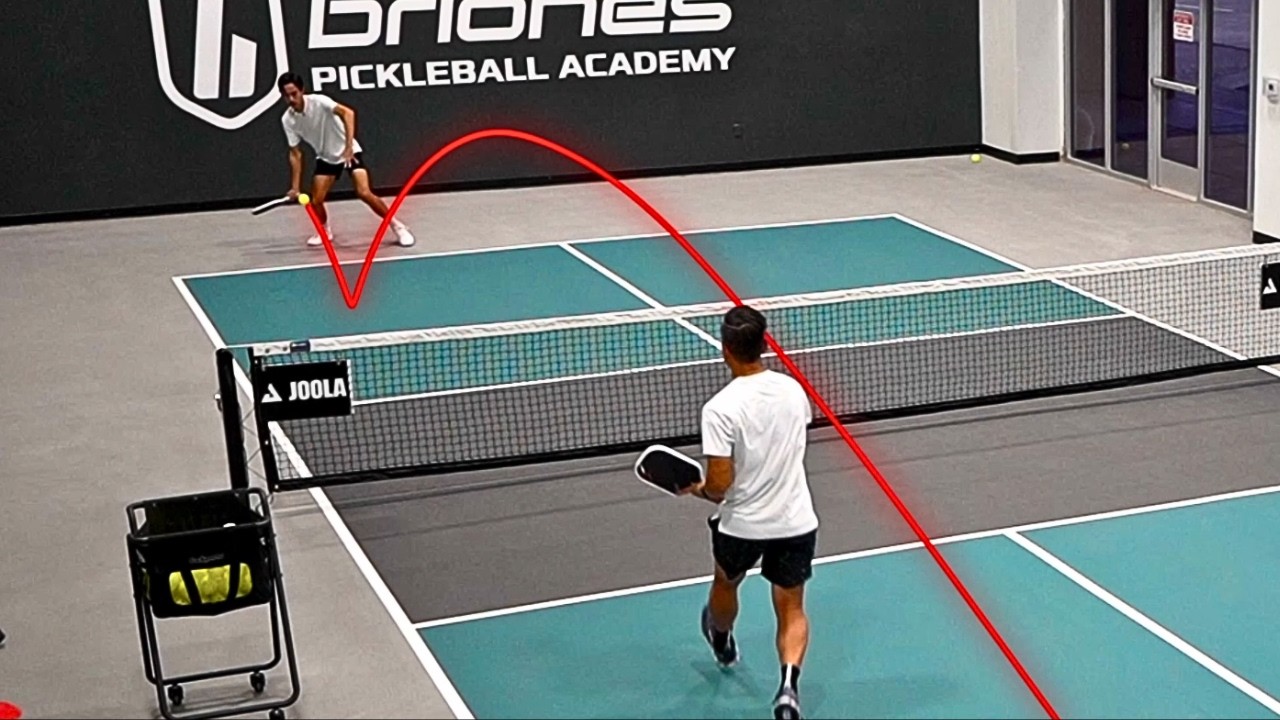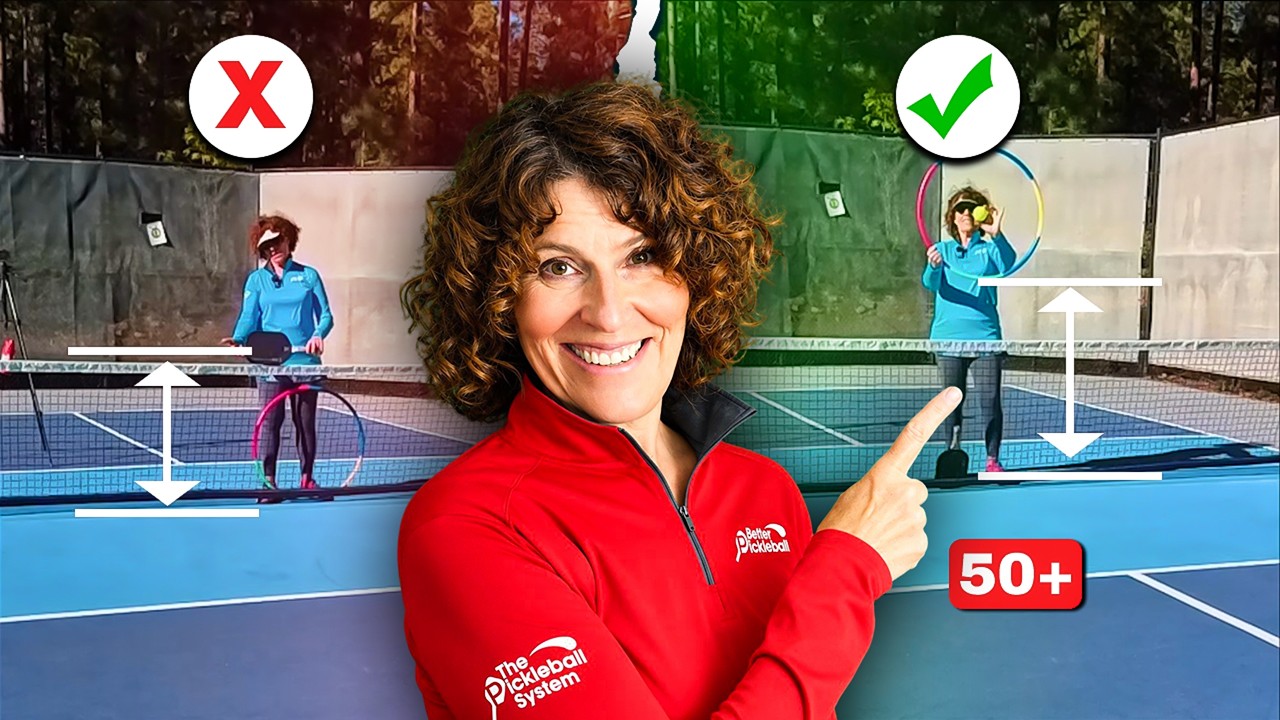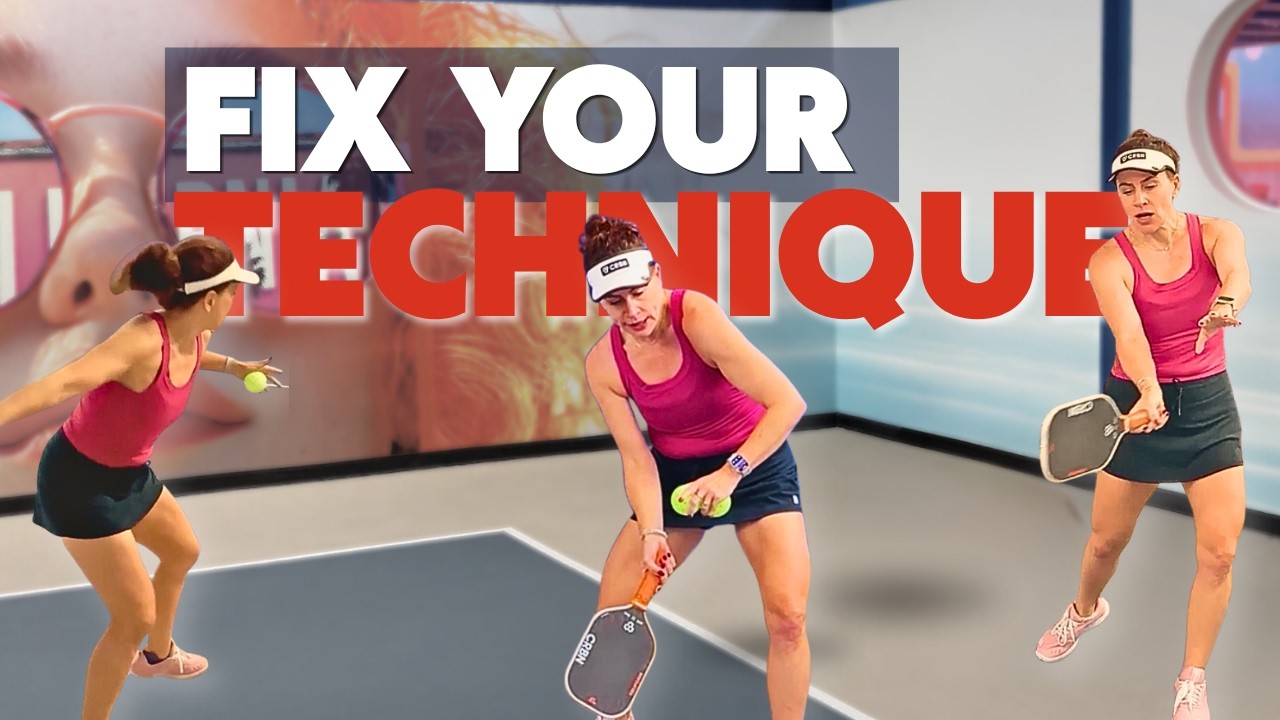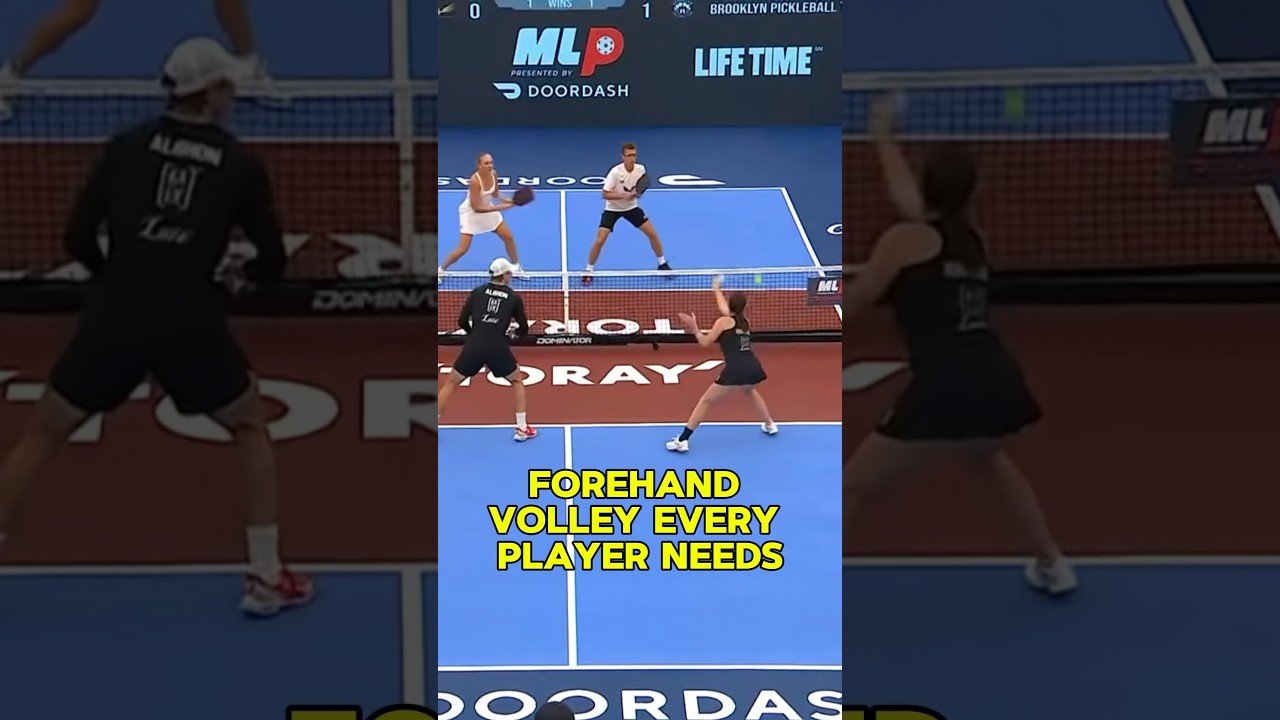
The forehand volley in pickleball is one of the most available weapons at the kitchen line. Here is how to build one that wins you free points.
The forehand volley in pickleball is one of the most available weapons at the kitchen line, and most players are completely wasting it.
You get there, you get the ball on your forehand side, and instead of finishing the point, you push it back soft and hope for the best.
The problem is not your paddle. It is not your fitness.
It is that nobody ever taught you how this shot actually works.
This breakdown covers the mechanics, the timing, and the specific adjustments that turn a passive forehand volley into a point-ending weapon.
Credit for the core concepts here goes to ItsEZ Pickleball on YouTube, where they break down exactly the kind of shot that separates 3.5 players from 4.5 players.
Love pickleball? Then you'll love our free newsletter. We send the latest news, tips, and highlights for free each week.
What Is a Forehand Volley and Why Does It Matter So Much?
A forehand volley is any shot you hit out of the air on your dominant side, without letting the ball bounce first.
At the kitchen line, this shot shows up constantly.
Most players treat it like a blocking shot. They just want to keep the ball in play.
That is the wrong mindset entirely.
The forehand volley, when executed correctly, is an attacking shot. It is one of the primary ways you win points at the net without needing a perfect setup.
If you are not treating it that way, you are handing opponents time to reset and recover.
Why Most Players Get This Shot Wrong
The most common mistake is a big backswing. Players wind up like they are hitting a groundstroke, and by the time the paddle comes through, the ball is either in the net or sailing long.
Volleys are compact shots. The power comes from the wrist snap and the body, not from a long swing.
A shorter swing gives you more control and more disguise, which is exactly what you need at close range.
The second mistake is dropping the paddle head below the wrist. When that happens, you lose the ability to direct the ball with any precision.
Your volley mechanics fall apart fast when the paddle dips.
The Grip That Sets Everything Up
Grip pressure is where the forehand volley either works or falls apart. Too tight, and you lose feel. Too loose, and you lose control on any ball with pace on it.
Think of a 4 out of 10 on the grip pressure scale as your baseline.
Firm enough to handle a hard incoming shot, relaxed enough to redirect with touch.
Your continental grip or a slight eastern forehand grip works best here.
It keeps the paddle face in a position where you can redirect down at your opponent's feet rather than floating the ball back up into their wheelhouse.
 The Dink Media Team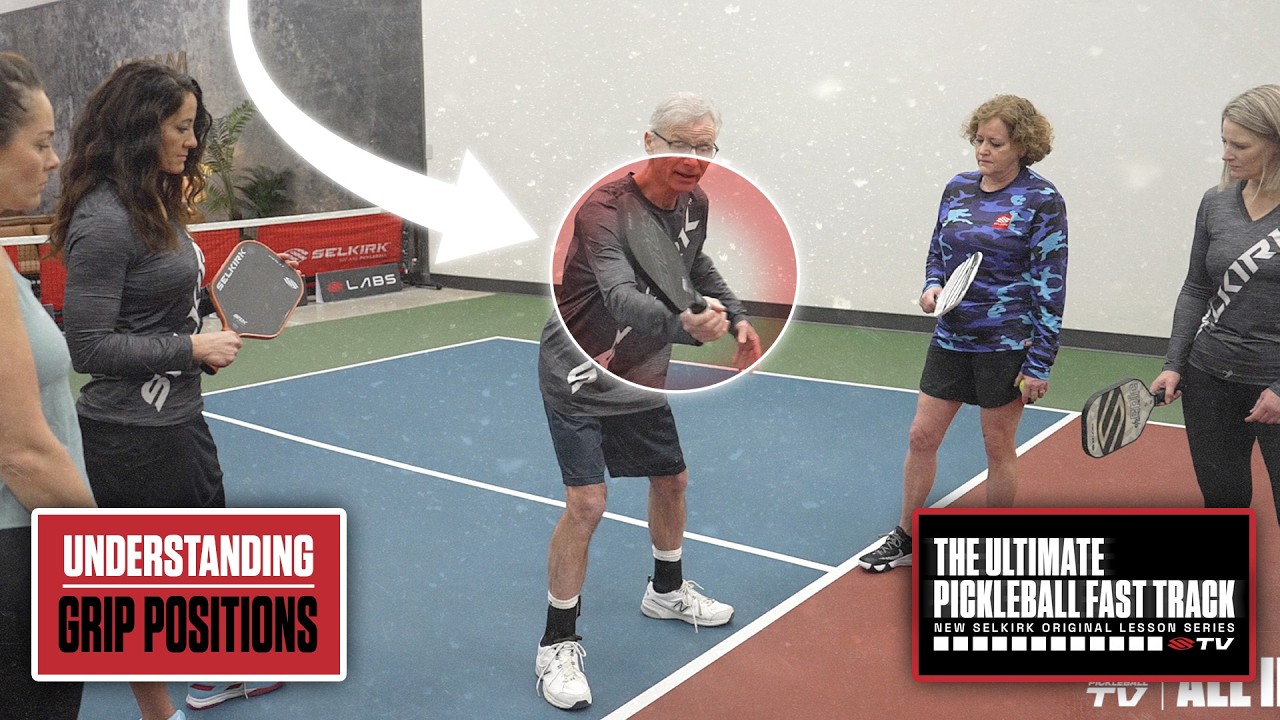
How Do You Actually Generate Power Without a Backswing?
The answer is body rotation and wrist acceleration. You do not need a big swing when your core is doing the work.
Here is a quick checklist for the mechanics that generate pace on the forehand volley:
- Keep your elbow in front of your body, not tucked into your side
- Step into the shot with your non-dominant foot when possible
- Rotate your shoulder through contact, not just your arm
- Accelerate the paddle through the ball with a slight downward angle
- Follow through toward your target, keeping the swing short and punchy
That downward angle is critical. It is what keeps your shot low and forces your opponent to hit up on the ball.
A flat or upward contact angle gives them a ball they can attack.
If you want to understand how forehand shots become consistent weapons, the mechanics above are where you start.
 The Dink Media Team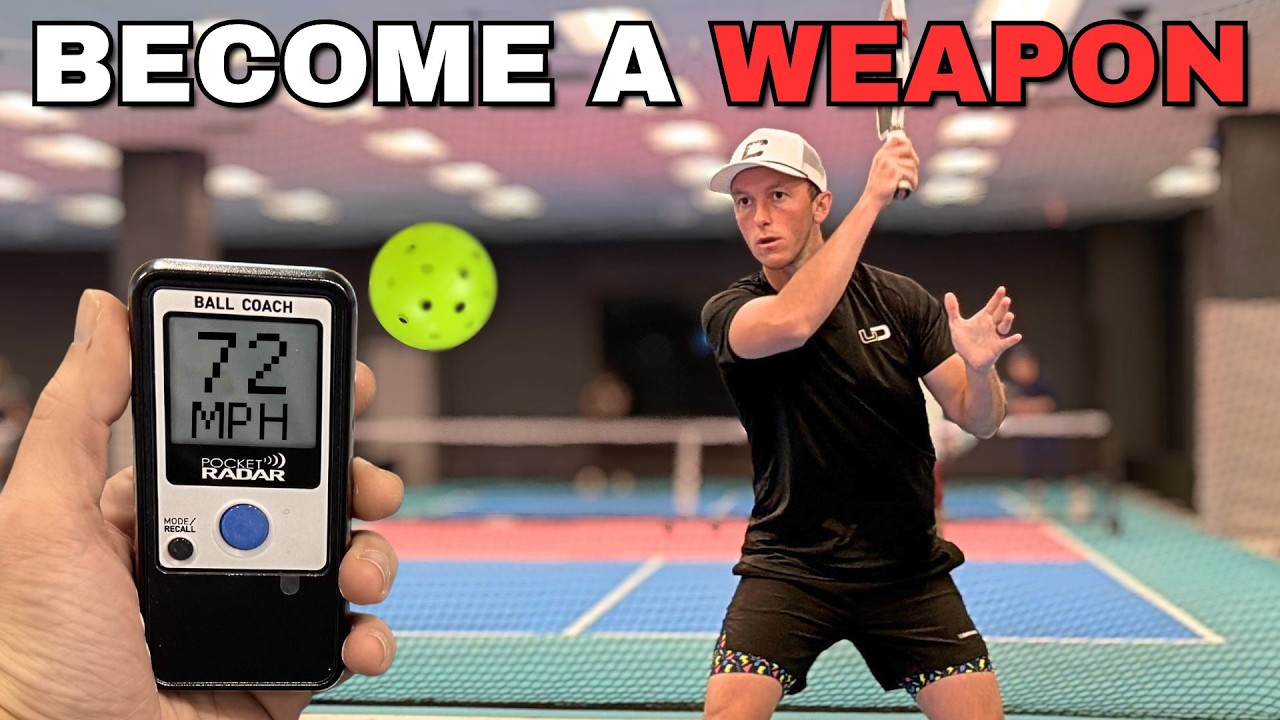
Where Should You Be Aiming?
Aim low. Every time. The target on your forehand volley should be your opponent's feet or the area just behind their kitchen line.
High volleys are the ones that come back. A ball at the feet forces a defensive dig, which means the next ball you get will be easier to put away.
Cross-court placement opens up angles and pulls opponents out of position.
A forehand volley hit down the line catches opponents who are cheating to cover the middle.
Mix those two directions and you make yourself very hard to defend against.
Learning cross-court strategy in pickleball gives you a real foundation for how to use placement rather than pure power to win points.
 The Dink Media Team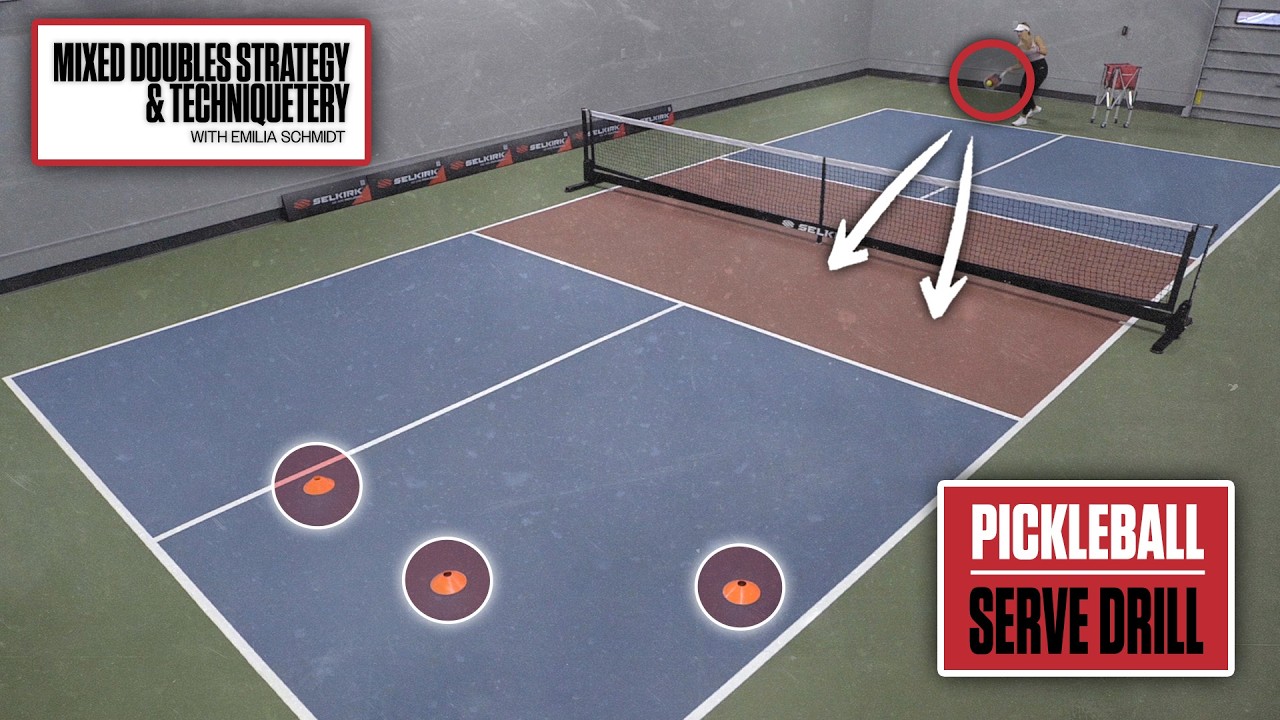
What About the Flick Volley?
The flick forehand volley is a more aggressive variation where you use a quick wrist snap to redirect a dink or soft shot with pace your opponent does not expect.
This is the shot that catches players off-guard at the kitchen.
They are in a dinking rhythm, you get a ball slightly above net height on your forehand side, and instead of pushing it back, you snap your wrist through the ball and drive it at their hip or feet.
Mastering this requires solid flick technique fundamentals, specifically the wrist loading position that most players completely skip.
Here is a simple progression for learning the flick volley:
- Start with slow shadow swings focusing on wrist snap only, no ball
- Practice with a partner feeding soft dinks to your forehand side
- Aim for a target at your partner's hip height, not below the net
- Gradually increase the pace of incoming feeds as you get comfortable
- Add the step-in footwork once the wrist action is automatic
 The Dink Media Team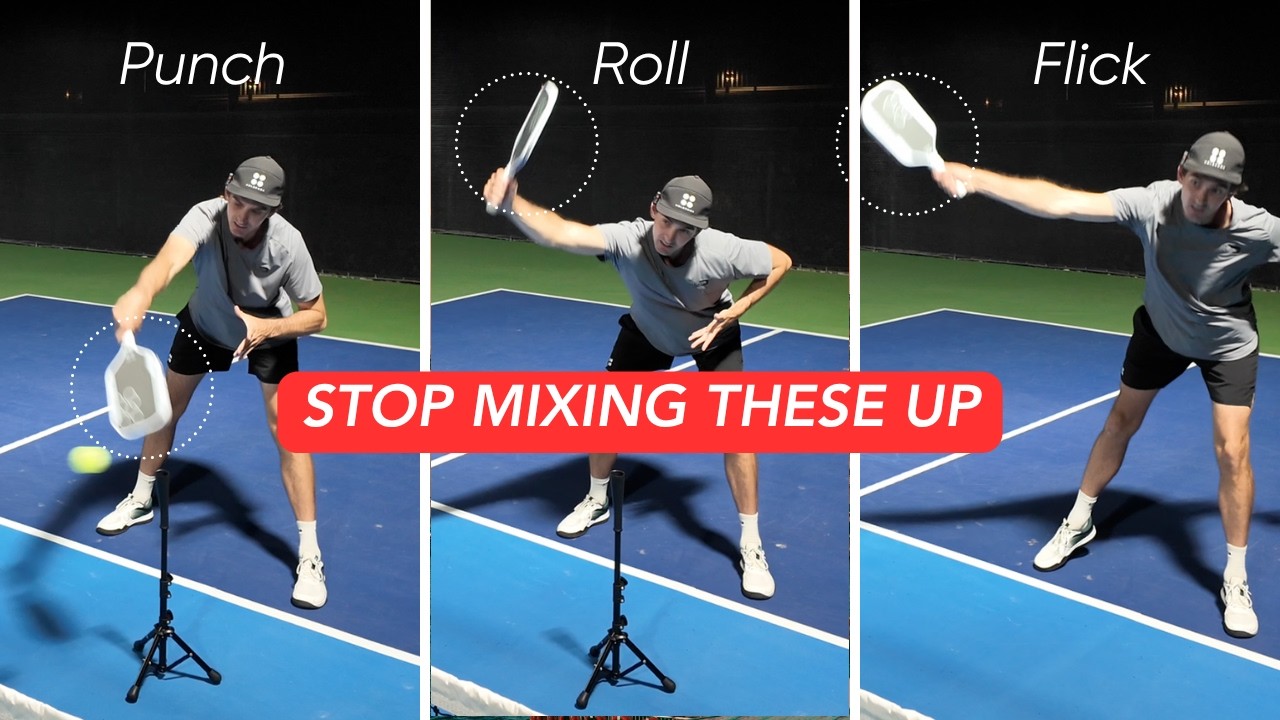
Does Your Footwork Actually Affect the Forehand Volley?
Yes, significantly. Most players stand flat-footed at the kitchen and wonder why they cannot generate anything on the ball.
Staying on the balls of your feet keeps you mobile and lets you load into the shot naturally.
A flat-footed stance makes your volley passive by default because your body cannot rotate properly.
Your split step timing feeds directly into your volley quality.
If you are not split-stepping before each shot, you are already late, and a late volley is a weak volley.
 The Dink Media Team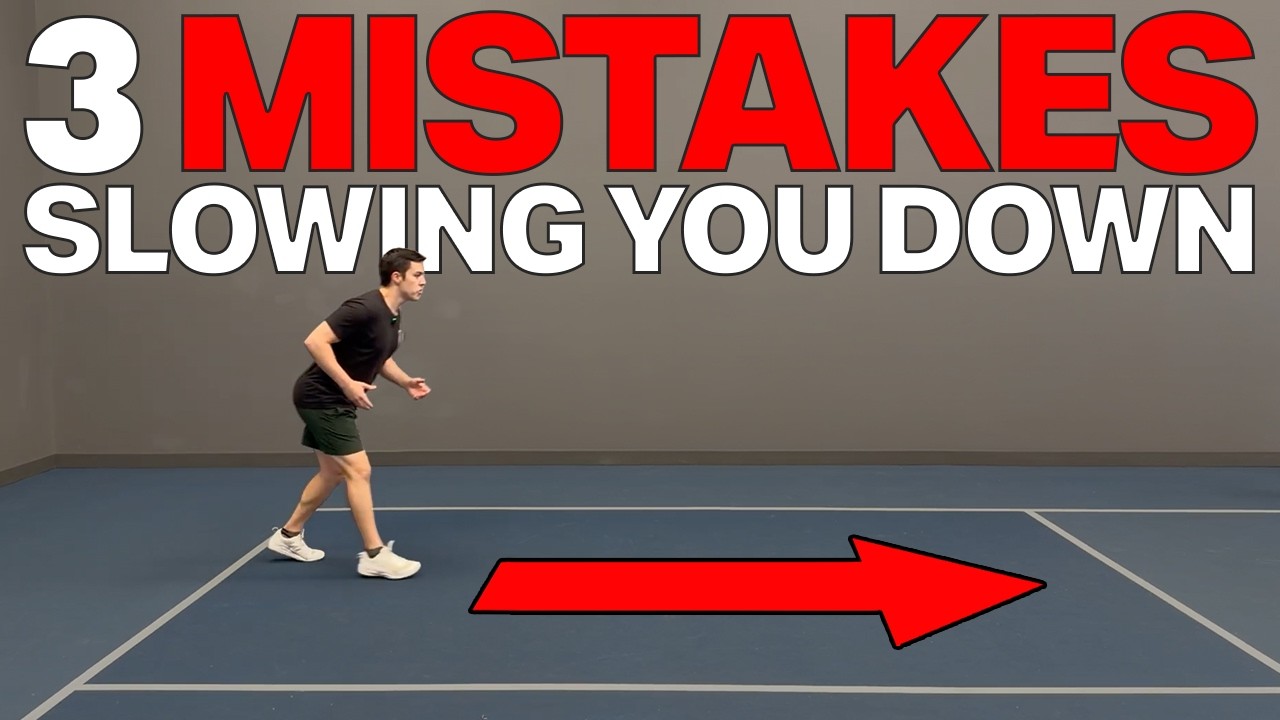
The Role of Wrist Position at Contact
Your wrist should be firm and slightly laid back at contact. That means the paddle face is slightly open relative to your wrist, not collapsed forward.
A collapsed wrist at contact causes two things: either the ball goes into the net or you pop it up. Neither is useful.
The wrist position fix that helps your drop game also applies directly here.
When your wrist is in the right position, the paddle face does the work of directing the ball without needing extra effort from your arm.
 The Dink Media Team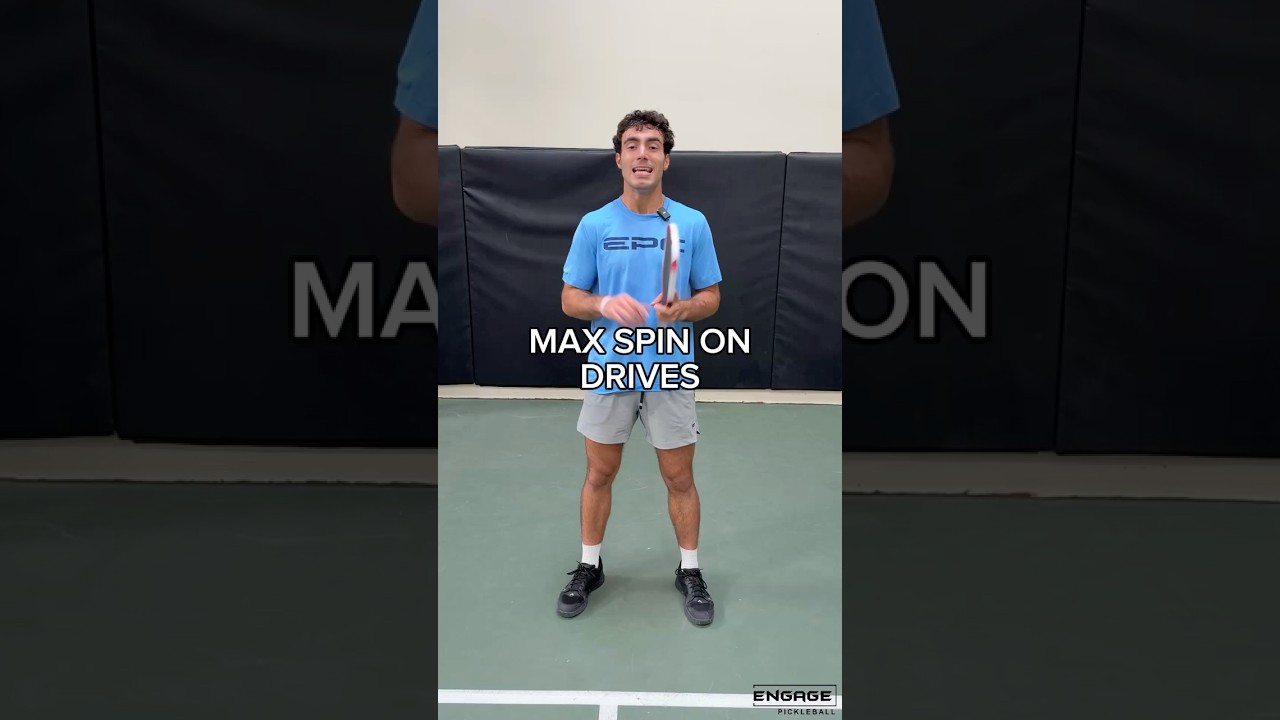
When Should You Use the Forehand Volley Versus a Dink?
Use the forehand volley when the ball is at or above net height. That is your signal to attack, not reset.
Use the dink when the ball is below net level and attacking would mean hitting upward.
Hitting up gives your opponent an attackable ball, which is the opposite of what you want.
The decision point is the height of the ball relative to the net.
A lot of players make mistakes here because they try to attack balls that are too low, and they pop up an easy shot for their opponent.
Understanding shot selection based on ball height is a fundamental skill that separates consistent players from inconsistent ones.
 The Dink Media Team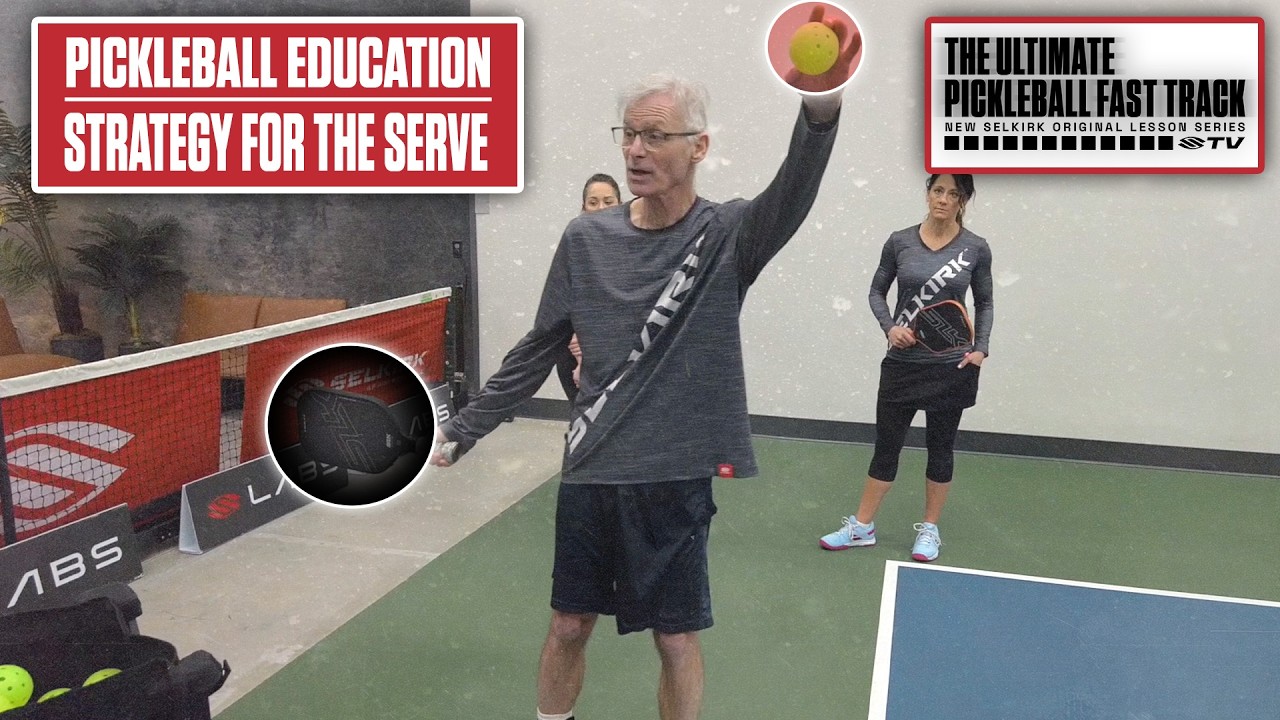
Building This Into Your Game Under Pressure
Knowing the mechanics is one thing. Using the shot when the point is on the line is something else entirely.
The way you build that confidence is through kitchen line attack practice that simulates real game pressure.
Drilling the shot in isolation is a starting point, but you need repetition in game-like scenarios to make it automatic.
One of the most effective drills is a live rally where you and a partner agree that any ball above net height on your forehand side must be attacked, not dunk.
That constraint forces you to commit to the aggressive choice and builds the habit fast.
If you find yourself hesitating at the kitchen line, check your positioning habits first. Being out of position forces reactive, passive volleys.
Being in the right spot lets you be the one dictating.
 The Dink Media Team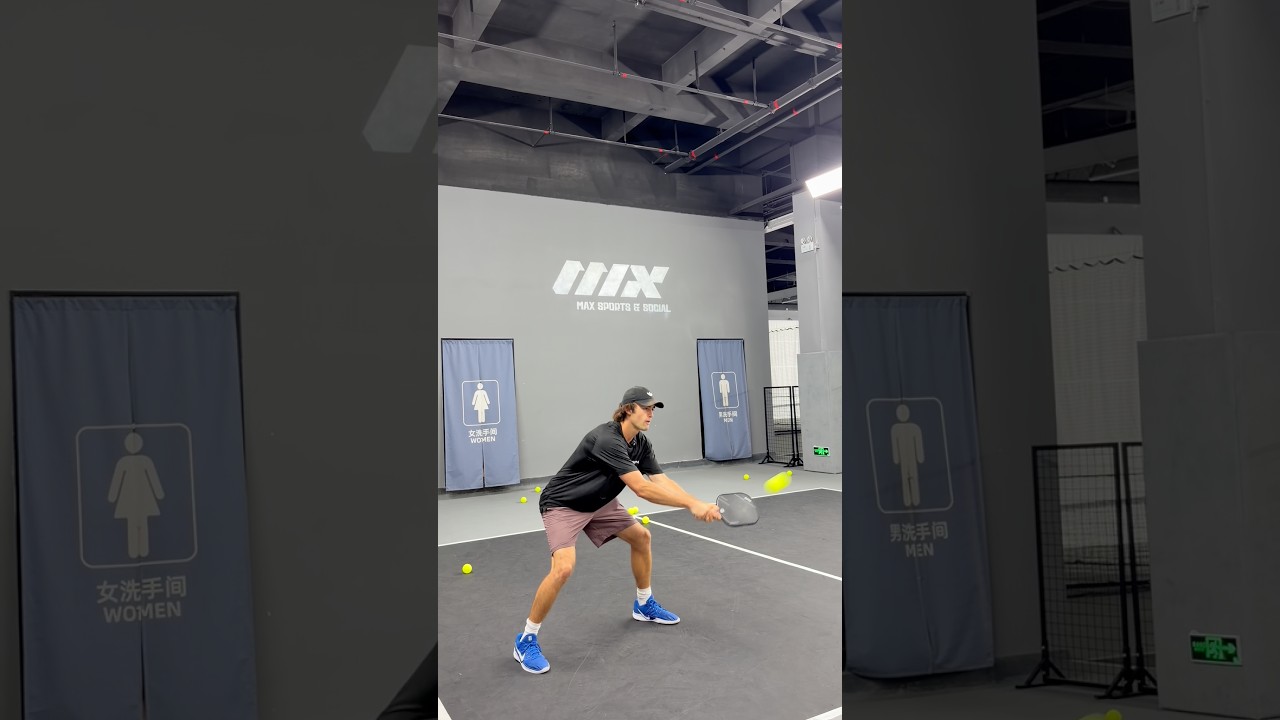
Common Situations Where This Shot Changes Everything
The forehand volley is most valuable in three specific situations.
- First, when a dinking rally gets too comfortable and you want to shift the tempo. A sudden flick volley off a predictable dink pattern breaks your opponent's rhythm completely.
- Second, when you are playing someone who resets well and is hard to move out of position. A sharp, low forehand volley at their hip gives them no clean angle to reset from.
- Third, when you and your partner have created an open court and you need to finish the point cleanly without floating the ball back into play. That is where a compact, directed forehand volley earns you the point instead of extending the rally.
Check out two-shot combinations that set this shot up on purpose, and the essential shots every serious player should own this season.
Players who are ready to move up a skill level almost always have a reliable forehand volley in their toolkit.
It is one of the clearest indicators that a player has moved past the defensive mindset and is starting to control points.
The forehand volley is not complicated. But it does require you to commit to the shot, trust the mechanics, and stop defaulting to a soft push whenever you feel uncertain.
Start with the grip, fix the wrist position, add the body rotation, and then practice finishing under pressure.
Do that consistently and this shot will become one of the most reliable weapons you have at the kitchen line.
Frequently Asked Questions
What is the most common forehand volley mistake in pickleball?
The most common mistake is using too much backswing, which causes timing issues and loss of control at close range. Keep the swing compact and generate pace through body rotation and wrist snap instead. A shorter stroke gives you more accuracy and more disguise.
When should you attack with a forehand volley instead of dinking?
Attack with your forehand volley any time the ball is at or above net height on your forehand side. Hitting up on a low ball only gives your opponent something to attack, so the net height is the key reference point. When in doubt, ask yourself whether you would need to swing upward to make contact.
How do you add pace to a forehand volley without losing control?
Use shoulder rotation and a quick wrist snap through contact rather than lengthening your backswing. Step into the shot with your non-dominant foot to load the rotation. Keep your follow-through short and directed toward your target.
What grip works best for a forehand volley in pickleball?
A continental grip or a slight eastern forehand grip gives you the most versatility for directing the ball low and at angles. Grip pressure should be around a 4 out of 10, firm enough to handle pace but relaxed enough to redirect with touch. Avoid gripping too tight, which kills feel and makes the shot stiff.
How is the flick volley different from a standard forehand volley?
The flick volley uses a wrist snap to generate sudden pace off a slow incoming ball, typically a dink that sits up slightly at or above net level. A standard forehand volley is used on faster incoming balls where you redirect pace that is already there. The flick volley is an offensive weapon you generate yourself, making it harder for opponents to anticipate.

Love Pickleball? Join 100k+ readers for free weekly tips, news & gear deals.
Subscribe to The Dink