The backhand flick is one of the most effective weapons at the kitchen line, but most players are executing it completely wrong. Here are three steps from a PPA pro to make it powerful and consistent.
If you have been reaching for short balls at the kitchen and coming up with a weak poke volley, your backhand flick is broken at the foundation, not the finish.
Most players think the flick is about wrist speed.
It is not. It is about where your paddle starts, how you generate spin, and when you actually pull the trigger on the shot.
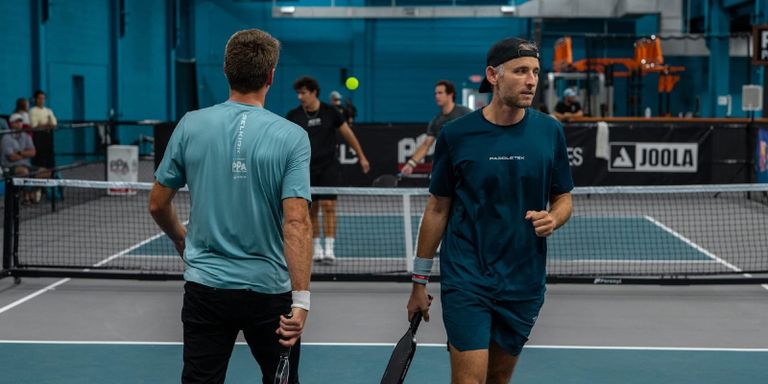
These three fixes come from Ashley Griffith, a professional player on the PPA Tour, and they address exactly why the flick feels inconsistent for most recreational players.
Love pickleball? Then you'll love our free newsletter. We send the latest news, tips, and highlights for free each week.
What Is the Backhand Flick, Really?
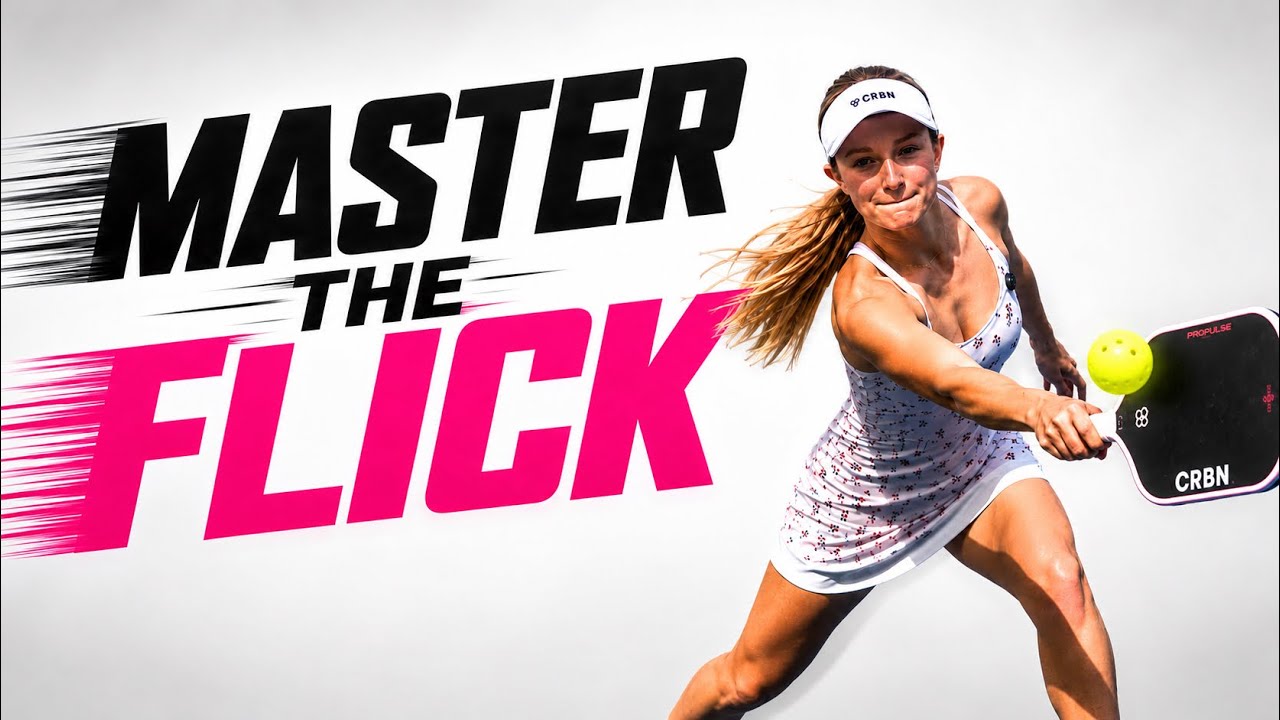
The backhand flick is an offensive volley hit from the kitchen line, used to attack short balls that sit up slightly inside or near the non-volley zone.
It's not a counter. It's not a poke.
It's a compact, accelerating shot with topspin that gives you reach and aggression without a full backswing.
The reason players struggle is simple: they skip the setup and go straight to the swing.
When that happens, the shot becomes a push with no spin and no real threat behind it.
Step 1: Get Your Paddle Tip Underneath the Ball
This is the most skipped step, and skipping it kills everything else.
Before you even think about swinging, your paddle tip needs to point toward the ground, below the contact point of the ball.
If your paddle stays flat or at ball height, you get two bad options. You either muscle the ball into the net, or you open your face and the shot sails long.
Getting under the ball gives you the angle to swing low to high. That low-to-high path is what creates the topspin the backhand flick lives on.
Think of it like throwing a Frisbee. Your wrist drops below the disc before you snap forward, and the flick works exactly the same way.
The paddle tip goes down first. Then you accelerate up and through.
What Does "Low to High" Actually Mean on the Backhand Flick?
Your paddle starts below the ball and finishes above it at contact. The motion is upward and forward at the same time, not just upward.
Only upward gives you spin with no power. Only forward gives you power with no spin. The shot needs both.
Here's your checklist before you swing:
- Paddle tip pointing toward the ground before contact
- Grip relaxed, not tight
- Ball seen early enough to set the paddle angle
- Body weight shifting forward, not back
This is the same paddle positioning that separates a clean flick from a flat poke. The tip position is everything.
Step 2: Stop Trying to Muscle the Ball
A powerful backhand flick does not come from a big swing.
It comes from a compact motion, proper acceleration, and spin generated through the contact zone.
This is where most players go wrong. They think more swing equals more power.
What actually happens is that a big backswing slows down your reaction time at the kitchen line and produces less consistent contact.
Instead, meet the ball out in front of your body and push forward into the shot. All your weight goes forward. Your core and legs drive the motion.
Your arm accelerates through the ball, not around it.
How do you actually generate spin without a big swing?
You brush the ball. Your paddle face stays neutral to the court, not open, not closed.
From that neutral position, you swing up and forward simultaneously, which creates the brushing contact that produces topspin.
Ashley Griffith describes the ratio as roughly 50/50: half of the effort goes into hitting through the ball, half goes into brushing up on it.
That combination is what gives the flick its signature dipping arc.
There are two ways players generate power on the flick:
- Wrist-driven flick: The wrist snaps through the ball at contact. This produces a very fast, whippy shot. It requires genuine wrist strength to be effective and consistent.
- Shoulder-driven flick: The shoulder pushes the motion forward and up. This is more reliable for players who do not have elite wrist strength, and it produces a slightly more controlled shot.
Griffith herself uses a more shoulder-driven flick in match play. Both approaches are legitimate. The goal is finding which one you can repeat under pressure.
If you want to see how fast hands mechanics work at the top level, the fundamentals are the same: compact motion, acceleration through the ball, clean contact.
One more thing to avoid: do not start from a pulled-back position. Your paddle should already be set in front of you.
The motion is forward and up from the ready position, not a load and launch.
 The Dink Media Team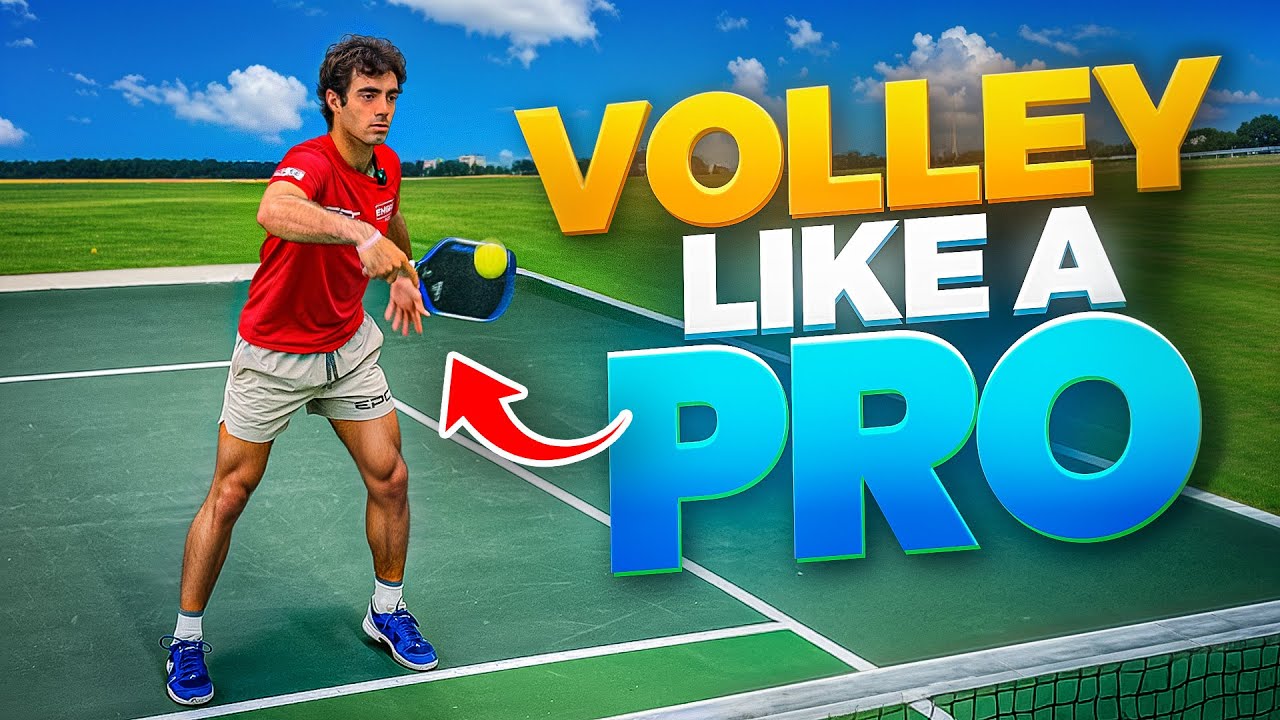
Step 3: Be Intentional About When and Where You Attack
This is the tip that actually makes your backhand flick win points, not just look good in practice.
The backhand flick is not for every ball.
It is specifically useful when a ball sits up short and slightly high in or near the kitchen, and you cannot reach it comfortably with a standard backhand or two-handed shot.
The flick gives you extended reach and lets you attack instead of defend.
Here is how to know when to flick versus when to take a different shot:
- Flick it: Ball is short, slightly elevated, and you can reach into the kitchen to attack it
- Dink it: Ball is deep or low and you cannot generate a clean upward contact
- Counter it: Ball is coming right at your body at a good height and you just need to redirect it compactly
Forcing a flick on the wrong ball is one of the most common mistakes at the 3.5 to 4.0 level, and it's one of the habits that keeps players from breaking 5.0.
You end up reaching awkwardly or popping the ball up because the setup was never right.
Where should you be aiming the backhand flick?
The highest percentage target, especially when you are building confidence with the shot, is straight at the body of the opponent in front of you.
If you are on the left side of the court, that means flicking down the line right at your opponent's chest or hip.
It is a fast, direct ball with no angle to run around. They have very little time to react, and even a clean counter is difficult when the ball is coming into their body.
This is exactly the same logic as attacking a high forehand ball back at the player in front of you. It is high percentage, high pressure, and hard to handle.
As you get more comfortable, you can start building attack combinations that use the flick to open up the cross-court angle or the middle.
But start down the line. Get comfortable with that shot first before you start going for angles.
Understanding when to speed up off the bounce versus when to flick from the air is a related decision worth sharpening.
Both are offensive, but they come from different ball positions and require different setups.
 The Dink Media Team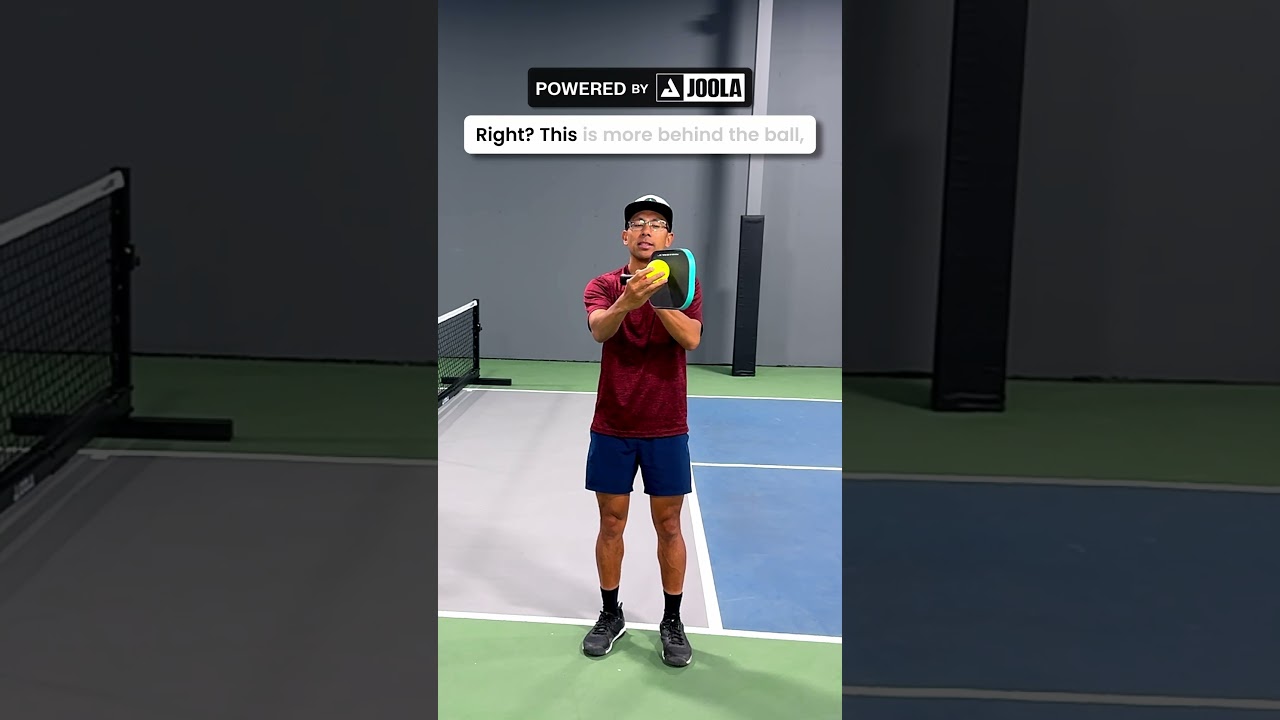
Putting the Three Steps Together
The backhand flick becomes dangerous when all three pieces connect. Paddle tip below the ball. Compact acceleration with a neutral face.
Smart shot selection for the right moment.
When one of those pieces is missing, the shot breaks down fast. No paddle angle means no topspin. Big backswing means no consistency.
Bad timing means you are flicking a ball that should have been dipped back as a reset.
Here is the full sequence to rehearse:
- See the short ball coming up in the kitchen area
- Drop your paddle tip below the ball immediately
- Meet the ball out in front with weight moving forward
- Accelerate through the ball with a neutral paddle face, brushing up and forward simultaneously
- Finish forward, not across your body
- Attack down the line at the opponent's body as your default target
If you want to build the reps needed to make this automatic, structured drilling progressions are the fastest way to do it.
Also worth understanding: losing hands battles at the kitchen often comes down to not having an offensive shot to initiate with.
The backhand flick solves that problem directly. Players who rely only on counters and resets are always playing from behind.
Adding a reliable backhand flick to your kitchen game means you can attack short balls that used to force a defensive response.
You can also look at how to build a backhand flick opponents cannot return once you have the basic mechanics dialed in.
The shot is worth learning. It is not complicated when you break it down, but it does require honest reps with the right fundamentals. Start with the paddle tip.
Everything else follows from there.
For the bigger picture of attacking off the right side, understanding right side speed-up techniques pairs well with a strong backhand flick.
And if you want to sharpen your overall decision-making at the kitchen, this shot selection framework gives you a clear mental model for every ball you face.
Finally, the flick works even better when your opponents are off balance.
Pairing it with a strong dinking game that moves opponents around creates exactly the kind of short, attackable balls the flick is built for.
Check out these kitchen line volley fixes to make your whole net game more dangerous.
Frequently Asked Questions
What is a backhand flick in pickleball?
A backhand flick is an offensive volley hit from the kitchen line with a compact, low-to-high motion that generates topspin and extended reach. It is used to attack short balls that sit up in the kitchen when a standard backhand volley would not be aggressive enough. The goal is topspin with forward acceleration, not a simple push or poke.
Why does my backhand flick go into the net?
The most common reason is that your paddle tip is not getting below the ball before contact. Without that downward angle on the paddle tip, you have no room to swing low to high, so the ball goes straight into the net. Fix the setup first, and the trajectory problem usually corrects itself.
Should I use my wrist or shoulder on the backhand flick?
Both work, and pros use both. Players with strong wrists can generate a snapping, whippy flick. Players who rely more on shoulder drive produce a slightly more controlled but still aggressive shot.
Ashley Griffith uses a shoulder-driven flick in match play because it is more consistent under pressure for her.
When should I hit a backhand flick instead of a dink or reset?
Hit the flick when the ball is short, slightly elevated, and sitting up in a way that lets you attack it cleanly. If the ball is deep or low, a dink or reset is the smarter play. Forcing a flick on a low, difficult ball almost always results in a pop-up or a miss.
Where is the best target for the backhand flick?
The best starting target is straight at the body of the opponent directly in front of you, specifically their chest or hip. This shot is fast, direct, and gives the opponent very little time or space to react. Once you are consistent with that target, you can start adding cross-court angles and middle attacks.

Love Pickleball? Join 100k+ readers for free weekly tips, news & gear deals.
Subscribe to The Dink