The Habit That Separates a 4.0 Pickleball Player From a 3.5
A 4.0 pickleball player doesn't have prettier shots than you. They have one habit you don't: they wait for a ball that genuinely deserves to be attacked, then they don't miss.
The gap between you and a 4.0 pickleball player isn't a shot you're missing. It's a decision you keep making three balls too early.
You already own the drop. You've hit resets that made your partner say "nice." You've won hands battles against people who out-rank you.
And you're still stuck at 3.5, watching someone with an uglier backhand and slower feet beat you 11-6 while barely swinging hard once.
Here's the thing. The habit that separates the two levels is almost boring: the 4.0 waits.
Love pickleball? Then you'll love our free newsletter. We send the latest news, tips, and highlights for free each week.
What Actually Separates a 4.0 Pickleball Player From a 3.5?
Decision-making. Not technique.
A 4.0 pickleball player knows which balls to hit and, more importantly, which ones to leave alone, while a 3.5 attacks balls that never asked to be attacked.
That's it. That's the whole gap, and it's why fit, athletic players stall here longer than anyone. Athleticism gets you to 3.5 fast.
 Alex E. Weaver
It does nothing for you after that, because power stops winning matches around 4.0. The 3.5 band is full of players with 4.0 hands and 3.0 patience.
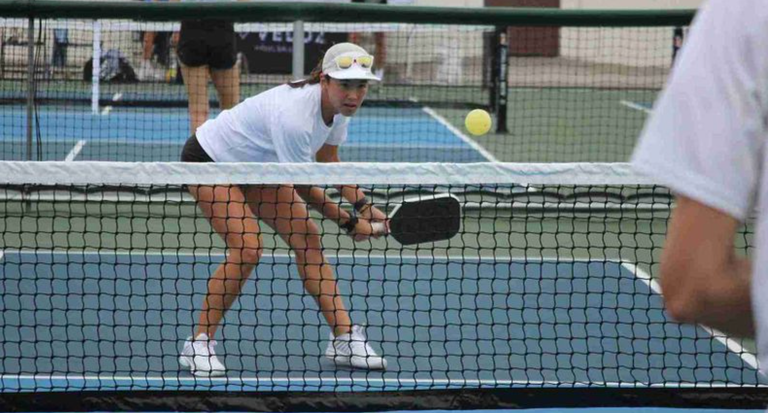
Watch a 3.5 dink rally. Somewhere around ball four, someone gets antsy.
The ball is still below net height, still low, still unattackable, and they try to speed it up anyway.
It pops. Point over. Now watch a 4.0 rally. Same ball, ball four. Nobody flinches. They just keep dinking to a spot and waiting.
What Is Shot Tolerance, Exactly?
Shot tolerance is your willingness to stay in a neutral rally without forcing offense.
It's the number of soft balls you can hit in a row, dink after patient dink, before your brain starts screaming "do something."
A 3.5 tolerance is about three balls. A 4.0 tolerance is closer to eight or ten. That's not a physical skill and it isn't talent.
It's a habit you build one rally at a time, and it's the single cheapest improvement available to you right now.
You don't need a new paddle. You need to choose between attacking and resetting correctly, over and over, until the choice stops feeling like a choice.
 Alex E. Weaver
How Does a 4.0 Pickleball Player Decide When to Attack?
Ball height above the net is the trigger. A 4.0 pickleball player attacks when the ball is clearly above net height and their body is balanced.
Everything else gets reset.
Two questions, asked in this order, every single ball:
- Is it above the net? If the ball is below the tape, there's no attack available. None. You're hitting up, and hitting up from the kitchen line is how you donate points.
- Am I set? If you're lunging, stretched, or still moving, the answer is no even when the ball is high. Ball height plus court position is the checklist.
A 3.5 asks "can I hit this?" A 4.0 asks "should I?" Same ball. Completely different question.
And the second one wins more matches than any third shot variation you'll ever learn.
Where the Habit Breaks Down
The habit fails in three predictable places, and every 3.5 reading this will recognize at least two of them.
You speed up off your own low dink. Honestly, this is the most common 3.5 leak there is.
The ball you hit was fine. The ball coming back is low.
You attack it anyway because the rally has gone on longer than you're comfortable with, and comfort is running your shot selection instead of the ball.
Resets and shot selection are the same skill wearing different clothes.
Your reset quality collapses when you're moving. In a static drill your reset is clean.
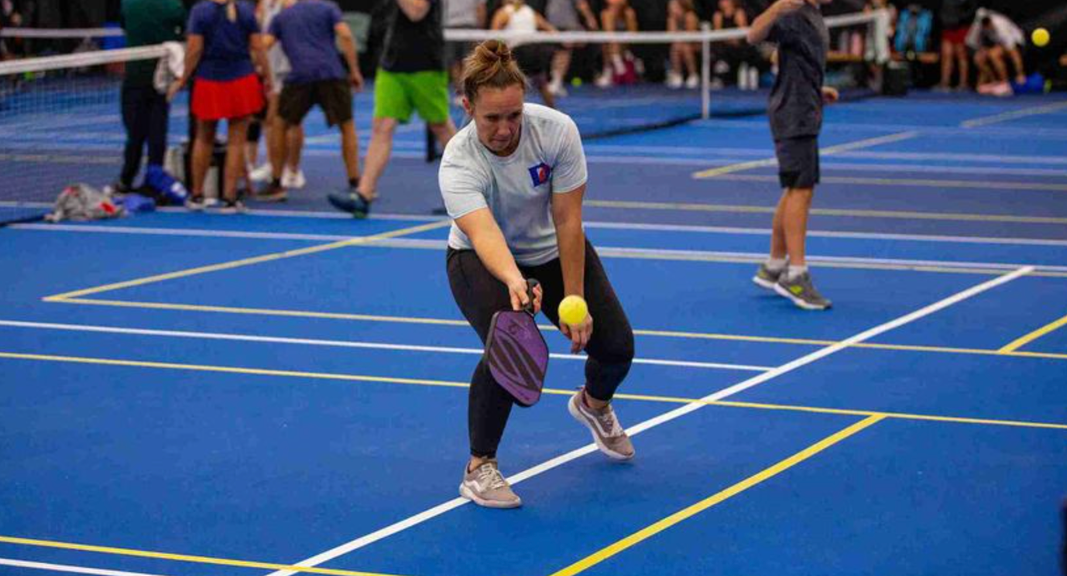
In a real point, stretched wide and backpedaling through the midcourt, the paddle face opens and the ball floats.
Escaping the transition zone is where the fifth, seventh, and ninth shots live, and those are the ones that actually separate levels.
Your targets are lazy. Every dink goes to the same place. Every return goes deep middle and nothing else.
A 4.0 hits with intent on every ball: at the feet, at the weaker player, behind someone who's leaning. Even a defensive dink has an address.
Notice what all three have in common. None of them are technique problems. You can already hit all of these shots.
You're just picking the wrong moment, which is exactly what PickleTip's level breakdown means by pressure-tested consistency: a 3.5 can execute 4.0 shots, but a 4.0 repeats them when it's uncomfortable.
 The Dink Media Team
How Do You Build the Habit of a 4.0 Pickleball Player?
You practice the decision, not the stroke.
A 4.0 pickleball player got there by drilling shot selection under pressure, not by adding a new weapon to a game that already had enough of them.
Here's what that actually looks like on court.
Drill Like a 4.0 Pickleball Player, Not a 3.5
Play a cooperative dink game where neither side is allowed to attack until a ball comes up above the tape. First one to speed up early loses the point.
It's tedious for about four minutes, then it becomes the most useful ten minutes of your week. Holding your dink an extra beat is the same muscle.
Then count. Track your unforced errors across three games. Halve that number and you'll move up faster than you would by adding any new shot.
Most points in pickleball end on a mistake, not a winner, which means the 4.0 across the net is mostly just handing you fewer gifts than you're handing them.
Reps matter here in a way rec play can't match. In a full game you might hit five or six third shot drops. In an hour of drilling you get a couple hundred.
That's why the drill-versus-play ratio matters more at this level than at any other, and why the reset deserves most of that hour.
Play the People Who Expose You
Stop protecting your record. If everyone at your regular courts is beatable, you're maintaining, not improving.
Get into games with 4.0s and accept the beating. You'll learn more in one loss to a stronger team than in five wins over people you've already solved.
They'll speed up balls you didn't know were attackable and reset balls you thought were winners, and after a few sessions you'll start reading paddle angles before contact instead of reacting late.
Two more things that compound fast.
Get your feet set instead of reaching, because balanced contact is most of what "fewer errors" actually means and footwork is the delivery system.
And talk to your partner about who takes the middle before the match, not after the miss, because a simple shared plan beats two people freelancing.
 The Dink Media Team
How Long Does This Take?
Six months to a year for most dedicated players.
That range is wide on purpose. Players who grind more hours at the same bad decisions plateau forever; players who change what they practice move in months.
Want a reality check before you start? Go assess your actual level honestly, then pick the one habit above that stings most.
The pattern work can wait. The waiting can't.
 The Dink Media Team
Key Takeaways
- A 4.0 player attacks fewer balls than a 3.5, not more.
- USA Pickleball's skill definitions put 3.5 in the patience-developing tier and 4.0 in the "limited unforced errors" tier.
- The habit is shot tolerance: staying in a dink rally six, eight, ten balls deep without forcing anything.
- Most points end on errors, not winners. Cutting your errors in half moves your rating faster than adding a new shot.
- You build this in drilling, not in open play.
Frequently Asked Questions
What is the main difference between a 3.5 and a 4.0 pickleball player?
Decision-making under pressure. A 4.0 attacks only genuinely attackable balls and resets everything else, while a 3.5 forces offense on balls that were never available. Both levels can hit the same shots; the 4.0 chooses better and gives away far fewer free points.
Do I need more power to reach 4.0?
No. Patience, resets, targeting, and fewer unforced errors separate the levels far more than pace does. Plenty of 3.5 players hit harder than the 4.0s beating them. If power were the answer, bangers would all be 4.5s.
How good does my third shot drop need to be?
Coaching guides commonly put a 4.0 drop in the kitchen somewhere around 60 to 70 percent of the time. Treat that as a rough guide rather than a hard cutoff. Consistency matters more than perfection, and knowing when to drop versus drive matters more than either.
How much should I be drilling?
More than you currently are. Serious improvement at this level usually means at least one focused hour of drilling per week, with resets and third shots getting most of it. Game play alone can't give you the repetitions the habit requires.
Can I build shot tolerance without a regular drilling partner?
Yes, partly. Wall work builds soft-game touch and paddle control, and you can practice the decision in rec games by giving yourself a rule: no speed-ups below net height for an entire session. The discipline is the drill, and patience under pressure is trainable without a court partner.

Love Pickleball? Join 100k+ readers for free weekly tips, news & gear deals.
Subscribe to The Dink