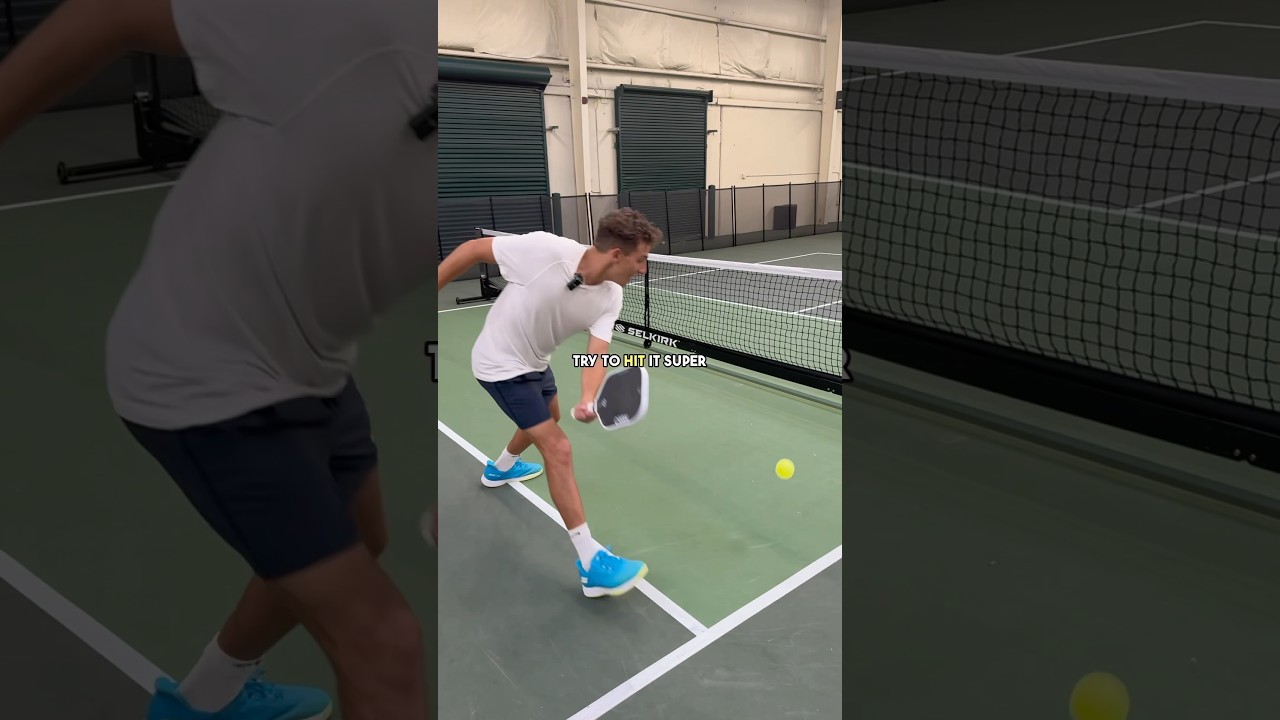
Drilling teaches your body how. Games teach your brain when. You need both — but intention matters more than just reps.
Kyle Koszuta thinks he has the answer to one of pickleball's most persistent questions: How much time should you actually spend on a pickleball drill versus playing?
Here's the thing: most players think this is a simple math problem. Like there's some magic ratio you can plug into a spreadsheet and suddenly you're improving faster. But Koszuta's latest breakdown reveals it's way more nuanced than that.
The real question isn't about time allocation at all. It's about how you get better faster with whatever time you've actually got.
Love pickleball? Then you'll love our free newsletter. We send the latest news, tips, and highlights for free each week.
Why New Players Shouldn't Drill Right Away
When Koszuta first started playing pickleball on August 21, 2021, he didn't drill once for 2 months and 11 days. Yes, he actually counted. And honestly, he thinks that was the right call.
Here's his logic: when you're brand new to the sport, you don't know what you don't know. You're still figuring out where to stand, what the score is, basic strategy — the fundamentals that take about 2 to 3 months of actual gameplay to absorb. If you want a head start, check out a beginner's guide to pickleball fundamentals to get grounded before you even pick up a paddle.
 Eric Roddy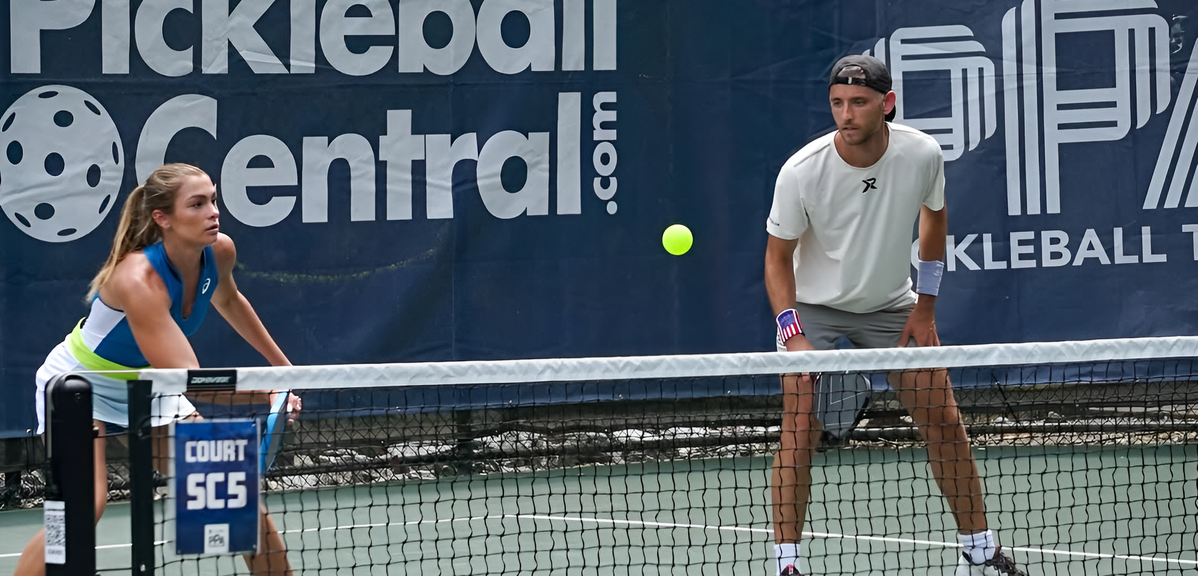
Drilling during this phase is like trying to perfect your golf swing before you understand the rules of golf. It just doesn't make sense.
Fast forward to 2025, and Koszuta had an eye-opening experience that completely shifted how he thinks about drilling. He was prepping for a tournament with his friend Cam Luhring when he realized just how lethal Luhring's two-handed backhand was. So he asked for a lesson, and they turned it into a YouTube video.
After 45 minutes of focused instruction on court, they took a break. Then three hours later, they headed to the courts for a regular gameplay session with two other buddies. During that 2-hour match, Koszuta tried hitting the two-handed backhand 15 times.
Spoiler alert: it didn't go well.
The Drilling Math That Actually Matters
If you play five times a week for two hours each session and you get 15 attempts at a new skill during gameplay, you're looking at:
• 75 reps per week
• 300 reps per month
• 3,900 reps per year
Sounds decent, right? Except there's a massive problem. All those reps are happening in the worst possible context for learning something new.
You're mid-game, thinking about winning, worried about messing up in front of your partner, stressed about ruining the match. Your brain doesn't have time to process what you're doing right or wrong. You're just reacting.
At that rate, it might take a year to feel somewhat comfortable with a new skill — and way longer to actually feel confident.
Now flip the script. What if you drilled that same shot for just 5 minutes a day, 5 days a week? Koszuta actually went out on court and tested this. In 5 minutes, he got 125 reps.
Do the math:
• 625 reps per week
• 2,500 reps per month
• 32,500 reps per year
That's over eight times the reps in a fraction of the time. A 2,000% return on your time investment. And honestly, that's a pretty good deal.
But Wait, There's a Catch
Here's where most players get it wrong. Psychologist K. Anders Ericsson spent decades studying what actually drives improvement, and he called it "deliberate practice."
You have to practice with intent and get feedback so you actually know what to fix.
Think of it like this:
• Every rep you take is digging a groove in your brain
• The more you repeat something, the deeper that groove gets
• But here's the problem: your groove gets dug whether you're doing it right or wrong
Your brain doesn't know the difference between correct and incorrect. It just learns what you repeat.
So if you practice bad technique dinks for 500 reps, your brain digs a groove of those 500 bad dinks. Then a coach watches you play and says, "Hey, you have a bad habit there." Now you're stuck.
You've been practicing it wrong for months, maybe years, and now you have to unlearn that groove and build a new correct one. That's frustrating.
 The Dink Media Team
The Two Keys to Actually Getting Better
When you're drilling, two things matter more than anything else:
1. Intention
Before you start, decide what you're working on and why. After you finish, reflect. What were you trying to do? What actually happened? What will you change next time? This isn't complicated, but it's the difference between mindless repetition and actual improvement.
2. Feedback
You need something or someone outside of yourself telling you what's really happening — not what you think is happening. Your memory of what happened on court isn't typically very good or accurate. So film yourself, get a coach, join an online pickleball school, or use AI software like Pickle Ball Vision.
Without feedback, you're just reinforcing whatever you already do — which might be the exact thing holding you back. If you want to watch a pickleball pro fix the habits holding you back, it's one of the clearest illustrations of why feedback changes everything.
 The Dink Media Team
Drilling Alone Isn't Enough
Here's another thing Koszuta emphasizes: drilling teaches your body how. Games teach your brain when. You need both.
In drills, you know exactly where the ball is probably going. You're working on one specific skill, usually playing half the court. There's some decision-making, but not nearly as much as in a real game.
In games, you're reading opponents, reacting in real time, trying not to let your partner down. There's pressure involved, which changes everything.
You've probably heard someone say, "I play great in practice, but I suck in games."
That's because drilling is easier than real games. You drill to build the wiring in your brain, then you play to test whether that wiring holds up under pressure.
And honestly, for a long time when learning a new skill, it won't hold up. That's normal. Don't beat yourself up too much. Give yourself grace because the learning process is messy. But that's also what makes it beautiful — when you finally nail that skill you've been chasing, it means something.
This is also why players who focus on making practice skills stick with the 70 Rule tend to bridge the gap between drilling and games faster than those who just grind reps without a system.
The Actual Recommendations
So what's the real answer? Koszuta gives specific guidelines based on where you are in your pickleball journey:
• 0 to 3 months: No drills. Just play to learn the game
• 3 to 6 months: Drill once a week for about an hour
• 6 to 12 months (or if you're trying to win your league): Drill twice a week for 60 minutes, then play the rest
• Retired with unlimited time: Drill three to four times a week and play three to four times
• Competitive player: Drill every day (Koszuta has won three gold medals on the A tour, so he's earned the right to be obsessive)
• No time to drill: Show up early to the court and spend 15 to 30 minutes isolating something specific before rec play
And if you truly just hate drilling? That's fine. But invest in a personalized match breakdown from a coach. It's one of the fastest ways to improve, especially when you're not drilling.
In fact, if you're looking for a broader framework, these 15 quick pickleball tips to see immediate improvement cover many of the same principles without requiring you to overhaul your entire schedule.
The ratio doesn't matter as much as the intention behind it. You could drill for 10 hours a week without intention and feedback, and you'll stay stuck forever. Or you could drill for 30 minutes with clear intention, test it in games, notice what fails, go back to drilling — and you'll improve faster than 99% of players.
According to CBS Sports, pickleball is one of the fastest-growing sports in America — and with that growth comes a flood of advice about how to improve. Most of it misses this exact point.
That's the real math that matters. And as Sports Illustrated has covered, the players who level up fastest aren't always the ones putting in the most hours — they're the ones putting in the most intentional hours.
Want to put your drilling reps to use immediately? Start with the 12 drills you need to play your best pickleball in 2026 — they're built around exactly the kind of deliberate, high-rep practice Koszuta is describing.
 The Dink Media Team
Frequently Asked Questions
How much should a beginner drill in pickleball?
If you've been playing for fewer than three months, you shouldn't be drilling at all — and that's actually good advice from a top pro. Your first priority is learning the game: scoring, positioning, and basic strategy. These fundamentals can only be absorbed through real gameplay. Start drilling once you have two to three months of court time under your belt.
What is the ideal drill-to-play ratio in pickleball?
There's no universal ratio, and that's kind of the point. The right balance depends on your skill level, goals, and schedule. Intermediate players (6–12 months in) tend to benefit most from two drilling sessions per week combined with regular gameplay. Competitive players may drill daily. The more important question is whether your drilling is intentional — not how many hours you're logging.
Is drilling pickleball actually better than just playing games?
For building specific skills, yes — drilling beats gameplay reps by a wide margin. In a typical two-hour recreational game, you might attempt a new skill 15 times. In just five focused minutes of drilling, you can rack up 125 reps. That's eight times the volume in a fraction of the time. But drilling without intention or feedback won't help — and playing games is still essential for developing real-time decision-making and pressure tolerance.
What is deliberate practice and why does it matter for pickleball?
Deliberate practice is a concept from psychologist K. Anders Ericsson that describes purposeful, feedback-driven repetition — as opposed to mindless repetition. In pickleball terms, it means knowing exactly what you're working on before each drilling session, observing results, and adjusting. Without this framework, you can actually ingrain bad habits just as efficiently as good ones. Your brain digs the groove either way.
What's the fastest way to improve at pickleball if I don't have time to drill?
If dedicated drilling sessions aren't realistic, the next best move is arriving at the courts 15 to 30 minutes early and isolating one specific skill before recreational play begins. You can also invest in a personalized match breakdown from a coach — watching your own footage with expert feedback is one of the highest-leverage ways to improve without adding hours to your week.

Love Pickleball? Join 100k+ readers for free weekly tips, news & gear deals.
Subscribe to The DinkGet 15% off pickleball gear at Midwest Racquet Sports