Pro Breakdown: The Power of Patience, Pressure, and Grit to Win Points
Continuing this series, I am excited to get back into it and review some pickleball gameplay. If you didn't catch my last breakdown, check it out below.
 Eric Roddy
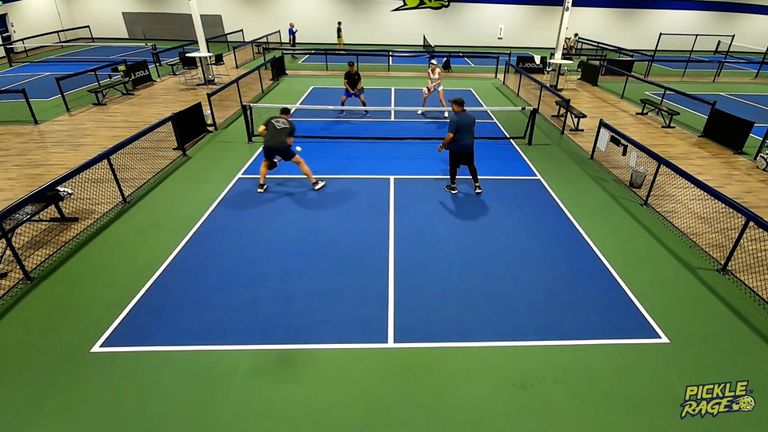
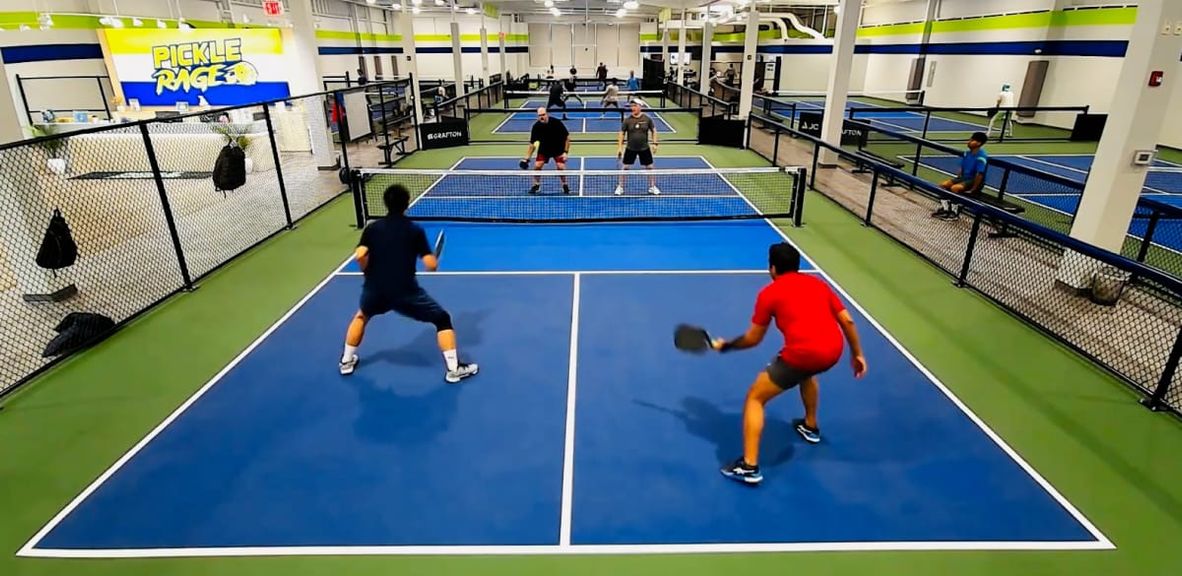
The video in this breakdown, originally posted on Reddit, features two 3.0/3.5 teams in what looks like competitive rec play at a cool place called Pickle Rage.
For anonymity, I will refer to the team closest to the camera as the near team, and the team further away from the camera as the far team.
Let's dive into the film and analyze what each team did well and could work on.
Want to have your match reviewed by a pro player? Sign up to our free newsletter. We ask our subscribers for their video highlights every month.oddy

Eric Roddy | DUPR 6.24
Turned Pro: 2022
Doubles Ranking: 55th
Singles Ranking: 20th
Point 1: Pickleball Match Strategy Starts with Patience and Positioning
The lefty (red shirt) on the near team is serving, although we don't know what the score is or what game it is.
Near-Side Team Analysis
The first thing I notice about this team is their serve — it's nice and deep. Depth is key on both the serve and the return, and the server does a great job starting the point with a deep ball.
From the serve onward, this point is all about the server. He hits every ball for his team during the rally and does a great job executing reset after reset to make his way to the kitchen. Executing quality reset shots from anywhere on the court is one of the defining skills that separates intermediate players from advanced ones.
Attack at the right time — Once he gets to the kitchen, the first ball he sees is high enough to attack, and he punishes his opponent with a well-placed speed-up through the middle to win the point.
How they could improve — While the near-side team wins the point, I'd love to see the server's partner take a more aggressive court position — especially after the server lands the first couple of drops and resets.
A few balls from the far team go through the middle, and the left-side player for the near team is hanging out in the transition zone instead of getting up to the kitchen to try and poach some of those middle shots. This is one of the most common pickleball match strategy errors at the 3.0/3.5 level: staggered positioning that opens a gap in the middle.
With his current court position, the near-side team stays staggered for much of the point, leaving a gap in the middle. Fortunately, the server makes enough quality resets to neutralize that vulnerability and work his way in.
Understanding how to recognize your court position is essential to making smarter shot decisions in competitive play.
Far-Side Team Analysis
The far team played this point exactly as they should have — until the very last shot. They started with a deep, penetrating return and kept pushing the ball deep to the opponent, who was positioned further back.
They didn't over-hit or try to force a winner too soon. Instead, they used topspin to roll the ball at the opponent's feet, making him hit as many balls as possible before reaching the kitchen. This is textbook pickleball match strategy at the rec level: apply pressure without abandoning discipline.
How They Could Improve — Despite playing almost every shot perfectly, the far team made one crucial mistake on the very last shot of the point.
Once the near team successfully reached the kitchen, the far team should have conceded and played a neutral ball (or dink). Instead, the player on the right side for the far team hit an ill-advised speed-up, giving the serving team a free ball to attack, which ultimately cost them the point.
I would have liked to see the far team stay disciplined and encourage a dink rally. Overall, it was a great first point for both teams.
Point 2: Pickleball Match Strategy Reveals How Grit Wins Points, But Decisions Seal the Deal
Near-Side Team Analysis
The near-side player in the red shirt hits a fantastic return. Is it the prettiest technique I've ever seen? No. But he manages to lob the return deep — about two feet from the baseline — giving himself enough time to sprint to the kitchen line and prepare for the next shot.
Target Your Opponents' Feet — The next two volleys at the kitchen from the near team are spot-on. They target their opponents' feet and body, forcing them to hit "survival" shots instead of well-executed resets. Targeting six key spots on your opponents is one of the most effective ways to create attackable balls. As a result, the near-side player on the left gets an overhead opportunity. However, he hits it with too much pace and too steep of an angle, giving his opponent a chance to drive the next shot and force an error — ultimately winning the point for the far-side team.
This point is a perfect example of how quickly momentum and percentages can flip in pickleball. The near team is in control the entire rally — until one poorly executed overhead turns the tide.
Love pickleball? Then you'll love our free newsletter. We send the latest news, tips, and highlights for free each week.
Far-Side Team Analysis
Kudos to the server on the far side — he hits a nice, deep serve. His partner recognizes how good the serve is and actually takes a couple of steps into the court but then has to backpedal to hit the third-shot drop off a deep return.
Make your opponents hit one more ball — From that third shot until the end of the point, the far team shows one of my favorite traits in a good pickleball player: grit. Their resets and drops aren't perfect, but they stay in the point by forcing their opponents to hit extra balls.
Ultimately, the far team (like all players) will want to continue improving their ability to hit quality resets from anywhere on the court. Learning proven drop shot techniques is one of the fastest ways to improve your ability to stay in rallies longer. That said, their grit and determination to just make balls keep them alive in this rally.
Take advantage of attackable balls — Eventually, the left far-side player gets the chance to drive a ball off a poorly executed overhead (the right call in this case), and he attacks his opponent, forcing the error and winning the point.
The Transition Zone: Where Pickleball Match Strategy Gets Tested
One of the recurring themes across both points is how each team handled the pickleball transition zone. This no-man's land between the baseline and the kitchen is where most 3.0/3.5 points are won or lost.
The near team's server navigated it brilliantly in Point 1 because he kept the ball low and reset under pressure. The left-side partner, by contrast, stalled in that transition zone and never committed to moving forward, which created the staggering problem.
Knowing when to play safe and when to attack from the transition zone is a core element of competitive recreational pickleball strategy. Smart shot decisions consistently beat raw power at every level, and this breakdown is proof.
Speed-Ups: When Pickleball Match Strategy Goes Wrong at the Kitchen
The far team's critical error in Point 1 was the ill-timed speed-up. Even at the 3.0/3.5 level, understanding why pickleball speed-ups fail is essential to avoiding unnecessary unforced errors.
A speed-up is only a good idea when your opponent is out of position, leaning the wrong way, or you have a clear angle. When the near team had successfully settled into the kitchen and was balanced, the far team's speed-up was a low-percentage gamble. Discipline at the kitchen line, like this point illustrated, often matters more than aggression.
Knowing how to generate heavy topspin on your drives can help you create more pressure from behind the kitchen before you're forced into a reactive speed-up situation.
Final Thoughts
Overall, the level of play and decision-making from both teams showed real promise. Even in this short clip, you can see the recurring themes — short returns, smart choices — that often decide points in competitive pickleball.
Pickleball has become the fastest-growing sport in America CBS News, and CBS News has covered how the sport's community-first culture is driving its explosive growth at every level. That means more competitive rec games like this one, and more opportunities to study your own play and improve.
As players at every level sharpen their pickleball match strategy, the principles on display here — patience, pressure, grit, and disciplined shot selection — are exactly what separate the players who plateau from those who keep climbing. You can also learn what Eric Roddy's journey looked like as he worked his way to the pro level, which adds helpful context to the analysis he brings to this breakdown.
Thanks for reading, and keep an eye out for the next article. Enjoy the grind — and remember: you can't dink all day if you don't start in the morning.
Frequently Asked Questions
What is the most important pickleball match strategy for 3.0 and 3.5 players?
The most important strategy is getting to the kitchen line as quickly as possible and staying disciplined once you're there. Avoiding ill-timed speed-ups and forcing your opponents to hit one more ball before you attack are the habits that win the most points at the recreational level.
Why does court positioning matter so much in competitive rec pickleball?
Staggered positioning between partners creates a gap in the middle that smart opponents will exploit with ease. When both players commit to advancing together toward the kitchen, you eliminate that gap and put your team in a position to control the point.
How do you know when to speed up the ball versus dinking at the kitchen line?
You should speed up the ball when your opponent is out of position, off-balance, or leaning away from where you're targeting. Attacking a balanced, ready opponent from the kitchen line is a low-percentage play that will cost you points more often than it wins them.
What separates a good reset from a poor one in rec-level pickleball?
A good reset is low, soft, and directed toward the opponent's feet, giving your team time to recover court position. A poor reset floats above the net and becomes an attackable ball — exactly what the server in Point 2 avoided by executing quality resets under pressure throughout the rally.
How can recreational pickleball players develop the grit shown by the far team in this breakdown?
Grit in pickleball comes from committing to making one more ball instead of going for the winner too early. Drilling resets, drops, and patient dink exchanges trains the mental discipline to stay in points longer, which is exactly what allowed the far team to fight back and win Point 2 despite imperfect technique.
Eric Roddy
Eric is a PPA tour pro living in Charlotte, NC, sponsored by Paddletek. In addition to playing PPA events, he teaches pickleball 2-3 hours a week, enjoys golf, and listening to his favorite band Goose.
Love Pickleball? Join 100k+ readers for free weekly tips, news & gear deals.
Subscribe to The Dink