Playing against a banger comes down to patience, not power. This guide covers the deep return, the soft block, and the reset that turns their offense into your rally.
Playing against a banger is less a technique problem than a temperament problem.
You know the type. They warm up with dinks for about four seconds, then spend the next eleven points trying to put a hole in your chest.
Every ball comes back harder. Nothing goes soft. And somewhere around 6-4, you stop playing your own game and start swinging like them.
That's the trap. Bangers aren't going anywhere, so the fix isn't hoping for a softer draw.
You need a plan that holds when the ball is screaming at you. Playing against a banger rewards structure over reflexes, and structure is learnable.
Pro Ava Ignatowich lays it all out below.
Love pickleball? Then you'll love our free newsletter. We send the latest news, tips, and highlights for free each week.
So What Actually Counts as a Banger?
A banger is a player who hits nearly every ball hard and flat, usually from the baseline or midcourt, instead of using drops, dinks, or resets to work their way forward.
Speed is the entire strategy. They'd rather win a point in three swings than build one in twelve, which is why this matchup feels so different from a normal rally.
They aren't bad players, either, and power alone isn't the problem.
Plenty of solid 4.0s have a real game built around drives, and the good ones know exactly how uncomfortable they make you.
The difference between a banger and a complete player is shot selection, which is why the ones who eventually learn the soft game get so much harder to play.
Our pickleball glossary has the term and about forty others.
Why Does Playing Against a Banger Feel So Chaotic?
Because they steal your time, not your options.
A hard drive from the baseline cuts your reaction window to a fraction of what a dink gives you, so every decision feels rushed even when your positioning is fine.
That rushed feeling is what makes you swing bigger, and swinging bigger is exactly what they want. It's the same trap as getting picked on at the kitchen, just louder.
Honestly, the chaos is mostly self-inflicted. The ball is fast, but it's also predictable.
Bangers drive to the same two spots over and over: your right hip and your partner's feet in the transition zone.
Once you accept that you're going to be on defense for a few shots, the panic drops off a cliff.
Defending against bangers is a patience exercise with a paddle in your hand.
Your Return of Serve Decides the Whole Rally
Hit it deep and hit it high. That's the entire assignment.
- A deep return pushes the banger back behind the baseline, where their drive has to travel farther, lose speed, and sit up for you.
- A short return hands them a mid-court ball to crush while you're still scrambling forward.
Boring wins here. Our breakdown of deep returns versus drives and drops makes the case for depth over flash.
So stop trying to hit a winner off a return, especially when playing against a banger who feeds on short balls.
Add height, not pace, and let your return of serve buy you the extra half-second you need to get to the kitchen line.
Playing Against a Banger Starts With a Deep, Boring Return
Here's the part people skip: the return isn't just about depth, it's about where you are when the ball lands.
Split-step at the kitchen line, not two steps behind it, because the ruthless return strategy for beating bangers only works if you actually get there.
A deep return with bad footwork is just a slower loss, and footwork is the quiet half of this whole thing.
 The Dink Media Team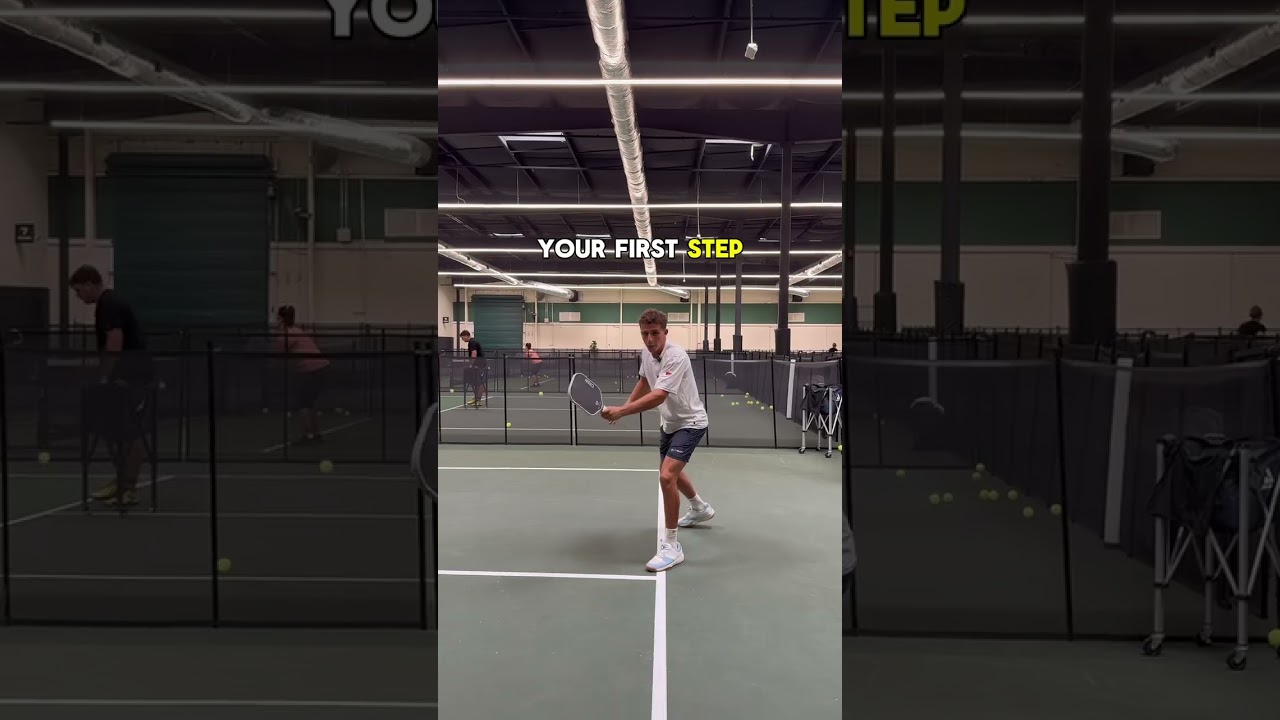
The Block Beats the Swing Every Time
When a drive comes at you at the net, do nothing. Not a swing, not a punch, nothing resembling a volley you'd hit off a pop-up.
Paddle out front, loose grip, let the ball hit it. The court is helping you here, too.
The USA Pickleball rulebook puts the non-volley zone 7 feet back from the net on each side, and nobody may volley from inside it.
A banger literally cannot stand at the net and swing.
That's a block, and it's the single highest-percentage answer to pace in the sport, because you're borrowing their power instead of generating your own.
Half of this matchup is refusing to add speed to a ball that already has plenty.
Grip pressure is where most players blow it. Squeeze hard and the ball rockets off your face and sails long.
Stay soft, around four out of ten, and it dies at their feet. Keep your paddle out front and your base wide.
Our guide to the push block at the kitchen line walks through the contact point, and and the rule of thumb is simple: if the drive is above your chest, let it go out.
Watch how often it does.
When Should You Block and When Should You Counter?
Block anything at or above your shoulders.
Counter anything that comes in below your chest and slow, because that ball is sitting in your strike zone and a block just hands the rally back.
The tactical breakdown of when to block versus counter against bangers is worth a read if you're the type who counters everything and wonders why half of them fly.
Pro Michael Loyd's two-thing rule for counters is the cleanest version I've seen: stable wrist, short swing.
Nothing else. Want more? There's a breakdown on counterattacking like a 5.0 and on attacking drives directly.
 The Dink Media Team
How Do You Stay Calm When Playing Against a Banger?
Shrink the game down to one job per shot. Not "win this point." Just "get this ball to land soft in the kitchen."
A 2026 position statement on performing under pressure describes the mechanism well: anxiety pulls your attention onto consciously steering a stroke you'd normally hit on autopilot.
It's not pickleball research, so take it as a frame rather than a promise.
But players who melt down against pace are almost always trying to solve the whole rally in one swing, which is one of the strategy mistakes quietly killing their results, and that's a fast way to pile up unforced errors you'll be thinking about in the car.
Three things help, and none of them are complicated (and none of them involve hitting harder):
- Breathe out on contact. It keeps your grip loose and your shoulders down.
- Reset between points, not during them. The six-second mental reset exists for exactly this.
- Expect to lose a few points fast. Bangers win quick points. That's the deal. It isn't evidence your plan is broken.
A 2024 meta-study found athletes and coaches across sports consistently name the same tools: routines, self-talk, task-focused attention.
Not pickleball-specific, but the pattern holds.
Our piece on staying calm under pressure covers the defensive mindset in more depth, and if you want the mental side from the pro level, the breakdown of patience, pressure, and grit is a good companion read.
The Reset Is Your Escape Hatch When Playing Against a Banger
A reset is a soft shot from the transition zone or midcourt that drops into the non-volley zone and takes all the speed off the rally.
It turns their offense into a neutral dink exchange, which is the exchange they usually don't want.
Get low, get the paddle under the ball, and absorb instead of punch.
The midcourt reset takes maybe two weeks of focused reps to become reliable, and it changes how the whole match feels.
Zane Navratil's rules for beating bangers lean on the same idea: neutralize first, attack second. For the full mechanics, start with the reset shot guide.
 The Dink Media Team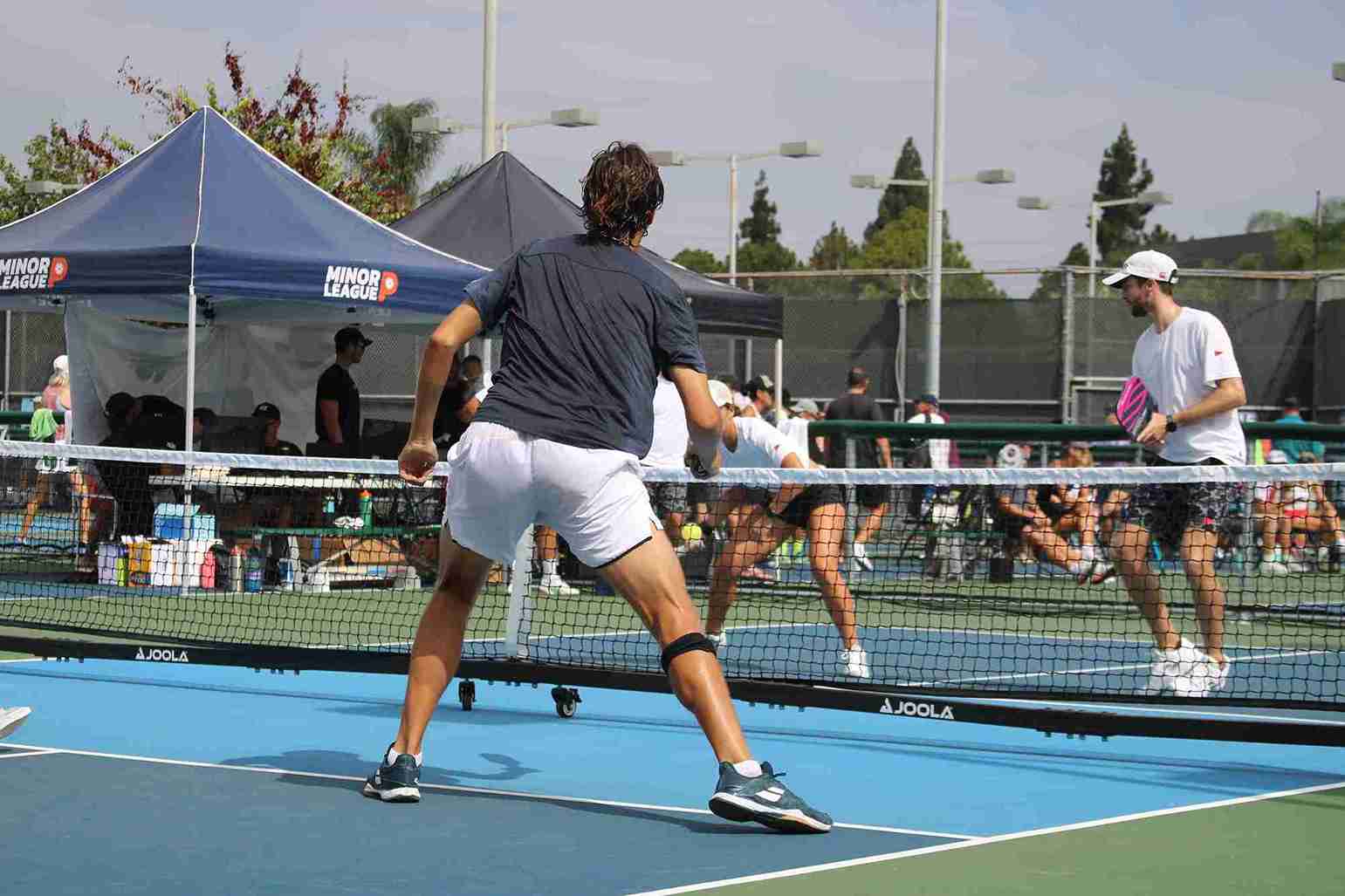
Drill It, or It Won't Show Up on Game Day
None of this holds up under pressure unless your hands are ready before the ball arrives. Paddle up, out front, at roughly chest height every single time.
Paddle preparation is the difference between a block and a flail.
Then feed it. Have a partner drive at you from the baseline while you block ten in a row into the kitchen; no counters allowed.
Add fast hands drills once the blocks are automatic.
Twenty minutes a week and playing against a banger starts feeling less like a fire drill and more like a free win.
Honestly, most of them are counting on you to panic. Don't.
 The Dink Media Team
Key Takeaways
- A banger hits hard, flat balls from the baseline or midcourt instead of using the soft game.
- Deep, high returns push them back and take pace off their drive before it starts.
- Block above the chest, counter below it. Grip pressure around four out of ten.
- Resets, not winners, are how you flip a defensive rally back to neutral.
- Let the ball go out. Bangers hit long far more often than you'd guess.
- Playing against a banger is won with patience and shot selection, not matching power.
- The kitchen rule is on your side. Nobody can volley inside the 7-foot non-volley zone.
Frequently Asked Questions
What is a banger in pickleball?
A banger is a player who hits almost every ball hard and flat, typically driving from the baseline or midcourt rather than dropping and advancing to the kitchen line. The style trades consistency for speed and pressure. Bangers are most common at the 3.0 to 4.0 level, though plenty of strong players keep a drive-heavy game on purpose.
How do you beat bangers in pickleball?
Return deep, block instead of swing, and reset the ball into the kitchen whenever you're caught in the transition zone. The goal is to make them hit one more ball than they want to. Most drive-heavy players lose patience and go for a low-percentage shot within three or four exchanges.
Should I hit back just as hard?
No, unless you're clearly winning those exchanges. Trading pace with someone who has rehearsed it thousands of times is playing their match, not yours. A soft block that lands at their feet does more damage than a counter that sails two feet long.
Why do I keep popping balls up against hard hitters?
It's almost always grip pressure and contact point. A tight grip bounces the ball off your paddle face, and letting it get behind your body forces your paddle angle open. Keep your hands out front and your grip soft, and the pop-ups mostly disappear.
Does the kitchen line still matter against a banger?
More than ever. Bangers want you stuck in the transition zone, where their drive has the best angle at your feet. Getting to the non-volley zone line and holding it takes away their best target. USA Pickleball's rules bar anyone from volleying inside the 7-foot kitchen, which forces the soft exchanges most bangers would rather avoid.

Love Pickleball? Join 100k+ readers for free weekly tips, news & gear deals.
Subscribe to The Dink