
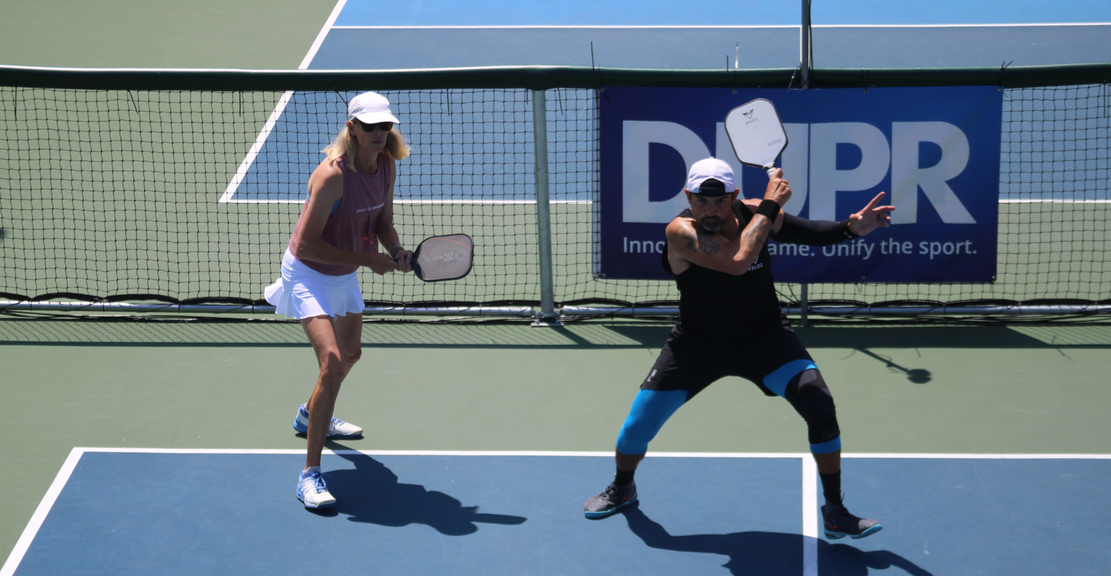
Playing Pickleball After 70: What to Expect and How to Keep Thriving
Pickleball after 70 is exploding in popularity, and for good reason, it delivers real cardiovascular, social, and cognitive benefits without punishing your joints. Here's everything you need to know to start strong and keep playing for years to come.
Pickleball after 70 is not a consolation prize. It's one of the best decisions an older athlete can make.
The smaller court, the slower ball, the emphasis on placement over power, every element of this game was essentially designed for players who want to compete hard without wrecking their knees in the process.
More than 36 million Americans now play pickleball, and the fastest-growing slice of that number isn't Gen Z.
It's players over 60. Seniors are showing up, staying on the court, and in many cases playing five days a week. Some are competing nationally.
And the research behind why this sport is so ideal for older players is genuinely compelling.
Here's what you can expect when you start playing pickleball after 70, and how to make sure you're still going strong at 75, 80, and beyond.
Love pickleball? Then you'll love our free newsletter. We send the latest news, tips, and highlights for free each week.
Why Pickleball After 70 Is Different From Every Other Sport You've Tried
Pickleball after 70 works where other sports fail older athletes because the physics of the game cooperate with aging bodies.
The court is 44 feet long and 20 feet wide, roughly a third of a tennis court. You cover less ground. The ball moves slower.
Rallies are decided by touch and positioning, not by who can sprint fastest to the corner.
That's not a workaround. That's a feature.
 The Dink Media Team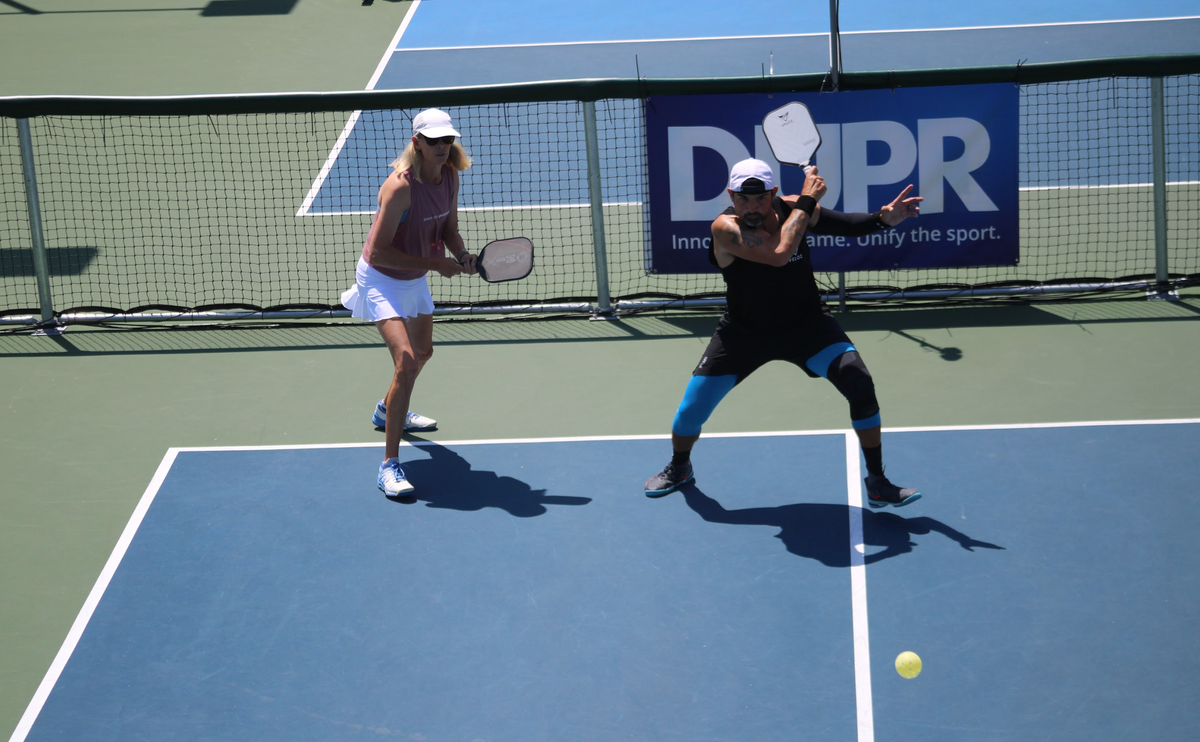
Research published in the Journal of Aging and Physical Activity found that recreational pickleball play produced significant improvements in cardiovascular fitness, agility, and mental wellbeing in adults over 65.
The metabolic demands are real, this isn't shuffleboard. But the injury risk is dramatically lower than racquet sports like tennis.
AARP has recognized this at scale, launching a nationwide clinic tour specifically targeting active aging.
When the country's leading senior advocacy organization builds a national program around your sport, that's the signal you've been looking for.
For senior players who've spent years watching sports become gradually harder on their bodies, pickleball is the rare activity that actually gets better as your experience grows.
What Does Your Body Actually Go Through Playing Pickleball After 70?
Honest answer: more than you'd expect from something that looks so casual from the sidelines.
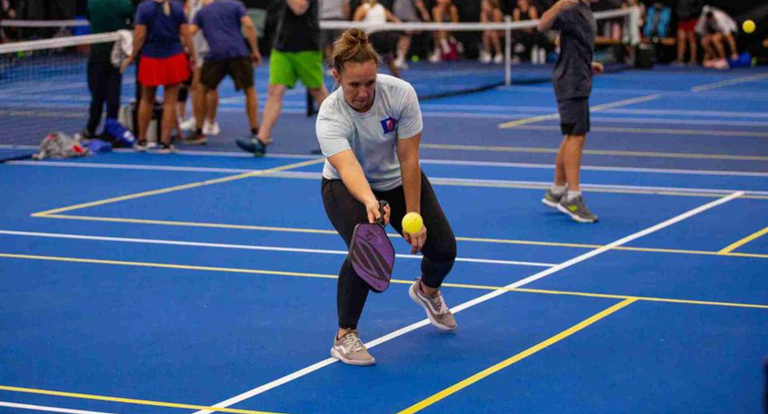
Pickleball puts real demands on your cardiovascular system, your lower body, and your hand-eye coordination.
A typical recreational session of 60–90 minutes can burn 350–500 calories, depending on pace and intensity.
Heart rate during play regularly hits 60–85% of maximum, which puts it squarely in the aerobic training zone recommended by the American College of Sports Medicine for older adults.
That means you're actually getting a legitimate cardio workout while socializing and competing.
 Alex E. Weaver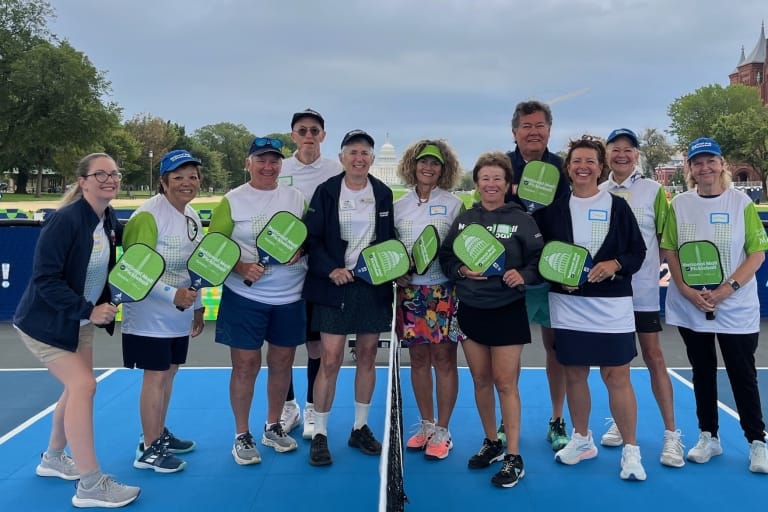
Joints are the bigger conversation.
Here's the good news: the underhand serve, the shorter court, and the soft game emphasis mean your shoulders, elbows, and knees are under far less stress than in tennis or running.
Most seasoned seniors report that pickleball causes fewer flare-ups than any racquet sport they played before.
The less good news: it's not zero-impact. Ankle rolls, knee strain from lateral movement, and pickleball elbow (a form of lateral epicondylitis) are real.
They happen most often when players skip the warm-up or jump from zero to five days a week too fast. More on how to avoid that below.
The Cognitive and Social Angle Nobody Talks About Enough
Here's the thing most articles skip when they cover pickleball for older players: the brain benefits.
A 2025 study from the British Journal of Sports Medicine identified court sports as among the most neuroprotective physical activities available, linking regular racquet sport participation to significantly lower rates of cognitive decline.
Pickleball checks every box: it requires real-time decision making, spatial awareness, pattern recognition, and social engagement, all in the same 90-minute session.
That social dimension matters enormously. Loneliness is one of the leading health risk factors for adults over 70, and pickleball practically eliminates it.
Studies on longevity in athletes consistently show that social sports outperform solo training in long-term health outcomes.
Doubles play means you're always talking, strategizing, and laughing with other people. You build a regular crew fast.
Mental health benefits extend beyond the social side.
The learning curve, figuring out your third shot, improving your dinking consistency, understanding court positioning, keeps the brain engaged in a way that low-skill activities simply don't.
 The Dink Media Team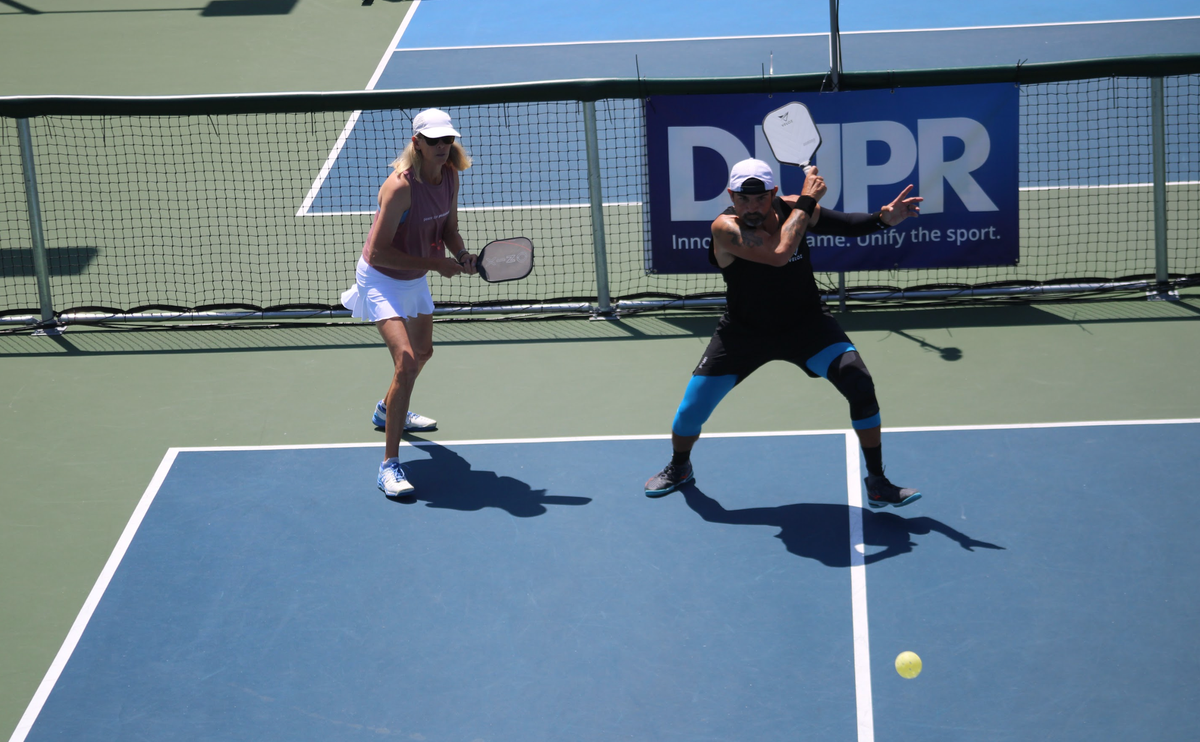
How to Start Playing Pickleball After 70 Without Getting Hurt
Starting smart is the whole game here.
The players who crash out in the first three months are almost always the ones who did too much, too soon, without proper gear or warm-up routines.
- Start with two days a week, not five. Your connective tissue adapts more slowly than your cardiovascular system. You'll feel like you can handle more. Respect the timeline anyway. Build to three days after four to six weeks, then reassess.
- Warm up for real. Ten minutes minimum. Dynamic stretching, leg swings, hip circles, shoulder rotations, beats static stretching before play. Hip mobility is especially critical for lateral court movement. Cold muscles on a pickleball court are an injury waiting to happen.
- Get the right shoes. Court shoes with lateral support are non-negotiable. Running shoes do not cut it on a pickleball court, their heel bias actually increases ankle injury risk during side-to-side movement. The data on which shoe matters most is clearer than most people realize. If your feet need extra support, quality inserts can be a game-changer for longer sessions.
- Protect your elbow. Grip pressure is a common culprit for tendon issues. Many older players grip the paddle too tight under pressure, a death grip that transfers shock directly up the forearm. Loose grip during dinking and resets dramatically reduces strain. Recovery products designed specifically for pickleball players can also help manage early soreness before it becomes a chronic problem.
If you're managing arthritis or joint conditions, USA Pickleball's adaptive play resources outline specific modifications that keep the game accessible without additional strain.
The Dink Media Team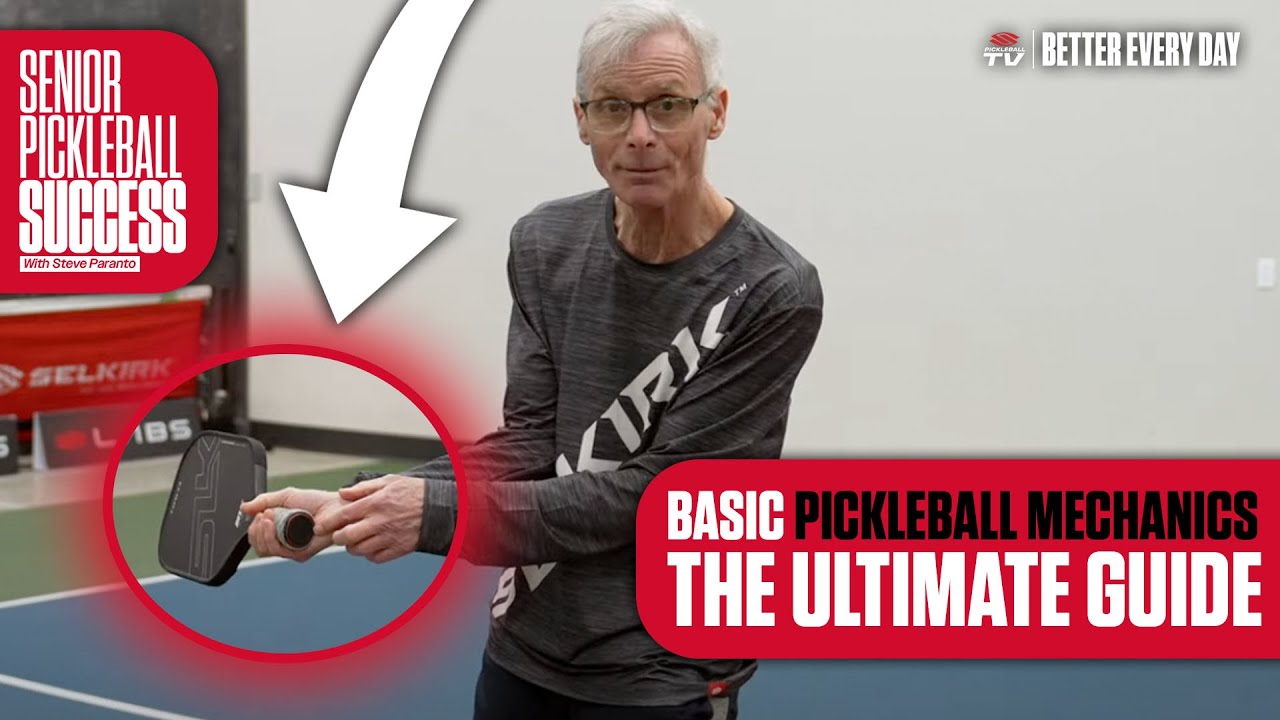
What Parts of the Game Actually Get Better With Age?
This is worth stopping on. Because pickleball after 70 isn't just about managing limitations.
There are genuine competitive advantages that older, experienced players develop.
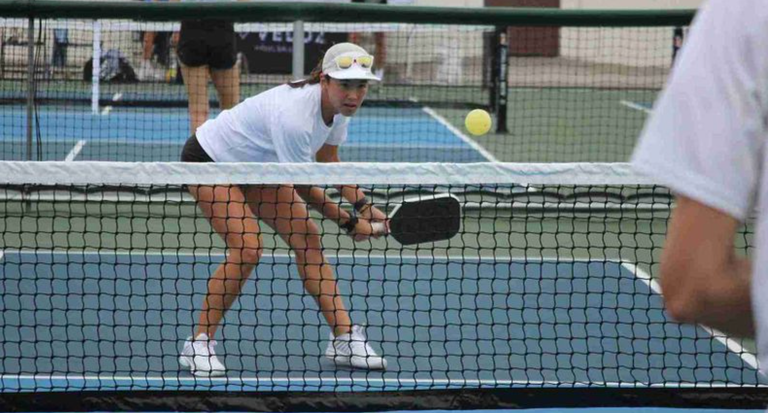
- Patience. The kitchen game, prolonged dinking exchanges at the non-volley zone line, is won by the player who waits longest for a genuinely attackable ball. Younger players speed things up prematurely and create their own errors. Older players who've been in long rallies before know how to stay composed. Positioning yourself correctly at the kitchen matters far more than foot speed.
- Shot selection. Power is the first thing to diminish with age. Precision is the last. A well-placed soft shot to the backhand hip is worth twice as much as a pace ball hit straight at someone's forehand. The five shots you genuinely need to know are all within easy reach for any 70-plus player who practices consistently.
- Reading the game. Pattern recognition compounds with court time. After 200 hours on a pickleball court, you start seeing opportunities before they develop. You recognize when your opponent is about to speed up. You anticipate the cross-court dink. This is pure mental reps, and age is not a limiting factor.
- Simplified strategy. Easy ways to simplify your pickleball game are actually superior strategy for most recreational levels. Stop trying to do too much. Hit deep returns. Get to the kitchen. Dink until you get a ball you can attack. Older players who internalize this framework compete at 4.0 and above without needing elite athleticism.
The Dink Media Team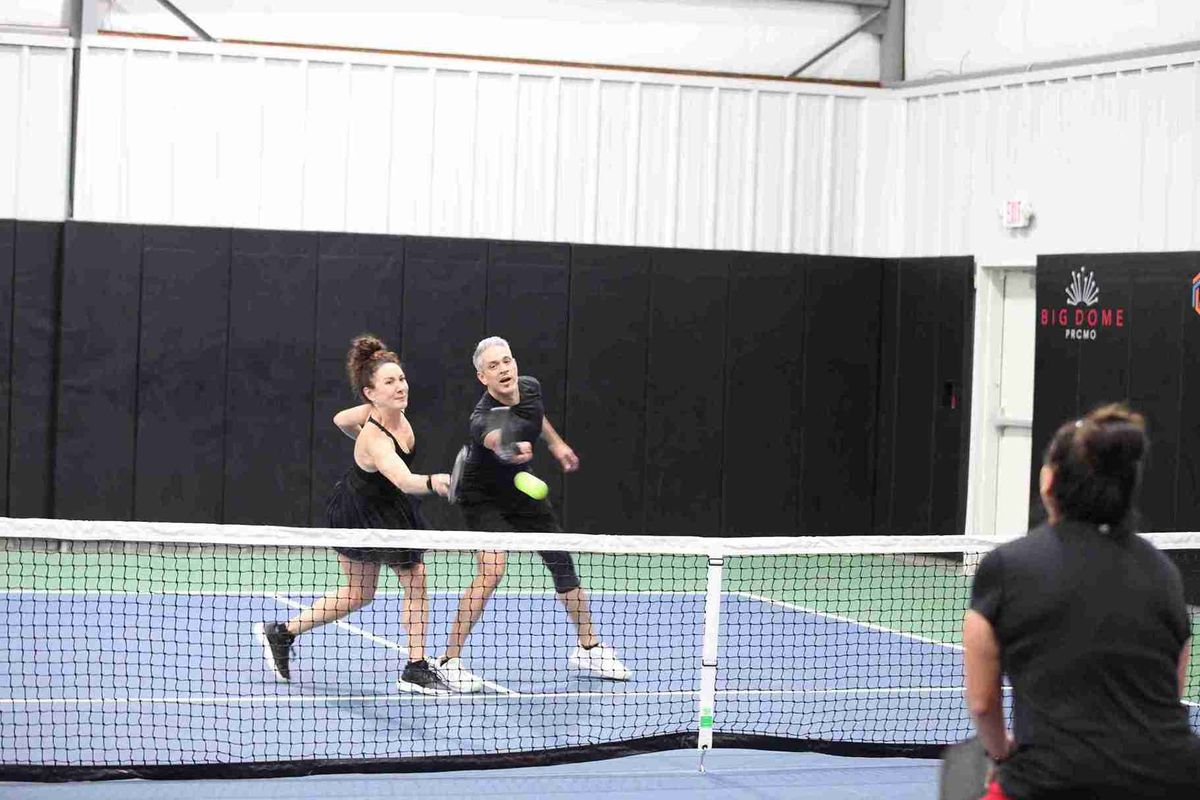
Recovery Is Part of Your Game Plan Now
You can't separate on-court performance from off-court recovery when you're playing pickleball after 70. They're the same system.
Sleep is your biggest recovery tool. Aim for seven to nine hours.
Muscle recovery processes are substantially faster during deep sleep, and chronic sleep deficit accelerates joint inflammation.
Hydration gets underestimated. Older adults have a reduced thirst response, meaning you can be significantly dehydrated before you feel it.
Drinking more water than you think you need before, during, and after play is a genuine performance and injury-prevention strategy.
Active recovery days, walking, light yoga, swimming, beat total rest days for most older athletes.
Staying mobile between court sessions maintains the flexibility that makes lateral movement safer and more efficient.
Cold exposure and contrast therapy have growing research support for post-play recovery in older athletes.
Cold plunge protocols have become standard for serious players managing inflammation after heavy sessions.
The Dink Media Team
Is Pickleball After 70 Safe With Existing Health Conditions?
Generally, yes, with appropriate modifications and physician clearance. This isn't a blanket statement.
Get cleared before you start if you have cardiovascular disease, uncontrolled hypertension, or significant joint instability.
For players managing osteoarthritis, research from the Arthritis Foundation consistently supports low-impact court sports as beneficial, not contraindicated, for joint health.
Movement promotes synovial fluid circulation. Inactivity accelerates joint degradation.
For players with Parkinson's or other neurological conditions, the sport has dedicated adaptive pathways.
Selkirk's Parkinson's Foundation partnership is one example of how the pickleball community is actively building inclusive infrastructure for players with specific health needs.
The key is modification, not elimination. Adapt your stance, serve mechanics, and footwork to your body's current range of motion.
The rules are flexible enough to accommodate a wide range of physical profiles.
Key Takeaways
- Pickleball after 70 delivers real cardiovascular, mobility, and social benefits backed by published research.
- The low-impact format makes it far gentler on joints than tennis, basketball, or running.
- Smart warm-ups, proper footwear, and adjusted playing frequency prevent the most common senior injuries.
- The kitchen game (dinking, soft resets) actually favors older players who prioritize control over power.
- Recovery becomes part of the game, plan rest days like you plan court time.
Frequently Asked Questions
Is pickleball after 70 safe for people with joint problems?
Pickleball is one of the most joint-friendly racquet sports available for older adults. The underhand serve eliminates the shoulder stress of tennis, the smaller court reduces running load, and the emphasis on touch and placement keeps explosive movement to a minimum. Players managing osteoarthritis should get physician clearance and may benefit from neoprene knee or elbow sleeves during play, but the Arthritis Foundation actively recommends pickleball as a beneficial low-impact activity for joint health.
How many days a week should a 70-plus player play pickleball?
Two to three days per week is the sweet spot for most players over 70, especially in the first few months. Connective tissue adapts more slowly than cardiovascular fitness, you'll feel capable of more before your tendons are ready for it. Build gradually, prioritize rest and active recovery days between sessions, and only increase frequency when soreness fully resolves between sessions.
What equipment does an older pickleball player actually need?
Court-specific shoes with lateral support are the most critical investment, running shoes significantly increase ankle injury risk on hard courts. Beyond that, a medium-weight paddle (7.5 to 8.2 oz) in the 13mm–16mm thickness range offers a good balance of control and power for older recreational players. Compression sleeves for knees or elbows, a proper paddle grip size, and a high-quality insole for extra cushioning round out the core kit.
Do older players have any actual advantages in pickleball?
Yes, more than most people expect. The kitchen game (extended dinking exchanges at the non-volley zone) rewards patience, soft hands, and shot selection over athleticism. Older players who've competed in any racquet sport bring an instinctive feel for angles, positioning, and patience that takes younger players years to develop. The slow game is tactically sophisticated, and experience is a genuine edge in it.
How does pickleball after 70 compare to tennis for older adults?
Pickleball requires roughly 60–70% less court coverage than tennis, puts far less rotational stress on the shoulder and elbow (due to the underhand serve), and keeps most exchanges at the non-volley zone rather than demanding full-court sprints. Most sports medicine practitioners who work with older racquet sport athletes consider pickleball the superior option for players over 65 who want to stay competitive without risking overuse injury.
The Bottom Line on Pickleball After 70
The game rewards exactly what you've spent decades building. Patience. Precision. The ability to slow things down and wait for the right moment. The physical demands are real but manageable. The social upside is massive. And the research on its health benefits for older adults is about as clean as it gets in exercise science.
Playing pickleball after 70 isn't about playing a senior sport. It's about finding the one sport where experience genuinely compounds, where every hour on the court makes you smarter and more dangerous, not slower and more limited.

Love Pickleball? Join 100k+ readers for free weekly tips, news & gear deals.
Subscribe to The Dink