
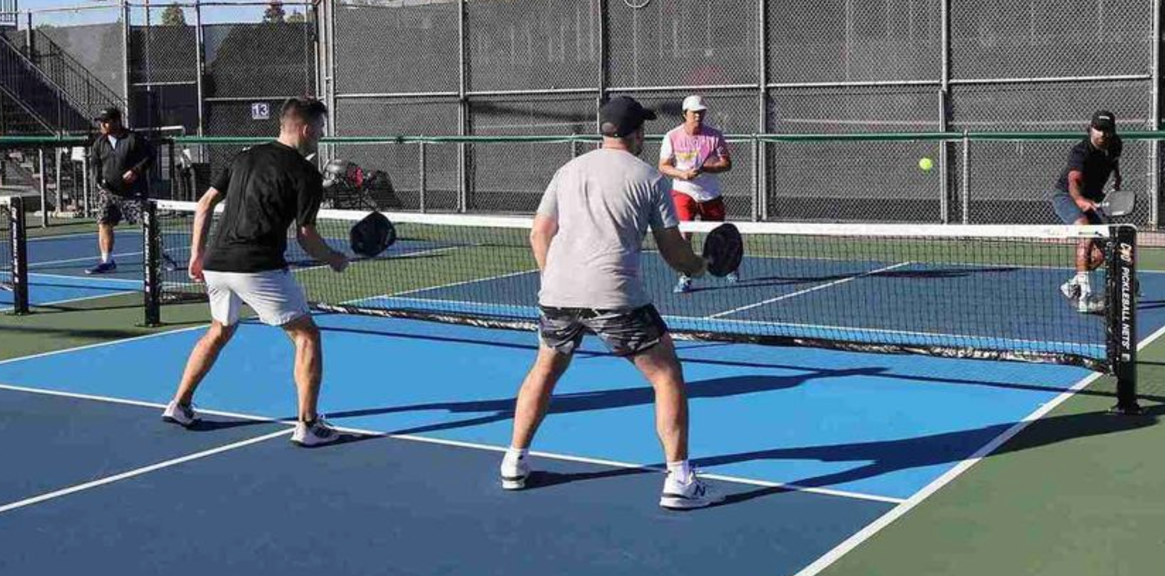
Losing focus with a big lead in pickleball is the most common way good players give away won matches. Keep your shot selection identical, give yourself a target instead of a scoreboard, and practice closing from 9-3.
Losing focus with a big lead in pickleball is the single most common way decent players hand away matches they already won.
You're up 9-3. You've been playing clean, patient, consistent pickleball for twenty minutes.
Then the score hits 9-6, your partner is giving you that look, and nobody can explain what changed.
Here's the thing:
Nothing changed about your opponents. Something changed about you.
Love pickleball? Then you'll love our free newsletter. We send the latest news, tips, and highlights for free each week.
Why Does Losing Focus With a Big Lead in Pickleball Happen So Often?
Losing focus with a big lead in pickleball happens because a comfortable score quietly changes your shot selection before you notice it.
You stop hitting the shot that built the lead and start hitting the shot that protects it. Those are two different shots, and only one of them wins points.
Watch what actually happens at 9-3. The drive you were ripping down the middle becomes a soft push.
The third shot drop you were committing to becomes a tentative lob that sits up. You're not playing worse on purpose.
You're playing safer, and safe pickleball against a team with nothing to lose is a losing formula.
The case for boring pickleball holds up right until boring turns into passive.
The Scoreboard Starts Playing Your Shots for You
Honestly, the worst thing about a lead is that it gives you something to think about.
Up 9-3, your brain stops solving the rally in front of you and starts doing math.
Two more points. Don't blow this. That's the moment your shot selection goes from reactive to calculated, and calculated is slow.
Unforced errors already decide most pickleball points.
One 2025 notational analysis of elite women's singles found that 63.7% of points ended on unforced errors, with the pattern concentrated in short and medium rallies.
That study covers pro singles, not your Tuesday rec game, but the lesson travels: you are far more likely to beat yourself than to get beaten.
A lead just raises the odds you'll be the one donating, which is why cutting unforced errors beats adding new shots.
What "Losing Focus With a Big Lead in Pickleball" Actually Looks Like
Losing focus with a big lead in pickleball is a specific behavioral pattern, not a vague mood.
It shows up as three things: shorter rallies, softer contact, and faster decisions. You stop resetting when you should and start swinging when you shouldn't.
Think of it this way. A collapse isn't one bad shot. It's the same bad shot four times in a row because nobody said anything after the first one.
The score goes 9-3, 9-4, 9-5, and by the time you notice, you're playing scared instead of playing controlled aggression.
Keep Hitting What Got You There
The fix for losing focus with a big lead in pickleball starts with a boring rule: don't change anything. Not your serve, not your return depth, not your third.
The lead is evidence that your plan is working. Changing the plan at 9-3 is like benching your best player because he's scoring too much.
Three things to keep identical:
- Your serve. Same depth, same spin, same target. If a deep serve to the backhand has been working, hit it eleven more times. Early preparation matters more than variety here.
- Your third shot. If you've been dropping, keep dropping. If you've been driving, keep driving. Switching mid-lead is how you end up stuck in the transition zone.
- Your patience at the kitchen. Dink until the ball comes up. That's it. Holding your dinks is still the right play at 9-3.
Why Does Momentum Swing So Fast in Pickleball?
Momentum swings fast because pickleball scoring compresses errors into runs.
Side-outs mean a single sloppy point hands the serve back, and three sloppy points in a row is a 9-3 lead turning into a real match.
Momentum control is less about getting hot and more about refusing to go cold.
The team trailing has permission to swing freely. You don't, because you've got something to lose.
That asymmetry is the whole problem, and the only way around it is to stop treating the lead as an asset you're guarding.
 The Dink Media Team
How Do You Fix Losing Focus With a Big Lead in Pickleball Mid-Match?
To fix losing focus with a big lead in pickleball mid-match, give yourself a job that has nothing to do with the score.
A target, a contact point, a depth. Something you can actually control on the next ball.
Sport psychology research supports this.
A 2026 position statement from Exercise and Sports Science Australia found that pre-performance routines and process goals consistently helped athletes perform under pressure, and that broad cues like "drive" worked better than fiddly mechanical ones like "arch your back."
Most of that evidence comes from closed skills like putting and free throws rather than live rallies, so treat it as a strong starting point rather than proof of what happens in a live rally.
The Reset Between Points That Actually Works
Build a reset you run every single point, not just when you're nervous. Turn away from the net.
One breath. Set your paddle. Look at your target. Four seconds, every time, the same way you'd reset a point after a bad miss.
The reason this beats "just focus harder" is that it's a physical sequence, so it still runs when your head is noisy. The Dink's six-second mental reset is built on the same idea, and it works whether you're up six or down six.
Pick a Target, Not an Outcome
Replace "don't miss" with a location. Deep middle. Cross-court backhand. Right hip.
Specific targets keep your attention outside your own body, which is exactly where it needs to be when the pressure arrives.
That's a core piece of staying calm under pressure and it costs nothing to try tonight.
 The Dink Media Team
What Should You Say to Your Partner at 9-3?
Say something about the next point, not the score. "Let's get a deep serve." "I'm going at his backhand." Anything that points forward.
What you should never say: "Two more." That phrase has ended more leads than any opponent.
It moves both players' attention to the finish line, which is the exact mechanism behind losing focus with a big lead in pickleball.
Good doubles partnerships talk tactics, not arithmetic.
If your partner is the one unraveling, call a timeout. Timeouts exist precisely for this, and most rec players never use them until it's 9-9.
 The Dink Media Team
Can You Practice Closing Out Matches?
Yes, and it's the most underrated drill in the sport. Start games at 9-3 in practice. Play them out. Do it ten times and the feeling of holding a lead stops being novel.
Why Losing Focus With a Big Lead in Pickleball Shows Up in Drilling Too
Losing focus with a big lead in pickleball shows up in drilling because most players practice the middle of a game and never the end of one.
You run dinking drills and third shot reps for an hour, then play games where the score genuinely matters maybe twice.
Fix it by adding stakes. Play to 11, win by two, loser does something unpleasant. Or run closing techniques as a dedicated block so that finishing a point feels routine.
A little pressure in practice makes real pressure feel smaller, which is the entire point of drilling with intent rather than drilling for reps.
 The Dink Media Team
Key Takeaways
- Losing focus with a big lead in pickleball is a shot selection problem first and a mental problem second.
- Don't change your serve, your third, or your kitchen patience once you're ahead.
- Replace scoreboard thinking with a specific physical target on every ball.
- Run the same four-second reset between every point, not just the tight ones.
- Say tactics to your partner, never "two more."
- Practice starting games at 9-3 so closing feels normal.
Frequently Asked Questions
Why do I always lose my lead in pickleball?
Most leads disappear because players shift from attacking to protecting. The shots get softer, the rallies get shorter, and unforced errors pile up fast. The fix is to keep running the same game plan that built the lead instead of switching to a defensive version of it.
What is the best way to stay focused at the end of a pickleball game?
Give yourself a concrete target on every shot, like deep middle or cross-court backhand. Specific targets keep your attention on the ball instead of the scoreboard. Pair that with a short, repeatable reset routine between points.
Should I change my strategy when I'm winning big?
No. A big lead means your strategy is working. Change only if your opponents adjust first and start neutralizing a specific shot, and even then adjust one thing, not everything.
Is choking under pressure a real thing in pickleball?
Yes. Performance under pressure drops when attention turns inward toward mechanics and outcomes rather than outward toward the ball and the target. Research across sports supports this pattern, though most studies come from golf, basketball, and other sports rather than pickleball specifically.
How do I practice closing out pickleball matches?
Start practice games at 9-3 or 10-5 and play them out. Repeating the end of a match removes the novelty of holding a lead. Adding small stakes, like a loser penalty, makes the practice pressure closer to real match pressure.

Love Pickleball? Join 100k+ readers for free weekly tips, news & gear deals.
Subscribe to The Dink