
The 3.5 pickleball mistakes to fix that are quietly costing you matches are almost never the ones you think. This guide breaks down the most common errors holding 3.5 players back and exactly how to correct them before your next tournament.
If you're serious about eliminating your 3.5 pickleball mistakes to fix, the first thing you need to accept is this: most of your errors aren't physical.
They're mental. They're habitual. And they're fixable faster than you think. You just need to know exactly what to look for.
The 3.5 level is a weird place to live. You're good enough to rally, control your dinks, and execute a decent third shot drop.
But you're not consistent enough to win when it counts. You lose to players who seem slower, less athletic, and somehow less impressive in warmup.
It's frustrating. And it almost always comes down to the same cluster of correctable mistakes.
Love pickleball? Then you'll love our free newsletter. We send the latest news, tips, and highlights for free each week.
What Actually Separates a 3.5 From a 4.0?
The gap between a 3.5 and a 4.0 player isn't paddle speed or ATP attempts. It's consistency under pressure and pattern recognition.
A 4.0 player doesn't just hit better shots. They make fewer unforced errors, know when to reset versus attack, and they almost never beat themselves.
According to USA Pickleball's 2025 skill rating descriptions, a 3.5 player demonstrates "improved shot consistency with directional control on ground strokes" but still "lacks control when trying for power."
That single phrase explains almost every mistake on this list.
Understanding where you actually sit in the rating system matters before you can start fixing anything. You can't solve a problem you haven't correctly identified.
The 3.5 Pickleball Mistakes to Fix That Are Costing You Points
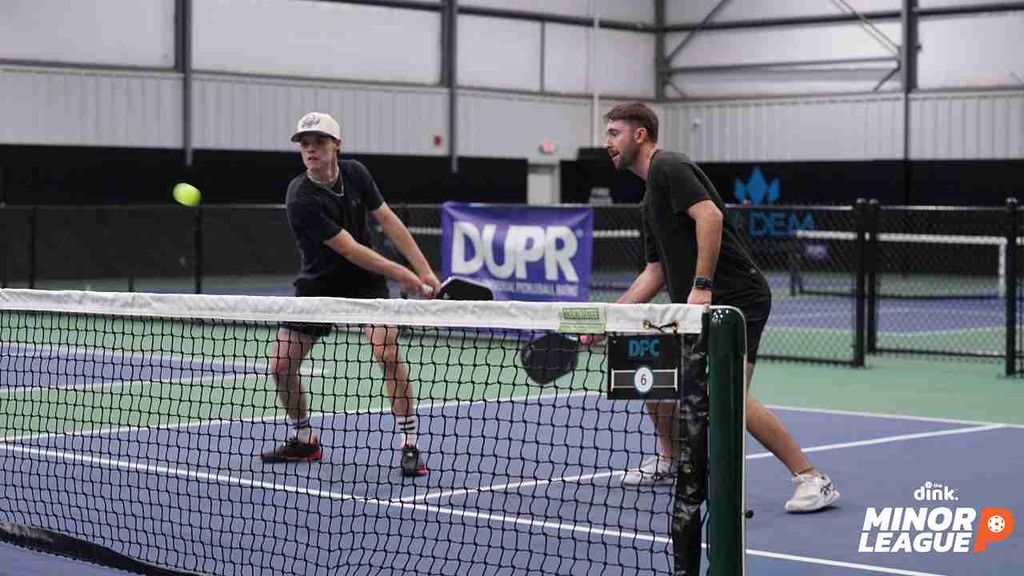
Mistake #1: Camping Out in No Man's Land
This is the one. If you're serious about fixing your 3.5 pickleball mistakes, start right here.
No man's land (the area roughly between the baseline and the kitchen line transition zone) is where 3.5 players go to die.
Here's what happens: you hit a serviceable third shot drop, your opponents handle it cleanly, and instead of committing to the kitchen, you stall.
You take one step forward, maybe two. Then a hard dink or a drive catches you mid-stride, your paddle's too low, and you pop it up for an easy put-away.
The fix is not subtle. After your third shot, you need to move forward decisively. If your drop is good enough to be neutral, keep moving.
If it's not, reset from where you are and try again on the fifth shot.
Learning how to position yourself at the kitchen is one of the highest-ROI skills you can develop at the 3.5 level.
The word "transition zone" gets thrown around a lot.
Here's a clean definition: the transition zone is the mid-court area (roughly 7-14 feet from the net) where you are vulnerable to both drives at your feet and angled dinks. It's not a place to camp. It's a place to move through.
A good drill: practice the fridge and toaster movement pattern to train your feet to move forward aggressively after the third shot.
Your footwork will start doing the thinking for you.
Mistake #2: Treating the Return of Serve Like a Formality
Most 3.5 players think the serve is the weapon and the return is just... getting the ball back. That mindset is a problem.
The return of serve is your best chance to go on offense before the point even starts.
Here's the thing: the serving team starts the point with a major disadvantage: they can't come to the net on the first shot because of the two-bounce rule.
That means a deep, aggressive return forces them to hit a difficult third shot while you're already moving forward.
You're essentially handing yourself control of the rally before a single dink is traded.
The most common 3.5 pickleball mistake to fix on the return isn't hitting it out. It's hitting it short and flat.
A short return lands at the server's comfort zone, lets them step into a third shot drive, and erases your advantage completely.
Where you place your return matters just as much as depth. Targeting the opponent's backhand hip is a reliable starting point.
Deep to the middle? Also excellent. It creates communication problems between partners.
Research published in the International Journal of Sports Science & Coaching (2025) found that return placement toward the center of the court in paddle sports increased transition errors from the receiving team's opponents by over 20%.
A consistently deep return followed by an aggressive move to the kitchen is one of the simplest tactical adjustments you can make today.
 The Dink Media Team
Mistake #3: Dinking Without a Direction or a Plan
This one's subtle. At 3.5, most players have learned to dink. What they haven't learned is why they're dinking where they're dinking.
Random cross-court dinks are neutral at best.
But purposeful dinking (moving the ball to open angles, targeting the backhand, building toward an attackable ball) is what separates recreational dinking from tactical dinking that actually sets up winners.
Think of the dink exchange like chess, not ping pong.
Every shot should either maintain the point you've built, move your opponent out of position, or set up an attack.
If you can't answer "why did I hit that dink there," you're just rallying.
The go-to slice dink is worth adding to your toolkit here.
A low, skidding slice forces your opponent to lift the ball, which is exactly the kind of "up ball" you want to attack.
Combine it with deception and shot variety and your dink game starts applying real pressure.
A practical framework: use three dinks to relocate your opponent, then a fourth to create the opportunity.
Don't rush the attack. Patience is the skill most 3.5 players are missing, and it's free.
 The Dink Media Team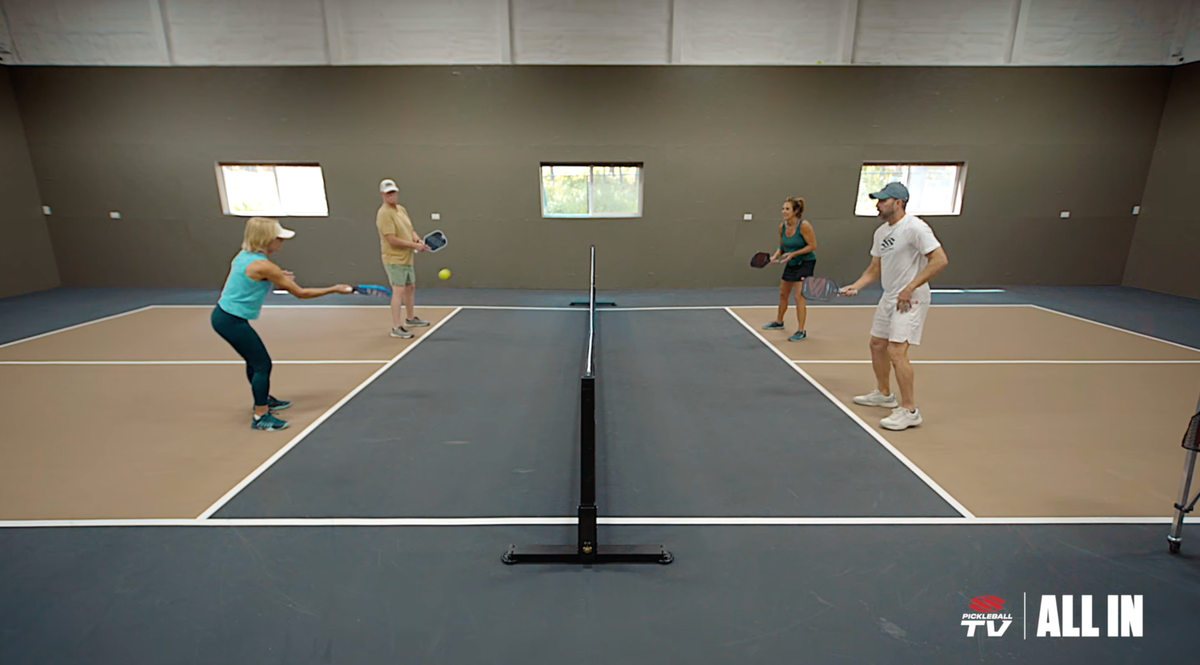
Mistake #4: Ignoring the Third Shot Drop Under Pressure
Every 3.5 player knows what a third shot drop is. Far fewer execute it consistently when the match is close and their nerves are up.
In practice, your third shot drop is smooth. In tournament play, it becomes a drive. Or worse, a floater.
The fix isn't to practice the drop more. It's to understand when to use it versus when to drive.
Here's the framework: if you're behind in the score or the pace is high, the drop resets the tempo in your favor.
If your opponents are deep and the ball is sitting up, the drive makes sense.
Defaulting to the drop under pressure is almost always the right call until you've proven to yourself that your drive is reliable at full match intensity.
Work on these solo drills to train the drop under fatigue. Add these advanced shot selection reps once the basic mechanics are clean.
 The Dink Media Team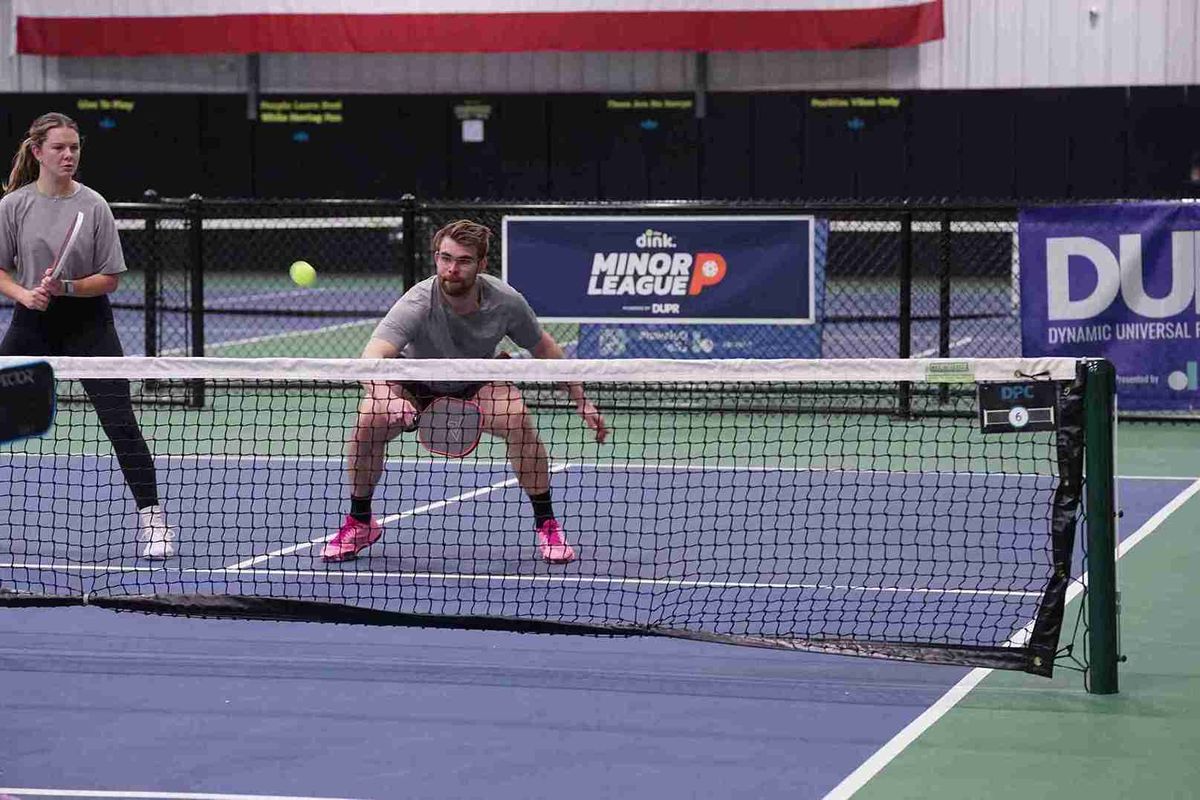
Mistake #5: Failing to Communicate in Doubles
This one doesn't get enough airtime in the "fix your 3.5 pickleball mistakes" conversation, but it belongs right here in the top five.
At 3.5 doubles, the middle ball is a recurring disaster. Two players freeze, both swing, or neither swings.
The opponent gets a free point and you share an awkward glance over the net. It happens at every 3.5 round robin in the country.
The solution is pre-point communication. Before every rally, establish: who takes the middle?
For most partnerships, the forehand player covers the middle on the dinking end, and the stronger player takes the aggressive ball in transition.
Changing the way you think about doubles positioning is the tactical reset that makes this easier.
Simple teamwork habits like calling the ball, setting expectations, and covering poaches don't require talent.
They require intention. And at the 3.5 level, a team with good communication beats a team with better individual skills more often than you'd expect.
Study the T and sideline placement patterns to understand how court coverage connects to shot selection. It changes the way you read the court.
 The Dink Media Team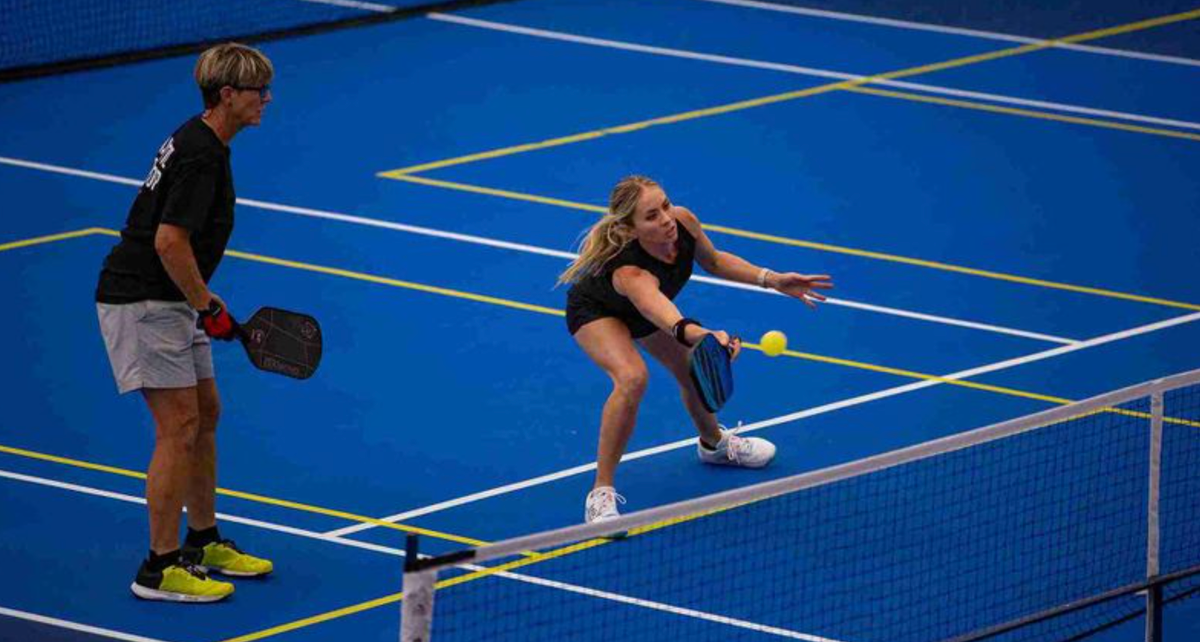
How to Fix 3.5 Pickleball Mistakes Before Your Next Tournament
Knowing the mistakes is step one. Actually fixing them requires structure.
The biggest trap is trying to work on everything at once. Pick one mistake per session. Drill it until it shows up in match play. Then move to the next.
A sample four-week prep cycle:
- Week 1: Kitchen positioning. Every drill ends at the kitchen line. No exceptions.
- Week 2: Return of serve depth. Hit every return deep, track what happens to the third shot you receive.
- Week 3: Directional dinking. Every dink has a target. Call it before you hit it.
- Week 4: Match simulation. Play games where you score yourself on execution, not outcome.
The figure-8 drill is a great standalone tool for building dink consistency and court awareness simultaneously.
Pair it with 4th shot coverage practice to cover the most critical transitions in doubles.
Zane Navratil made the point directly : playing tournaments, even when you lose, accelerates improvement faster than any amount of recreational play.
The pressure exposes exactly the habits you need to fix.
 The Dink Media Team
Why Do 3.5 Pickleball Mistakes Keep Coming Back?
The short answer: habits formed in casual rec play are incredibly sticky.
If you've played 200 hours of no-stakes kitchen singles, your baseline behaviors are built for low-pressure situations.
Tournament environments rewire how you process the game. Your serve becomes tentative.
Your third shot drop floats. Your communication breaks down. These aren't new mistakes.
They're old habits that were always there, just invisible when stakes are low.
Research from the Journal of Motor Learning and Development (2025) indicates that athletes who practice under simulated competitive pressure retain skills more effectively in actual competition.
The implication for pickleball is clear: drilling in comfortable conditions isn't enough. You need pressure in practice.
These 8 things amateur players should avoid reads like a checklist of tournament landmines. Worth bookmarking.
 The Dink Media Team
How to Fix 3.5 Pickleball Mistakes: The Mental Side
Here's the part most guides skip. Fixing 3.5 pickleball mistakes to fix isn't just about physical reps. It's about how you process errors during a match.
The worst thing you can do after a mistake is replay it while the next point is starting.
You're essentially handing the next rally to your opponent before it begins. One point at a time is a cliche because it's true.
Build a reset trigger: bounce the paddle on your thigh, take a breath, pick a target.
Mid-court tips and mental frameworks apply here too. The physical and mental sides of the game are more connected than most players realize.
Blocking and resetting under pressure is a skill. So is keeping your head in the point.
 The Dink Media Team
Key Takeaways
- Most 3.5 pickleball mistakes to fix are tactical and mental, not technical
- Rushing to the kitchen after the third shot is the #1 court position error at this level
- Return of serve placement is a silent match-decider most 3.5 players ignore
- Dinking without a plan is just volleying at a lower speed
- Tournament nerves amplify every bad habit you haven't addressed in practice
- Fixing one mistake consistently is worth more than half-fixing three
Frequently Asked Questions
What are the most common 3.5 pickleball mistakes to fix?
The most common 3.5 pickleball mistakes to fix include camping in the transition zone after the third shot, hitting short returns of serve, dinking without directional intent, inconsistent third shot drops under pressure, and poor doubles communication around the middle ball. These errors compound in tournament play, where pressure amplifies every habit, good or bad.
How is a 3.5 pickleball player different from a 4.0?
A 3.5 player has directional control and basic shot consistency but lacks the tactical discipline and unforced error rate of a 4.0. According to USA Pickleball's 2025 rating definitions, a 3.5 still "lacks control when trying for power" and makes errors on shots that don't require pace. The gap is more mental than physical.
How long does it take to improve from 3.5 to 4.0 in pickleball?
Most players who train consistently, drilling multiple times per week and playing competitive matches or tournaments, can close the gap in six to eighteen months. The timeline compresses significantly when you target specific skill gaps rather than just playing more recreational games. Structured practice beats volume every time.
Should a 3.5 player enter pickleball tournaments?
Yes. Tournament play is one of the fastest ways to identify and fix 3.5 pickleball mistakes because the pressure exposes habits that don't appear in casual play. Starting with local round robins or APP/USA Pickleball sanctioned open events gives you real match experience without the high stakes of national competition. Here's why Zane Navratil agrees.
What drills should a 3.5 player focus on to level up?
Prioritize: deep return of serve drills, transition zone footwork, directional dinking with targets, and third shot drop under simulated pressure. The fridge and toaster drill, figure-8 dink drill, and solo wall drills are high-value reps you can do with or without a partner.

Love Pickleball? Join 100k+ readers for free weekly tips, news & gear deals.
Subscribe to The Dink