5 Ways Pickleball in Asia Is Played Differently, According to Collin Johns
Collin Johns spent three months coaching pickleball in Asia and came back with real observations about how the game looks different over there. From defensive drives to overrated ratings, here's what he saw and what it means for your game.
Pickleball in Asia is not a scaled-down version of what you see on the PPA Tour.
It's a genuinely different game, shaped by climate, equipment, and a playing culture that never followed the American trajectory.
Most players assume that pickleball is pickleball wherever you go.
Collin Johns just spent three months coaching in Asia and came back with observations that should make you rethink that assumption.
This breakdown comes directly from a conversation on Building Pickleball on YouTube, where Collin broke down what surprised him most about the Asian game and how those differences are actually shaping the way he coaches now.
Love pickleball? Then you'll love our free newsletter. We send the latest news, tips, and highlights for free each week.
The Ratings Don't Mean What You Think They Mean
Here's the first thing Collin Johns noticed: the amateur players in Asia are significantly better than their ratings suggest.
He put it simply.
A player who identifies as a 3.5 over there plays like a strong 4.0 or even a 4.5 by American standards.
The rating systems haven't caught up with actual skill levels.
This matters if you're planning to travel and play.
Don't use ratings as your only benchmark when you're jumping into games abroad. You may be in for a surprise in the first rally.
There's always some disparity in ratings even within the U.S., but Collin said the gap in Asia is noticeably larger.
If you're curious about why you're still not a 4.0 pickleball player, this context matters more than you'd expect.
Why Does the Kitchen Line Get Ignored Over There?
This is the most striking stylistic difference Collin described. In Asia, the kitchen doesn't get much use.
Players hit hard, they hit early, and they rarely settle into the soft game that American coaches preach as gospel.
That's not laziness or ignorance. There's a real reason behind it.
The balls used in many Asian markets are softer than what you'd find at a PPA event.
Add in the heat and humidity, especially in countries like Vietnam, and you get a playing environment where the ball slows down significantly and stays in play.
In those conditions, driving the ball hard and playing defensively with low flat shots is actually a viable long-term strategy.
The conditions reward a different approach. Understanding that context changes how you evaluate the style entirely.
If you've been wondering about why you keep losing to bangers, this gives you some useful perspective on when the banger game actually works.
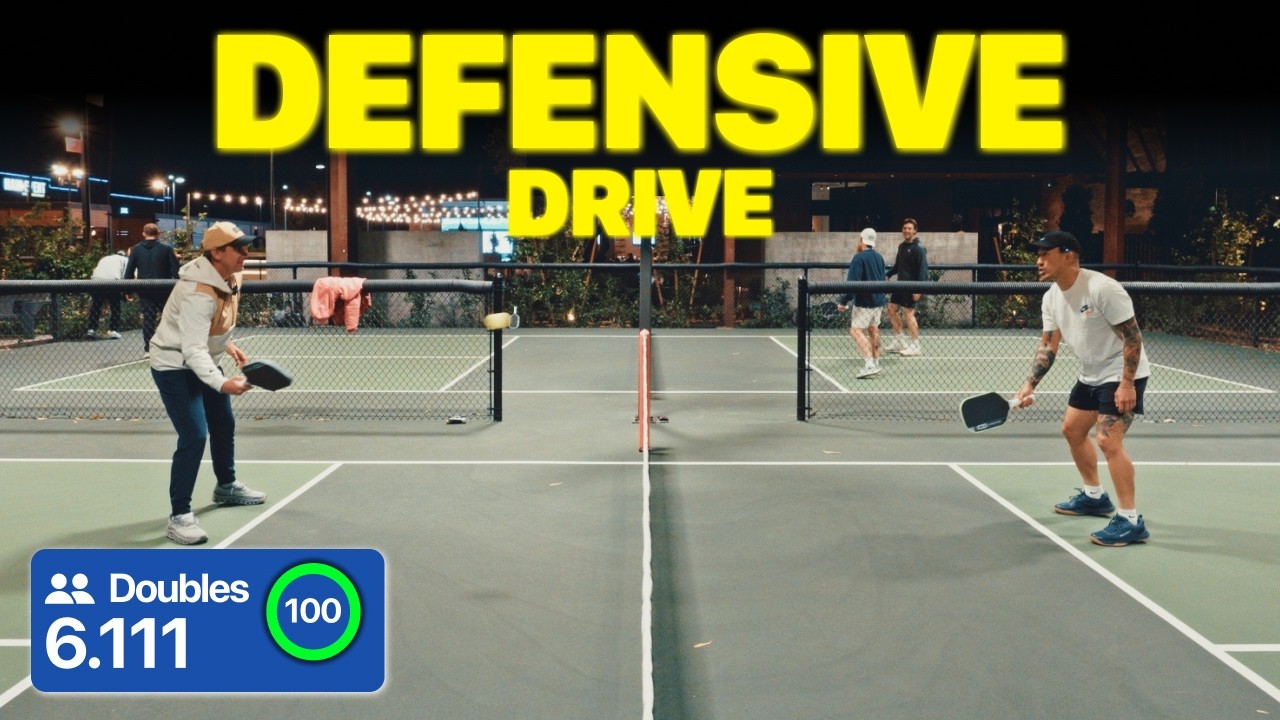
What Is the Defensive Drive and Why Should You Care?
The defensive drive is one of the most practical concepts Collin Johns brought back from his time coaching in Asia.
Here's the basic definition: instead of trying to reset a tough ball into the kitchen when you're under pressure, you simply square your paddle and drive the ball back low and flat to keep the point alive.
It's not a winning shot. It's a survival shot.
Most players are taught that the reset is the answer when you're in trouble. And it is, eventually.
But resetting in pickleball is one of the hardest shots to execute consistently, especially under pressure.
The defensive drive is a lower-skill path to the same outcome: keeping the rally alive so you can work your way back into position.
In hot and humid conditions, the defensive drive works even better because the ball stays low and doesn't pop up the way it might in cooler, drier air.
Asian players have built this shot into their game because the environment demands it.
Here's when and how to use the defensive drive effectively:
- When you're stuck in transition and you can't get to the kitchen fast enough to reset cleanly
- When you've been pushed back and a drop attempt would likely go into the net
- When the ball is at your feet and you want to neutralize pace without popping it up
- When you're playing against aggressive players who keep attacking the same side
The key is keeping the drive low. If it floats, you're giving your opponent a free putaway.
 The Dink Media Team
How Conditions Should Change the Way You Think About Driving Thirds
Collin made a point that is easy to miss if you're not paying attention.
In Asia, driving the third shot is a real tactical weapon, but not for the reason most players use drives back home.
The goal isn't to win the point outright with the drive. It's to get a short volley from your opponent so that you can then drop your next ball and move forward.
That's a two-step sequence, not a one-shot kill.
And it works because the soft ball and humid air mean your opponent's volley often comes back shorter and slower than they intend.
This is a smarter framework for how most club players should think about drives anyway.
The third shot drive matters more when you treat it as a setup, not a finisher.
Here's a simple two-step sequence to practice:
- Drive your third shot low with pace, targeting the opponent's backhand side
- Read their volley response and be ready to drop your fifth shot into the kitchen from wherever you've moved to
Most players skip step two entirely. They drive and then freeze. The whole point of the drive in this context is to get you a softer, shorter ball to work with next.
 The Dink Media Team
How Paddle Technology Changed What Collin Is Working On
Collin Johns is adjusting his own game, and it has everything to do with how paddle technology shifted faster than his playing style did.
When the newer, faster paddles arrived, aggressive players were already hitting shots that sailed out by a foot.
With the new equipment, those same shots started landing in by a foot. Overnight, their aggression became an asset instead of a liability.
Collin's game is built on consistency and shot discipline. Those qualities didn't get rewarded by the new gear the way raw aggression did.
So he's adding wrinkles, specifically the ability to flick balls he used to pass on, while keeping the disciplined core intact.
The lesson applies to you too. If your paddle changed and your game didn't, you're leaving points on the table.
Now is a great time to add a new shot if you've recently upgraded.
 The Dink Media Team
The Body Attack Is the Right Move With the Lifetime Ball
This is a shift specific to the ball being used at top-level events right now. The Lifetime ball is faster, and that changes how you should think about attacking.
Collin calls it the "butcher mentality." You don't need to aim precisely. You just need to get the ball on your opponent's body fast.
With a faster ball, a body shot arrives before your opponent can fully reset their paddle position. You're not trying to thread a corner.
You're just targeting the torso and letting the pace do the work.
If you've been struggling with getting bodybagged in pickleball yourself, understanding this concept from the attacker's side gives you real defensive insight too.
 The Dink Media Team
The "Hit the Same Spot Twice" Pattern That Pros Actually Use
Here's a tactical detail that Collin observed from watching high-level players rally.
When you counter a speed-up from a certain position, your paddle naturally loads to the opposite side for your next shot.
Most players follow that loading and swing to the new side.
Smart players notice that loading and go right back to the same spot again instead.
It works because your opponent sees your paddle moving and assumes the ball is going to follow.
When it doesn't, they're late. Two-shot combinations built around this principle are some of the easiest ways to create free points at the kitchen line.
The takeaway is straightforward.
Don't always flow into the next obvious shot. Sometimes hitting the same spot two times in a row is the most aggressive play available.
It also connects to shot selection more broadly. The right shot isn't always the hardest shot.
Sometimes it's the one your opponent isn't expecting because it breaks a pattern they thought they'd read correctly.
A few situations where hitting the same spot twice is a high-percentage play:
- After a backhand counter, your paddle is loaded to the forehand side. Going back to the backhand catches opponents mid-transition.
- After an attack to the hip, your opponent often shifts their weight to protect that side. The same hip attack lands clean again before they can reset.
- In a firefight at the kitchen line, keeping the ball in the same zone forces errors rather than giving your opponent a chance to reset to a comfortable position.
If you want to see how this fits into a broader framework for reading the game, here's what 6.0 players see that 4.0 players miss.
Frequently Asked Questions
Is pickleball popular in Asia?
Pickleball is growing quickly across Asia, with strong scenes developing in Vietnam, Taiwan, and other Southeast Asian countries. Collin Johns spent three months coaching there and noted that amateur players are significantly better than their ratings suggest. The sport is expanding fast, though the rating systems haven't kept pace with actual skill levels yet.
What is a defensive drive in pickleball?
A defensive drive is a low, flat shot hit straight back when you're under pressure and a drop or reset isn't realistic. Instead of trying to float the ball softly into the kitchen, you square your paddle and drive the ball back to keep the rally alive. It's most effective in transition or when you've been pushed back and need to buy time to recover position.
Why do Asian pickleball players avoid the kitchen line?
The softer balls used in many Asian markets, combined with hot and humid playing conditions, slow the ball down significantly. In those conditions, driving hard and hitting defensive drives is actually effective because the ball stays low and doesn't pop up. The kitchen-heavy soft game that dominates American play is less necessary when conditions slow everything down naturally.
How does the Lifetime ball change pickleball strategy?
The Lifetime ball travels faster than many other balls used at the recreational and competitive level. That extra pace rewards body attacks because the ball arrives before your opponent can fully prepare. Collin Johns describes this as a "butcher mentality" where you aim at the torso with pace rather than trying to place the ball precisely into a corner.
Should you adjust your pickleball game based on conditions?
Yes, and most players don't do this at all. Hot, humid conditions slow the ball down and reward drives and flat defensive shots. Cool, dry conditions with a faster ball reward more aggressive attacks and body shots.
Collin Johns specifically coaches players in Vietnam to lean into condition-specific shots like the defensive drive rather than fighting the environment.

Love Pickleball? Join 100k+ readers for free weekly tips, news & gear deals.
Subscribe to The Dink