
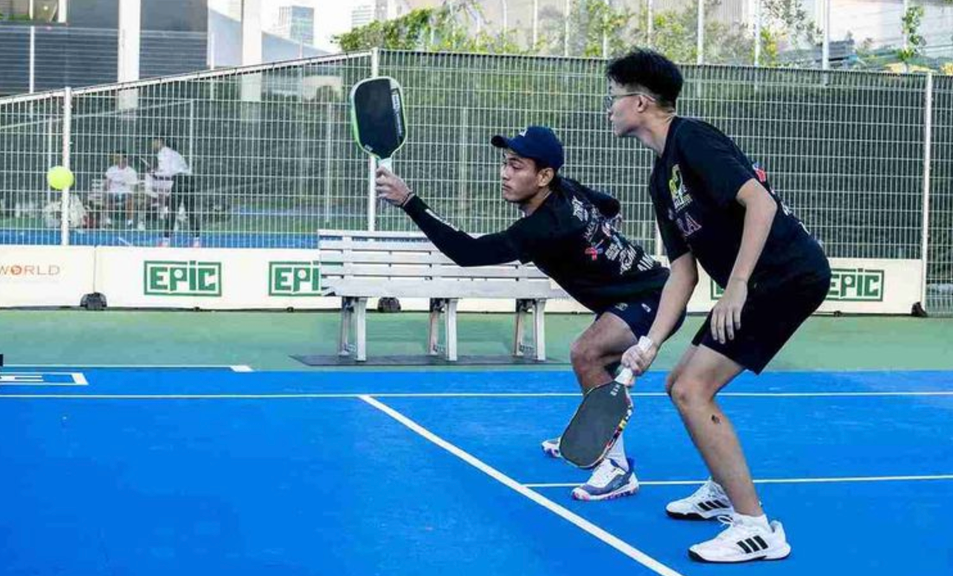
The Pickleball Partner Pep Talk: 3 Signs It's Time Mid-Game
A pickleball partner pep talk is a ten-second reset between points, not a coaching session. Learn the three signs your teammate needs one and the exact script that works.
A well-timed pickleball partner pep talk has rescued more rec-league matches than any third shot drop ever will.
You know the moment.
You're down 3-8, your partner just shanked an easy putaway into the net, and their shoulders have dropped about four inches since the first timeout.
Most players do nothing here. They stare at their paddle, mutter "no worries," and hope the next point fixes it.
It usually doesn't, because nobody thinks clearly in the pressure zone.
Here's the thing: your partner almost always tells you they're slipping before the scoreboard does.
The signals show up in their feet, their apologies, and their shot selection. Read them early and you get a chance to change the match.
Miss them and you're just watching it happen.
Love pickleball? Then you'll love our free newsletter. We send the latest news, tips, and highlights for free each week.
So What Counts as a Pickleball Partner Pep Talk?
A pickleball partner pep talk is a short, deliberate exchange between points or during a timeout that resets your teammate's emotional state and gives them one clear job for the next rally.
It's not coaching. It's not a technique lecture.
Ten seconds, one message, paddle tap, move on. Think of it as the on-court version of being the best teammate on your team.
That distinction matters more than people think.
Research on doubles tennis found that winning teams exchanged roughly twice as many messages between points as losing teams, and more than half of those exchanges were emotional rather than tactical (Research Quarterly for Exercise and Sport).
Winners weren't drawing up plays between points.
They were keeping each other steady, which is also the whole premise behind building a champion mindset in the first place.
So the goal isn't to say something brilliant. It's to say something at all, at the right moment, and then get back to work. Now the three moments worth acting on.
Sign 1: The Apology Loop Has Started
The clearest signal is verbal: your partner starts apologizing for shots that don't need an apology.
"Sorry." "My bad." "Ugh, sorry again."
Once the apologies outnumber the actual errors, their attention has shifted from the ball to their own performance, and that's when the mistakes you didn't know you were making start stacking up fast.
A player stuck in the apology loop is playing two matches at once. One against your opponents and one against themselves. Guess which one they lose.
Why the Apology Loop Needs a Pickleball Partner Pep Talk Fast
Because it compounds.
The apologizing player starts avoiding the ball, which pulls your team out of shape and hands the middle to your opponents, and suddenly your court coverage in doubles is a mess for reasons that have nothing to do with footwork.
The fix is short and specific. Kill the apology, then hand them a job. Something like: "Stop apologizing, that ball was ugly for both of us.
Next one, just get it deep." You've closed the loop and given them a target.
That's a complete pickleball partner pep talk, and it takes six seconds, which is roughly the time it takes to reset better after a rough rally.
Avoid the classic mistake here, which is reassurance with no instruction.
"You're fine, don't worry about it" sounds supportive and does nothing, because you haven't told them what to do with the next ball.
Every effective pickleball partner pep talk ends with a verb.
 The Dink Media Team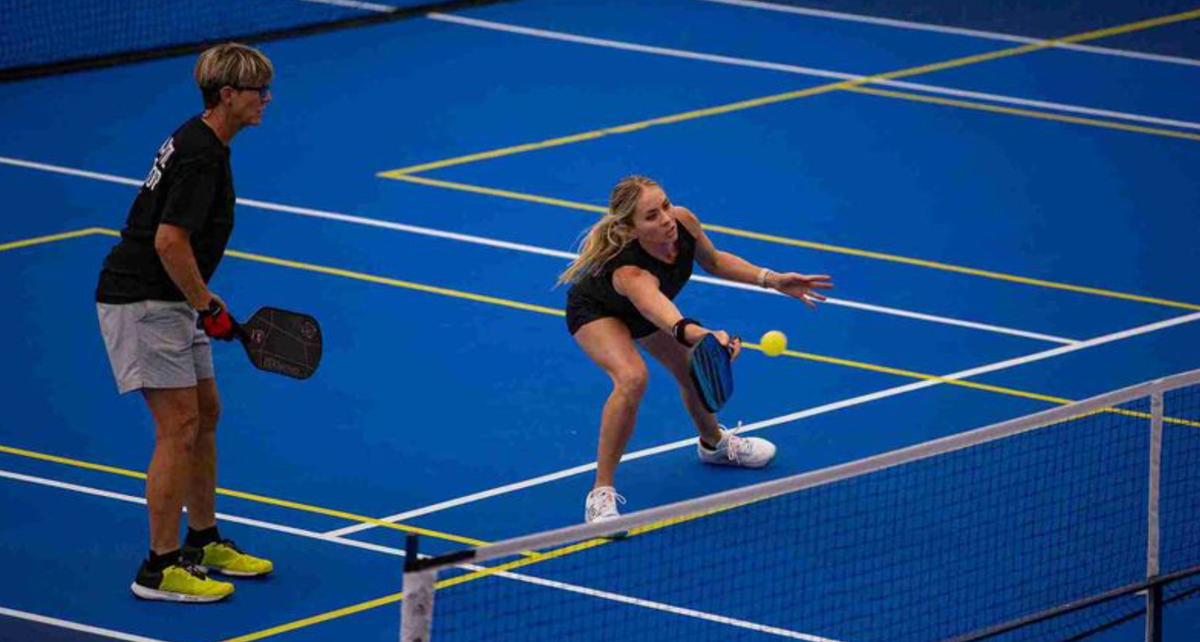
Sign 2: The Body Language Goes Quiet
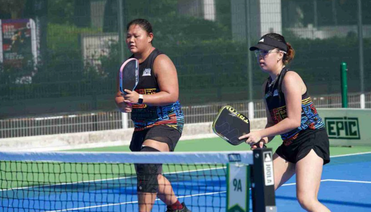
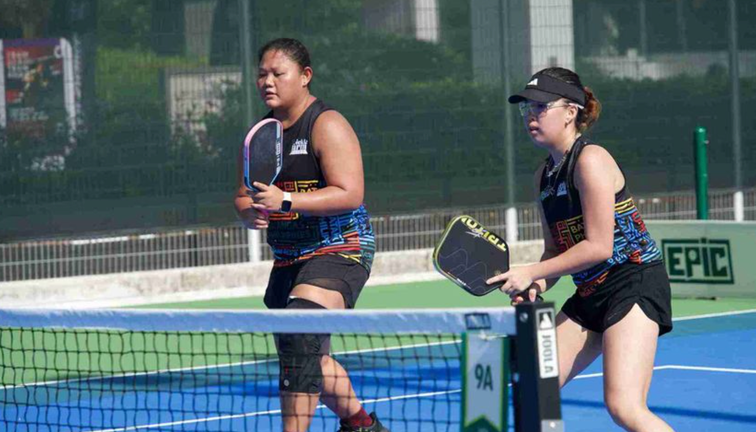
Watch the between-point walk. A locked-in partner resets to their spot, taps paddles, and faces you.
A fading partner turns their back, stares at the fence, and takes the long route back to their spot at the kitchen.
Body language usually breaks before the shots do.
Elite athletes leak this constantly.
An analysis of more than 18,000 nonverbal behaviors at the 2022 FIFA World Cup found that players showed more negative than positive emotional nonverbal behavior during competition.
If World Cup professionals broadcast their frustration that openly, your Tuesday night partner in rec play absolutely does too.
Naturalistic research on athletic partners also suggests encouragement tends to increase as a task gets harder.
Translation for pickleball: the tighter the game gets, the more you should be talking, not less.
Most rec players do the opposite and go silent at 9-9, which is exactly when their teammate needs a voice and a reminder to simplify the game.
The move here is physical before it's verbal. Meet them at the baseline instead of waiting at the kitchen. Paddle tap. Then one line: "We're good. Same plan."
Sometimes proximity does more than words, a point that runs through simple tips to improve teamwork and holds up at every level.
 The Dink Media Team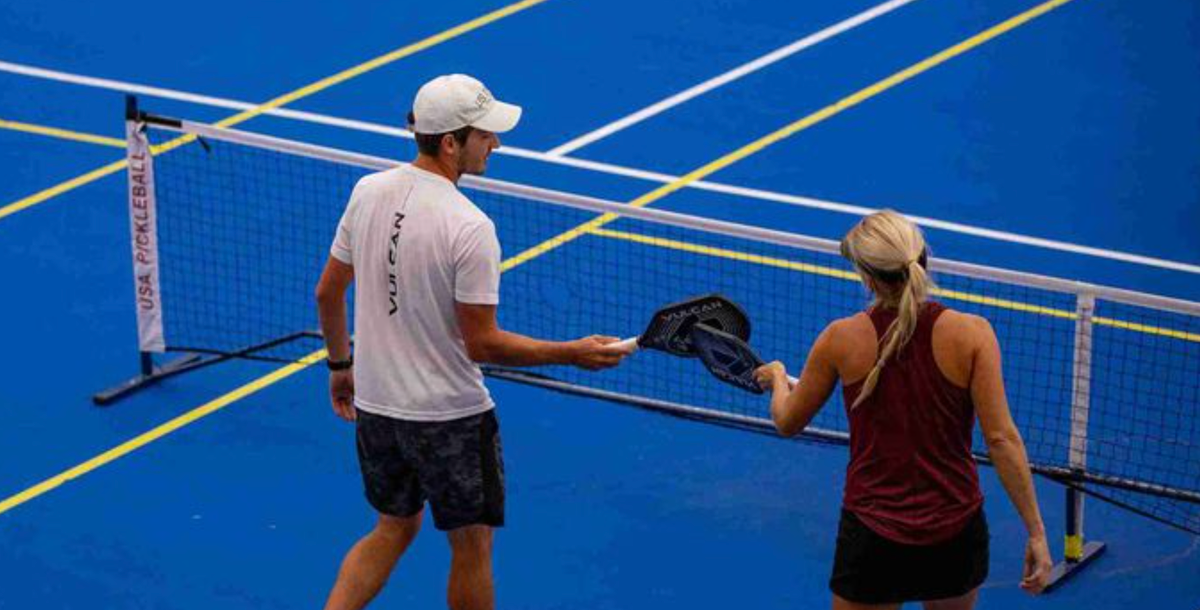
Sign 3: They Start Playing Scared
The third sign shows up in shot selection. Your partner stops attacking anything.
Every ball becomes a soft roll back to the middle, they refuse speedups they were winning ten minutes ago, and they start dinking with no intention of ever ending the point.
Safe isn't the same as smart.
A partner playing scared hands your opponents free time to set up, and good teams will work the middle until something breaks.
Passive pickleball is losing pickleball, just slowly, and it's the fastest way to stop being unattackable.
The Pickleball Partner Pep Talk for a Partner Playing Scared
Give them permission, not pressure. The words that work: "Take that speedup. If it goes out, who cares, we'll get the next one." You've done two things there.
You've removed the fear of being blamed, and you've told them exactly which shot you want back.
What doesn't work: "You gotta be more aggressive." Vague, mildly critical, and impossible to act on in three seconds.
Name the shot. Name the situation. That's it. Same logic as playing the percentages, just applied to your teammate's confidence instead of your shot chart.
Worth noting: if you're the one going quiet and playing safe, the same diagnostic applies.
Plenty of players need a different kind of reset that has nothing to do with a shot.
 The Dink Media Team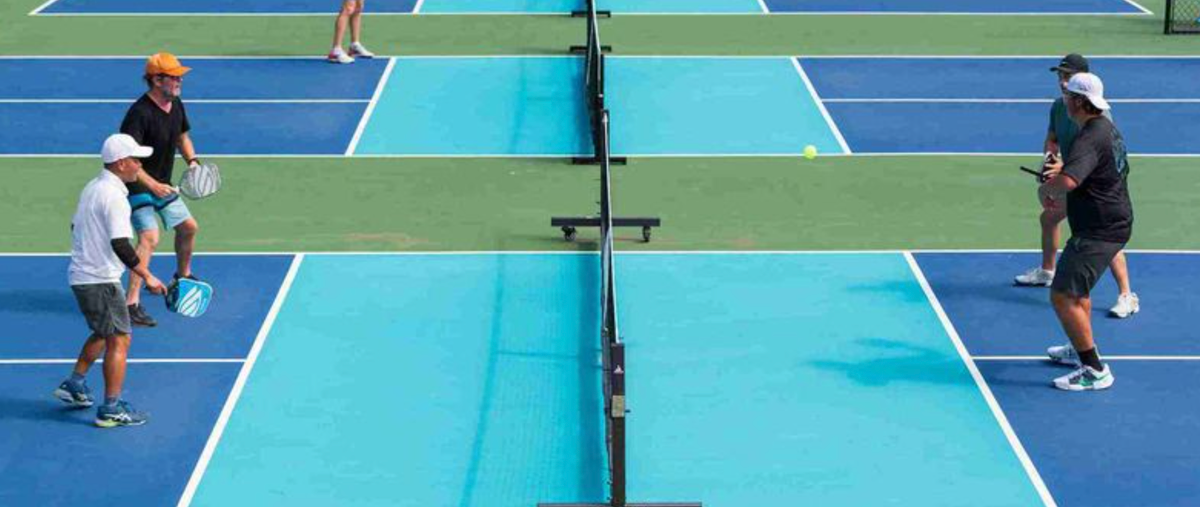
How Do You Deliver a Pickleball Partner Pep Talk That Actually Lands?
Keep it to ten seconds, lead with emotion, close with one instruction.
That's the whole framework.
Long speeches between points don't calm anybody down; they add noise while your partner is still replaying the last error, and they eat the clock you could spend getting the most out of your court time.
Here's the sequence worth stealing, and it holds up whether you're a 3.0 or climbing toward 3.5:
- Make contact first. Paddle tap, eye contact, or just standing next to them. Do this before you say a word.
- Say the emotional line. "We're fine." "I've got you." "Still our game." Short. Believable. Not a speech.
- Give exactly one instruction. Deep returns. Cross-court dinks. Serve to the backhand. One job, not three.
- Walk away and play. Don't linger and don't revisit it two points later.
Honestly, the best pickleball partner pep talk is usually the shortest one in the match. If the match is genuinely slipping, use the clock you're given.
Pickleball timeouts exist for exactly this, and burning one to stop a 0-6 run is a better investment than saving it for a comeback that never starts.
When a Pickleball Partner Pep Talk Backfires
Three ways to get it wrong.
- First, disguising criticism as encouragement: "Just relax and stop missing those" is not a pep talk, it's a complaint wearing a costume.
- Second, over-coaching their dink technique at 6-9.
- Third, false cheer, because a partner who just donated four straight points knows they're struggling, and "you're crushing it" reads as sarcasm rather than support.
Even good sideline positioning can't save a team that's stopped trusting each other.
The reliable version is honest and forward-looking. Acknowledge, redirect, go.
A good pickleball partner pep talk respects that your teammate already knows what happened.
They just need somewhere to put their attention next, the same principle behind focusing on your strengths instead of your weaknesses.
This works in reverse, too. Tell your partner what you need before the match starts.
Some want silence, some want constant chatter, and finding that out at 8-10 is too late.
Five seconds of conversation during warmups tells you what kind of pickleball partner pep talk they'll actually hear, especially if you're changing the way you think about doubles altogether.
 The Dink Media Team
Key Takeaways
- A pickleball partner pep talk is a ten-second reset between points, not a coaching session.
- The three signs to watch: repeated apologies, closed-off body language, and passive shot selection.
- Winning doubles tennis teams communicated about twice as often between points as losing teams, and most of it was emotional rather than tactical.
- Always pair reassurance with one specific instruction. Comfort alone changes nothing.
- Agree on communication preferences during warmups, before the pressure arrives.
Frequently Asked Questions
What do you say during a pickleball partner pep talk?
Keep it to two parts: one short emotional line and one clear instruction. "We're still in this. Just get your returns deep" works better than a long analysis. Your partner can only act on one idea at a time, and the point clock is short.
When is the best time for a pickleball partner pep talk?
Between points, during the side change, or in a timeout. Between points is best for small corrections because the reset happens immediately. Save timeouts for genuine momentum swings, like an opponent run of four or more straight points.
Should you give your partner tactical advice mid-match?
Only if it's one instruction they can execute right away. Deep returns, serve placement, or which opponent to target all qualify. Technique fixes do not. Rebuilding a stroke mid-game usually makes a struggling player more self-conscious, not less.
How do you tell the difference between a bad stretch and a partner who's fading?
Look at their behavior between points, not their errors. Everyone misses shots. A player who still resets to position, taps paddles, and keeps attacking is fine. One who turns away, apologizes constantly, and stops taking shots has checked out mentally.
What if my partner tells me to stop talking?
Respect it and adjust. Some players regulate better in silence, and forcing conversation on them adds pressure instead of removing it. Switch to nonverbal support: paddle taps, nods, and getting into position quickly. Then have the conversation properly after the match.
Love Pickleball? Join 100k+ readers for free weekly tips, news & gear deals.
Subscribe to The Dink