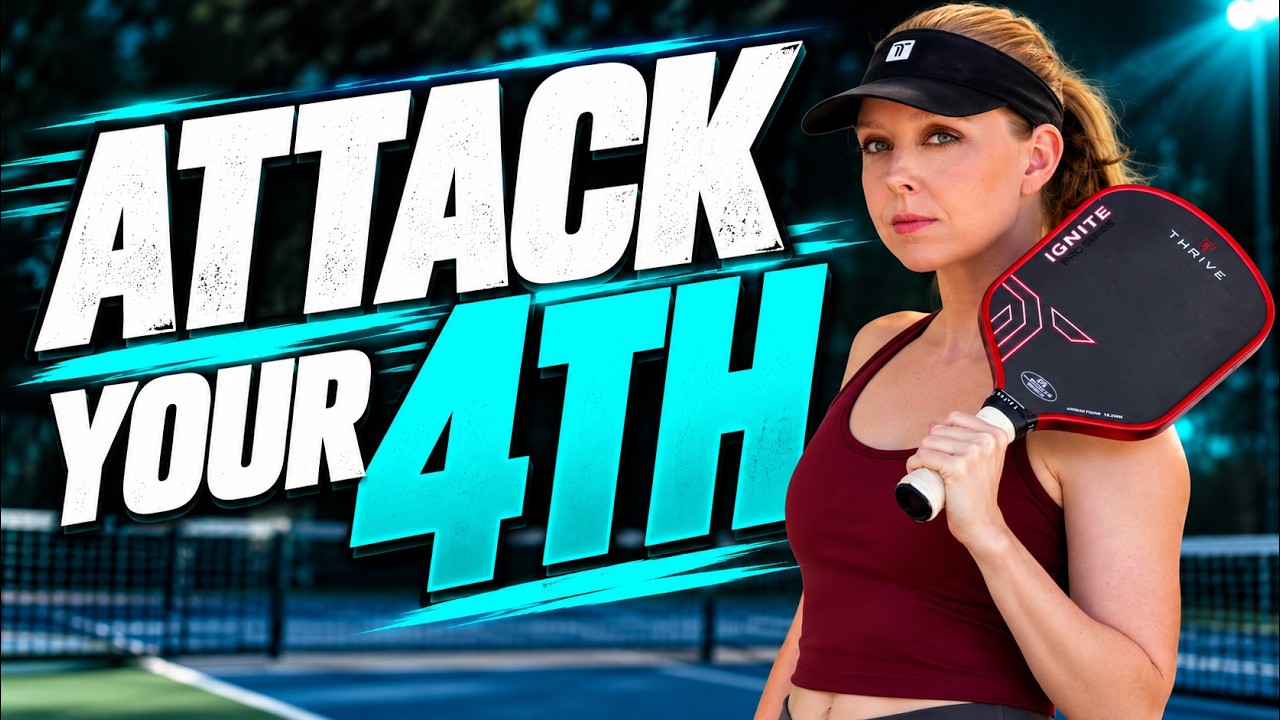


5 Reasons to Stop Targeting the Weaker Player in Pickleball
Targeting the weaker player every time is one of the most common amateur mistakes in doubles. Here is why it backfires and what to do instead.
You step on court, size up the other team in about ten seconds, and decide to hammer the weaker player all game.
That plan of targeting the weaker player feels logical, and it is one of the fastest ways to lose a match you should win.
The problem is not that the weaker player is a bad target. The problem is what happens to the stronger player while you keep feeding his partner.
These ideas come from tanner.pickleball on YouTube, who breaks down why amateurs get this wrong and what to do instead.
Below, we expand on that advice with specific patterns you can use in your very next game.
Love pickleball? Then you'll love our free newsletter. We send the latest news, tips, and highlights for free each week.
Why Does Targeting the Weaker Player Backfire?
Hitting every ball to the weaker player lets the stronger player slide into the middle and dominate the point.
That is the core mistake, and it shows up at every rating level.
When you send everything to one side, the better player stops defending and starts hunting.
He knows exactly where the ball is going, so he cheats toward the center, poaches, and ends points on your weakest shots.
You think you are applying pressure. In reality, you are giving the best player on the court a free read on every ball.
If you have ever felt like you were "doing everything right" and still got crushed, this is often why.
For a deeper look at how the center of the court decides doubles points, read our guide on targeting the middle in pickleball.
What Does "Getting Huge in the Middle" Actually Mean?
Getting huge in the middle means a player shifts toward the center line so his reach covers most of the court, leaving his partner responsible for only a small sliver.
It is a coverage tactic, and strong players love it. When the better player is huge in the middle, your dinks, drops, and drives all run into his paddle.
He can volley the ball out of the air, speed it up at the weaker player's feet, or poach across the whole court.
Here is what that looks like in practice:
- He takes balls that were technically his partner's.
- He cuts off your cross-court dinks before they cross the net.
- He sets up the weaker player with easier balls because he controls the pace.
That last point matters most.
The pattern shows up in the data too: a 2025 match analysis of professional men’s doubles found that on winning pairs, the left-side player hit noticeably more shots per game than his partner.
Targeting the weaker player often makes that player’s job easier, not harder, because their stronger partner is doing the heavy lifting from the middle.
The 50/50 Split That Actually Creates Pressure
The fix is to split your balls evenly between both opponents and send a good share of them behind the better player.
Even distribution keeps the stronger player honest and stops him from camping in the center.
Think of it as a simple cadence. Roughly half your balls go to each opponent, and you deliberately mix in shots that take the stronger player wide.
Here is a quick way to build that habit:
- Start with the better player. Make your first few balls go to him so he has to move and defend.
- Mix in a ball behind him. Aim for the lane he just left, not the one he is guarding.
- Return to the weaker player. Once the better player is stretched, the weaker player becomes a much bigger target.
- Repeat without a pattern. If you only ever go A, B, A, B, a smart opponent will read it.
This is about forcing movement. A stretched team is a vulnerable team, and the weaker player cannot hide when his partner is out of position.
 The Dink Media Team
Why Going Behind the Better Player Works So Well
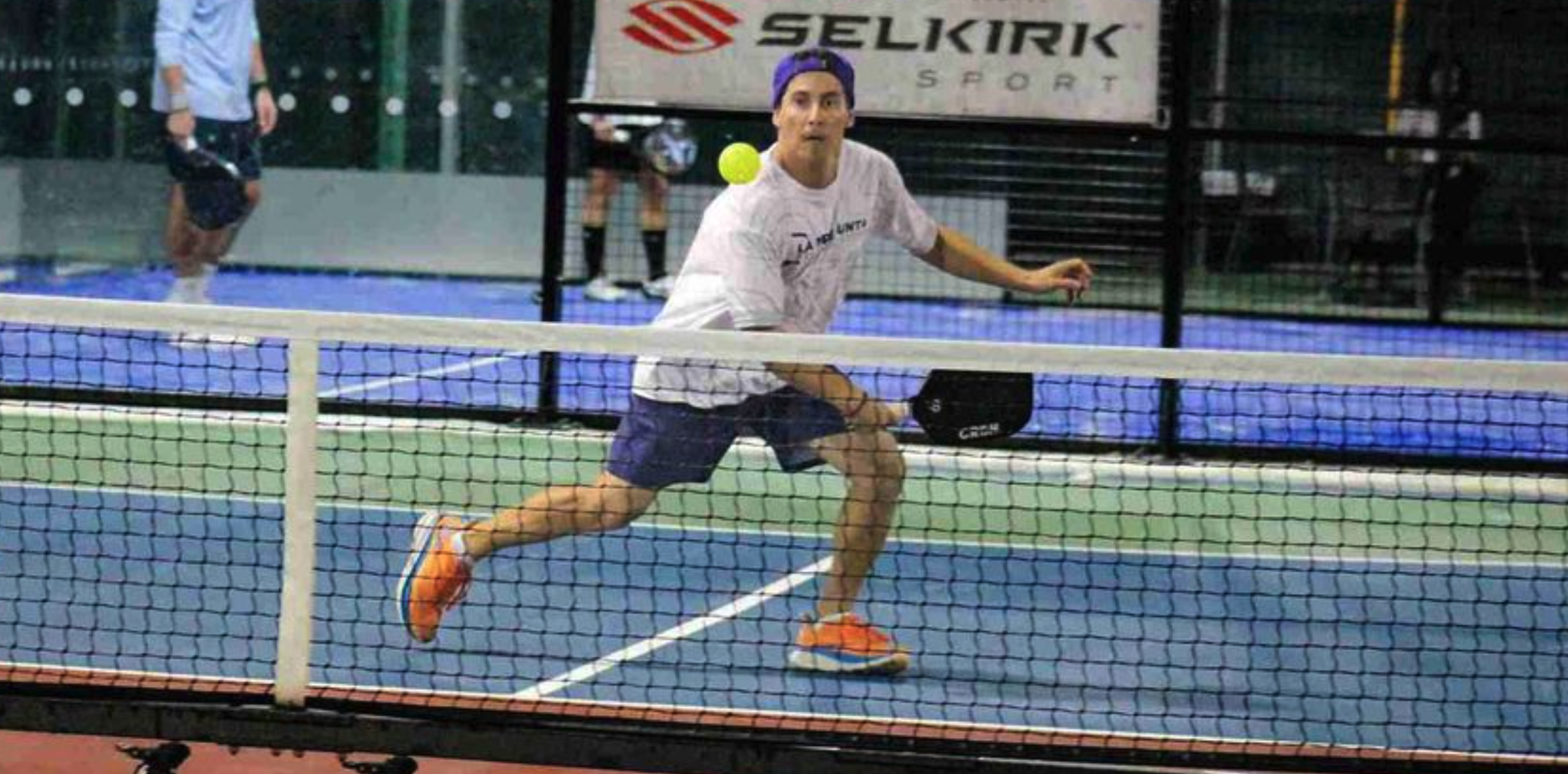
Hitting behind the better player pulls him away from the middle and makes his partner a far bigger target.
It is the single most useful adjustment in this strategy.
When the stronger player has to chase a ball toward the sideline or recover from a wide position, the center opens up.
His partner suddenly has more court to cover and less help. Now your next ball to the weaker player is a real problem for them.
They are exposed, they cannot count on a poach, and they have to handle a ball they would have gladly let their partner take.
This is the real reason pros think about coverage first and targets second.
If you want to study how top players control the middle and the left side, see how Ben Johns and the rest of the field approach modern doubles.
 The Dink Media Team
How Do You Know When to Attack the Weaker Player?
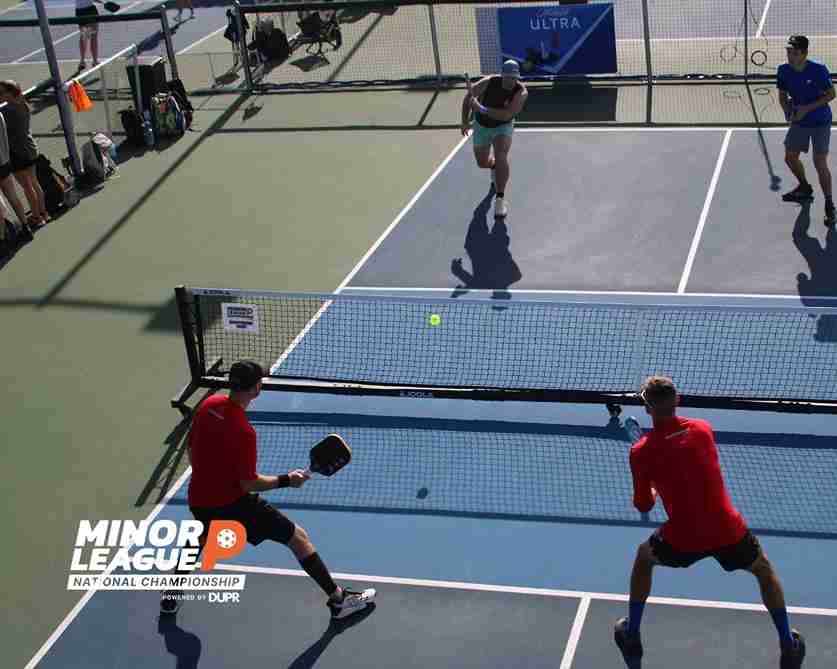
You attack the weaker player when the stronger player is out of position, not simply because the weaker player is the weaker player.
Timing and positioning decide the target, not reputation.
Cues That Justify Targeting the Weaker Player
- The better player just hit a ball from outside the sideline and is recovering.
- The better player is leaning to one side and cannot cover the middle.
- The weaker player is caught with a low ball at their feet and no help nearby.
- The two opponents are standing too far apart, leaving a gap between them.
If none of those cues are present, stay patient. Keep the ball in play, keep both opponents moving, and wait for the opening.
Patience is a skill here. Our breakdown of dinking with intention shows how to earn an attack instead of forcing one at the kitchen line.
 The Dink Media Team
Five Reasons This Strategy Beats Pure Targeting
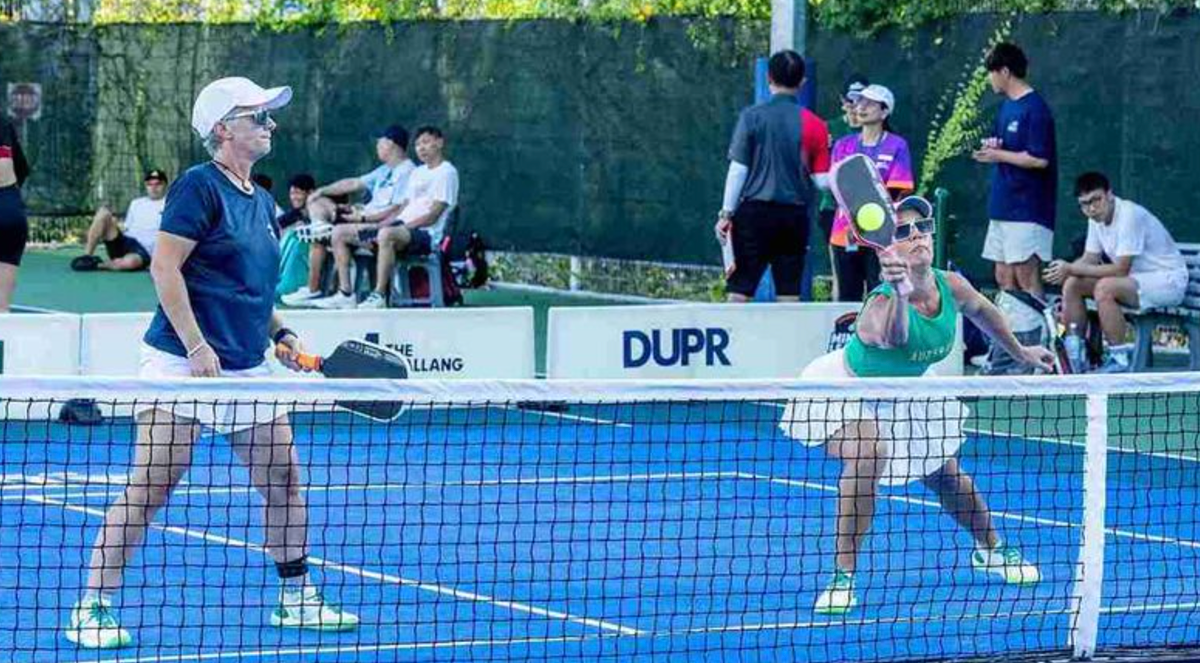
Splitting the ball evenly wins more points than hunting the weaker player because it solves five problems at once. Here is the full list.
- It keeps the better player out of the middle. He cannot camp in the center if you keep pulling him wide.
- It prevents easy poaches. A predictable target means a predictable poach, and you stop handing those out.
- It makes the weaker player a bigger target. Their partner is out of position, so every ball to them carries more pressure.
- It makes you harder to read. Opponents cannot set up for a pattern that does not exist.
- It protects you against good teams that hide a weak link. Strong teams often protect their weaker player, and the 50/50 split breaks that protection.
That fifth point is worth repeating.
Plenty of teams with a clear weak link still win because the stronger partner covers for them, and constant targeting plays right into that setup.
 The Dink Media Team
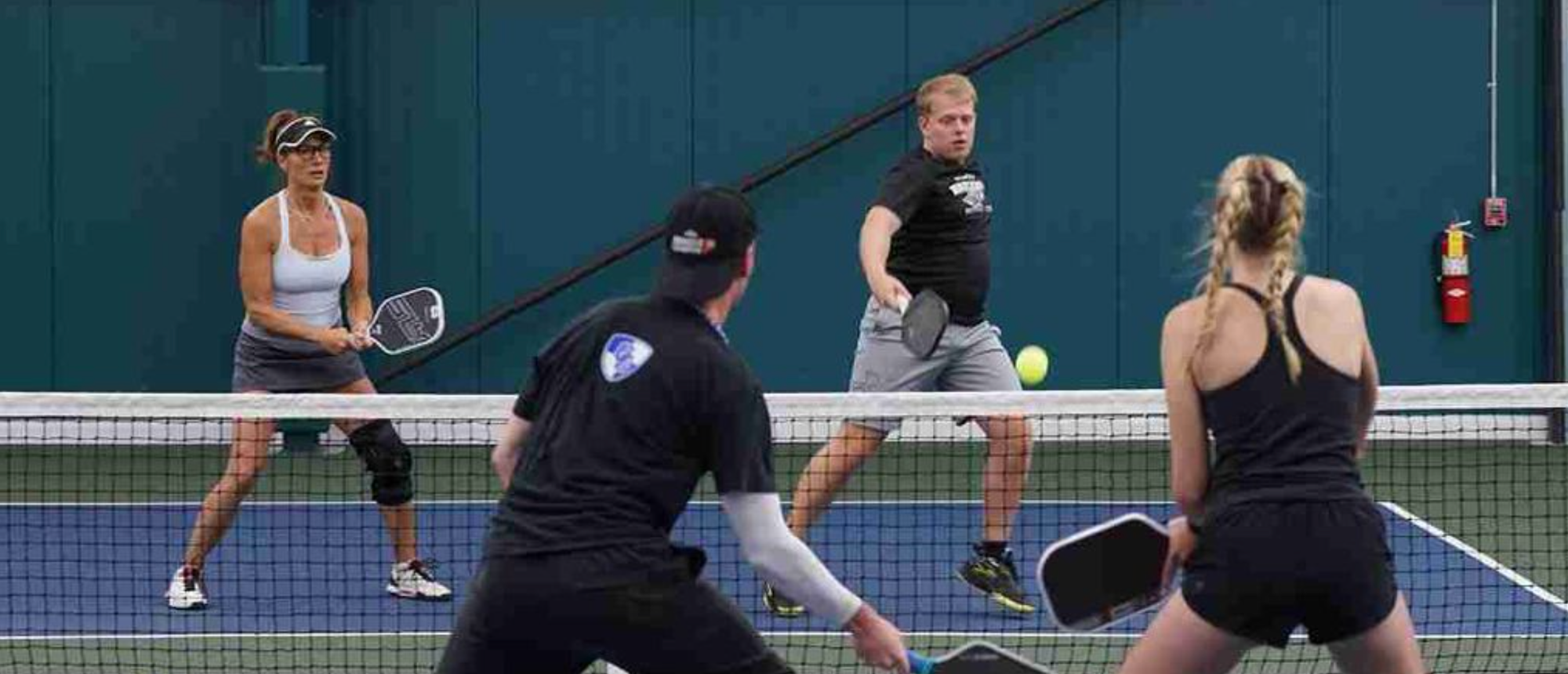
What If Your Opponents Are Mismatched by Skill?
A big skill gap between opponents does not change the plan, it just changes how often the weaker player gets a ball.
You still split the balls, but you take extra advantage of the openings the gap creates.
Against a mismatched team, the stronger player usually feels the need to over-cover. That is exactly the habit you want to exploit.
Research on elite mixed doubles published in 2025 found that the dominant partner finishes a disproportionate share of points, especially right after a ball goes to their partner.
Send the ball behind him early and often. When he stretches to cover, the weaker player is left alone, and your next ball to them carries real weight.
You can also play this from the other side of the net.
If you are the weaker player on your team, read our advice on how to be a good partner and how to stop getting picked on.
And if you are the stronger one, see how to play when teaching a newer partner or running a mixed doubles lineup.
 The Dink Media Team
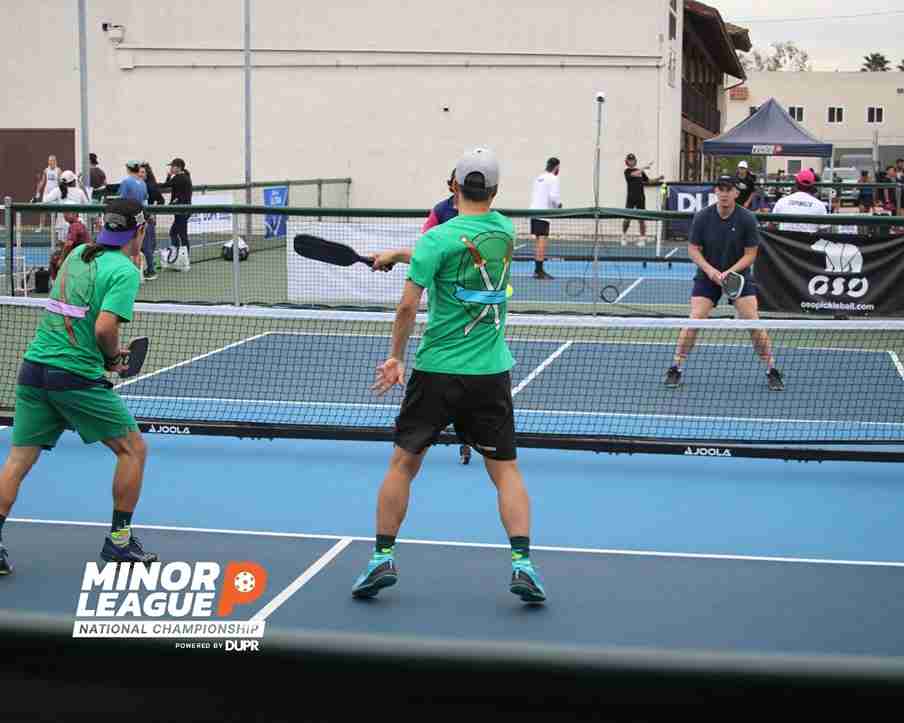
Common Mistakes When You Switch to a 50/50 Plan
The biggest mistakes are going too predictable, ignoring the weaker player entirely, and forcing the ball behind the better player when it is not there.
Each one throws away the advantage you are trying to build.
Watch for these slip-ups:
- Alternating like a metronome. A rigid A, B, A, B pattern is just another pattern.
- Abandoning the weaker player. You still need to hit them when the opening is there.
- Going behind the better player with a weak ball. A floaty ball he can reach is a gift, so make it a quality shot.
- Getting impatient. The payoff comes after a few balls of movement, not on the first one.
If you struggle with court positioning in general, our piece on the pickleball court positioning fix pairs well with this strategy.
 The Dink Media Team
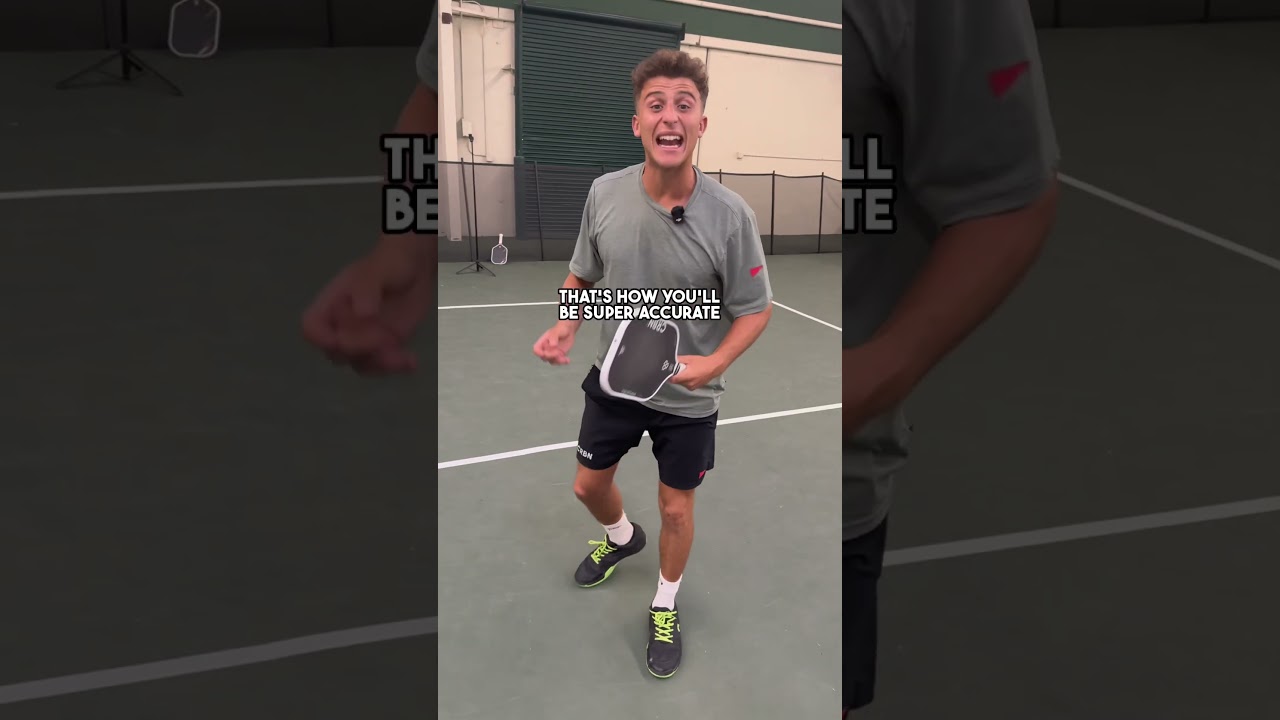
How to Practice This Without Targeting the Weaker Player on Autopilot
You can build the 50/50 habit in low-stakes games before using it in a tournament.
Start with a simple rule: every point, you must hit at least one ball to each opponent before you attack.
That forces you to stop locking onto a target. It also teaches you to read when the stronger player has drifted out of position.
Add a second layer once that feels natural.
Challenge yourself to send at least one ball per point behind the better player, and track how often it creates an easy follow-up.
Smart doubles play is about reading positions, not just picking a target. Watch where both opponents stand before every shot and ask who is out of place.
For structured work on this, try these pickleball practice drills for any skill level.
If you want to see how reading the opponent’s body shapes your shot choice, check out playing the body, not the lines.
And if you are facing a team that is simply better than you, keep our advice on playing a better team and beating an opponent you are intimidated by in your back pocket.
Our roundup of 5 pickleball strategy shifts that change how you play covers more ideas in the same spirit.
Frequently Asked Questions
Should you ever target the weaker player in pickleball?
Yes, but only when the stronger player is out of position and cannot help. Target the weaker player when you have pulled their partner wide, not as an automatic default.
What does it mean to go behind the better player?
It means hitting the ball into the space the stronger player just left or cannot cover. This pulls them away from the middle and leaves their partner exposed.
Why does the better player get so big in the middle?
When every ball goes to the weaker player, the stronger player knows where the ball is headed and shifts toward the center to cover it. That position lets them poach and volley on almost every shot.
How often should you hit to each opponent?
Aim for a roughly even split, about half the balls to each player. Keep it unpredictable so opponents cannot set up for a pattern.
Does this strategy work at every skill level?
Yes, because the principle is about coverage and movement, not rating. Beginners and advanced players both lose points when the stronger opponent camps in the middle.

Love Pickleball? Join 100k+ readers for free weekly tips, news & gear deals.
Subscribe to The Dink