
5 Things Anna Bright's MLP Finals Vlog Teaches Every Competitive Pickleball Player
Anna Bright's MLP Finals vlog pulls back the curtain on what elite competition really looks like. These five lessons apply to every competitive pickleball player, not just the pros.
The MLP Finals are supposed to be the glamorous peak of professional pickleball.
What you actually see behind the scenes is a lot messier, a lot more relatable, and honestly far more instructive than any highlight reel.
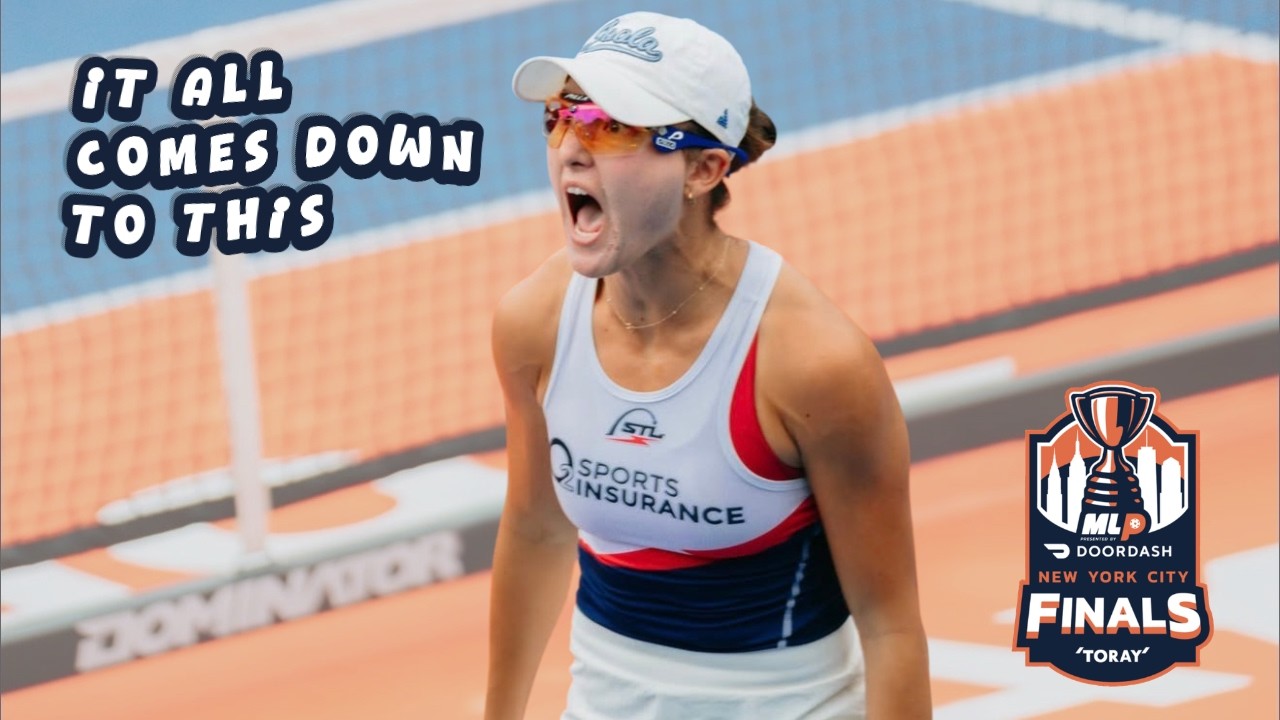
Anna Bright documented her entire week in New York City for the MLP Super Finals, and the raw footage covers everything from rainy courts and soggy scrimmages to post-loss ice cream runs and genuine emotional processing after a heartbreaking result.
What stands out is not just the competition.
It's the mental framework, the team dynamics, and the strategic self-awareness that separates players who grow from losses versus players who just feel bad about them.
Here are five lessons every competitive player should take from her experience.
Love pickleball? Then you'll love our free newsletter. We send the latest news, tips, and highlights for free each week.
Shame and Sadness Are Not the Same Thing
This is the most important mental distinction Anna makes in the entire vlog, and most recreational players have never thought about it this way.
After the loss, she explains that the previous two years of MLP Finals defeats felt different.
They were colored by shame: the team played scared, didn't hit their potential, or left something on the table mentally.
This year was different. She felt sad, not ashamed, and she was clear about why that matters.
Shame after a loss means you didn't compete to your capability. Sadness means you competed fully and still came up short.
Those two outcomes require completely different responses from you as a player.
If you walk off the court feeling shame, that is a signal that your preparation, your mindset, or your in-match decision-making needs to change.
If you walk off feeling sad but clean, you are doing the right things and the results will eventually follow.
Most players bundle every loss into one emotional category and call it "bad." Understanding why a loss hurts tells you exactly what to fix next.
Check out these pickleball IQ decisions pros make every point to start building that self-awareness into your game.
What Does "Playing Scared" Actually Look Like?
Anna references playing scared in prior years, but she doesn't spell it out. Here is what it actually looks like on court.
- You stop attacking attackable balls because you don't want to miss
- You default to safe shots when the score is tight instead of trusting the shots you've drilled
- You aim away from your opponent's strength rather than playing your own game
- You hesitate at the kitchen line instead of committing to a speed-up or reset
- Your body language drops between points and your partner can feel it
Playing scared is not a personality flaw. It's a habit that forms when you haven't done enough reps under pressure.
The fix is specific: these mindset shifts can help you stop defaulting to fear-based shot selection in tight matches.
Identify the Strategic Problem Immediately After a Match
Anna doesn't just say "we lost." She comes back the next morning having already identified the tactical problem.
"We just lacked offense, honestly. That was the main strategy takeaway."
Specifically, she points to the mixed matches as the area that needed more aggression.
That level of clarity, reached overnight after an emotional loss, is a skill. It requires you to separate your feelings from your film review.
Most club players replay losses emotionally. They think about the point they missed at 10-9 or the net cord that went against them. Pros think about patterns.
They ask: where were we passive? Where did we give up the middle? Where did we stop attacking balls we should have attacked?
After your next tournament match, give yourself one hour to feel whatever you feel.
Then sit down and answer this question: what was the pattern of how we lost points?
One honest answer to that question is worth more than ten post-match complaints.
See what else the MLP Finals taught us this year for more strategic takeaways from the championship weekend.
 The Dink Media Team
How Do You Stay Locked In When Conditions Fall Apart?
New York tested the team with rain-soaked courts, uneven surfaces, and a schedule that kept changing.
Anna's response was grounded: "It's the same for everyone."
That's not a throwaway line. It's a mental anchor, and when conditions are bad, the player who stops complaining soonest has an edge.
The court had a raised section bouncing like a trampoline. Instead of spiraling, the team asked whether it could be fixed and adjusted their warmup accordingly.
That is process-focused thinking, and you can train it. Here is a simple protocol for when conditions go sideways.
- Name the problem out loud once, then stop talking about it
- Ask what you can control within the situation
- Find one thing about the conditions that might actually help your game
- Reset your focus to the first point and play it like the court is perfect
Conditions anxiety is one of the quieter reasons players underperform.
These tournament preparation mistakes include exactly this kind of mental error, and the MLP Finals stage magnifies every one of them.
 The Dink Media Team
Team Chemistry Is a Real Performance Variable
The vlog captures something box scores never will: how much the interpersonal texture of a team affects performance.
There's a moment where Gabe tells each player individually that he loves them before a match. Anna is visibly moved.
Then there's the post-loss dinner where everyone scattered separately, followed by an ice cream meetup she credits as genuinely good for camaraderie.
These details matter.
Research consistently shows that teams with higher trust perform better under pressure, and the mechanism is simple: when you trust your partner, you take smarter risks.
You stop protecting yourself and start playing for the team. You attack that ball into the middle because you know your partner has your back if it doesn't work.
If you play regular doubles with a partner, the quality of your off-court relationship directly affects what you're willing to try on court.
These doubles strategy fixes work even better when trust between partners is high.
 The Dink Media Team
Mixed Matches Demand More Offensive Pressure Than You Think
Anna's clearest strategic note from the MLP Finals is that the mixed matches lacked offense.
That's not a random observation. It points to a pattern that shows up at every level of the game.
In mixed doubles, the instinct is often to play conservative and wait for an error.
The problem is that conservative play against elite opponents just gives them time to reset and attack on their terms.
More offense does not mean reckless. It means being willing to speed up balls that are attackable rather than dinking into a pattern your opponent has already solved.
It also means the woman plays aggressively at the kitchen line instead of staying passive and letting the men dictate.
The Offensive Triggers That Decide MLP Finals Mixed Matches
- Any ball above tape height from either opponent gets attacked, not patted back
- The woman at the kitchen line looks to attack cross-court angles, not just defend
- Speed-ups go to the body or backhand, not predictably to one wing every time
- After a speed-up exchange, the team moves forward immediately instead of resetting to baseline habits
The team that controls the middle and maintains offensive pressure in mixed almost always wins.
These kitchen line volley fixes are the right starting point if you're passive at the net.
For a closer look at how Anna Bright reads the court, this pro analysis breaks down how elite players stay offensively minded under pressure.
 The Dink Media Team
The Fight Is Never Over When You Think It Is
After losing match one of the finals, Anna reminds her team of a key piece of context.
The New Jersey Fives lost this exact way in the previous two years, winning match one in a dreambreaker and then losing.
The structure of the competition meant the fight was genuinely still alive.
That's not wishful thinking. It's informed optimism, grounded in actual historical data.
Wishful thinking ignores the score. Informed optimism knows the score and finds the real reason to keep competing hard.
The structure of the competition is worth studying before you ever watch another MLP Finals weekend.
If you want the full arc of how this one played out, here is the full championship result and the day two recap including the dreambreaker.
When you're down in a match, ask yourself what the structure of the situation actually allows. Is there a real path?
If yes, compete on that path fully. If no, compete anyway, because the habits you build under pressure carry into every match that follows.
That mindset, clear-eyed and fully committed even when it's hard, is exactly what separates the players who grow from the ones who just accumulate losses.
Frequently Asked Questions
What is the MLP Super Finals format and how do teams advance?
The MLP Super Finals is a championship weekend where the top Major League Pickleball teams compete in a structured bracket. Teams play matches across all four disciplines: women's doubles, men's doubles, mixed doubles, and a dreambreaker singles tiebreaker if needed. The team that wins the most disciplines in a match advances.
What is a dreambreaker in Major League Pickleball?
A dreambreaker is a singles tiebreaker format used in MLP when a match is tied after the doubles and mixed doubles games. Each team selects players to compete in alternating singles points until one team reaches a set score. It is one of the most high-pressure formats in professional pickleball.
How do pro pickleball players recover mentally after a tough loss?
Elite players separate emotional processing from strategic review. They allow themselves to feel the loss, then shift quickly to identifying specific tactical patterns that need to change. Anna Bright's approach of distinguishing shame from sadness is a useful framework for understanding whether the problem is mental or tactical.
Why does mixed doubles pickleball require more offense than other formats?
In mixed doubles, conservative play often hands the advantage to opponents who are patient enough to wait for errors. The most effective mixed doubles pairs attack balls above tape height consistently and keep the woman active and aggressive at the kitchen line rather than passive. Passive mixed play gives elite opponents time to dictate the point on their own terms.
How can recreational players apply pro tournament lessons to their own game?
The most transferable lesson is the post-match pattern review: identify what caused the majority of lost points, not just the one or two that hurt the most. Pairing that with an honest self-assessment of whether you played scared or played your actual game gives you a clear target for your next practice session.

Love Pickleball? Join 100k+ readers for free weekly tips, news & gear deals.
Subscribe to The Dink