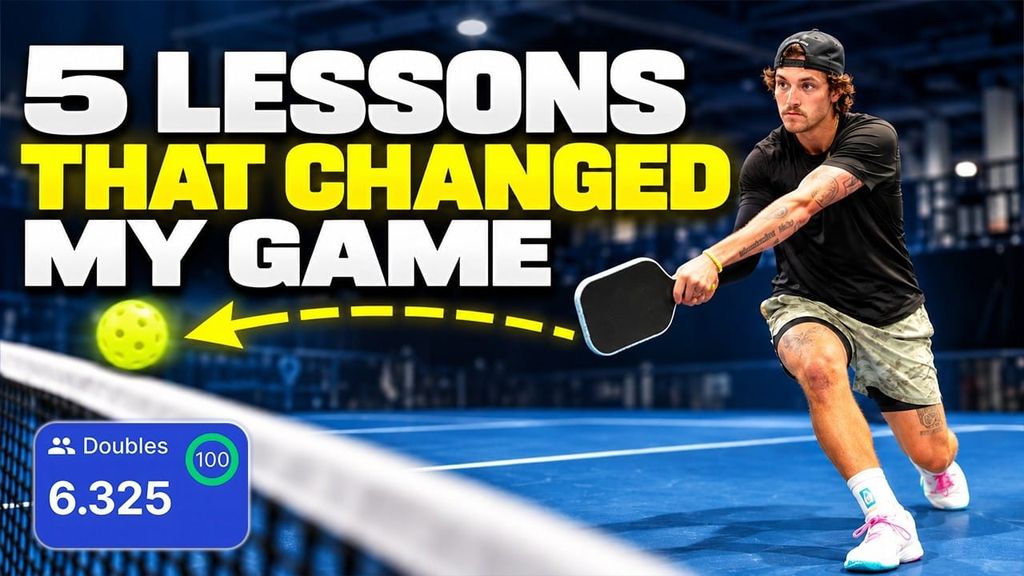
5 Pickleball Strategy Shifts That Actually Change How You Play
Most players try to improve their pickleball strategy by adding more shots. These five mindset and strategy shifts show you why thinking better beats hitting harder every time.
Most players trying to improve their pickleball strategy go looking for new shots. A better third shot drop, a faster speed up, more spin on the dink.
But the biggest leaps in this game rarely come from technique. They come from thinking differently about what you’re doing and why.
Pro player and coach Michael Lloyd broke down five lessons from five years of competing and teaching at a high level.
These aren’t drills. They’re frameworks.
The video comes from Pickleball Hub on YouTube, and if even one of these clicks for you, your game is going to feel different fast.
Love pickleball? Then you'll love our free newsletter. We send the latest news, tips, and highlights for free each week.
1. Aggression Isn't About Hitting Hard
This is the one that most players get completely backwards.
When someone tells you to be more aggressive, your brain immediately goes to speeding up, attacking, swinging harder.
But real aggression is about pressure. You can be just as aggressive with a deep return or a well-placed dink as you can with a speed up.
If you're speeding up the wrong ball, that's not aggression. That's recklessness.
Here are four ways to apply genuine pressure without swinging harder:
- Aggressive third shot placement: Roll the ball out wide with heavy topspin. You're not trying to overpower anyone. You're forcing them into a tough position and moving to close ground behind it.
- Forward positioning: Moving up behind an okay third shot is itself an aggressive act. Being big in the middle and closing fast forces errors even when you're not touching the ball.
- Deep returns: Depth beats pace. A hard return that lands short gives the serving team an easy third, while a deep, controlled return that lets you reach the kitchen puts you in charge immediately.
- Intentional dinking: Moving opponents side to side with no two balls landing in the same spot is pressure. You don't need topspin bombs. You need intent on every single dink.
The goal isn't to end the point.
The goal is to force a popup or create a gap big enough to attack through. That mindset alone will clean up a lot of reckless ball striking.
For a deeper look at this concept, here's how to play aggressively without taking bad risks.
2. Your Opponents Are Human. Start Treating Them That Way.
This one is subtle, but it might be the most powerful shift on the list.
Most players treat their opponents like a wall, hitting shots that keep coming back until they give up looking for an angle.
The better approach is to humanize your opponent.
That means actively hunting for patterns, weaknesses, and tendencies instead of just reacting to whatever comes back.
What Reading Tendencies Adds to Your Pickleball Strategy
If you’ve been speeding up to someone’s backhand and they keep countering it cleanly, stop praising them and start exploring.
What does their forehand look like under pressure, and what happens when you go at their right hip?
What breaks down when they have to move laterally instead of staying planted? That information is the entire point.
This applies to teams, too. In mixed doubles especially, players default to targeting one person over and over.
If the player you’re targeting is locked in, go find out what the other one is doing. You might be one ball away from an easy popup.
There’s a related principle worth knowing: whatever someone is great at, the opposite is often a real weakness.
If your opponent leans in and crushes balls out of the air at the kitchen, they’re probably not great at retreating for a lob.
Reading your opponent’s weak side is a skill you can build deliberately.
3. Are Most Points Really Decided Before You Reach the Kitchen?
Yes. And it’s not even close.
The first five shots of every point set the tone for almost everything that follows. Modern pickleball strategy starts long before the dink rally does.
Serve, return, third, fourth, fifth. That sequence decides whether you’re on offense or defense, and none of it gets fixed by having great hands at the kitchen.
Most players spend the bulk of their practice time at the kitchen line because it’s the most fun place to be.
But if you’re losing points before you even get there, more dinking practice won’t save you.
How to Think About Each Shot in the Sequence
- Serve: Deep and with movement. Push your opponent back, make the return harder, and give yourself an easier third.
- Return: Depth matters more than pace. Get it deep and get yourself all the way to the kitchen line.
- Third shot: Choose based on the quality of the return. A short return might allow a drive, a deep return usually means a third shot drop, and forcing one when the other is clearly better costs you the point.
- Fourth shot: This is not an offensive opportunity. This is about staying on offense, which means making the ball and keeping your position instead of gambling on a winner.
- Fifth shot: Your first real chance to either go offensive or get established at the kitchen. Read the third and react accordingly.
- Too many players are overplaying the fourth shot. Earning your attacks means not forcing them before the point is ready.
 The Dink Media Team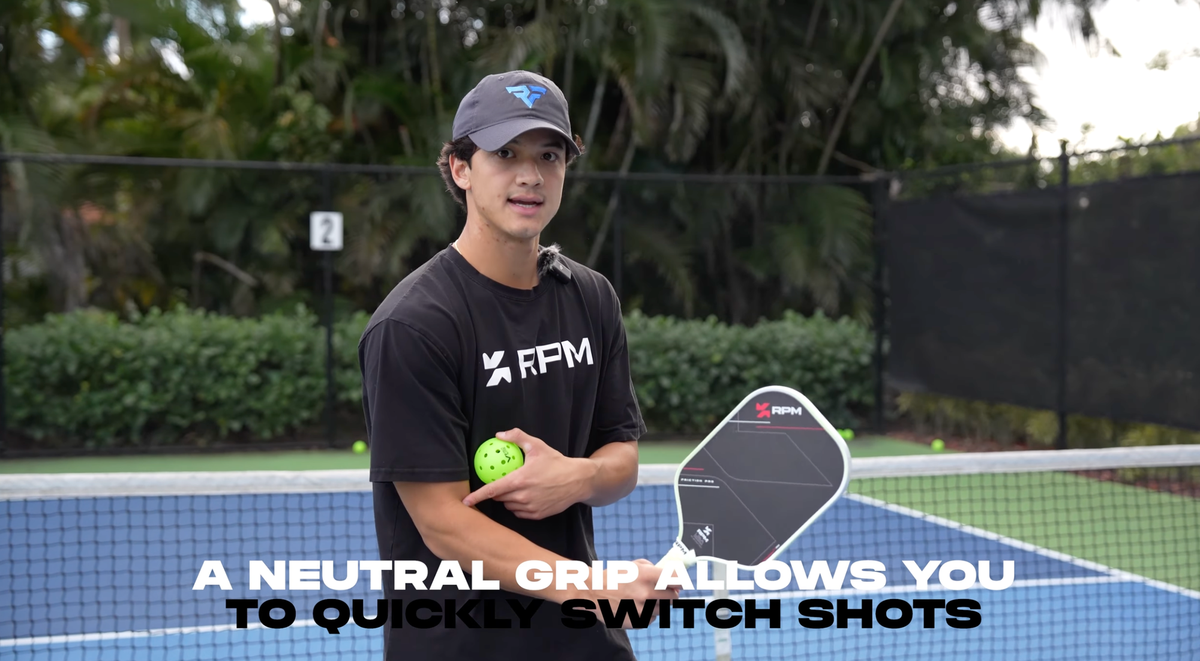
4. Should Beginners and Advanced Players Practice the Same Way?
Absolutely not. But plenty of players never adjust how they practice as they improve, and that’s a real problem.
If you’re a beginner, your practice should be almost entirely about reps. Dink back and forth collaboratively and focus on making clean contact.
Don’t worry about moving your partner around or generating heavy spin. Build the foundation before you start stacking things on top of it.
Serves and returns aren’t glamorous to practice.
But you hit them every single point, so skipping those reps to work on speed ups leaves easy improvement on the table.
How Your Pickleball Strategy Should Shift as You Improve
Once you move into intermediate and advanced territory, the structure has to change.
Collaborative drilling matters less, and live ball situations, four-player scenarios, and drills with specific rules and consequences matter much more.
The goal is to replicate real game pressure, not just hit pretty shots into an open court.
A good practice drill structure looks very different at 3.5 than it does at 4.5.
One specific example: beginners shouldn’t be practicing aggressive topspin roll drops.
Master the basic drop first, because when your foundation is solid, the advanced shots actually stick.
 The Dink Media Team
5. What Does It Mean to Play With Real Intent?
Playing with intent means every shot has a purpose before you hit it.
This shows up most clearly in the dink rally, where it’s easy to keep the ball in play and hope something happens.
At higher levels, nothing in the dink rally is passive.
Every ball is placed somewhere specific to create a problem, and you’re never hitting to the same spot twice in a row.
You’re moving opponents sideline to sideline. You’re looking for the popup or the gap before it appears, not after.
Adding topspin to your dinks is one of the fastest ways to make that intent physical.
A heavy roll pushes back through the court instead of floating, which creates a different read and applies pressure without a harder swing.
Understanding the difference between a topspin dink and a roll dink gives you more tools at the kitchen.
The same principle applies to court positioning.
Closing aggressively behind a good third shot is itself a form of intent, and camping at the baseline after a nice drop gives up all the pressure you just created.
 Eric Roddy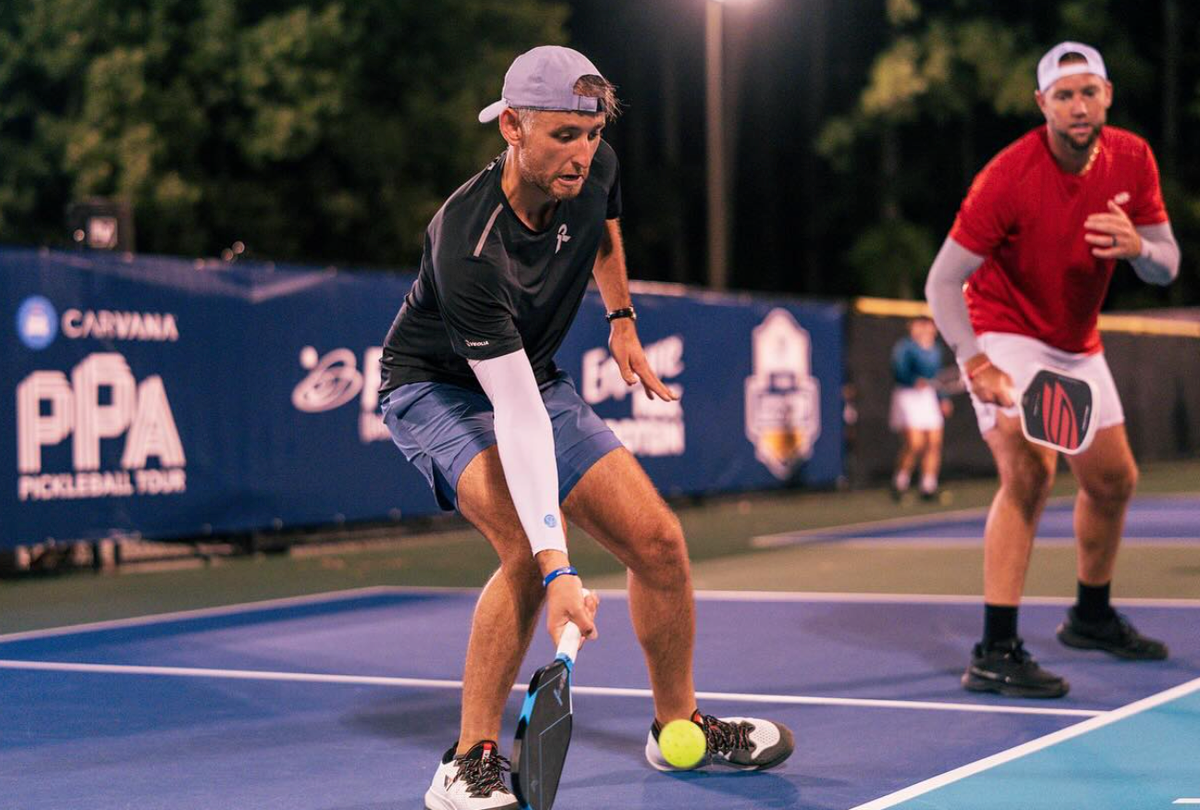
Patience Is a Pickleball Strategy, Not a Last Resort
Most players treat patience like something you fall back on when nothing else works. It should be your first choice, not your emergency exit.
Patience doesn’t mean passive. It means you’re not panicking after four bad points, and it means you understand that even a hot opponent eventually cools down.
When you’re losing a stretch and your opponent looks unbeatable, that’s exactly the wrong time to abandon your game plan and start gambling.
Staying patient during long rallies is what separates competitive players from ones who fall apart.
The same patience applies to shot selection. You don’t need to force a winner every time you get an above-average ball.
Set the point up. Keep moving your opponent. Trust that the right ball is coming if you stay disciplined.
And if you’re drifting from the plan, check whether you’re actually being patient or just playing too passively. There’s a real difference between the two.
Frequently Asked Questions
What does aggression actually mean in pickleball strategy?
Aggression in pickleball means applying pressure through placement, depth, spin, and positioning rather than just hitting harder. A deep return that pins your opponent at the baseline is an aggressive shot even if it's not fast. The goal is to force your opponent into a bad position, not to overpower them.
Why do most pickleball points get decided in the first five shots?
The serve, return, third, fourth, and fifth shots establish who is on offense and who is on defense before the dink rally starts. A weak third shot keeps you stuck at the baseline, and no amount of kitchen skill fixes a point that's already uphill. Spending more practice time on transition and baseline play will have a faster impact than more dinking drills.
How should my pickleball practice change as I improve?
Beginners should focus on repetition, consistency, and basic shot mechanics including serves and returns. Intermediate and advanced players need live ball situations with four players, specific constraints, and real decision-making pressure. If your practice looks the same as it did two years ago, you're probably slowing your own improvement.
What does it mean to humanize your opponent in pickleball?
Humanizing your opponent means recognizing that they have strengths, weaknesses, tendencies, and bad stretches instead of treating them like a machine that never misses. If their backhand is shutting you down, explore the forehand. If one partner is making everything, start targeting the other one and gather information.
How do I apply pressure in a dink rally without speeding the ball up?
Move your opponents side to side so that no two balls land in the same spot consecutively. Add topspin to your dinks so the ball pushes through the court instead of floating. Stay intentional with every ball and look for the popup or gap before attacking rather than forcing the issue early.
Love Pickleball? Join 100k+ readers for free weekly tips, news & gear deals.
Subscribe to The Dink