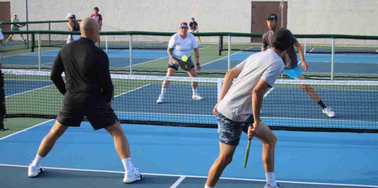
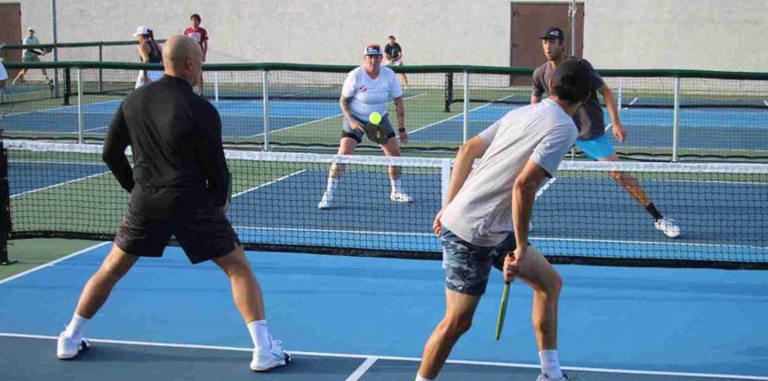
Most players hit the same flat pickleball serve every point. These three serves add power, height, and spin so you win the first ball more often.
Your pickleball serve is the one shot nobody can touch before you hit it, and most players waste it.
You roll out the same flat serve every single point, your opponent grooves their return, and the rally starts even.
It does not have to go that way. With three serves in your bag, power, height, and spin, you put pressure on the returner before the rally even begins.
Here is how to build all three, straight from the court.
Love pickleball? Then you'll love our free newsletter. We send the latest news, tips, and highlights for free each week.
Why the Power Pickleball Serve Should Be Your Default
The power serve works at every level from rec play to the pro game, which is exactly why it should be your default pickleball serve.
Hit it with pace and depth, and the return gets forced shallow, handing your team an easier next ball.
Depth is the real weapon here, not raw speed. A deep serve pushes the returner behind the baseline and makes their contact point awkward.
The engine of the shot is your weight transfer from back foot to front foot.
That momentum shift is where the easy, effortless power comes from, and dialing in your footwork, stance, and load matters more than swinging hard.
You have three targets to attack against a right-handed opponent:
- The backhand corner. Most players dislike their backhand, so the far corner is the safe bet when you are unsure of a weakness.
- The body. The most underrated target on the court. Serve into the body and you force the returner to decide forehand or backhand, and you jam anyone standing on the baseline.
- The forehand corner. Useful once you spot a weak forehand or see opponents cheating heavily to their backhand side, catching them reaching at the T.
Early in a match, when you have not read your opponents yet, the body serve is the smart opener because it makes them commit first.
If you want more pace on top of placement, work on your serve speed in practice rather than in games.
Mastering this kind of shot selection is one of the core 5 pickleball shots you must master before 2026.
How to Execute the Power Serve Cleanly
Keep a closed stance so your hips can rotate and your weight can drive from back foot to front foot. That closed setup is what gives the swing its power.
If you want a different feel, walk into the serve.
Not a casual stroll, a deliberate step with intention that pours momentum into the ball and keeps it deep.
Two mistakes kill the power serve. The first is not using enough hips and weight transfer, so all the effort comes from the arm.
The second is taking too big a backswing.
An oversized backswing might add pace, but when it dumps the ball into the net or sails it long half the time, the trade is not worth it.
A shorter, repeatable swing that finds the lag in your serve beats a violent one that misses.
If you are building a system around clean, repeatable ball striking, the 4-step system to win more pickleball games in 2026 lays out how consistent mechanics compound across a full match.
What Makes the Lob Pickleball Serve So Hard to Return
The lob serve wins because of the height of the bounce, not the height of the ball in the air, and that high kick is what catches returners off guard.
Anna Leigh Waters has popularized a high, deep serve recently, and the principle behind it is simple to copy even if her execution is elite.
Picture the contrast.
Your power serve stays low and skids, while your lob serve should bounce up a substantial distance higher off the same court.
That gap in bounce height is the whole point.
Depth still matters. Aim for the last 25 percent of the service box so your opponent has to wait on the ball and strike it from behind the baseline, pushing them back and making their contact harder. According to CBS Sports' 2025 pickleball coverage, deep ball placement on the serve remains one of the highest-leverage adjustments recreational players can make.
The deception comes from matching your two serves.
Keep the setup, preparation, and swing identical to your power serve all the way up to contact, so opponents get no early read.
 The Dink Media Team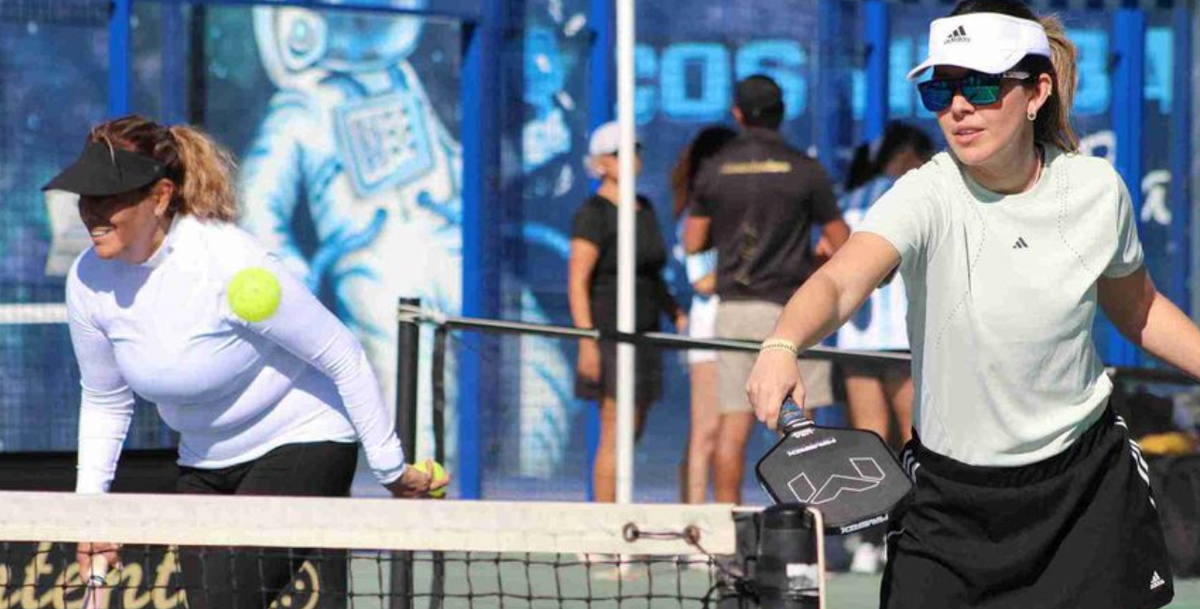
The only tell is that you get under the ball slightly more to lift it, which is unavoidable and still hard to spot in time.
For targets on the lob serve, two spots give you the most margin:
- The body. Right into the returner, forcing the forehand or backhand decision again.
- The crosscourt corner. The diagonal gives you more court length to work with, so your accuracy climbs compared to the middle T.
Going at the middle T introduces more ways to miss wide.
The corner buys you distance and a better make percentage, which is why it pairs so well with the 12 drills you need to play your best pickleball in 2026 for consistency and deception.
The two common lob serve mistakes are not getting enough bounce difference from your power serve, and using the wrist to generate the lift.
Wrist action sprays the ball left, right, deep, and short. Lift with the shoulder and keep one continuous swing instead.
Used well, the lob is one more way to vary your serve and keep opponents off balance.
 The Dink Media Team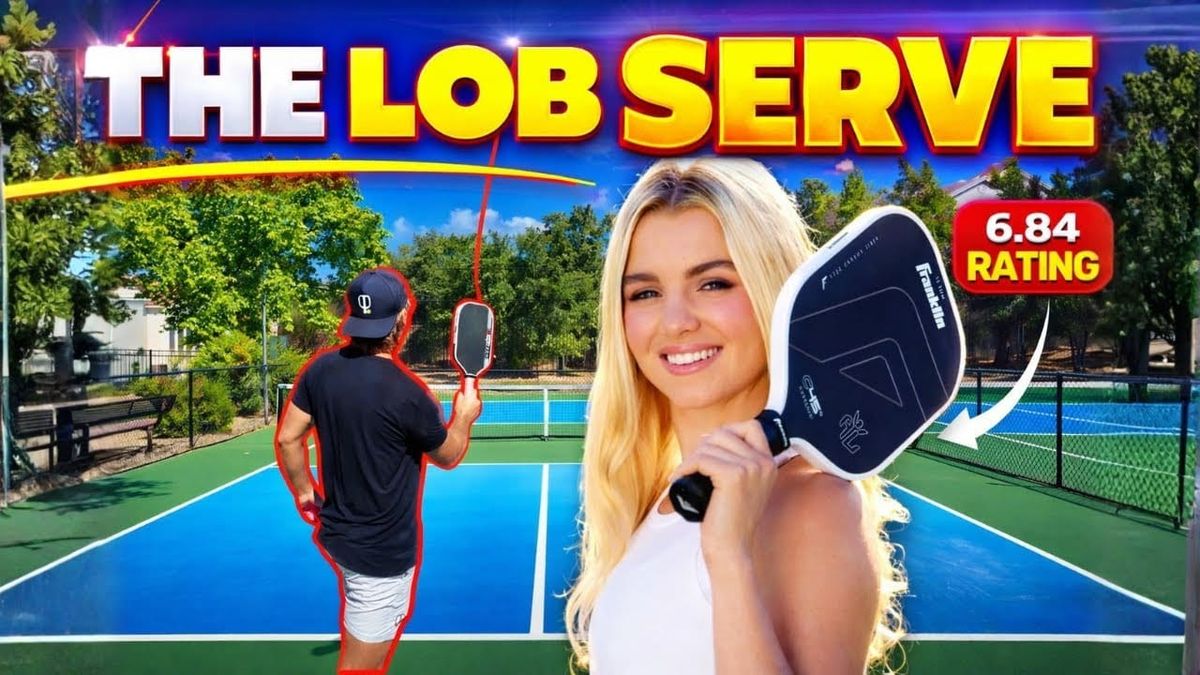
When to Pull Out the Sidespin Pickleball Serve
The sidespin serve, or screwball serve, is your timing-breaker for when an opponent has read your power serve all match.
The ball is already bending in the air, and when it lands it kicks sideways even more, either running into the returner or skidding away from them.
That extra movement off the bounce makes a clean return tough.
Aim it at the middle of the box, into the body, and the sideways action forces another uncomfortable forehand-or-backhand decision.
This kind of serve variety is exactly what separates players who are building toward modern pickleball strategies for 2026 from those stuck in predictable patterns.
What Is a Screwball Serve, Exactly?
A screwball serve is a heavy sidespin pickleball serve that curves in the air and then shoots sideways off the bounce, the way a screwball breaks in baseball.
The spin sends it running across the court rather than bouncing straight through, so the returner has to adjust late.
The technique departs from your other serves. Set your feet, take the paddle back like normal, then send it out away from your body.
That outward path lets you swing across your body and finish in a crescent, a small letter C shape.
That C motion is what spins the ball to the side while keeping your accuracy, because you still finish out in front toward your target.
If you want a deeper look at shaping the ball, understanding why pro pickleball players abandoned the slice shot in 2025 covers the same swing-path fundamentals from a different angle.
How to Avoid the Two Sidespin Serve Mistakes
Two mistakes show up most on the sidespin serve. The first is breaking your wrist to create the spin.
The sidespin does not come from the wrist, it comes from the shoulder, the momentum, and the swing path of the paddle.
The second is swinging too fast. Too much speed and the ball either slips off the face and flies somewhere random, or it bends so much it sails out the back.
Smooth and controlled beats fast every time.
For players drilling this at home, these same control principles appear across the 6 essential pickleball shots to master for 2026.
 The Dink Media Team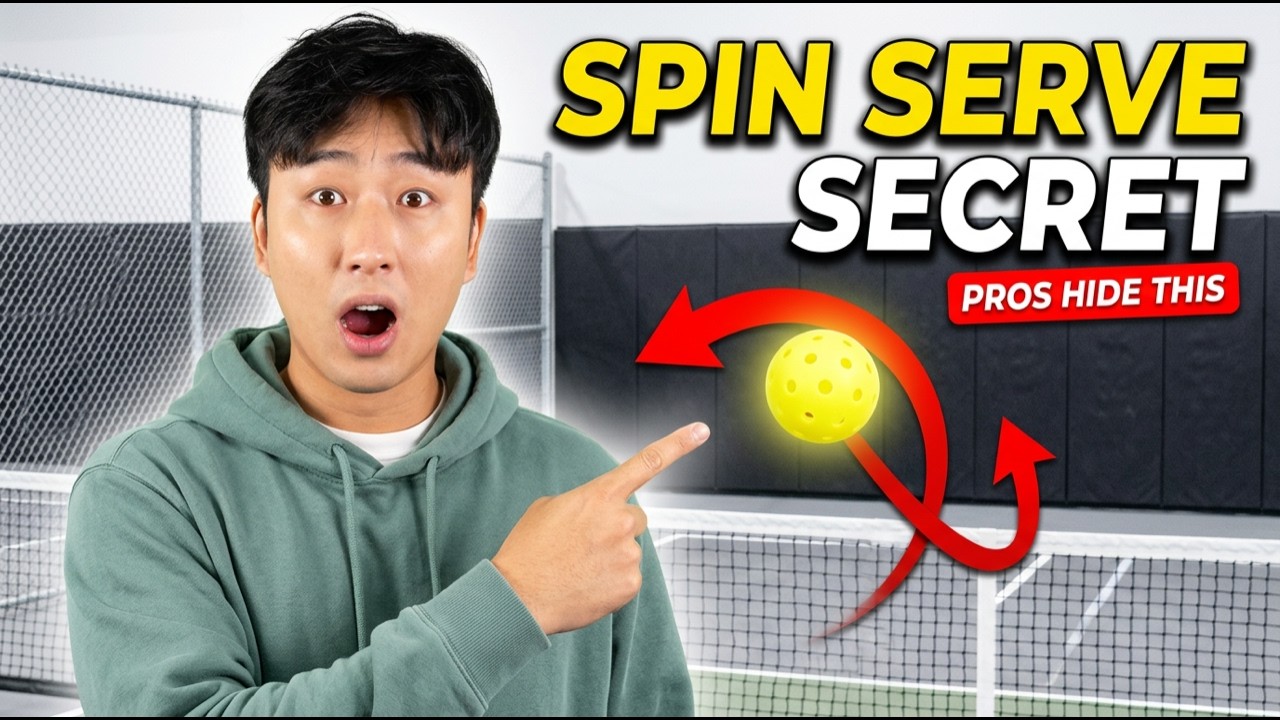
How to Add These Pickleball Serves to Your Game
The next time you play, mix up your serves and be okay with missing a few.
You practice for a reason, and you will spray some while you learn, which is exactly how every level of player improves.
Pros miss serves and amateurs miss serves.
The difference is missing with a purpose, because you are going for an advantage instead of patting the ball in and starting even.
Remember that the serve sets the tone, but the next ball decides the point, which is why the return of serve is your most important shot on the other side of it.
Building serves that force weak returns is how you win points off your serve, and it ties straight into the larger picture of strategy mistakes that are costing you games.
Three serves, three different problems for your opponent.
The same player driving the sport forward, Anna Leigh Waters, who recently signed with Nike and sits at World No. 1 across the pro game, built her dominance on variety like this.
The pros lining up at the U.S. Open Pickleball Championships all serve with intent rather than habit.
You do not need a pro contract to copy the approach.
As ESPN's 2025 pickleball coverage shows, the players who win early in the rally are the ones who refuse to give away a free, predictable pickleball serve.
If you want to see where the sport's best are heading next, the 25 biggest stories in pro pickleball from 2025 puts the full picture in context.
Frequently Asked Questions
What Is the Best Pickleball Serve for Beginners?
The power serve is the best starting point because it works at every level and rewards depth over raw speed. Focus on weight transfer from your back foot to your front foot and aim deep toward the backhand corner. Once that is reliable, add a second serve for variety.
How Do You Hit a Deep Pickleball Serve Consistently?
Drive your weight from back foot to front foot and keep your backswing short and repeatable rather than huge. A compact swing with good momentum produces depth without the high miss rate of an oversized swing. Aim for the last quarter of the service box to push the returner behind the baseline.
Is a Spin Serve Legal in Pickleball?
Yes, a sidespin or screwball serve is legal as long as the spin comes from your swing path and not from manipulating the ball with your hand before contact. The pre-toss hand spin serve was banned, but generating spin through your paddle motion is fully within the 2025 USA Pickleball rule changes. Always generate sidespin through shoulder rotation and swing path, not wrist flicks.
How Can I Make My Pickleball Serves Less Predictable?
Keep your setup and swing identical across your power and lob serves so opponents cannot read which is coming. Then sprinkle in a sidespin serve to break their timing once they have grooved your pace. Changing depth, height, and spin from the same look is what keeps returners guessing.
Why Does the Body Serve Work So Well?
A serve into the body forces the returner to instantly decide between a forehand and a backhand, which costs them time and balance. It also jams players who stand close to the baseline. That moment of indecision often produces a weak return you can attack.
Love Pickleball? Join 100k+ readers for free weekly tips, news & gear deals.
Subscribe to The Dink