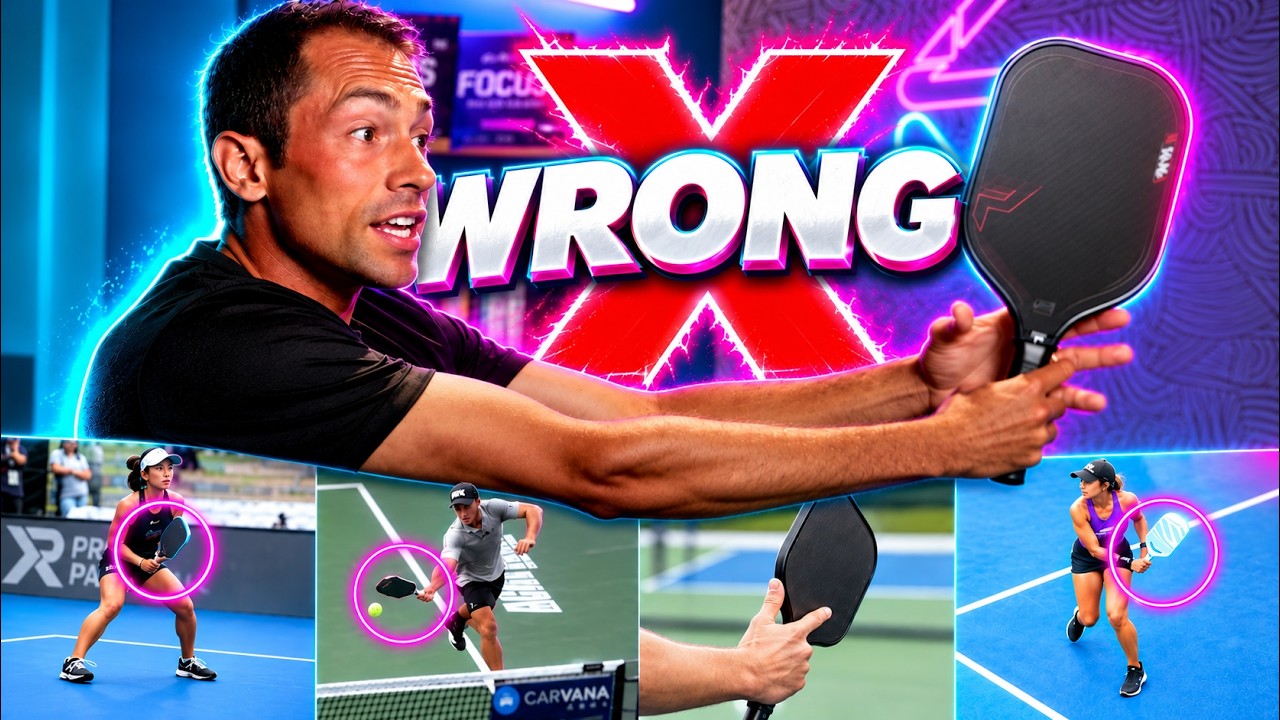
Most pickleball advice gets repeated so often that players stop questioning it. These are the biggest pickleball myths a pro says you should stop believing today.
The pickleball myth cycle is real. Someone says "never miss a serve" or "always hit to the backhand," and suddenly every player on every court repeats it like gospel.
The problem is that a lot of these tips are either flat-out wrong or only apply in very specific situations.
Following bad advice does not just keep you stuck, it actively trains you into habits that cost you points.
This breakdown comes directly from Zane Navratil Pickleball on YouTube, where Zane, a multiple-time PPA and MLP champion, went through the sport's most repeated myths one by one and called out which ones are actually false.
Love pickleball? Then you'll love our free newsletter. We send the latest news, tips, and highlights for free each week.
The Pro Myths You Probably Believe
Let's start with what people think they know about professional pickleball players. These myths shape how rec players think about the game at every level.
- Myth 1: Half the tour played pro tennis. There were only a handful of legitimate professional tennis players who made the transition. The real names are Jack Sock, Donald Young, Sam Querrey, Travis Rettenmaier, Genie Bouchard, and Tina Pisnik. Signing up for a prize money tournament does not make someone a pro tennis player.
- Myth 2: Pros make no money. This is also wrong. Players in the top 50 of men's and women's doubles are earning a liveable wage. It is not generational wealth, but it is a real income.
- Myth 3: Pros use special paddles you cannot buy. Most pros use exactly what is available to you. Paddles get tested the day of events. Zane himself plays his Paddletek Honeycomb straight out of the box with nothing but an overgrip added.
- Myth 4: The best pros never make unforced errors. Pros make fewer bad errors, but they still miss. What separates them is that they make good errors. They miss long, not into the net. That distinction matters enormously for your own shot selection.
- Myth 5: Pros grind 8 hours a day. More hours does not equal faster improvement. Anna Leigh Waters is known to do an hour and a half of intense play and call it a day. Intensity beats volume every time.
Is It True That Pros Are Great at Letting the Ball Go?
No, this one is mostly a myth. Pros are very good at letting balls go when they are in the transition zone, away from the kitchen.
At the kitchen line itself, they are guessing just like you are.
This is exactly why pros miss long instead of short. If you are going to err, err in the direction that gives your opponent less to work with.
A ball that lands out gives away nothing. A ball dumped into the net gives your opponent an easy setup.
If you want to cut your unforced errors fast, start by understanding which errors are acceptable and which are killers.
The Technique Myths Coaches Keep Repeating
This category has the most damage potential. Bad technique advice, practiced thousands of times, becomes very hard to undo.
- Myth 6: You must use a continental grip. Continental is the most common grip at the pro level and probably the best starting point for beginners. But it is not the only option. Some pros play slightly Eastern. A few lean toward semi-western. The point is, you need a good reason to deviate, not a hard rule that says you cannot.
- Myth 7: Never take a backswing. The real rule is: do not take a backswing that is out of control. If you have time and you are trying to hit the ball with pace, a backswing is not just acceptable, it is necessary. The actual guideline is simpler: if the ball is going into the kitchen, no backswing. If you are hitting hard, some backswing is appropriate.
- Myth 8: Stop and hit. The idea behind this is the split step, which is real and useful. But "stop and hit" is bad framing. Think about balance and hit instead. Sometimes your best balance comes from staying in controlled motion rather than a full stop that throws off your momentum coming to the kitchen. Footwork is one of those areas where a simple drill can fix lateral movement fast once you understand what you are actually trying to accomplish.
- Myth 9: Keep your paddle up. For 3.0 to 4.0 players, yes, paddle up beats paddle down. But watch pros and you will see the ready position sits near the waist, not raised high. That is because most attacks come at the body. If you are always paddle high, a fast ball at the midsection catches you reaching downward in a panic.
- Myth 10: Stay low. Staying low with your legs is correct. Hunching your spine to get low is not. There are also different styles, from JW Johnson's more upright stance to Callan Dawson's extremely low position. The style can vary. The spine should not collapse.
- Myth 11: Ready position all the way out in front. This comes from tennis, where you block and punch volleys out in front because you can step into the shot. In pickleball, the kitchen stops you from doing that. If your arms are fully extended at the ready, you have no room to punch outward when the ball comes.
Bring your arms in tighter so you can actually generate force on contact.
This connects directly to how to volley in pickleball and win every hands battle.
Your starting position determines everything about what shots you can actually execute.
 The Dink Media Team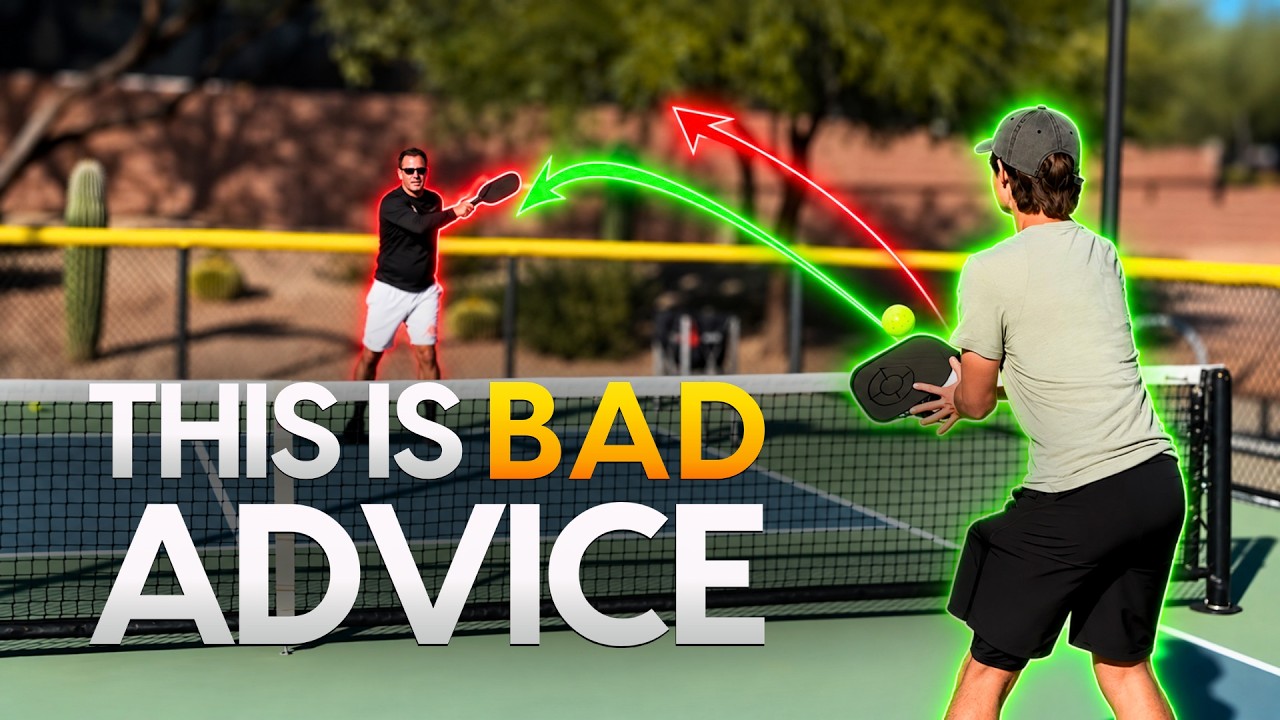
What About Grip Changes and Watching the Ball?
- Myth 12: Never change grips. This is solid advice until you reach around the 4.5 level. After that, there are specific situations where a grip change is the right move. One exception holds: at the kitchen line, avoid switching grips. When your opponent can speed up at any moment, you cannot afford to be mid-adjustment.
- Myth 13: Watch the ball all the way to the paddle. This is physically not possible. Your eyes skip and cannot track at that speed when the ball is very close. Track the ball to your expected contact point, then shift attention to your opponents. If you stare all the way down at your paddle, you lose sight of an Erne attempt or any other aggressive move your opponent is setting up.
 The Dink Media Team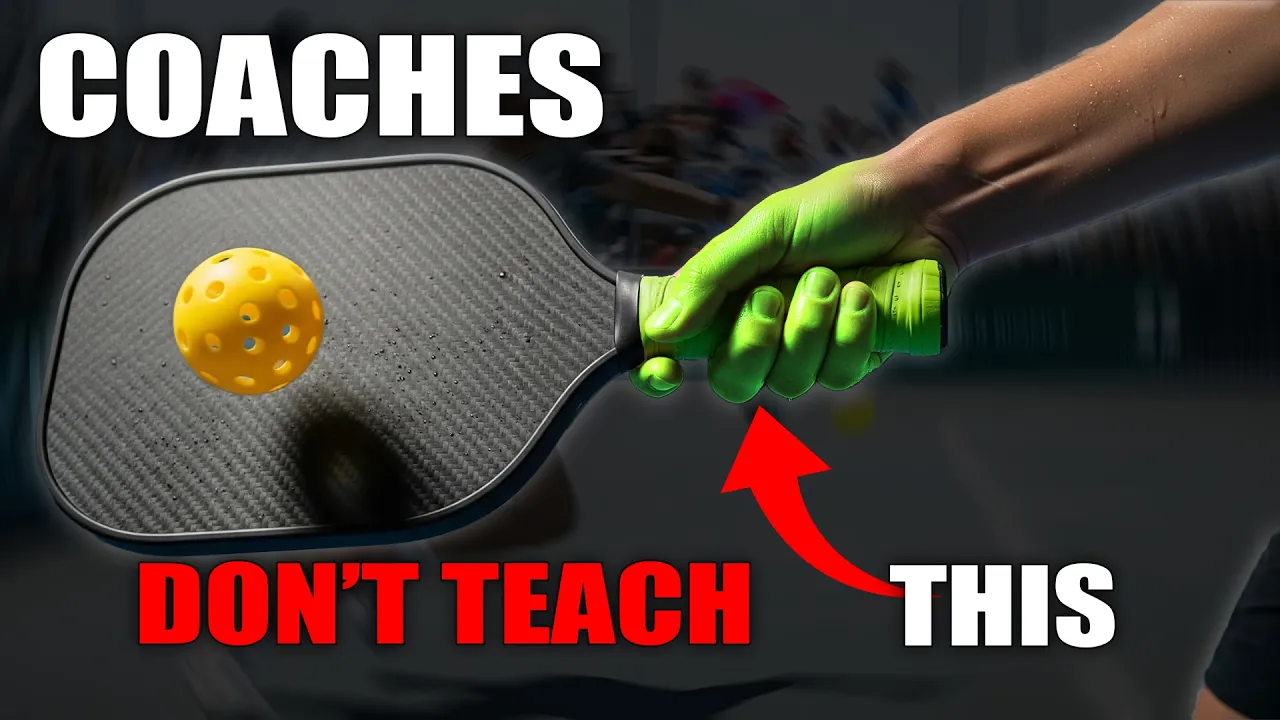
The Strategy Myths That Cost You Points
Strategy myths are dangerous because they sound logical and responsible. That makes them harder to question.
Here are the biggest ones to stop following:
- Never miss a serve. If you make 100 percent of your serves, you are not taking enough risk. One miss per match is a reasonable rate. If you are perfect on serves, push them deeper and make them harder.
- No crosscourt speed-ups. If your opponents are covering the middle hard, going crosscourt is exactly the right answer. Modern paddle technology makes this shot even more effective with added spin.
- Forehand takes the middle. Coverage of the middle depends on court geometry, positioning, and the specific play, not just which hand your paddle is in. Learn how to stop the confusion on middle balls with a proper framework.
- Slow the banger down. Resetting every ball against a banger only shows them the reset is working. Counter attack instead. Punish the bad speed-ups and they will start to think twice.
- Always hit to their backhand. A lot of players protect their backhand and are completely ready for it. The actual target is their weakness, which sometimes lives on the forehand side.
- Placement over power. Sometimes the right play is to crush an easy ball right through the middle. Trying to be too cute on a put-away leads to missed opportunities.
The third shot drop myth deserves a specific note. The drop is not dying. What changed is timing.
You are seeing more third shot drives followed by a fifth shot drop. The drop itself remains essential.
If you want to fix why yours keeps failing, here is why your third shot drop pops up.
 The Dink Media Team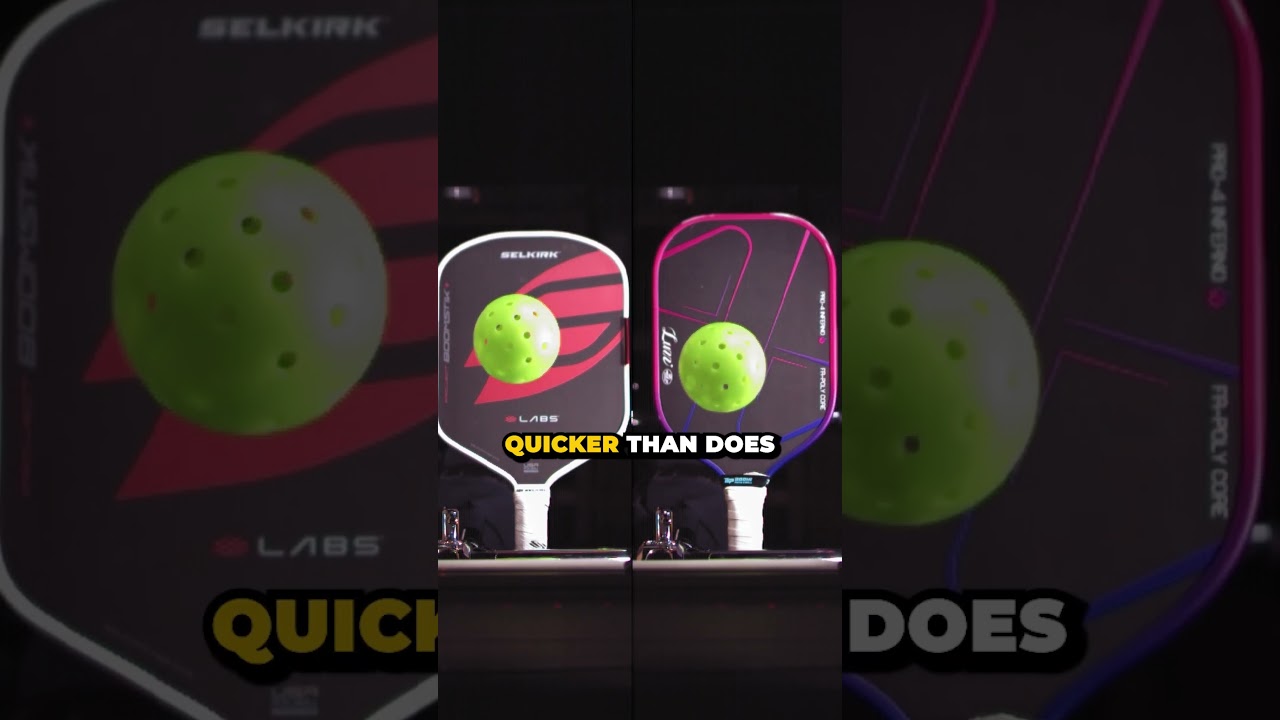
Are Expensive Paddles Actually Better?
Paddles do matter once you reach a certain skill level. But the myth that a better paddle fixes your game is completely false.
No paddle is giving anyone more than a fraction of a DUPR point.
Here are the equipment myths worth busting outright:
- More grit equals more spin. Paddle regulations now control spin through exit testing. How you get there matters less than it used to.
- Thicker paddle equals more touch. Different core constructions have changed this relationship significantly.
- Bigger paddle face equals more power. There is no real correlation. Small faces can generate more power than large ones depending on construction.
- You must use lead tape. Most pros do, but Zane plays his Paddletek straight out of the box. It is a preference, not a requirement.
- Pros use elongated paddles. This was trending for a while, but pros are moving back toward more standard shapes now.
What is worth paying attention to is surface material. Exposed raw carbon fiber is the current standard at the pro level for a reason.
If you are buying a new paddle, that is where to focus. You can also learn how pros actually set up their paddles before making any changes.
One equipment myth that is unambiguously true: use an overgrip.
This one is not a myth. Add an overgrip and your feel, control, and sweat management all improve immediately.
 The Dink Media Team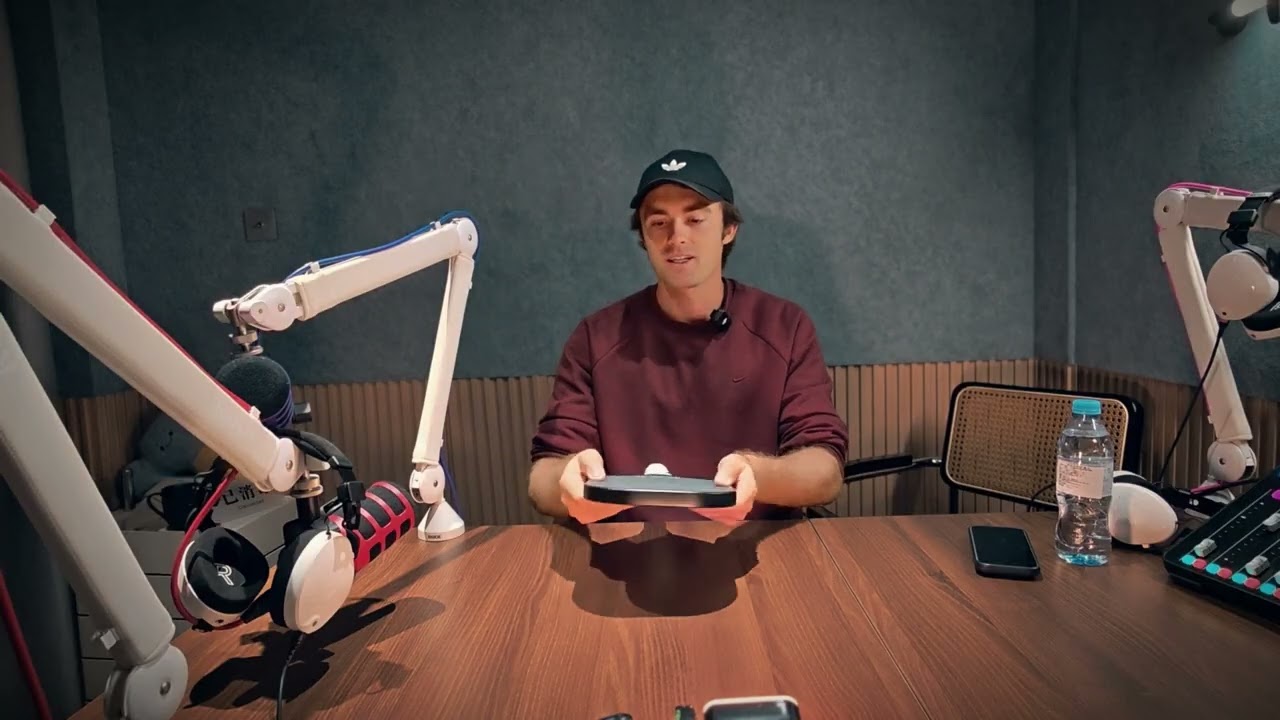
A Few Bonus Myths Worth Knowing
Pickleball was not named after a dog.
The sport is named after the pickle boat, a racing term for a crew assembled from leftover rowers, and the original equipment was similarly cobbled together.
And the idea that pickleball is only for older players? That has been dead for years.
The sport now runs college tours, professional leagues, and draws elite athletes across age groups, which is worth remembering before you assume anything about your own skill level.
Finally: drilling more than you play is not automatically better.
Drilling matters, but actual match play builds the pressure-reading and decision-making skills that drilling alone cannot replicate.
A ratio of about 45 minutes of drilling to 90 minutes of play tends to produce better results than drilling-heavy sessions.
Frequently Asked Questions
Is it true that you should never miss a serve in pickleball?
No, this is one of the most damaging pickleball myths in the sport. If you never miss a serve, you are not pushing enough depth, spin, or placement. Aim to miss roughly one serve per match as a sign that you are actually using your serve as a weapon.
Do pickleball paddles actually make a difference at the recreational level?
Your first paddle does not matter much, but once you develop real skills, equipment starts to matter. No paddle will fix a fundamentally broken shot, but the right paddle can add consistency and feel once your technique is solid.
Should you always hit to your opponent's backhand in pickleball?
Not automatically. Many players protect their backhand and are fully prepared for it. The better approach is to find your opponent's actual weakness, which is sometimes the forehand side or the body, and attack that instead.
What does it mean to make a "good error" in pickleball?
A good error is a ball that misses long rather than into the net. Pros miss long because a long ball gives opponents nothing to attack, while a net ball is always the server's or hitter's fault entirely. Train yourself to err on the long side when you miss.
Is the third shot drop still relevant in pickleball?
Absolutely yes. What has shifted is the timing: pros now drive more third shots and use the drop on the fifth shot instead. The drop itself remains one of the most important shots in pickleball at every level above 3.5.
Love Pickleball? Join 100k+ readers for free weekly tips, news & gear deals.
Subscribe to The Dink