
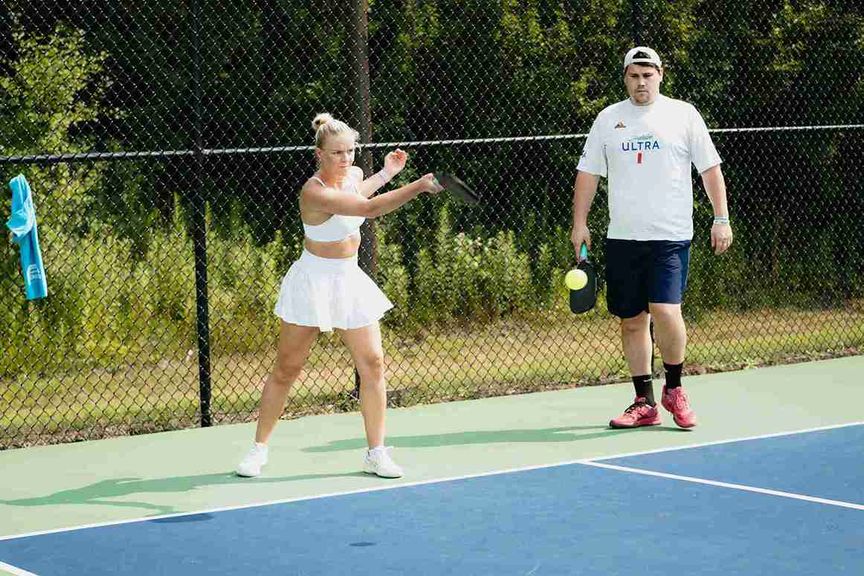
Tournament Day Stamina: How to Stay Sharp Through a Long Day of Pickleball
Tournament day stamina isn’t about being the fittest player in the bracket. It’s about managing energy, attention, and recovery across eight hours so your 9 a.m. game and your 4 p.m. game look like the same person played them.
Tournament day stamina is the reason your 4 p.m. match looks nothing like your 9 a.m. match. You didn't forget how to dink.
You spent the morning in a camp chair in the sun, ate half a gas station protein bar around eleven, then got called to a court cold against a team that's been sitting in the shade with a cooler and a plan.
That's not a skill gap. That's an energy problem, and it's the most fixable thing in tournament pickleball.
Love pickleball? Then you'll love our free newsletter. We send the latest news, tips, and highlights for free each week.
Why Tournament Day Stamina Has Nothing to Do With Your Conditioning
Here's the thing most players get wrong: a tournament is not an endurance event. It's eight hours of waiting with 25 minutes of actual violence sprinkled through it.
You're not gassed because your cardio is bad. You're gassed because you did five cold starts in one day, and nobody trains for that.
Rec play is one long session where you get warm in game one and stay warm until you leave.
A bracket is the opposite. Twenty minutes on, ninety off, repeat, and every restart asks your body to go from zero to full-speed hands in four minutes of warm-up.
The cold start is the hidden tax on your whole day.
Define it this way: a cold start is any match you begin with a body temperature, heart rate, and reaction speed that haven't been elevated in the previous 15 minutes.
Your first three or four points are practice, except they count.
Drop two cold starts in a round robin and you're playing for third before lunch, which is why tournament strategy and stamina are the same conversation.
What Does a Real Tournament Morning Actually Look Like?
Arrive early enough that nothing is rushed, and front-load the day instead of saving yourself for later.
Ninety minutes before your first serve is the sweet spot. That covers check-in, courts, shade, and a full warm-up routine without sprinting from the parking lot.
Show up 20 minutes out and you'll burn your first match on logistics instead of reading opponents, which is a terrible way to spend tournament day stamina you'll want at 2 p.m.
Pros arrive early for a reason. It's one of the small habits that separate them from the field.
Eat earlier and lighter than feels right.
A real breakfast two hours out beats a huge one 30 minutes out, and everything you pack should be food you've already tested in practice.
Tournament morning is not the day to try a new gel or a new pickleball nutrition plan you read about Thursday.
The Warm-Up That Actually Builds Tournament Day Stamina
Warm up to play, not to stretch.
Static stretching at 8 a.m. does almost nothing for your first match.
You want movement that raises your temperature and rehearses the patterns you're about to use: lateral shuffles, split steps, short sprints, then paddle work.
The roll, lunge, jump sequence Anna Bright uses is a good template because it loads every joint you're about to use.
Then hit in this order: dinks for touch, drives for timing, drops for feel, hands battles for speed.
Five minutes, maybe seven. Save the longer stretching routine for after you're done, when it's doing actual recovery work.
The Between-Match Window Is Where Brackets Get Decided
The 40 minutes between games matter more than the 20 inside them.
Most players treat the gap as dead time. They stand around watching other courts, paddle still in hand, cooking in direct sun.
Then they get called and wonder whose legs these are.
Treat every break as a job with three tasks: cool down, refuel, re-warm. Singles players already know this, because the sweat adds up fast.
Cool down means getting out of the sun and actually sitting. Shoes off if you have more than 30 minutes.
Change your shirt. Fix grip problems before they cost a point, because sweaty hands are an energy leak nobody notices until the paddle turns on a put-away.
Refuel in small amounts, constantly. Sip, don't chug.
Research on athletes has associated cognitive and mood decline with hypohydration around 3 to 5% of body mass, which is more fluid loss than most players realize they stack up across a hot six-match day.
The fix is boring: drink on a schedule, not when you're thirsty, and keep your footwork honest while you still have legs.
How Do You Protect Tournament Day Stamina Between Games?
Build a repeatable 10-minute block before every call to the court.
That's the whole trick. Tournament day stamina isn't a mystery, it's a routine you run five times instead of once:
- Minutes 1 to 3: walk, shade, water, shoes off, breathe.
- Minutes 4 to 6: eat something small if it's been more than 90 minutes.
- Minutes 7 to 10: shoes back on, shuffle and split step until you feel warm, then a few shadow swings.
Got a gap longer than two hours? That's where a short rest helps.
Meta-analysis work has associated naps under an hour with better cognitive performance and lower perceived fatigue in athletes, though it was studied in young men and you want roughly an hour between waking and playing so you're not groggy.
Translation: a 25-minute car nap at noon is fine. A 90-minute one at 2 p.m. is a trap. If you're sore more than tired, active recovery beats lying flat.
 The Dink Media Team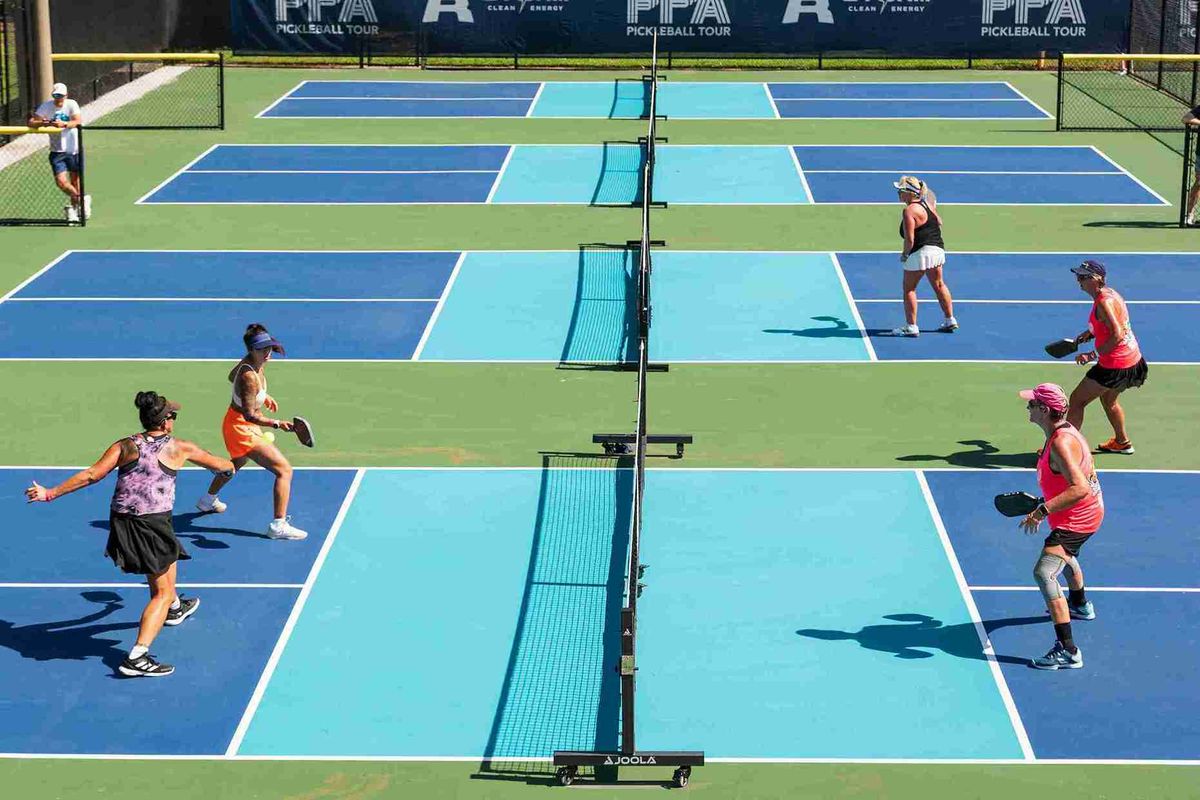
Your Brain Quits Long Before Your Legs Do
Shot selection is the first thing to go, and nobody notices it happening.
You'll still get to the ball at 3 p.m. You'll still have hands. What disappears is patience.
Research in sport has most consistently linked mental fatigue to worse decision-making and changes in visual search, which on a pickleball court shows up as one tell: you start taking the speed-up you'd never have taken at 9 a.m.
That's the late-day signal. Attacking a ball below net height out of impatience means you're losing focus, not fitness.
Simplify instead of trying harder. Go back to what's working, keep playing to your strengths, and let the other team force the error.
Simple Tournament Day Stamina Resets Between Points
Use the seven seconds you already have.
Turn to the back fence after every point. Walk, don't stand.
Breathe out longer than you breathe in, which drops your heart rate faster than anything else available mid-game.
Then set your feet and get ready early, because late preparation is what makes a long day feel longer.
 The Dink Media Team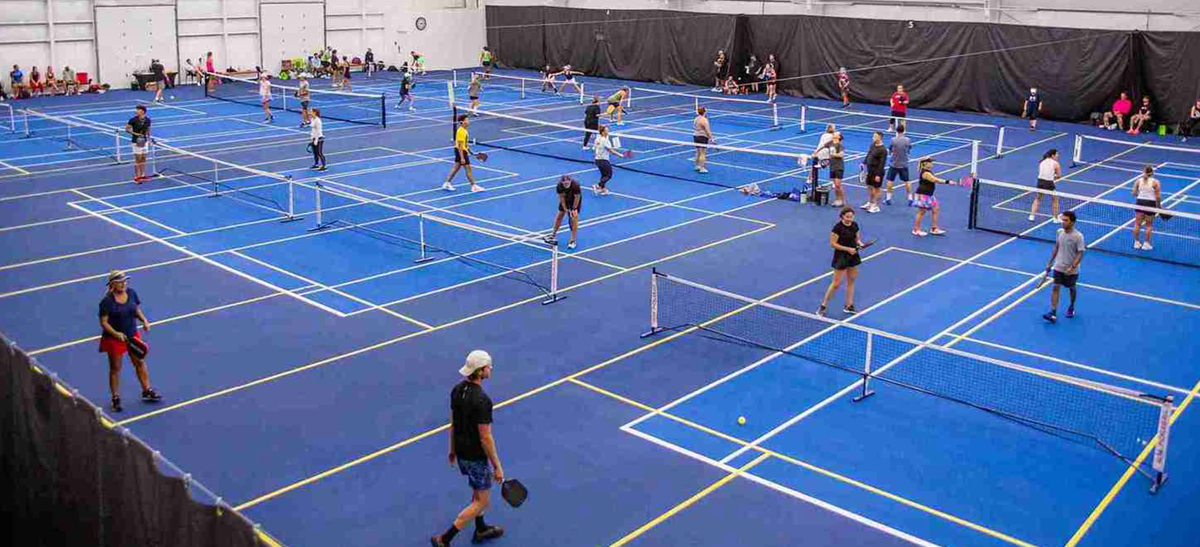
Training So Tournament Day Stamina Isn't a Surprise
Practice the thing you're bad at, which is restarting.
Rec sessions never simulate a bracket, so build it in. Drill hard for 20 minutes, stop completely for 20, then play a game to 11 starting cold.
Better use of a Tuesday than two more hours of open play, and it's the gap a real training plan for competitive players closes.
Three things worth adding to your week:
- Play games when you're already tired. Last match of the night, legs heavy, make good decisions anyway.
- Add contrast training so repeated bursts cost you less.
- Use solo drills on off days to keep touch without burning your legs.
And honestly, the ratio matters more than the volume.
One top pro did the math on drilling versus playing, and most amateurs play far too much and drill far too little.
That's the habit that leaves you with great instincts and no ability to restart six times in a day.
 The Dink Media Team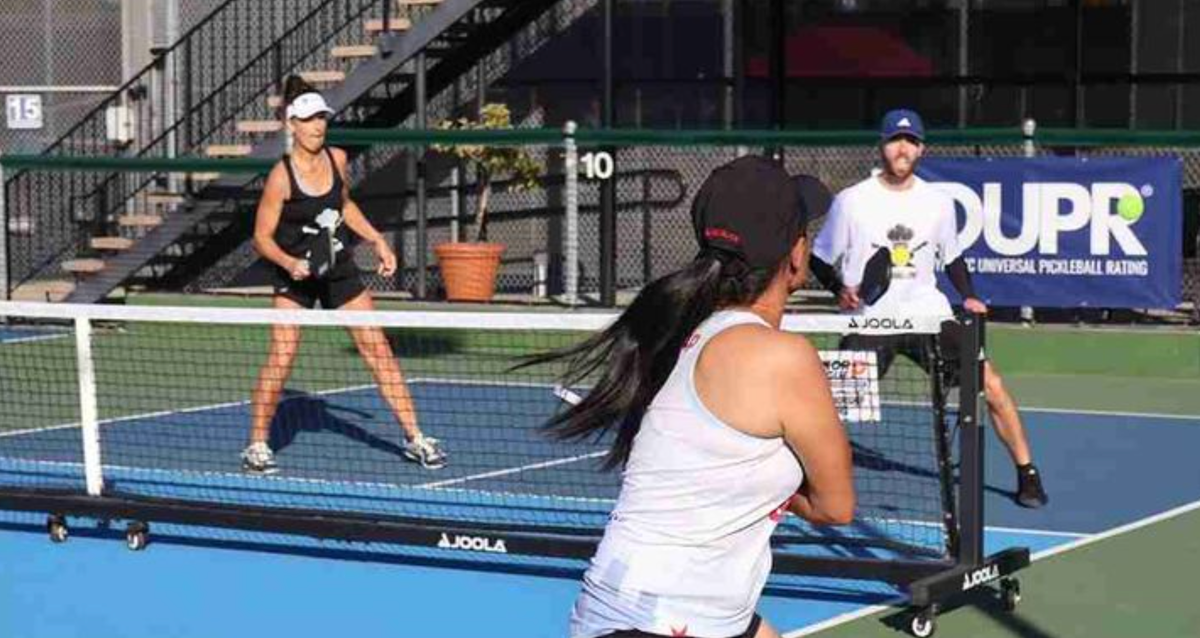
Key Takeaways
- Tournament day stamina is an energy management problem, not a conditioning one. The fatigue comes from repeated cold starts, not total court time.
- Arrive 90 minutes early, warm up with movement instead of static stretching, and eat earlier and lighter than feels natural.
- Run the same 10-minute routine before every match: cool down, refuel, re-warm.
- Drink on a schedule rather than by thirst, and keep any nap under an hour.
- Decision-making fades before your legs do. When you start attacking low balls out of impatience, simplify instead of swinging harder.
Frequently Asked Questions
How long do pickleball tournaments usually last?
Plan for a full day. Most amateur round robin or double elimination events run six to nine hours from check-in to medal matches, with your games scattered across that window in unpredictable gaps. Build your schedule and your food around a full day, not a few hours.
What should I eat between matches at a tournament?
Small, familiar, and frequent beats one big meal. Think fruit, half a sandwich, pretzels, or something with easy carbohydrates every 90 minutes, plus steady fluids. The one rule that matters: nothing you haven't already eaten before a practice session.
How early should I get to a pickleball tournament?
About 90 minutes before your first scheduled match. That covers check-in, courts, shade, water, and a real warm-up without rushing. Show up late and you'll spend your first match on logistics instead of reading the other team.
Should I nap between matches?
Only with a long gap, and keep it short. Research in athletes has associated naps under an hour with better cognitive performance and lower perceived fatigue, though that work was done in young men and grogginess is the practical catch. Give yourself roughly an hour between waking and stepping on court.
How do I stay loose during a two hour gap?
Keep moving in small doses instead of sitting for two hours and then sprinting to the court. Walk a few minutes every half hour, add easy lateral movement, and start your re-warm about 15 minutes before you expect to be called. The goal is never going fully cold.

Love Pickleball? Join 100k+ readers for free weekly tips, news & gear deals.
Subscribe to The Dink