Strategy for Your First Pickleball Tournament: 5 Winning Tips from a Pro
Winning your first pickleball tournament isn't about flashy shots — it's about smart pickleball tournament strategy. Learn the five proven tactics that separate winners from the rest.
When you're stepping onto the court for your first pickleball tournament, the pressure can feel overwhelming.
But here's what separates players who win from those who don't: it's not about hitting the hardest shots or pulling off highlight-reel plays.
It's about understanding the right pickleball tournament strategy.
According to Tanner Tomassi, a top-rated APP professional player who recently placed fourth in a professional ATP tournament, the key to tournament success lies in five fundamental strategies that any player can master.
Love pickleball? Then you'll love our free newsletter. We send the latest news, tips, and highlights for free each week.
The Mental Game Is Your First Pickleball Tournament Strategy
Before you even step on the court, you need to reset your mindset. This is where most players lose tournaments before the match even starts.
Pickleball is a game of errors, not highlights. Whoever makes the fewest mistakes wins. That's it.
You don't need to be a superstar; you need to be consistent.
Tanner's golden piece of advice is simple but transformative: tell your partner and yourself that you're not going to speed up the ball until you've hit at least 10 dinks minimum.
Play passive. Get comfortable. Let your opponents feel the pressure of trying to win while you focus on not losing.
This shift in mentality removes the weight off your shoulders. You're no longer hunting for that perfect shot.
You're hunting for your opponent's error. And at lower-level tournaments, those errors come fast.
Why the Third Shot Matters More Than You Think
Now let's talk about the back of the court.
The third shot is where most tournaments are won or lost, and it's where most players make their biggest mistakes.
Here's the thing: if you're playing your first tournament, odds are it's a lower-level event. Everyone's nervous. Everyone's uncomfortable.
So instead of hitting a third shot drop (the passive, safe play), start with a third shot drive down the middle at 70% power.
Why? Three reasons.
- First, if your opponents don't have great chemistry, there's confusion about who gets the ball when it comes fast through the middle.
- Second, your ball might nick the net and still go over.
- Third, you're testing whether they can handle speed.
Maybe they can't. Maybe they're super uncomfortable with drives.
The strategy is tactical:
Start every match with the drive until your opponents prove they can handle it.
Only then switch to drops. This approach puts the pressure on them early when they're most vulnerable.
 The Dink Media Team
2. The Kitchen Line: Where Pickleball Tournament Strategy Is Really Won
Once you're at the kitchen line, everything changes. This is where dinking strategy becomes your superpower.
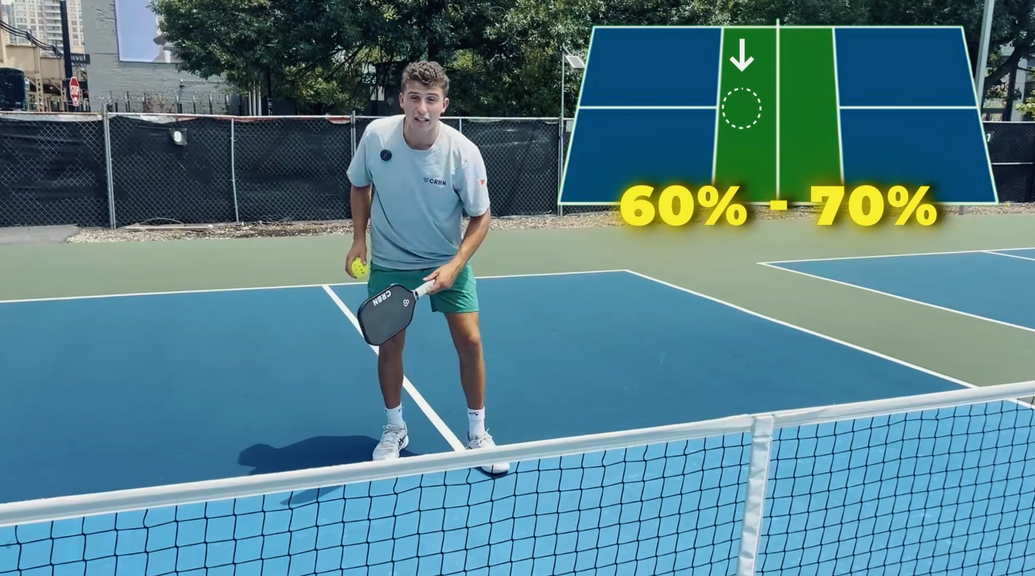
And the best dinking strategy is almost counterintuitive: aim for the middle
Tanner recommends putting 60 to 70% of all your dinks right down the middle of the kitchen. There are three reasons this works so well.
- First, it's the safest spot on the court. When you dink to the middle, the ball never crosses anybody's paddle. If you dink wide and lift it too high, your opponent can catch it out of the air and attack. But if you dink to the middle, there's a funnel that's nearly impossible to attack.
The net is two inches lower there, and the geometry just works in your favor.
- Second, points at lower levels move fast. If all four players are dinking, the rally will end quickly. By hitting to the middle, you minimize errors and let your opponent make the mistake.
- Third, you and your partner develop rhythm. You know where the ball's going. Your partner knows where you're hitting it. That extra edge in anticipation and reaction time is huge.
The Dink Media Team
3. Shading: The Positioning Secret Most Players Miss
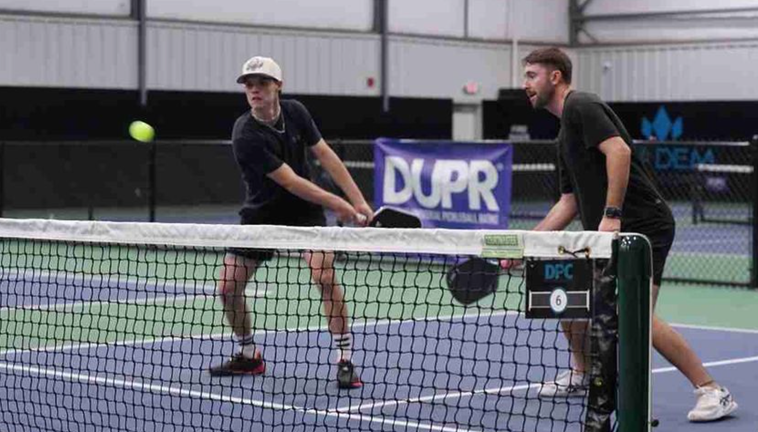
Here's a concept that separates good players from great ones: shading. It's simple but incredibly effective.
Whenever you hit the ball, you or your partner should take one step in that direction and point your paddle toward that area.
If you dink the ball to the right, you move right. If you dink to the middle, you both position halfway with your paddles ready.
This isn't complicated, but it transforms your anticipation and reaction time. You're not standing flat-footed and reacting at the last second.
You're already moving toward where the ball is most likely to go. Your paddle is already in position.
That millisecond of advantage is the difference between winning and losing at tournament level. Recognizing your court position is what takes your shot selection from reactive to deliberate.
4. The Middle Coverage Rule: End the Confusion
One of the most controversial topics in pickleball is this: which player covers the middle? Tanner gives a clear, definitive answer that eliminates all gray area.
Whichever player is diagonal from where the ball is coming should commit to covering the middle, whether it's their forehand or backhand.
It doesn't matter. That's their job.
Here's why this works. If you're in front of your opponent, you're the shortest distance away. You have the least amount of time to react.
So if your partner is responsible for covering the sidelines and the line, and you're responsible for the middle, she won't get caught guessing, she won't have to flip open, and she can stay compact and cover her area.
There are exceptions, of course. If you can read and anticipate where your opponent is hitting, you can cut it off.
But 85% of the time, this rule holds true and eliminates confusion. If you want to go deeper on controlling the middle, this breakdown of how to hunt the ball in the middle of the court is worth your time.
The Dink Media Team
5. Playing to Not Lose: The Final Piece of Pickleball Tournament Strategy
Here's the final piece of the puzzle, and it might be the most important:
Play to not lose, not to win.
In pickleball, the longer the rally, the more mental pressure builds. If you stay cool and composed while your opponent gets uncomfortable, you win those points.
People get super uncomfortable the longer rallies go. They start pressing. They start making errors.
So your job isn't to hit winners. Your job is to keep the ball in play, stay patient, and let your opponent beat themselves.
This is the essence of tournament pickleball strategy at every level. It also maps directly to what CBS Sports has covered about the mental side of competitive racquet sports — the players who manage pressure best, win.
Want to go even deeper on competing without cracking? Defensive pickleball strategy and staying calm under pressure is an essential companion read.
Frequently Asked Questions
What is the most important pickleball tournament strategy for beginners?
The most important tournament strategy is understanding that pickleball is a game of errors, not highlights. Focus on consistency and letting your opponent make mistakes rather than hunting for winners — this mental shift alone will dramatically improve your results.
How does dinking to the middle help your pickleball tournament strategy?
Aiming 60 to 70% of your dinks down the middle is the safest play because the ball never crosses your opponent's paddle, making it nearly impossible to attack. It also builds rhythm between you and your partner, giving both of you a coordination edge throughout the match.
What does shading mean in competitive pickleball?
Shading is a positioning technique where you take one step toward the direction you just hit the ball and point your paddle toward that zone. It improves your anticipation and reaction time by putting you in position before your opponent has even hit the ball back.
Which player should cover the middle in doubles pickleball?
The player diagonal from where the ball is coming is responsible for the middle. This gives them the shortest distance to react and removes all ambiguity between partners about court coverage, which is one of the most common sources of confusion in doubles.
Why is the third shot drive a smart pickleball tournament strategy at lower levels?
Starting with a third shot drive at 70% power tests your opponents early, creates confusion if they lack chemistry, and puts immediate pressure on them when nerves are highest. Once they prove they can handle speed, you adjust to drops — but the early drive gives you a read on exactly what you're working with.

Love Pickleball? Join 100k+ readers for free weekly tips, news & gear deals.
Subscribe to The Dink