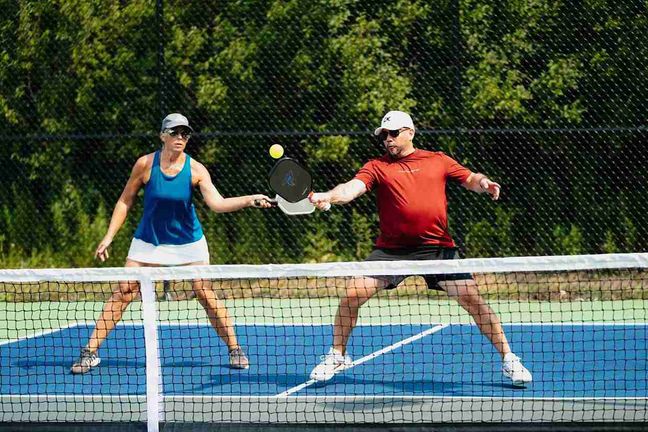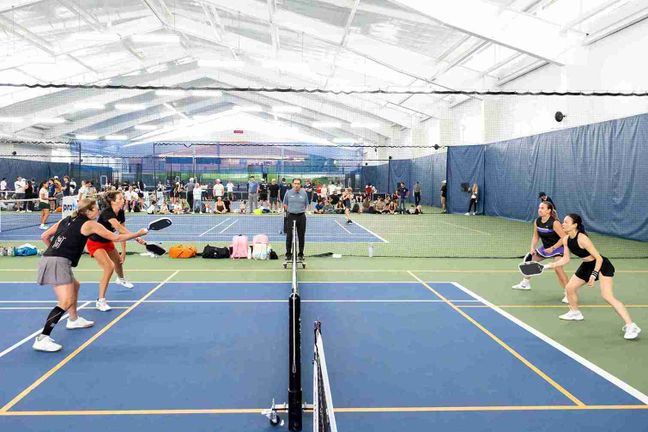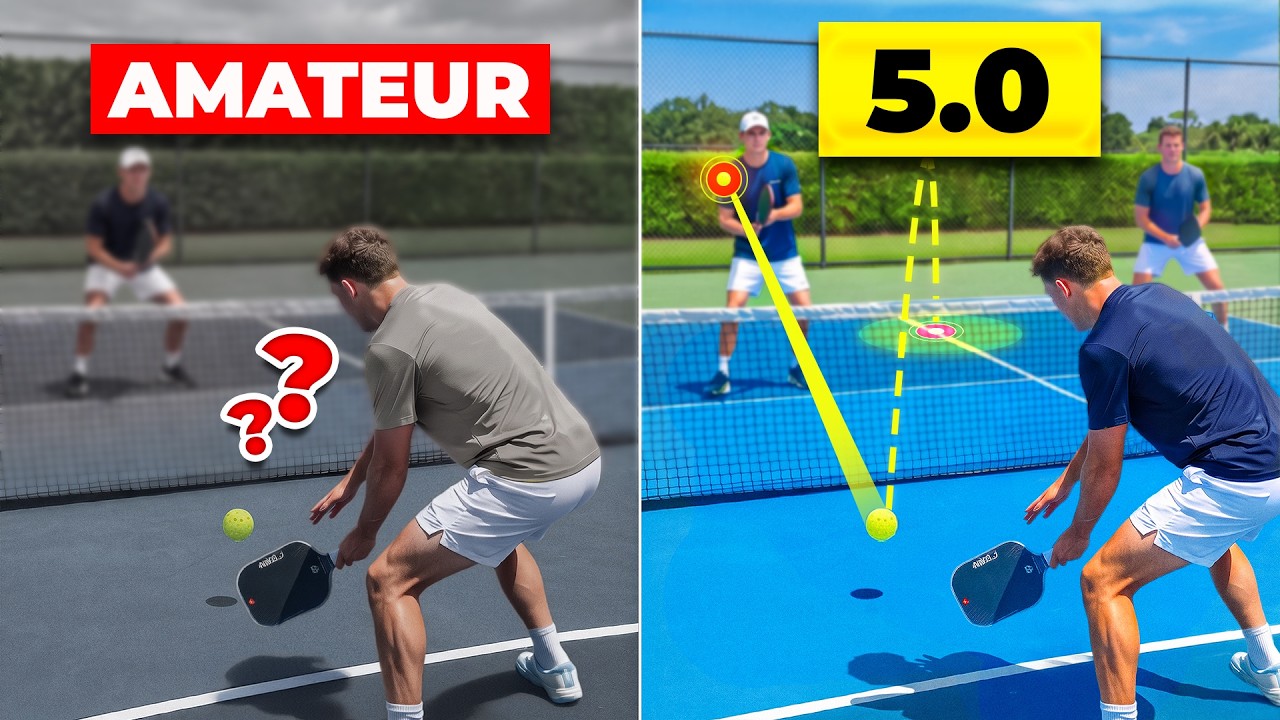
A 5.0 pickleball player isn't just hitting better shots. They're reading the court in a completely different way. Here are the seven vision habits that separate them from everyone else.
If you've ever played against a 5.0 pickleball player and felt like they always knew what was coming, you weren't imagining it.
They weren't reading your mind. They were reading the court in a way most players never learn.
The gap between a 3.5 and a 5.0 isn't just physical. It's almost entirely about perception and decision speed.
What they see in the half-second after the ball leaves your paddle determines everything.
These seven habits come from Tanner Tomassi on YouTube, where he breaks down exactly how elite players process the game in real time.
Once you see it, you can't go back.
Love pickleball? Then you'll love our free newsletter. We send the latest news, tips, and highlights for free each week.
1. They See the Next Shot, Not the Current One
This is the single biggest mental shift you can make. A 5.0 player isn't watching the ball they just hit. They're already solving the next problem.
Take a big serve that forces a weak midcourt return. The moment that serve leaves the paddle, they're already moving instead of waiting to see where the return goes.
The same thing happens in a crosscourt pickleball dink rally.
The second they roll an aggressive dink, they're stepping over and leaning in, putting pressure on the opponent before the ball even arrives.
Most players stand and watch. That pause is where points are lost.
2. Every Ball Gets Sorted in One Second
Attack or defense. Gas or brakes. That's the only decision that matters off every incoming ball, and elite players make it instantly.
Watch a 5.0 pickleball player receive a third shot drop.
The absolute second that ball comes off the opponent's paddle, they know whether to apply pressure or concede the kitchen.
There's no deliberating. There's no hoping.
This is a learned skill, not a gift. Most players get shot selection wrong because they're reacting to where the ball is instead of where it's going.
Train yourself to read the trajectory off the paddle, not the bounce.
That anticipation window is the same one sports vision research keeps identifying as the real separator between skill tiers across racket sports.
Does Your Early-Match Play Shape the Whole Game?
Yes, absolutely. A pickleball match is a chess game, and what you do at 1-1 matters at 8-8 in game three.
This is tip three, and it's one players consistently ignore.
At a neutral score early in the match, you should be making investments, not just playing each point in isolation.
The example here is direct: rip a hard ball at your opponent's body in a low-stakes moment early on. Plant that memory.
Then, later in the match when pressure is high and the score is tight, that same scenario appears.
Your opponent is waiting on the hard one. That's when you hit the soft dink wide, and the point is yours because you set it up three games ago.
This kind of pickleball IQ is what separates players who compete from players who just rally.
 The Dink Media Team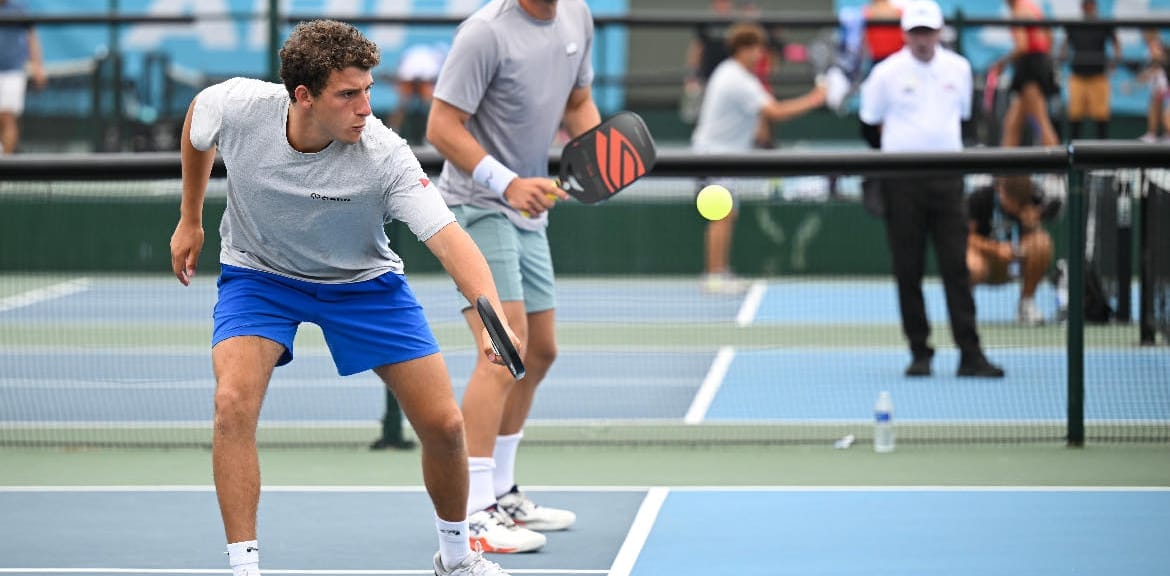
4. They Always Know If They're Ahead or Behind in the Rally
Amateur players don't track rally position. They just react. A 5.0 pickleball player always knows their current status.
If a ball is coming in high and attackable, they know they're ahead.
If a ball is low and wide and forcing them off balance, they know they're behind and need to buy time.
That awareness changes everything about how they move and what shot they choose.
Learning to recognize your court position is a skill that pays off immediately once you practice it consciously.
Most recreational players get a difficult ball and still try to attack.
The better player steps back, resets, and neutralizes the rally instead of gambling on a low-percentage shot.
 The Dink Media Team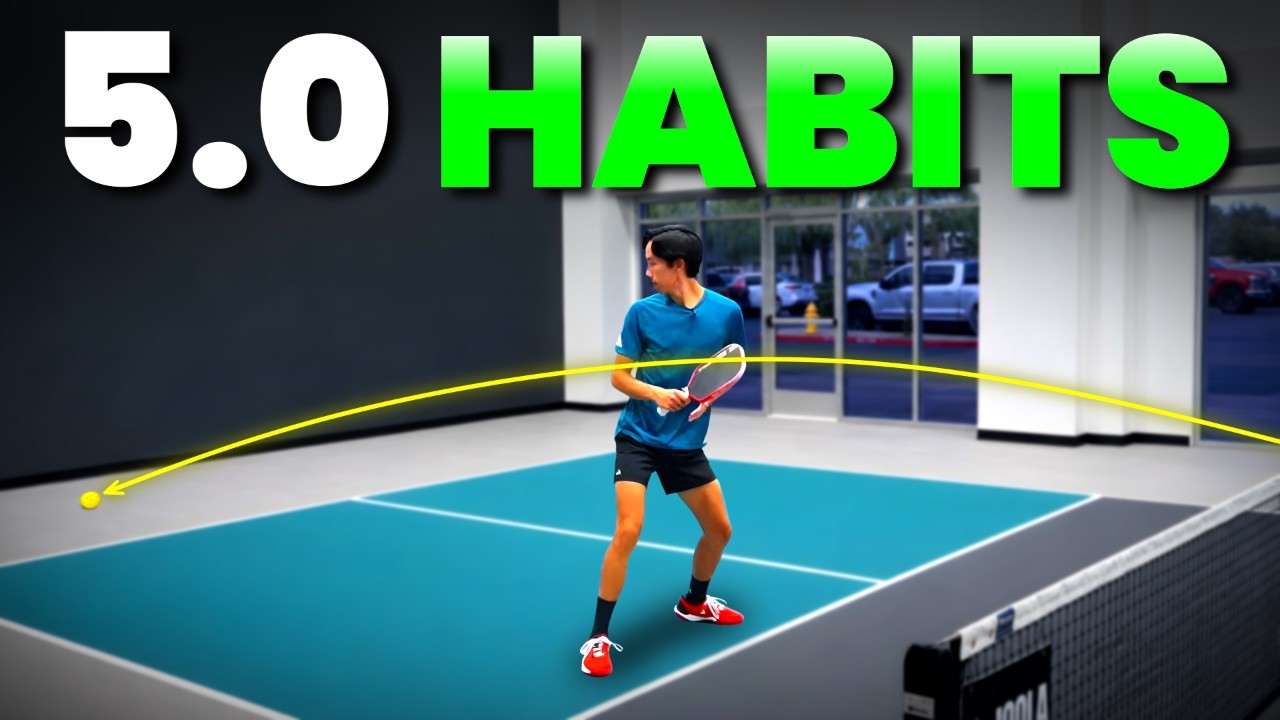
5. Strong Teams Play Into Their Strengths on Purpose
This isn't random. Elite doubles teams map out their strengths before the point starts and build their rally strategy around them.
Here's a real example. If one partner has heavy hands and the other has a dangerous two-handed backhand roll, the strategy writes itself.
The backhand roller stays crosscourt and pushes aggressive dinks, forcing the opponent to attack into the heavy hands player.
The opponent ends up hitting a shot they don't want to hit, into a player who thrives on it.
That's not luck. That's a team playing a system, and it's one of the four key strategies defining modern pickleball right now.
 The Dink Media Team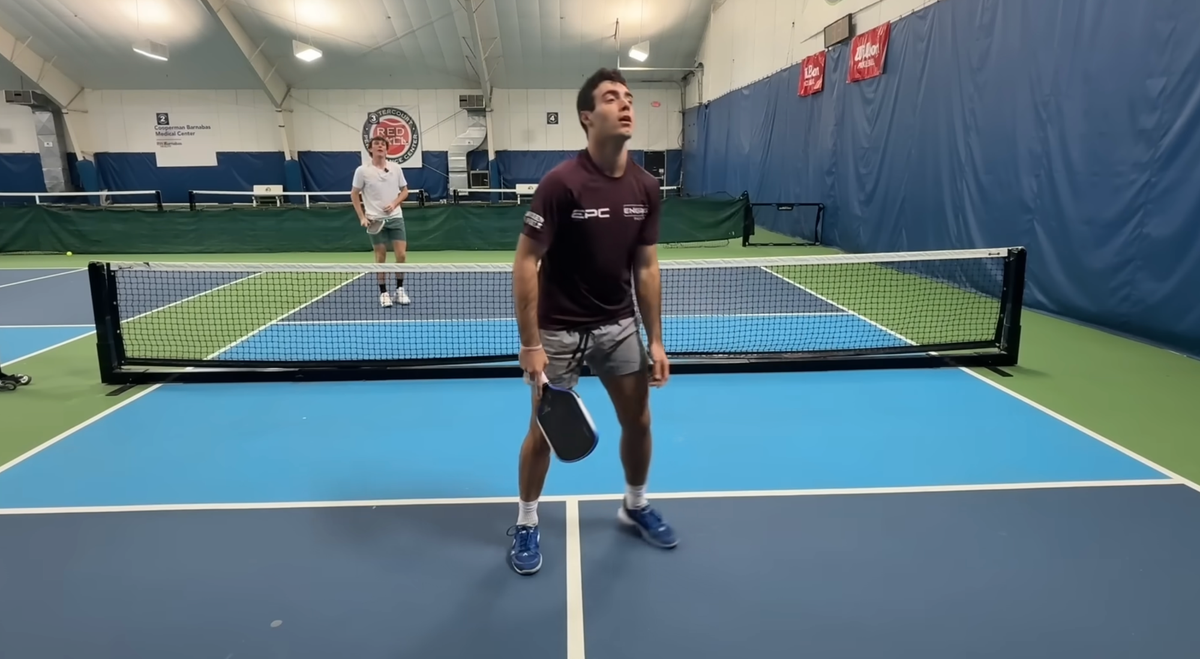
How Do You Remove an Opponent's Best Weapon?
You avoid feeding it. That's tip six, and it's one of the most underused tactics in recreational pickleball.
If you know your opponent has a dangerous backhand flick, stop dinking to that side when you're off balance.
You don't have to avoid it forever. You just avoid it until you're in a position where you can execute a precise dink that stays low enough to neutralize it.
Go to the middle. Go to their partner. Keep the ball away from their strength until you get a dead ball, a clean setup, a position where you're fully behind the shot.
Then you go there with confidence.
This is exactly what ball height and shot selection rules are built for. Knowing when you're in position to execute changes every dinking decision you make.
- Scout before you attack: Identify which side your opponent protects most aggressively and avoid it when you're stretched or off balance.
- Use the middle as a reset: When in doubt, go middle or to the weaker partner until you earn a clean look at the dangerous side.
- Wait for the dead ball: Only go behind a strong player when you're fully set and certain the dink will stay low enough to cause trouble.
 The Dink Media Team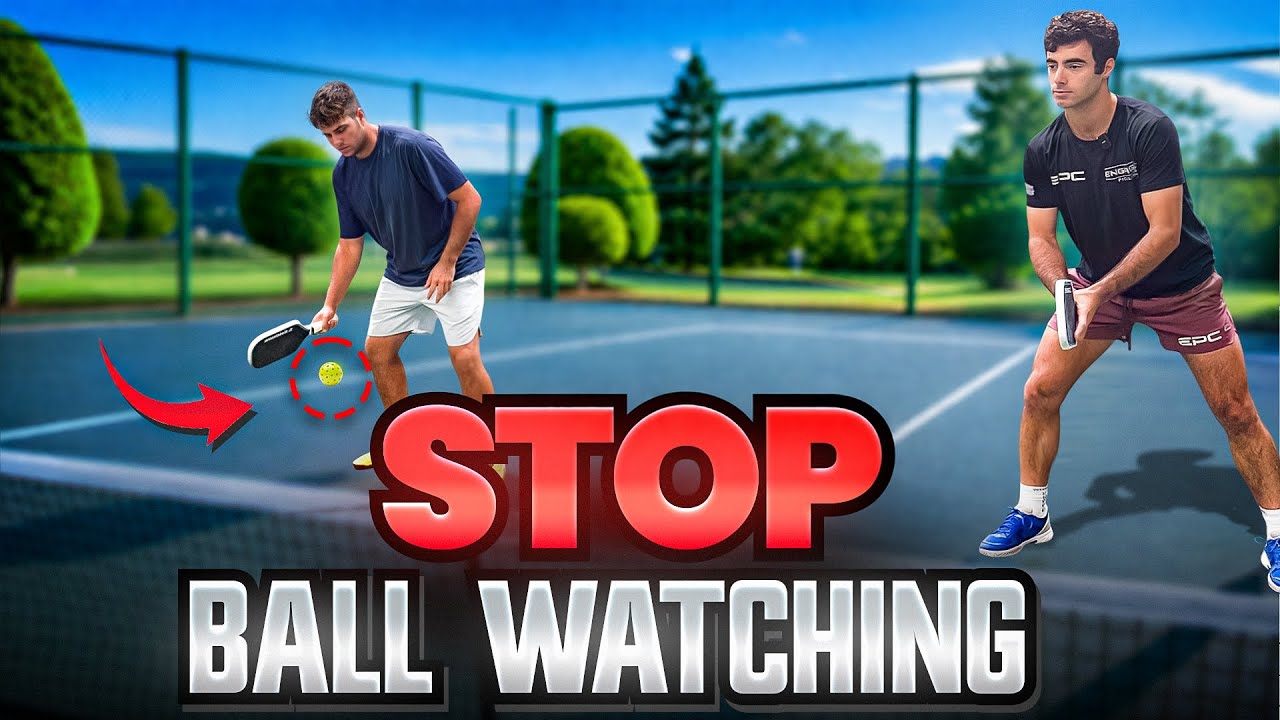
7. The Biggest Shift: Percentages Over Highlights
This one rewires how you see every single shot. Amateur players think in highlights. Elite players think in percentages.
Here's what that looks like in practice. You're in the midcourt and a ball comes to you at shoe level.
The amateur thinks, "I can speed this up." The 5.0 pickleball player thinks, "What is the actual percentage chance that speed-up wins the point from this position?"
The answer is low. So they reset into the kitchen and advance.
But if that same ball comes in above the net and the 5.0 player is balanced and on top of it?
Now the percentage flips. Now attacking makes sense. The shot selection isn't emotional. It's mathematical.
This is why your reset keeps failing. You're not choosing it based on percentage. You're avoiding it because it feels passive, and the highlight shot feels better.
That instinct is costing you points constantly.
The low forehand, high backhand rule is one framework that helps structure this thinking. Start applying a filter to every ball before you swing.
 The Dink Media Team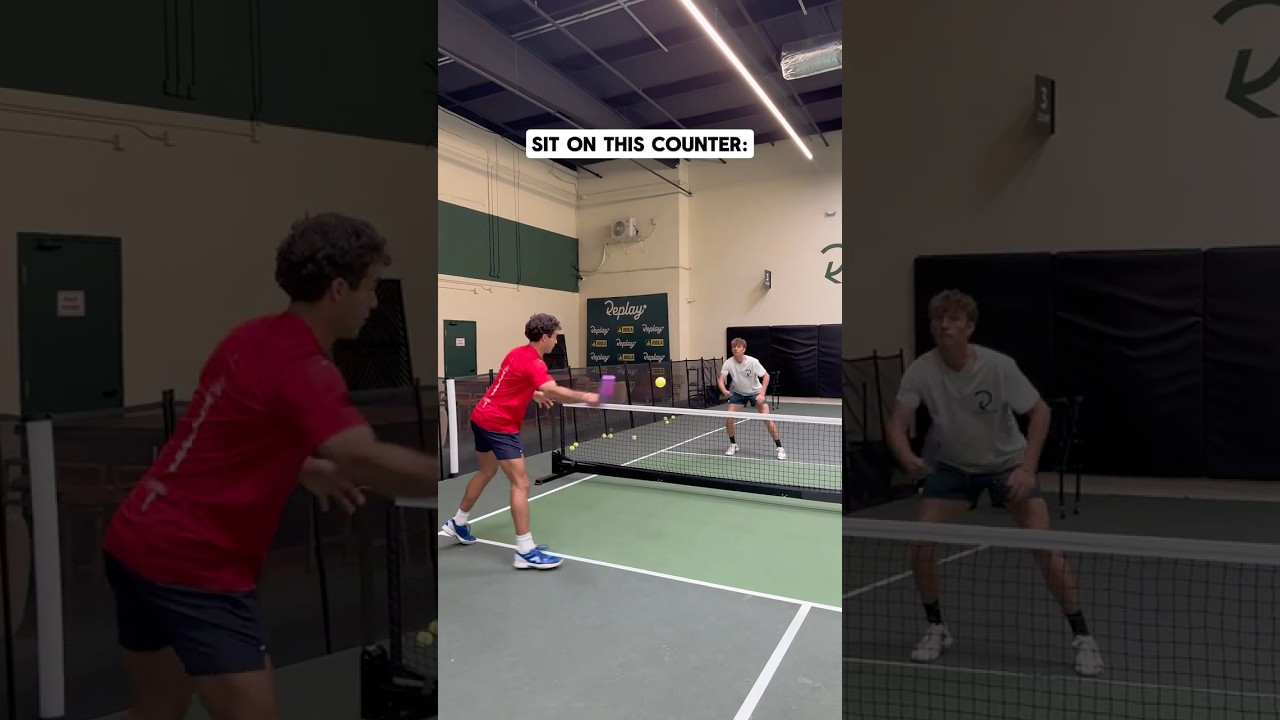
Putting It Together: How These Seven Habits Connect
None of these seven habits work in isolation. They stack on top of each other to create a player who always seems one step ahead.
- See the next shot before the current one lands.
- Categorize instantly as attack or defense off every paddle contact.
- Invest early in the match to create opportunities later.
- Track your rally position and adjust movement based on whether you're ahead or behind.
- Play your team's strengths as a deliberate system, not a coincidence.
- Remove your opponent's weapon by denying it until you're set to attack it cleanly.
- Think percentages, not highlights, on every shot from every position.
Players who want to compete against higher rated opponents need to start with this list. The shots come later. The vision comes first.
If you want to push further into court reading and positioning, these progressive drills that take players from 3.0 to 5.0 are worth bookmarking.
The patterns you drill in practice are the patterns you'll read in live play.
Start with habit one. The next time you serve, commit to moving before the return lands. That single change will shift how you see the entire court.
Frequently Asked Questions
What does a 5.0 pickleball player do differently than a 4.0?
A 5.0 pickleball player reads the ball off the opponent's paddle and makes their decision before it crosses the net. A 4.0 typically waits for the ball to arrive before deciding what to do. That half-second difference changes positioning, shot selection, and rally control entirely.
How do I train myself to see the next shot in pickleball?
Start by committing to one movement cue immediately after you hit. If you roll a dink, step over. If you hit a serve, split step forward.
Drill this specific link between your shot and your next movement until it becomes automatic before you focus on what your opponent does.
What does thinking in percentages mean in pickleball?
Thinking in percentages means choosing shots based on how often they actually win the point from a given position, not based on how exciting they look. A midcourt speed-up from shoe level wins less than 30 percent of the time against a solid player. A reset into the kitchen followed by an advance wins far more often.
How do doubles teams use their strengths as a system?
Strong teams identify each player's best shot and build rally patterns that force opponents to feed those weapons. For example, if one player has heavy hands, their partner dinks aggressively crosscourt to provoke a speed-up that the hands player is ready for. The rally is designed to arrive at that exchange on purpose.
When should you avoid your opponent's strongest shot in pickleball?
Avoid it whenever you're off balance, stretched wide, or not fully set behind the ball. Only go to a strong player's dangerous side when you have a clean, low, precise dink that stays below net height on arrival. Until you earn that position, go middle or to the weaker player.

Love Pickleball? Join 100k+ readers for free weekly tips, news & gear deals.
Subscribe to The Dink