Reaching 5.0 has nothing to do with being the fastest player on the court. These are the seven skills that move a 5.0 pickleball player up a level.
Becoming a 5.0 pickleball player has almost nothing to do with how fast or athletic you are.
It comes down to decision making: knowing why you hit each shot the moment you hit it.
If you are stuck at 4.0 and wondering what the next tier actually demands, this is your answer.
The gap is not power. It is the thinking behind every dink, drop, and speed up, and that is a gap you can close on purpose.
Here are the seven skills that move you from 4.0 to 5.0, broken down so you can take each one to the court tomorrow.
Mastering these pickleball skills is what separates a solid 4.0 from a true 5.0 pickleball player.
Love pickleball? Then you'll love our free newsletter. We send the latest news, tips, and highlights for free each week.
Skill 1: Make Them Feel You at the Kitchen Line
The first habit of a 5.0 pickleball player is presence: applying pressure every single time you stand at the kitchen line. You want your opponent to feel you there.
You create that pressure with your feet. Stay active, and get your body behind the ball on every contact.
When you sit flat and reach, your opponent reads instantly that you are no threat, and the point belongs to them.
Watch the difference when you load your body behind a dink. Now you can push it deep, you can speed it up, or you can hold.
Your opponent has no idea which one is coming, and that uncertainty is the pressure.
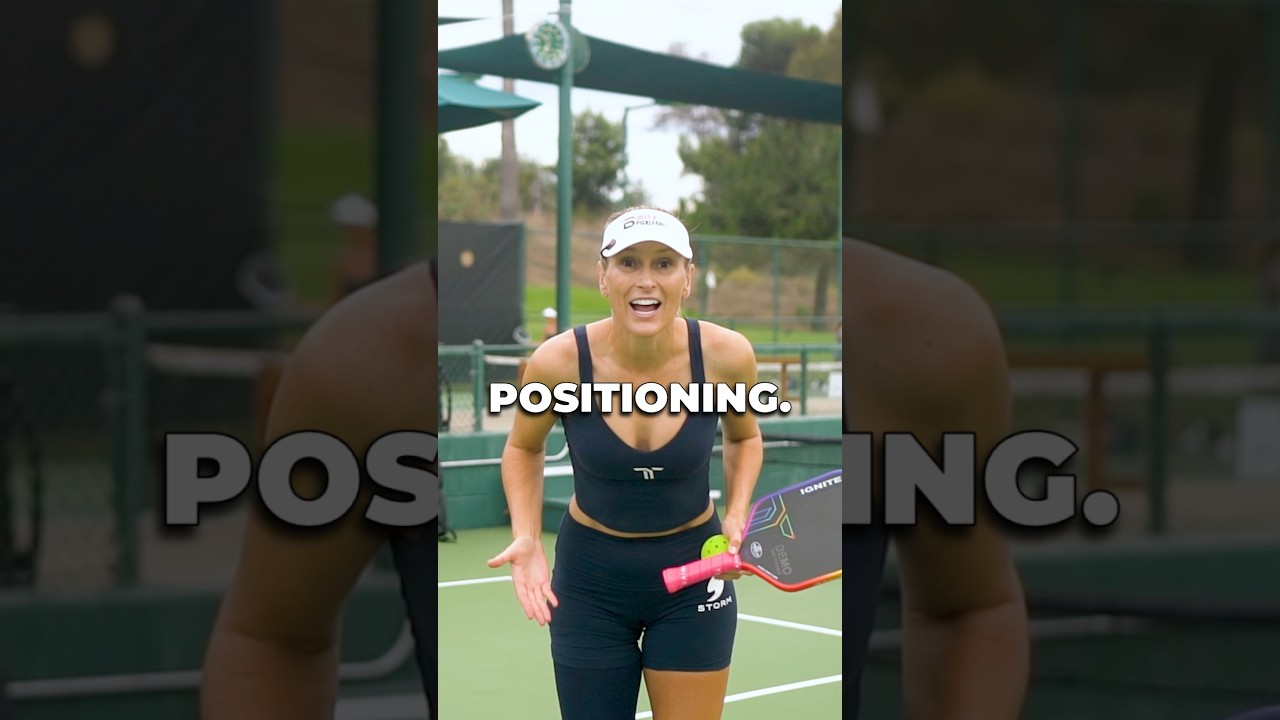
Better kitchen line positioning is what makes that threat real instead of imagined.
Skill 2: Win the Race to the Kitchen With a Clean Reset
A 5.0 pickleball player gets to the kitchen line at a high percentage, and the shot that earns the ticket there is the reset in the middle of the court.
Most amateurs struggle with the reset because they lack confidence in the transition zone, so they rush through it.
They hit their drop, sprint forward, and try to reset while still moving.
That ball almost always sails or pops up.
The fix is subtle and it changes everything. After you hit your drop, follow it in and take as much ground as you can while the ball is traveling.
The instant your ball reaches the net, stop. Be completely still, set your feet, and absorb the next ball instead of swinging at it.
Stillness, not speed, is what turns the no man's land from a trap into a launch pad.
Skill 3: Make Your Third Shot Matter
Aim your third shot drop at the player who is still running in, not the one already planted at the kitchen line.
That single targeting rule separates a thoughtful drop from a hopeful one.
Most players hit a decent drop with zero thought about placement. They just lift it over the net.
But the opponent moving forward has less time and less reach, so a drop aimed at the runner is far harder to handle than one sent to the stationary player.
There is one exception. If the player at the net cheats hard into the middle and leaves the outside open, drop it behind them into that space.
Beyond that, target the runner every time.
If you want the full menu of shapes and spins, study the third shot drop variations that hold up at higher levels.
Skill 4: Dink With a Plan, Not a Prayer
Elite dinking is a recipe, not a guess: if this happens, then that happens.
A 5.0 pickleball player reads the angles of the court before the ball even arrives, which is exactly the "dink with a plan" idea that Yahoo Sports broke down with coach Jordan Briones.
Here is the logic. If you get a ball you cannot attack and you can only push it, send it to the middle of the court.
From the middle, your opponent has no angle to hurt you with. Push it wide instead and you hand them the sideline angles that pull you out of position.
Go wide only when you are being aggressive on a ball your opponent has to defend. And when you hit that aggressive dink out wide, do not stand and admire it.
Step over, lean into the kitchen, and look to take the next ball out of the air.
That combo, a soft ball to the middle followed by an aggressive roll out wide and a lean in, is what the pros grind through every point.
Learning to take the ball out of the air is how you convert all that patient dinking into offense, and the deeper advanced dinking patterns build directly on this foundation.
 The Dink Media Team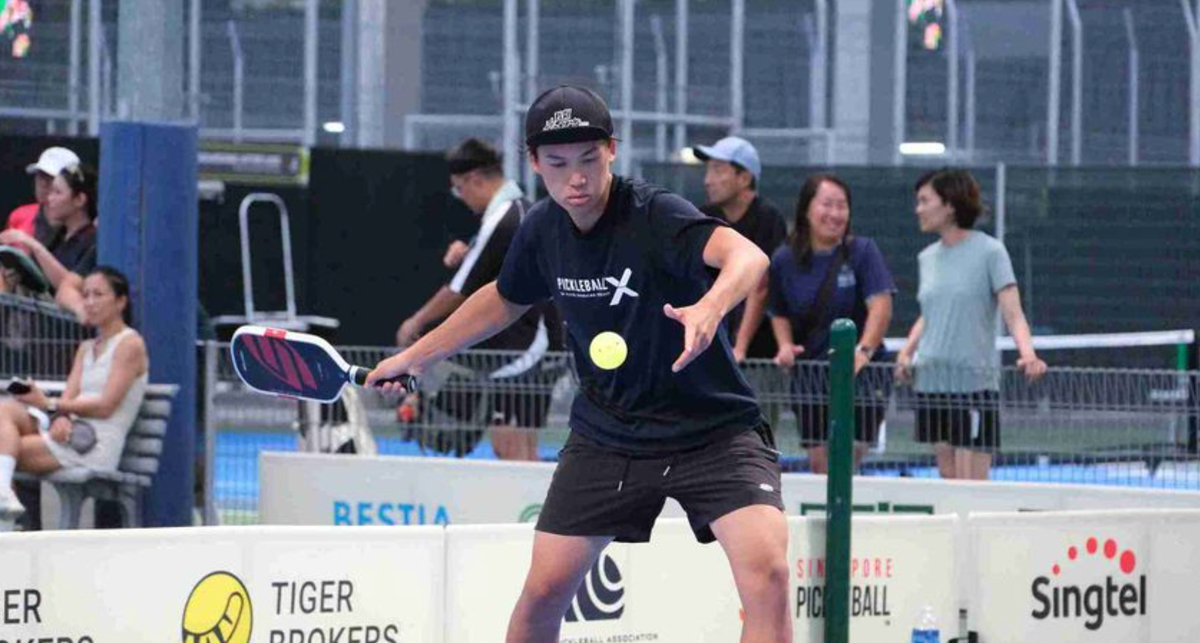
Skill 5: Build a Backhand Counter People Respect
If you cannot punish a speed up with your backhand, opponents will fire at you all match long.
A 5.0 pickleball player establishes a backhand counter early so the speed ups dry up.
Three things make this shot work. First, your ready position.
Do not hold the paddle straight on.
Cheat it slightly toward your backhand, because from there you can cover roughly 70 percent of your body and remove the forehand or backhand decision that gets you jammed.
These are the kind of essential pickleball shots that separate the levels.
Second, paddle height, which is where most players go wrong. Keep a slight crease in your elbow with the paddle up and your wrist cocked.
From there you can attack forward by hinging at the elbow and batting the ball down, or drop back for defense.
Third, get your chest in front of the ball. Wherever it bounces on your opponent's side, step so your chest, not your wing, is behind contact.
Your chest produces the power, and leaning in beats leaning back every time.
The same principles carry over to the two handed backhand counter if that is your grip.
 The Dink Media Team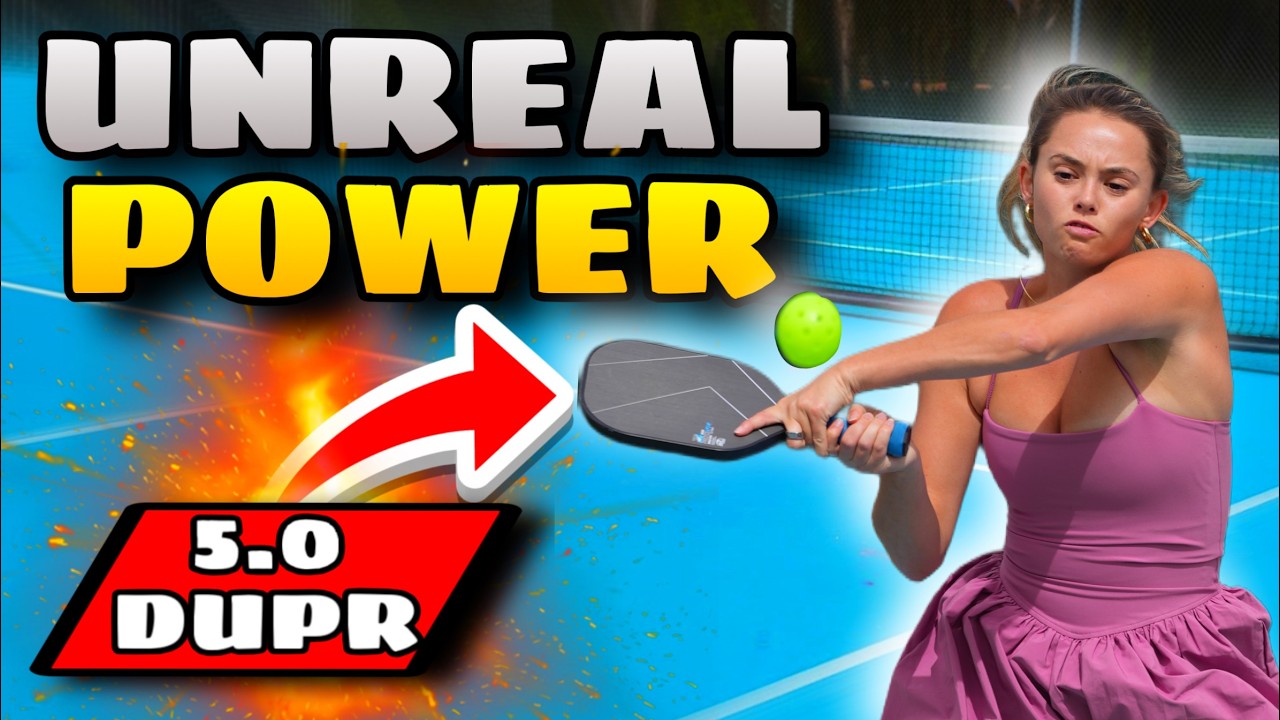
Skill 6: Apply Fourth Ball Pressure, Always
Fourth ball pressure is the offensive ball you hit right after your opponent's third shot drop, and learning it is what stops you from handing opponents a free ride to the kitchen.
Almost every player struggles with it until someone shows them the trick.
The mistake is finessing the low ball with your wrist. The wrist is too small a muscle, so you get no power and the ball floats.
Lock your wrist instead, and use only your shoulder to swipe up the back of the ball from low to high.
Stay on the same plane as your body so you are not crossing over, and that upward swipe gives you topspin that drops the ball in with pace.
It also disguises your shot: because the shoulder drives contact, you can turn your wrist slightly in or out at the last second and redirect the ball either way.
This kind of footwork and shot discipline is exactly what the four key strategies to winning are built around.
This is the same fourth ball pressure that is reshaping how points are won.
 The Dink Media Team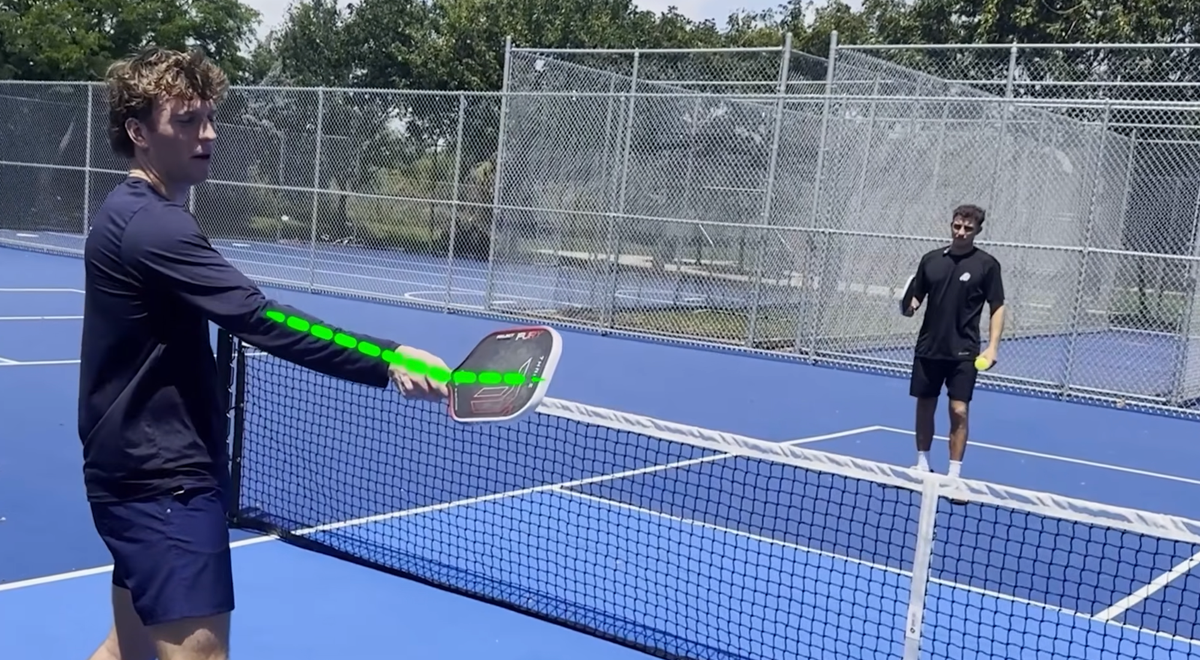
Skill 7: Speed Up With Intent, Never Blind
A 5.0 pickleball player never speeds up blind, and that is the single biggest divide between 4.0 firepower and 5.0 control.
Amateurs see a ball, drop their head, and rifle it with zero thought.
Instead, build every speed up around three variables:
- Speed: mix fast and slow so your opponent can never settle into a rhythm.
- Spin: add more topspin to keep aggressive balls in.
- Location: read where your opponent is sitting and attack the opposite gap.
Start a match by throwing different looks to learn your opponent's strengths and weaknesses.
Go hard at the chest first, the easiest speed up to read, and see how they handle it.
If they counter it cleanly, they are ready for pace, so the next ball gets a big windup that you actually hit soft and high to wreck their timing.
For location, never fire without looking. Hold the ball, fake the dink, and watch where your opponent leans to cover.
If they flinch to their forehand, attack the farthest distance away from it.
This is the read first, fire second mindset, and it lines up with the factors in the drills you need to play your best pickleball.
This is also why Ben Johns sits at the top of the sport.
As his partner Anna Leigh Waters put it, "He knows what shot to hit at the right time always. He knows when to speed it up, he knows when to dink it."
Yahoo Sports credited that pickleball IQ as the thing that sets Johns apart, and IQ is exactly what you are building with these seven skills.
 The Dink Media Team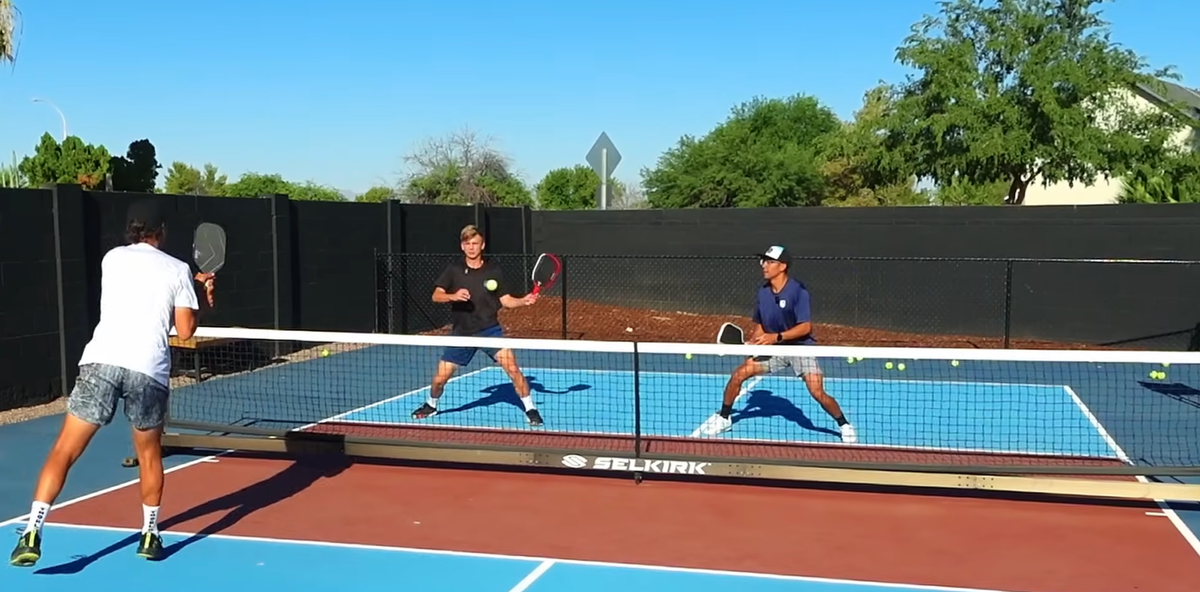
The Quick Version: 7 Skills of a 5.0 Player
- Pressure at the kitchen with active feet and body behind the ball.
- A clean reset built on stopping and absorbing in the transition zone.
- A targeted third shot drop aimed at the player running in.
- Dinking with a plan, using angles and the wide ball lean in combo.
- A backhand counter with a cocked wrist and chest behind the ball.
- Fourth ball pressure driven by the shoulder, not the wrist.
- Speed ups with intent, mixing speed, spin, and location.
None of these require elite athleticism. They require better decisions, repeated until they are automatic.
That is the same theme behind going from 4.0 to 4.5, and it shows up again in the habits that advanced players do differently.
Every 5.0 pickleball player you'll ever play against got there the same way: one deliberate decision at a time.
Frequently Asked Questions
What does a 5.0 pickleball player do differently than a 4.0?
A 5.0 pickleball player makes deliberate decisions on every shot rather than reacting on instinct. They target the right opponent on drops, push soft balls to the middle, and never speed up without reading where their opponent is covering.
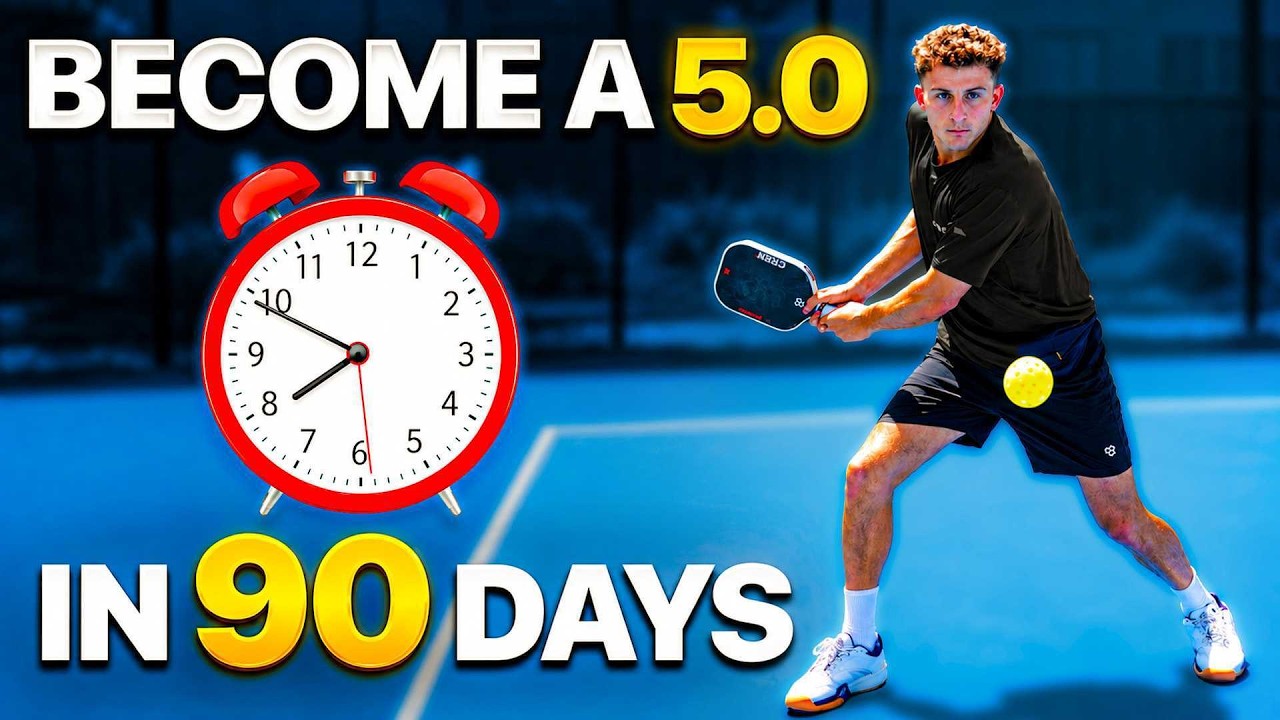
Can you really go from 4.0 to 5.0 in 90 days?
It is possible if you focus on decision making and drill the right habits instead of just logging more court time. Resets, targeted drops, and controlled speed ups improve fastest when practiced with intent.
What is the most important skill to reach 5.0?
Consistent resets from the transition zone matter most, because getting to the kitchen line at a high percentage gives every other skill a chance to work. Without that, dinking and speed ups never get the platform they need.
Why do my speed ups keep failing?
Most failed speed ups happen because players fire blind with no plan for speed, spin, or location. Reading your opponent first turns a 50/50 gamble into a high percentage point.
How do I hit a backhand counter that does not pop up?
Keep your paddle up with a slight crease in your elbow and your wrist cocked, then get your chest behind the ball. Leaning into contact instead of pulling back is what supplies real power without the pop-up.

Love Pickleball? Join 100k+ readers for free weekly tips, news & gear deals.
Subscribe to The Dink