
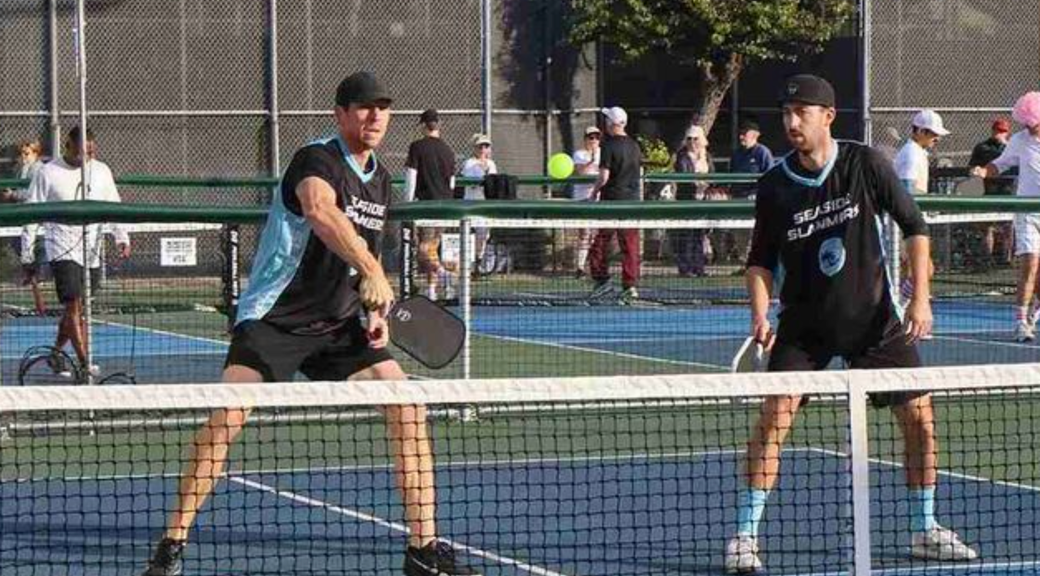
Playing pickleball in the wind rewards the player who adjusts first, not the player who hits hardest. This guide breaks down the serve, drop, dink, and side-selection changes that turn a gusty day into a tactical advantage.
Playing pickleball in the wind is the fastest way to find out who actually controls their paddle and who has just been getting away with it.
You know the type. The 4.0 with the beautiful drop that floats three feet long the second a 12 mph gust shows up. The banger whose drives suddenly sail.
Wind does not create new weaknesses in your game; it just turns the volume all the way up on the ones you already had.
Here's the thing: the players who win on breezy days are rarely the most talented ones on the court.
They're the ones who adjusted by the third point instead of the third game.
Playing pickleball in the wind is a decision-making skill, not a talent, and you can learn to use the conditions the same way the pros do at outdoor tournaments.
Love pickleball? Then you'll love our free newsletter. We send the latest news, tips, and highlights for free each week.
Why Does Playing Pickleball in the Wind Wreck Good Players?
Playing pickleball in the wind breaks good players because wind changes the ball's speed relative to the air around it, not just its direction.
A pickleball is light, hollow, and full of holes, which makes it the most wind-sensitive object in racket sports.
Aerodynamic analysis of pickleball flight shows that wind can increase or decrease horizontal velocity, push the ball off line, and change how fast it drops.
Same swing, same contact point, completely different landing spot, which is why your usual ball height and positioning checklist needs a tune-up before the first serve.
Quick definition: a headwind blows into your face and holds the ball up, a tailwind pushes from behind you and carries the ball deep, and a crosswind moves it sideways across the court.
Most outdoor courts give you some mix of all three, and the mix changes when you switch ends.
The mistake is treating this like a technique problem. It isn't.
It's a margin problem, and margin is something you can fix in your shot selection long before you fix it in your swing.
That's good news, because better shot decisions are available to you today.
Should You Actually Want the Wind at Your Back?
Not necessarily, and that surprises almost everyone.
A 2024 modeling study published in the International Journal of Racket Sports Science found that playing against the wind is often preferable to playing with it.
The logic holds up on court: a headwind gives you permission to swing, adds shape to your ball, and brings your drops down inside the kitchen instead of past it.
That study is a mathematical model, not a controlled match, so treat it as a strong starting assumption rather than gospel.
We broke down the with-or-against-the-wind question in more detail if you want the full argument.
Honestly, the practical takeaway matters more than the physics. Into the wind, you can be aggressive. With the wind, you have to be surgical.
Most players have it exactly backwards.
Playing Pickleball in the Wind: The Shot Menu That Holds Up
Shrink your shot menu and raise your margin. That's the entire strategy for playing pickleball in the wind.
Gusty days are not the time to experiment with the shot you hit correctly twice last Tuesday, and they're definitely not the time to abandon the soft game entirely.
Serving and Returning When Playing Pickleball in the Wind
Serve to the middle and take the lines off the table.
A crosswind that moves your serve eight inches turns a good wide serve into a fault, and a serve still has to clear the non-volley zone and land in the correct diagonal court under the USA Pickleball rulebook no matter what the weather is doing.
Wind is not a do-over. Build in margin before you need it, and if your serve is already shaky, fix the mechanics first.
With a tailwind, flatten the serve out and aim shorter than feels comfortable. Into the wind, add pace and let the air do the containing.
Returns flip the same way. A deep return is still the goal, and deep returns still win more rallies, but with the wind behind you a flat return sails long fast.
Add topspin instead of pace.
If your topspin return is a work in progress, a chunky slice return that stays low works too, since low balls spend less time in the air getting pushed around.
What Happens to Your Drops and Dinks?
Your drop gets ten times harder downwind and slightly easier upwind. That's the whole story, and it should change what you hit from the baseline.
Downwind, stop forcing the perfect drop. Drive more, get to the kitchen line off a shorter fifth-shot reset, and accept the ugly point.
Upwind, this is your moment: the air holds the ball up, your aggressive third shot drop lands softer, and the players who botch drops under pressure stop botching them.
Dinks need the opposite adjustment.
Keep every dink lower and shorter than your instinct says, because a crosswind turns a sloppy high dink into a free attack for the other team.
Dink placement beats dink power on windy days, every time. And when the ball does pop up, your reset matters more than your counter.
 The Dink Media Team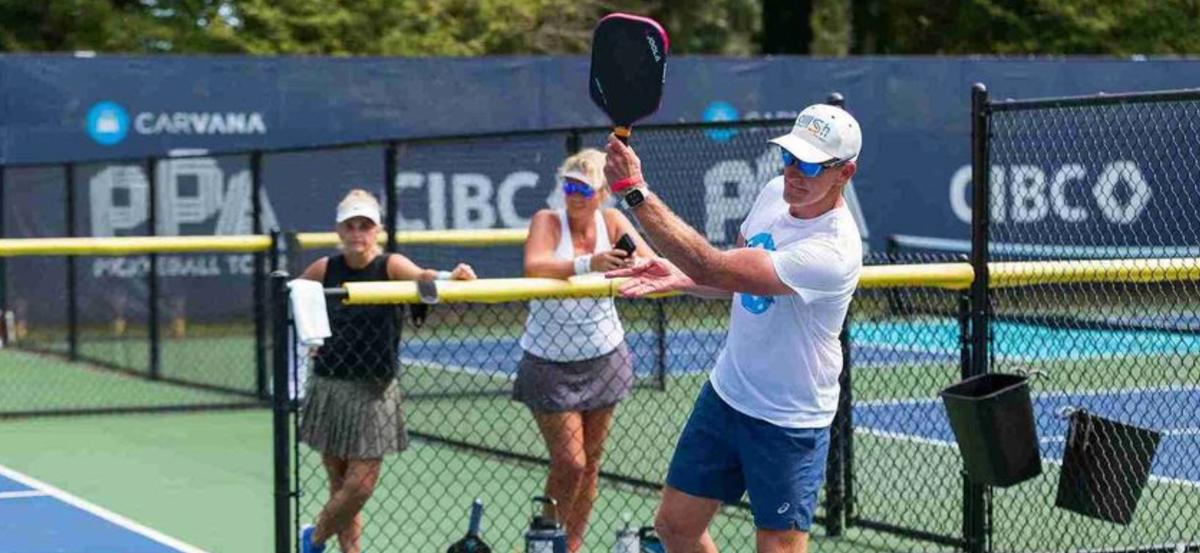
How Do You Turn the Wind Into a Weapon?
By hitting the shots that wind makes unreturnable instead of the ones it makes impossible.
Playing pickleball in the wind is an edge if you know which three shots get better, not worse, when the air moves.
- The upwind lob. A headwind holds a lob up and drops it short, which is why a ruthless, well-disguised lob is the single most underused weapon on a breezy day. Your opponents' lob defense is already shaky. Add wind and it falls apart.
- The deep downwind drive. When the wind is behind you, pace is free. Take it.
- The patient crosswind rally. Push every ball into the wind side of the court and let the breeze carry your opponent's reply wide.
One more weapon nobody talks about: positioning.
If one partner handles overheads better than the other, use stacking to keep that player on the side the wind is pushing lobs toward.
Overhead defense in wind is a different skill entirely; let the ball bounce more often than you'd like, and move your feet early.
Good footwork matters more than a clean swing when the ball is moving on you mid-flight.
Also: talk to your partner. Call "mine" louder and earlier than usual, because wind swallows sound and nothing kills a doubles team faster than two players watching the same ball land.
 The Dink Media Team
When Is It Too Windy to Play at All?
When the National Weather Service says so.
A wind advisory or high-wind warning is a reason to postpone outdoor activity, not a challenge to accept, mostly because of loose debris, fences, and tree limbs around the court rather than anything about the ball.
Lightning is non-negotiable: get inside, and wait 30 minutes after the last thunder.
Below that threshold, playing pickleball in the wind is a preference call.
Most rec players start grumbling around 10 to 15 mph and genuinely struggle past 20, which is exactly when simple, repeatable tips beat fancy ones.
And remember that a breeze masks heat, so hot-weather play still demands the same hydration you'd use on a still day.
A proper warm-up helps too, since you'll be reaching, lunging, and recovering more than usual.
 Erik Tice
Key Takeaways
- Playing pickleball in the wind punishes high, floaty balls more than hard ones; lower your trajectory before you change your technique.
- Playing against the wind is often the better side, since a headwind adds margin to drops and drives.
- Serve and return toward the middle in a crosswind, and add spin instead of pace with a tailwind.
- Upwind lobs and downwind drives are the two highest-value shots on a breezy day.
- Treat a wind advisory as a safety stop, not a strategy problem.
Frequently Asked Questions
How do you adjust your serve when playing pickleball in the wind?
Aim toward the middle of the service box and give yourself extra margin from every line. Into a headwind, add pace and let the wind bring the ball down. With a tailwind, take pace off and target shorter, because the ball will carry farther than you expect.
How windy is too windy for pickleball?
There's no official cutoff. Most recreational players find 10 to 15 mph noticeable and 20 mph genuinely difficult, but the real answer is a safety one: if your area has a wind advisory or high-wind warning, don't play. Below that, treat it as a strategy reset rather than a reason to cancel.
Is it better to play with or against the wind in pickleball?
A 2024 modeling study concluded that playing against the wind is often preferable, and most experienced players agree. A headwind gives your drops and drives more margin, while a tailwind forces you to take pace off every shot and lean on slice or topspin for control.
Does wind count as a hinder or a replay?
No. The USA Pickleball rulebook defines a hinder as a transient occurrence not caused by a player, and ordinary wind is not listed as an automatic replay. If the wind blows your serve toss around, you simply play it or re-toss where the rules allow. The same goes for kitchen rules: conditions never change them.
Should you change paddles or balls for windy conditions?
You don't need a different paddle, though a control-oriented one makes low, flat shots easier to execute. Outdoor balls with 40 holes are designed for outdoor conditions and are the right choice; indoor balls are lighter and move around far more in a breeze.

Love Pickleball? Join 100k+ readers for free weekly tips, news & gear deals.
Subscribe to The Dink