Pickleball Tips for Seniors to Win More Points Without Hitting Harder
The best pickleball tips for seniors have nothing to do with swinging harder. Placement, court position, and patience win the points that power only thinks it wins.
The best pickleball tips for seniors have almost nothing to do with swinging faster.
Watch any decent senior doubles game and the pattern repeats: the winning team rarely owns the biggest drive.
They own the one spot the other side can't attack.
Power is the most overrated skill in rec pickleball, and it's the first thing players reach for the second a game slips away.
Here's the thing. Placement, position, and patience take almost every point that power thinks it's taking.
Those three ideas are the spine of this piece, and they separate strategy that actually holds up from advice that sounds nice.
Love pickleball? Then you'll love our free newsletter. We send the latest news, tips, and highlights for free each week.
Why Pickleball Tips for Seniors Should Start With Placement, Not Power
Placement beats power because the middle gives you the longest distance to work with and the lowest part of the net to clear.
USA Pickleball's own guidance names the middle as the safest place to land a drop, ahead of crosscourt and well ahead of down the line.
It's geometry, and geometry doesn't care how old you are.
The practical version, the one that turns most pickleball tips for seniors from advice into points: pick a target before the ball reaches you, not while you're swinging at it.
Most rec players aim at a region and hope. Aim at a person's backhand hip instead, or at the seam between two opponents, and your error rate drops.
Playing the percentages is the whole game once your legs stop bailing you out.
What Does "Playing the Percentages" Actually Mean?
Playing the percentages means choosing the shot that wins most often across a hundred attempts, not the shot that looks best on the one it lands.
A crosscourt speed-up wins outright maybe twice in ten. A soft ball to the middle keeps you in the rally eight or nine times.
Over three games, that gap is the match. It's the reason good pickleball tips for seniors keep circling back to the boring shot.
It's also why the middle is worth covering more aggressively than most partnerships bother to.
The Pickleball Tips for Seniors That Fix Your Third Shot
Fix your third shot by shortening the swing and moving your feet, not by adding effort. USA Pickleball's third shot instruction is specific about it:
- Short backswing, full finish. Compact motion, ball stays predictable.
- Relaxed grip, stable wrist. Squeeze the handle and the ball flies. Soften the grip and it drops.
- Contact out in front. Move your feet so you strike the ball ahead of your body, never beside it.
- Favor the forehand when you reasonably can. More control surface, more margin.
- Advance after a good third. Hold if it was weak. A bad drop plus a sprint forward equals a ball at your feet.
That fifth point is the one most players ignore, and it costs more points than a mediocre drop ever does.
Of all the pickleball tips for seniors on this list, holding back after a weak drop is the cheapest to apply.
If you want a version of this shot with a little bite on it, there's a spicier third shot worth adding once the plain one is reliable.
Honestly, most seniors would gain more from ten clean drops in a row than from a new paddle.
 The Dink Media Team
How Do You Get to the Kitchen Line and Stay There?
You get there by returning deep and moving immediately, then by not retreating once you arrive.
USA Pickleball frames it plainly: the overriding principle of strategy is to reach the non-volley zone line and stay there.
Hit a deep, boring return that pushes the server back, then walk in behind it.
The staying part is harder than the getting part, which is why most pickleball tips for seniors underrate it.
When a ball comes in high and fast, the instinct is to back up.
Back up and you've handed away the position you just spent two shots earning. Learning where your feet belong at that line is worth more than any grip change.
When your partner hits a drop, take two steps forward together.
Two players moving as one unit close the gaps; one drifting up alone leaves a hole the size of a garage door.
That's the difference between a good shot and bad positioning, and it's usually the positioning that loses the point.
 The Dink Media Team
Pickleball Tips for Seniors: Footwork That Doesn't Cost You the Point
Better footwork comes from training direction changes, not from running more.
One 10-week program of strength, balance, and change-of-direction work in players 55 and older was associated with a 0.7-second improvement in change-of-direction speed and a significant drop in fear of falling.
That study was small, non-randomized, and limited to players with a fall history or a fear of falling, so it doesn't describe every senior.
The mechanism still holds up: pickleball asks you to stop, restart, and change lines constantly, and that quality responds to specific practice.
On court, the cheapest of all the pickleball tips for seniors is the split step.
Land it as your opponent makes contact, weight forward, and you'll reach balls you used to watch go by.
Solo drills handle this fine if you don't have a partner, and cleaner mechanics will do more for your pickleball footwork than any amount of extra effort.
 The Dink Media Team
Why Does Patience Win More Points Than Power After 60?
Patience wins because the rally itself is your best weapon. Extend a point past six or seven shots at the rec level and the other team usually hands it to you.
That's not passive play; it's a shot placement strategy that puts the risk on whichever opponent can't stand the wait, and it's why patience shows up in every serious set of pickleball tips for seniors.
The soft game is where this lives. Dinking, resetting, and dropping aren't defensive habits you settle for.
They're the offense, because they force errors without asking your shoulder for anything.
If you doubt soft game skills can be brutal, try the hardest dinking drill we know and count your unforced errors.
 Eric Roddy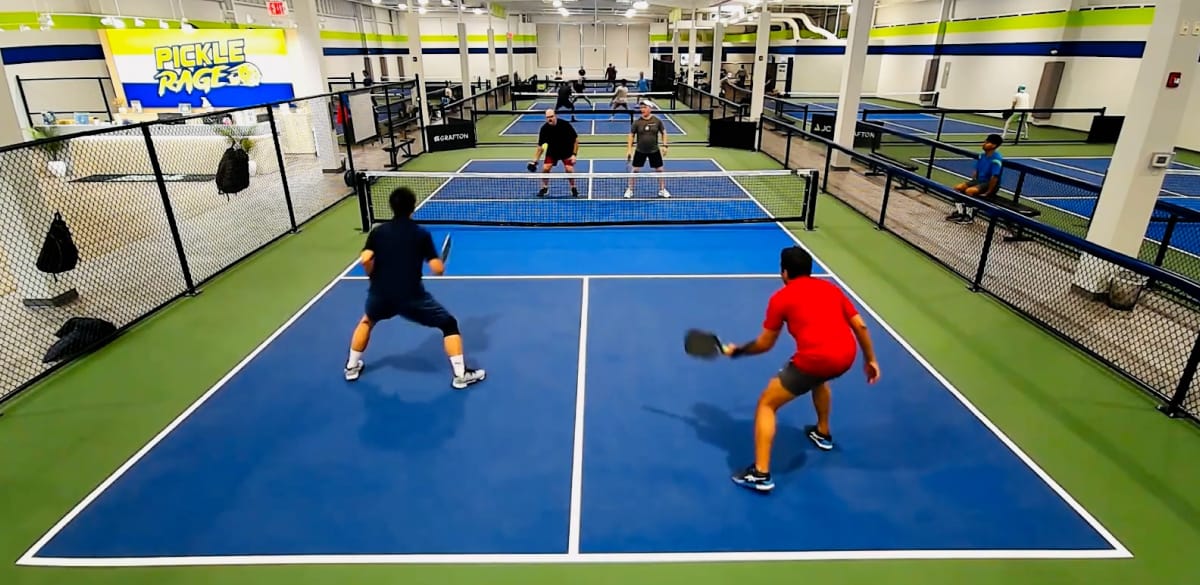
The Pickleball Tips for Seniors Guide to a Reliable Reset
A reset is a soft ball you hit from a defensive position to take pace off the rally and buy back your court position.
Open the paddle face, keep the hands loose, and think trajectory rather than speed. The ball should arc, not travel.
Resetting better is the highest-return skill for anyone who's been told to stop hitting through people, and it pairs with letting the paddle do the work instead of your arm.
One more thing. Plenty of good senior players lose to habits rather than to limitations, and a few of those habits are easier to drop than a new skill is to build.
Chasing the overhead you can't reach. Speeding up from below the net. None of that is about age.
So here's the short version of every one of these pickleball tips for seniors: swing compact, pick a target, get to the line, stay there. Everything else is noise.
 The Dink Media Team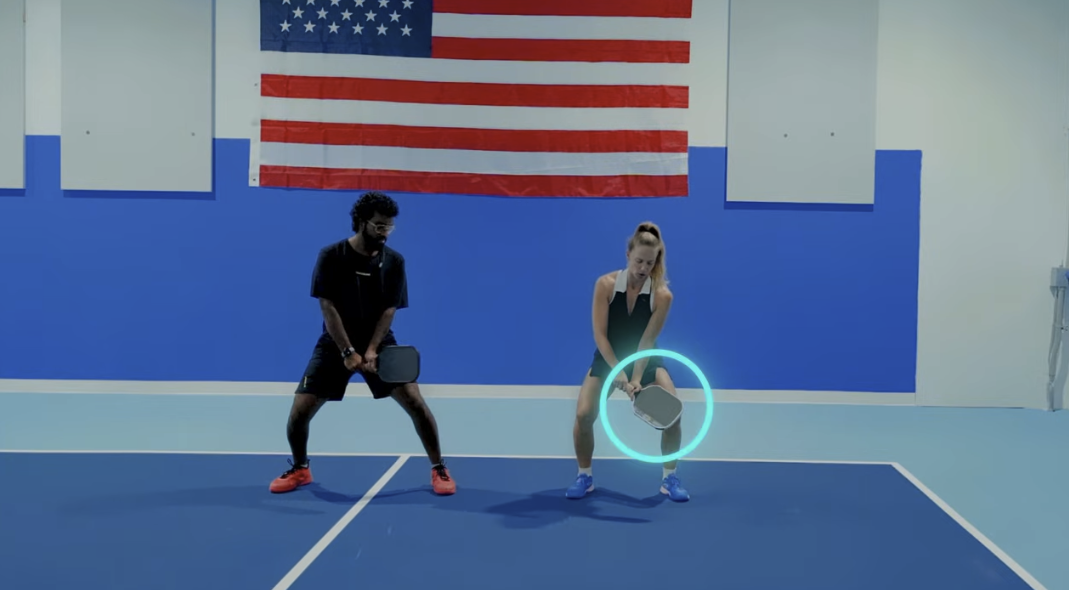
Key Takeaways
- The most effective pickleball tips for seniors target ball placement, court position, and rally patience instead of swing speed.
- The middle is the safest target on almost every third shot: longest distance, lowest part of the net.
- USA Pickleball's third shot guidance calls for a short backswing, a relaxed grip, and contact out in front.
- Getting to the kitchen line and staying there matters more than any single shot you hit.
- Research has associated a 10-week strength, balance, and change-of-direction program with faster direction changes and less fear of falling in players 55 and older.
Frequently Asked Questions
What are the best pickleball tips for seniors who keep losing to younger players?
Stop trading pace and start extending rallies. Younger players win the speed-up exchange and lose the patience exchange, so keep the ball low, target the middle, and make them hit one more ball than they want to. Deep returns and consistent third shot drops do more damage than any drive.
How often should seniors play pickleball to keep improving?
Two or three sessions a week is enough to hold your skills and build slowly, with at least one spent on drills rather than games. Playing more without practicing anything specific just reinforces what you already do. Fold in some strength and balance work on off days.
What paddle weight works best for older players?
Most senior players do well in the mid-range, roughly 7.5 to 8 ounces. Too light and the paddle gets pushed around; too heavy and it taxes the shoulder over three games. Grip circumference matters as much as weight. If you're gripping hard to keep control, the handle is probably too small.
Is the third shot drop or the third shot drive better for seniors?
The drop is the higher-percentage choice because it lets you advance to the kitchen line, which is where points are actually won. Drive when the return lands short and you're already moving forward. Otherwise the drop keeps you in control of the rally.
How do you stop backing up from the kitchen line?
Hold your ground and reset instead of retreating. Backing up gives away the position you earned and turns an attackable ball into a ball at your feet. Practice taking pace off shots hit right at you, since that's the situation that triggers the retreat.

Love Pickleball? Join 100k+ readers for free weekly tips, news & gear deals.
Subscribe to The Dink