
How to Hit a Roll Shot in Pickleball: Topspin That Dips Fast
Learning how to hit a roll shot in pickleball comes down to three things: paddle angle, swing path, and timing. Master the roll shot and you turn shoulder-high floaters into putaways instead of unforced errors.
If you've ever watched a pro rip a ball that looked hittable and land it two feet inside the baseline, you've watched a roll shot.
This is the shot that separates players who just hit hard from players who hit hard and keep it in.
A roll shot isn't about muscle. It's about angle, path, and timing, in that order.
We're going to break down how to hit a roll shot in pickleball, why it belongs in your bag, and the drills that make it repeatable under pressure.
If you've watched pros work topspin into their game, you already know the edge this shot creates.
Love pickleball? Then you'll love our free newsletter. We send the latest news, tips, and highlights for free each week.
What Exactly Is a Roll Shot in Pickleball?
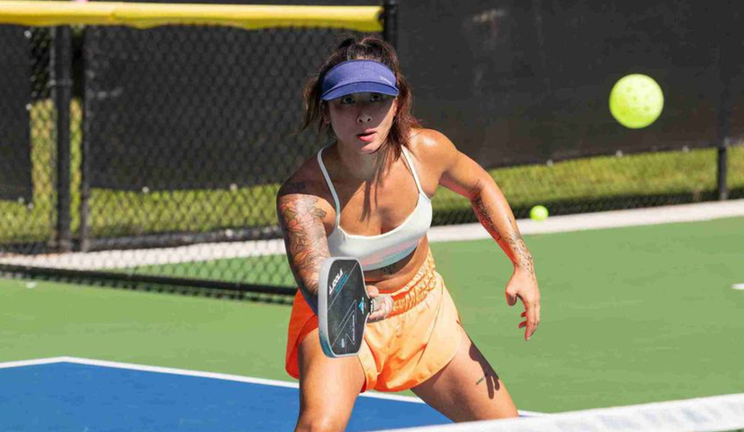
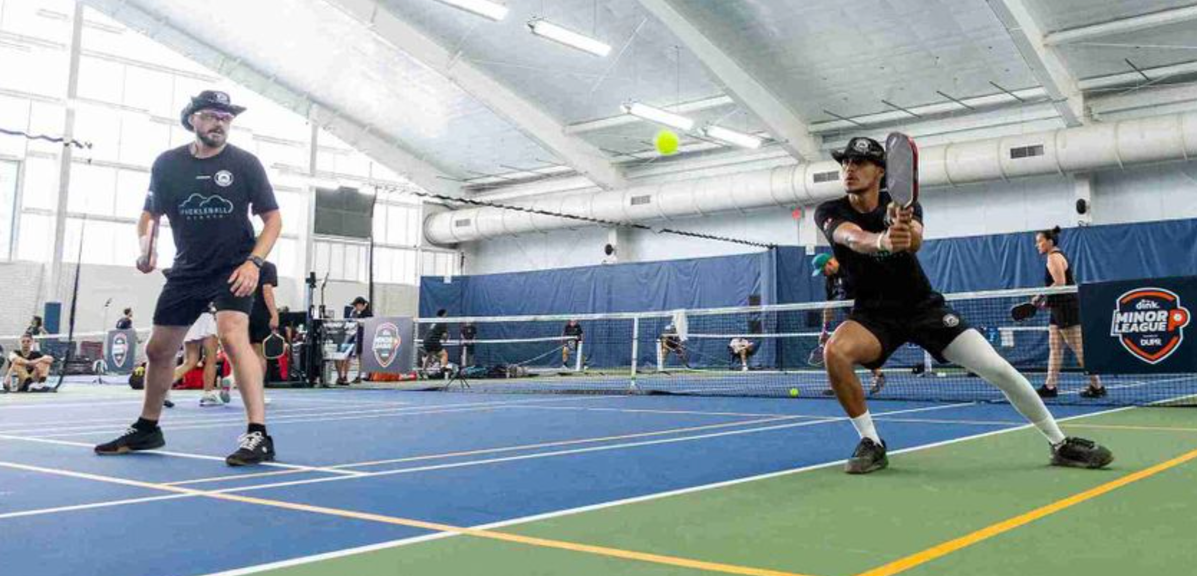
A roll shot is a topspin drive hit with a low-to-high paddle path that makes the ball dip fast after it clears the net.
Think of it as the aggressive cousin of the drive: same intent to attack, but with spin doing the work that pure pace usually does.
The topspin makes the ball drop into the court quickly, which means you can hit it harder and flatter than a normal drive without sailing it long.
 Alex E. Weaver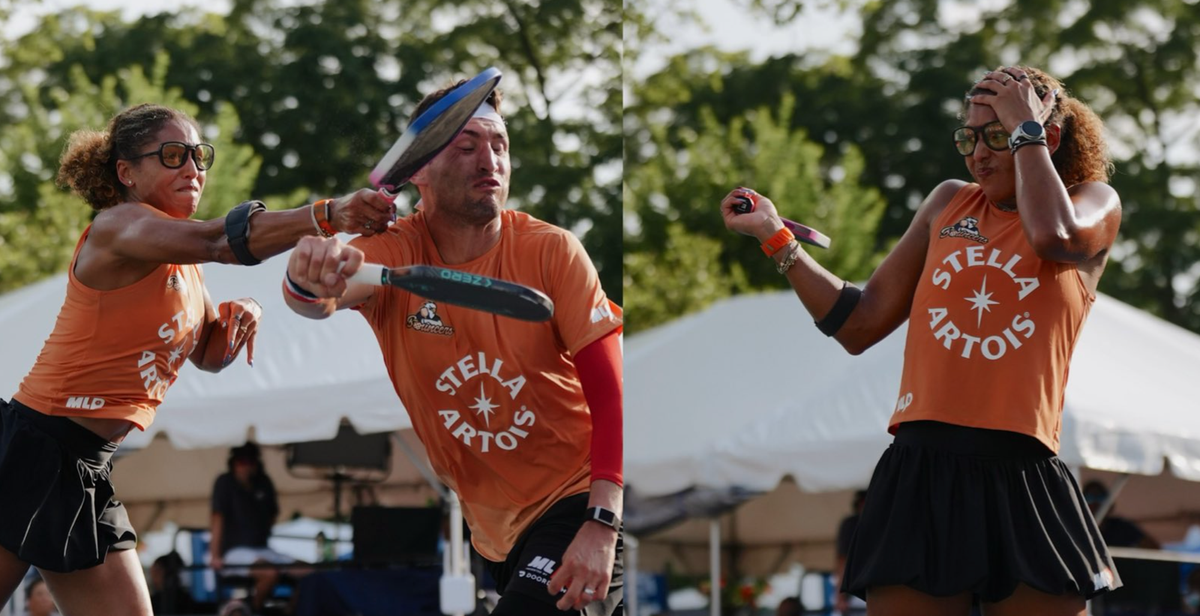
That's the whole appeal of pairing spin with real power shots. You get pace and safety in the same swing, which almost never happens in this sport.
Most shots ask you to trade one for the other.
Some players call it a "topspin roll." Others just call it a spin drive. The name doesn't matter.
The mechanics do, and that starts with what your paddle face is doing on contact.
Why Bother Adding a Roll Shot to Your Game?
Because the ball you'd normally reset with a soft dink becomes a weapon instead. A shoulder-high or waist-high ball floating to you at the kitchen line is a gift.
Most recreational players either smash it long or push it too soft and hand the point back.
A roll shot solves both problems. The topspin buries the ball at your opponents' feet before they can reset, and it does it with margin built in.
This is the shot that turns a neutral rally into a point you control, especially once you pair it with solid mid-court positioning.
Honestly, if you're stuck in a pattern where every hittable ball turns into an unforced error, this is probably the fix.
Even a few beginner-level corrections can clean up the swing fast. It's not flashy. It's just correct.
How to Hit a Roll Shot in Pickleball: The Mechanics
The short answer: paddle below the ball, low-to-high swing path, and a relaxed wrist that snaps at contact, not before it.
Grip and Paddle Angle
Start with a continental or slightly closed grip, not the fully open face you'd use for a drop shot. The paddle face should sit a little forward, or closed, relative to vertical. Plenty of players use a topspin training tool to groove this feel before taking it live. This is what lets you brush up the back of the ball instead of just pushing through it.
Your grip pressure matters here too. A death grip kills wrist speed, and wrist speed is where your spin actually comes from, not your shoulder.
 Alex E. Weaver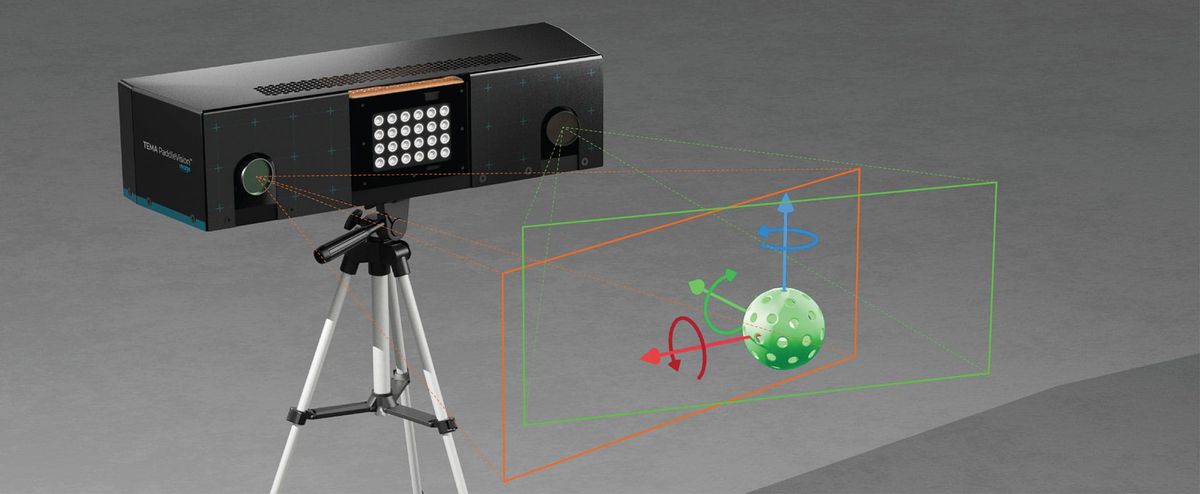
The Low-to-High Swing Path
This is the part players skip, and it's the part that makes or breaks the shot. It's the same low-to-high instinct that turns a weak reset into a clean return, block, or smash depending on the ball you're given. Drop your paddle head below the ball's contact point before you start forward. Then accelerate up and through, brushing the back and lower half of the ball on the way.
A flat swing gives you a flat drive. A low-to-high path is what generates the topspin that makes a roll shot dip instead of fly. Good positioning at the kitchen line gives you the room to load that path instead of rushing it. If you've hit a topspin forehand in tennis, the feeling is nearly identical, just compressed into a shorter, punchier motion because pickleball courts don't give you room for a full backswing.
Wrist Snap and Follow-Through
The wrist stays loose through the entire backswing, then fires right at contact. Not before. Study the footwork and prep elite players use before contact and you'll notice the wrist is always the last thing to move, never the first. A wrist that's already snapped by the time the paddle meets the ball loses most of its spin potential.
Finish high, with your paddle face finishing near your opposite shoulder. Whether you're rolling a forehand or working on the tougher backhand version, the same rule holds: the wrist finishes the job, the arm just sets it up. If your follow-through stops dead at contact, you're not getting full spin transfer, and the ball will fly flatter and longer than you want.
 The Dink Media Team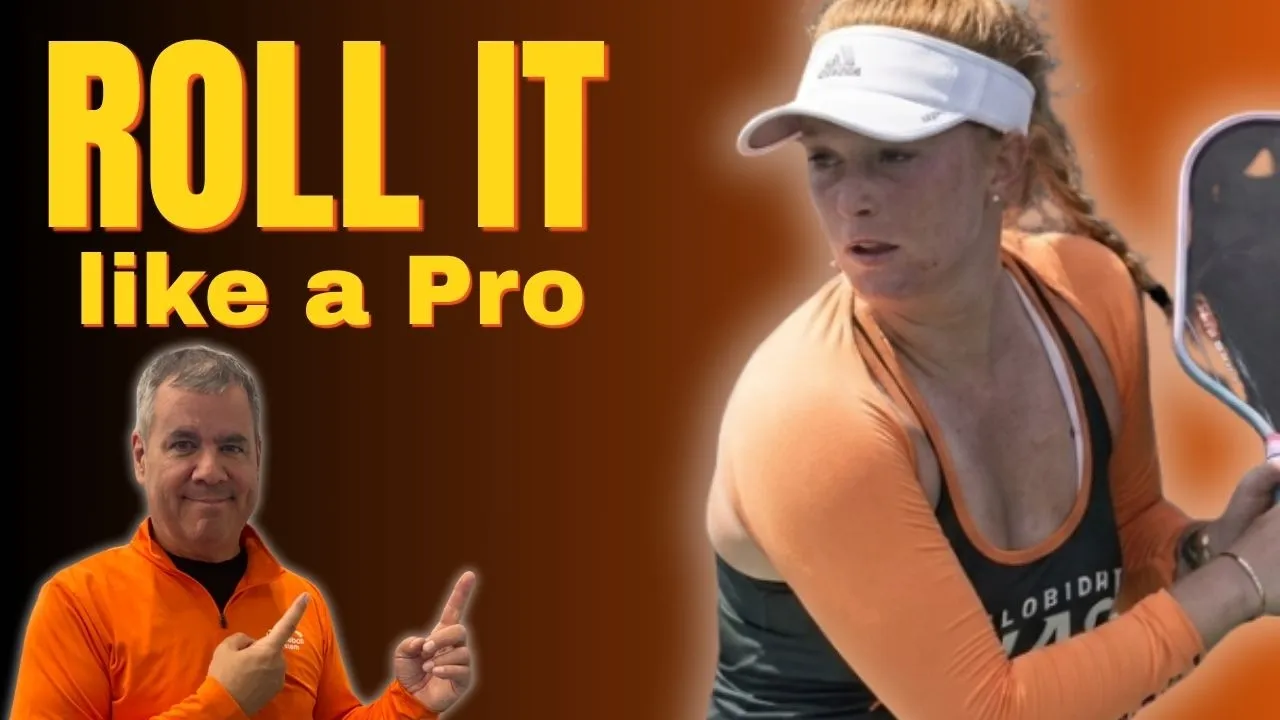
When Should You Actually Use a Roll Shot?
Use it on any ball that sits up above the net, whether that's a lazy third shot drop that popped up or a mid-court reset that floated.
The higher and slower the ball, the more time you have to load the low-to-high path correctly.
It's a bad choice on low balls near your feet or anything below net height. You simply don't have room to swing low-to-high without hitting the net first.
On those, dink it back or reset instead.
Transition zone and mid-court are the sweet spot.
You're closer to your target, the ball usually has more height on it, and a well-placed roll shot at an opponent's feet is nearly impossible to counter cleanly.
 The Dink Media Team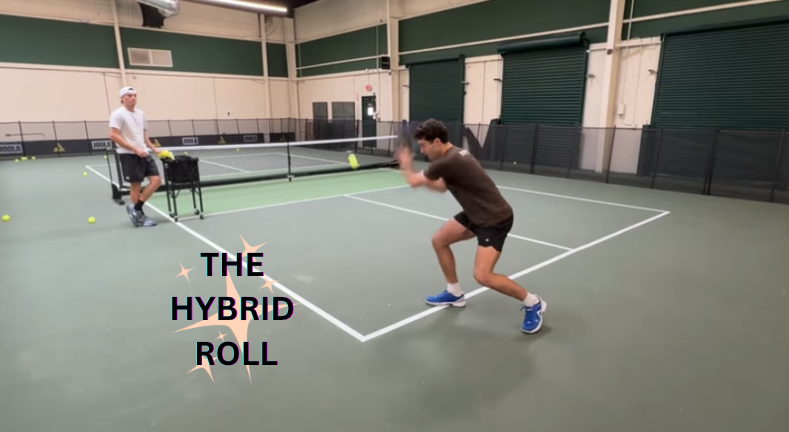
Roll Shot vs. Drive vs. Dink: What's the Difference?
A drive relies on pace and a flatter path. A dink relies on soft hands and almost no pace at all.
A roll shot sits in between: real pace, controlled by spin instead of touch.
Here's the practical difference on court. A drive that's two inches long sails out. A roll shot with the same swing speed drops in because the topspin pulls it down.
That margin is the entire reason to learn this shot.
Compare it to backspin, too. A backspin or slice shot floats and stays low after the bounce, which is great for neutralizing pace.
A roll shot does the opposite: it adds pace and still lands in bounds. Different tools for different moments.
 The Dink Media Team
Common Mistakes That Kill Your Roll Shot
Most players who struggle with this shot make one of a few errors:
- Swinging flat. This turns a roll shot into a flat drive that sails long.
- Snapping the wrist too early. You lose spin and lose control at the same time, the same issue that shows up when players rush their serve grip instead of setting it early.
- Trying it on low balls. There's no room to brush up through the ball, so it either nets or floats.
- Over-swinging. This isn't a baseball swing. A short, accelerating path beats a long, looping one every time.
- Ignoring footwork. You need your body behind the ball, not reaching, to generate consistent spin. A handful of tactical tips around positioning can fix this faster than pure repetition.
Fix the swing path first.
Everything else tends to clean itself up once the low-to-high motion becomes automatic, especially when you add a little deception to disguise which shot is coming.
 The Dink Media Team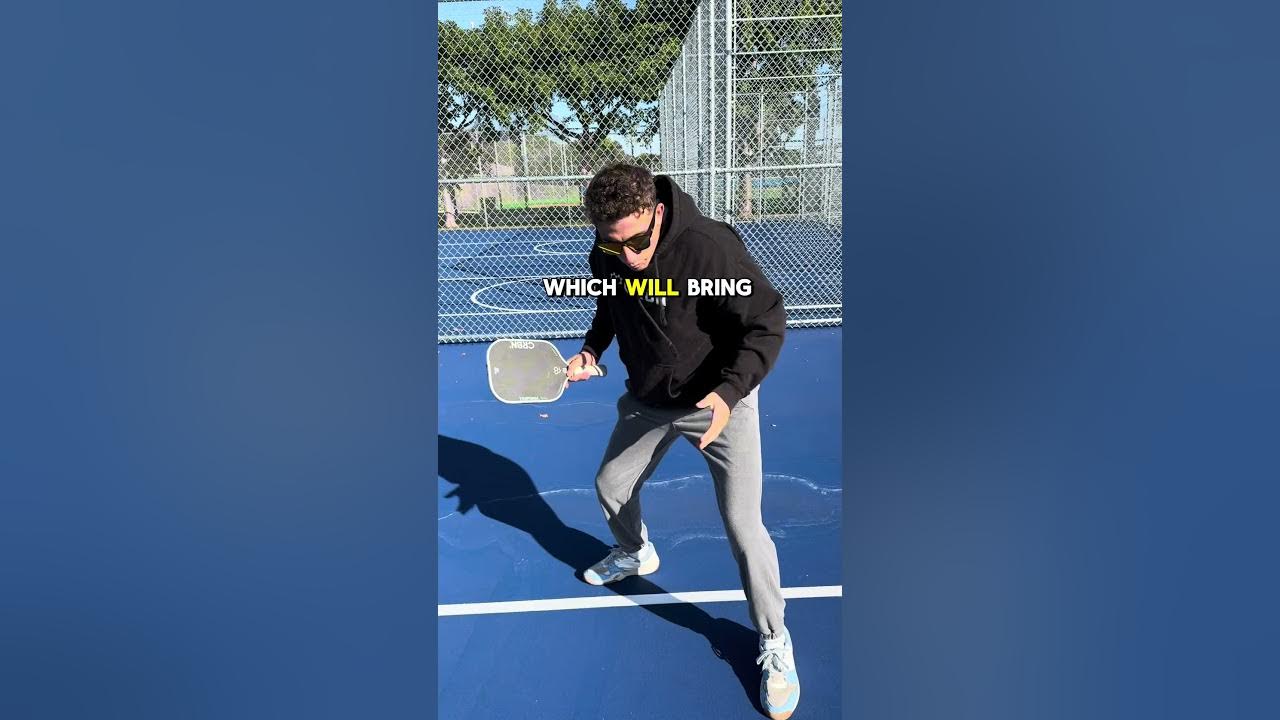
Drills to Build a Reliable Roll Shot
Repetition against a stationary target beats live-ball reps early on.
Try a simple wall or fence drill where you feed yourself a ball, let it bounce to shoulder height, and focus only on the low-to-high path. No pace yet. Just spin.
Once the path feels natural, move to a partner feeding you floaters from the kitchen line while you're at mid-court.
This mimics the real look of a roll shot better than solo reps.
The figure-8 footwork drill pairs well here since it forces you to load your legs before contact instead of arming the shot.
For shot selection under pressure, run a live-ball drill focused on shot creation where you have to decide, in real time, whether a ball is a roll shot, a drive, or a reset.
That decision-making is half the battle in a real match.
Players executing this shot near the non-volley zone line should double-check foot position before contact.
A well-timed roll shot means nothing if the swing carries a foot into the kitchen on a volley.
 The Dink Media Team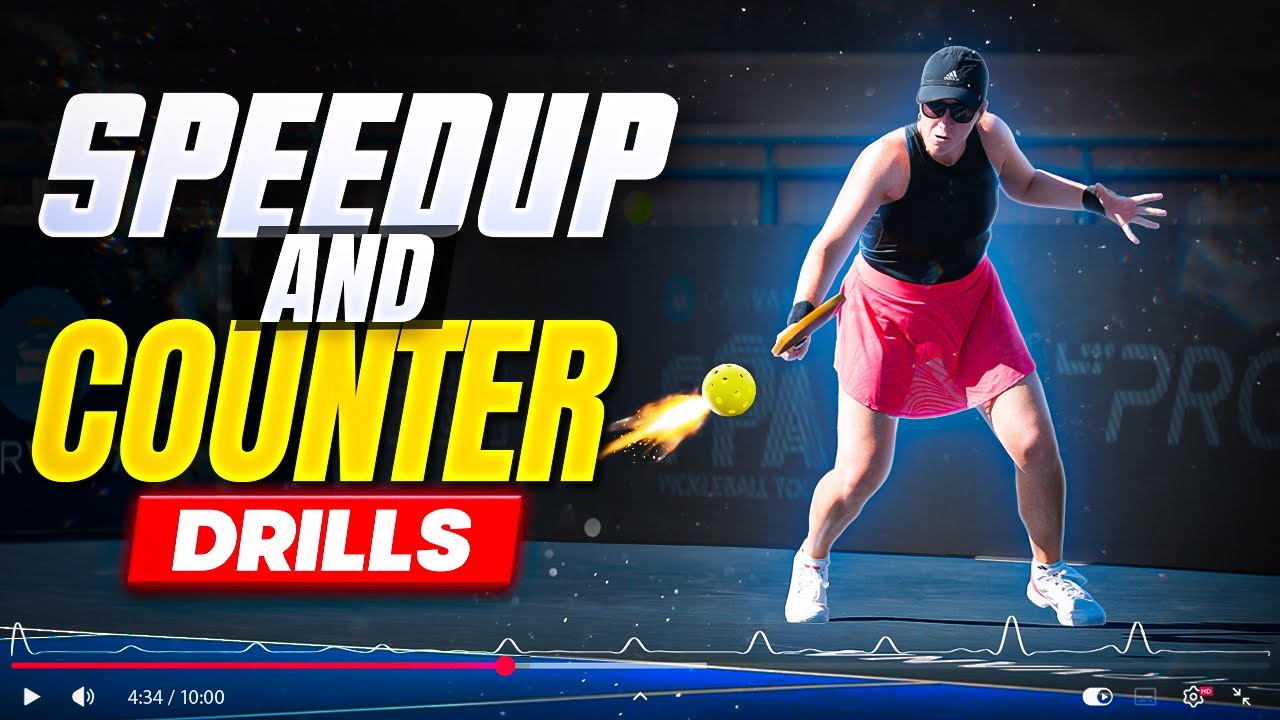
Key Takeaways
- A roll shot is a low-to-high, topspin-driven shot that adds pace without sacrificing margin.
- Grip pressure and a closed or continental paddle face set up the spin.
- The wrist snaps at contact, not before it.
- Best used on floating balls above net height in the transition zone or mid-court.
- In doubles, pair it with smart sideline and T positioning so your partner can cover the return.
- Drill it slow before you drill it fast: path first, pace second.
Frequently Asked Questions
Is a roll shot the same as a topspin drive?
Pretty much. Roll shot and topspin drive describe the same motion: a low-to-high paddle path that brushes up the ball to create forward spin. It's the same spin concept players lean on to return a hard serve, just applied from a different spot on the court. Some coaches use the terms interchangeably, others reserve "roll shot" for the version hit closer to the net.
Why does my roll shot keep going into the net?
Usually it's paddle angle. If your face is too closed or you're not brushing up through contact, the ball dies low. Grab a partner and run a few teamwork-focused feeding drills so you get live reps instead of guessing at the fix alone. Open the face slightly and commit fully to the low-to-high path instead of easing into it.
Can beginners learn a roll shot?
Yes, but footwork and a stable dink game should come first. A roll shot rewards good timing, and timing is easier to build once your basic groundstrokes and resets are solid.
What grip is best for a roll shot in pickleball?
A continental or slightly closed continental grip works best for most players. It's the same grip family a lot of players use when weaponizing their serve, since both rely on wrist freedom over brute force. It lets you close the face naturally through contact without manipulating your wrist into an awkward position.
How is a roll shot different from a lob?
A lob goes up and over an opponent. A roll shot stays low and fast, driven into the court with topspin. They're used in almost opposite situations, and in doubles they call for different court coverage: a lob buys you time, a roll shot ends the point.

Love Pickleball? Join 100k+ readers for free weekly tips, news & gear deals.
Subscribe to The Dink