
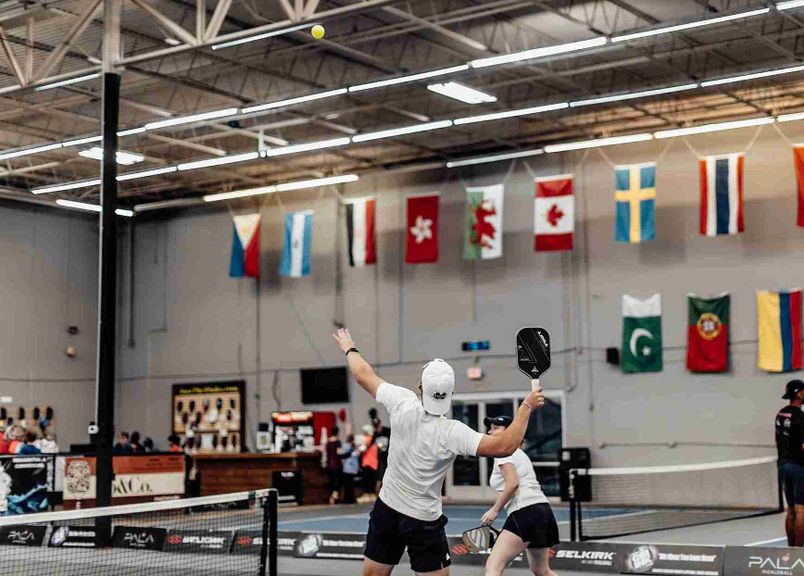
How to Defend a Lob in Pickleball: 3 Adjustments to Make Against a Lobber
Knowing how to defend a lob in pickleball comes down to three adjustments: where you stand, where you hit, and how you move once the ball is airborne. This guide breaks down each one with drills, footwork fixes, and the shot targets that give you the biggest margin.
Nobody wants to admit they need to learn how to defend a lob in pickleball, and that's exactly why the lobber keeps winning.
It's the shot everyone calls cheap right up until it goes over their head for the third time in a game, and the fix has more to do with where you stand than with how hard you can swing.
Here's the thing: the lob is completely legal, completely strategic, and completely your fault when it works.
USA Pickleball's rulebook has never had a problem with it. Your positioning does, and it's one of the things amateur players keep doing wrong.
The good news is that beating a lobber is not a talent issue. It's three adjustments, and none of them require a better overhead than you already have.
Love pickleball? Then you'll love our free newsletter. We send the latest news, tips, and highlights for free each week.
What Is a Lob in Pickleball, and Why Does One Keep Cooking You?
A pickleball lob is a high, arcing shot hit over your head with the goal of pushing you off the net and back toward the baseline.
That's the whole trick. It isn't power, it isn't spin, it's geometry.
The lobber is betting that you are standing too close to the kitchen line and that you will react by backpedaling, which is exactly the real reason you aren't improving against them.
They're usually right. Learning how to defend a lob in pickleball means accepting that unpleasant fact first.
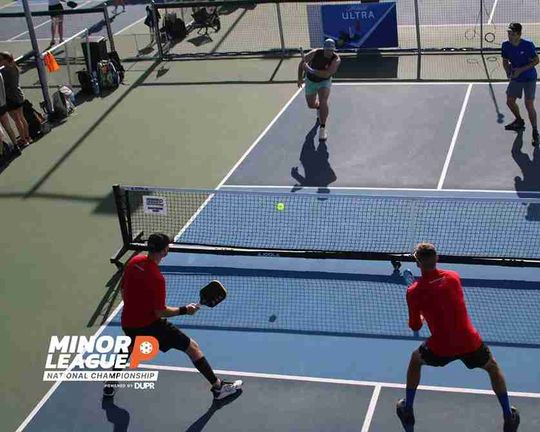
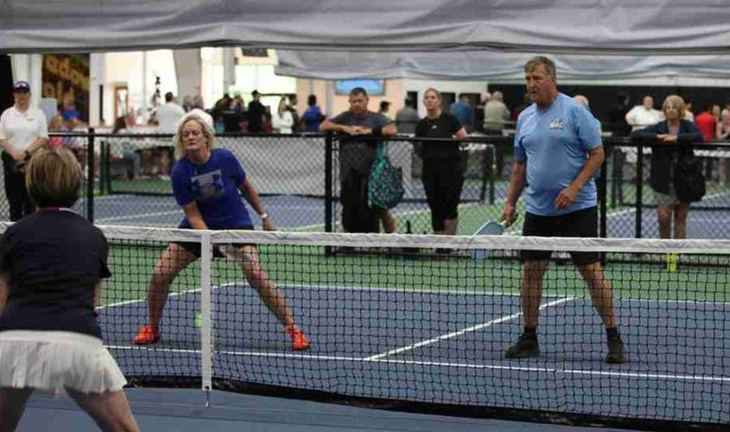
Most rec players plant themselves at the net and freeze there, which is the same bad positioning habit that costs points on speed-ups too.
A lobber reads that stance in about two rallies. Then they feed you soft, floaty balls until you creep even closer, and up it goes.
Two kinds of pickleball lob are worth separating.
The offensive lob is disguised out of a dinking exchange, hit off a low ball with an upward swing path, built to catch you leaning in.
The defensive lob is the panic version, hit from the baseline to buy time.
One is a weapon. The other is a gift. Telling them apart is the same skill as responding to a perfect drop: read the paddle face before contact.
Adjustment 1: Back Off the Net (How to Defend a Lob in Pickleball Starts With Your Feet)
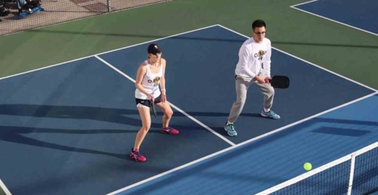
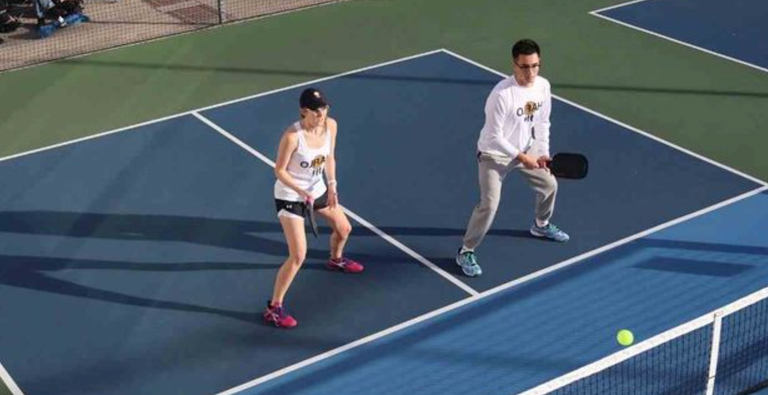
The first fix for how to defend a lob in pickleball is to stop pinching the net.
Certified teaching guidance from USA Pickleball and Pickler coaching resources recommends a slightly deeper, more flexible position instead of glueing your toes to the non-volley zone line, which buys you the distance and time to retreat properly.
Half a step. That's it. Everything else about how to defend a lob in pickleball gets easier once that half step exists.
Not the service line, not no man's land, just enough that the lob has to be genuinely good to clear you.
Honestly, most players resist this because it feels like surrendering the net. It isn't.
You still own the kitchen from a half step back, and you gain the thing that beats a lobber: reaction space.
If you've been pulled wide at the NVZ, you know how fast a frozen stance turns into a scramble.
How to Defend a Lob in Pickleball Without Backpedaling Into a Fall
Never run backward while facing forward.
Drop-step instead, meaning you pivot the dominant foot back, turn your hips sideways, and sprint toward the baseline like a wide receiver tracking a deep pass.
This is not a style preference.
Coaching guidance identifies backpedaling as a leading cause of non-contact falls in court sports, because your center of gravity ends up behind your feet with nothing to catch you.
Turning and running keeps you balanced, faster, and upright.
Practice it cold. Stand at the kitchen, have a partner point over your shoulder, and drop-step to the baseline ten times per side.
Pair it with the heel lock for stability and with solo drills you can run alone. Backward movement is rough on knees, so bulletproofing them helps.
 The Dink Media Team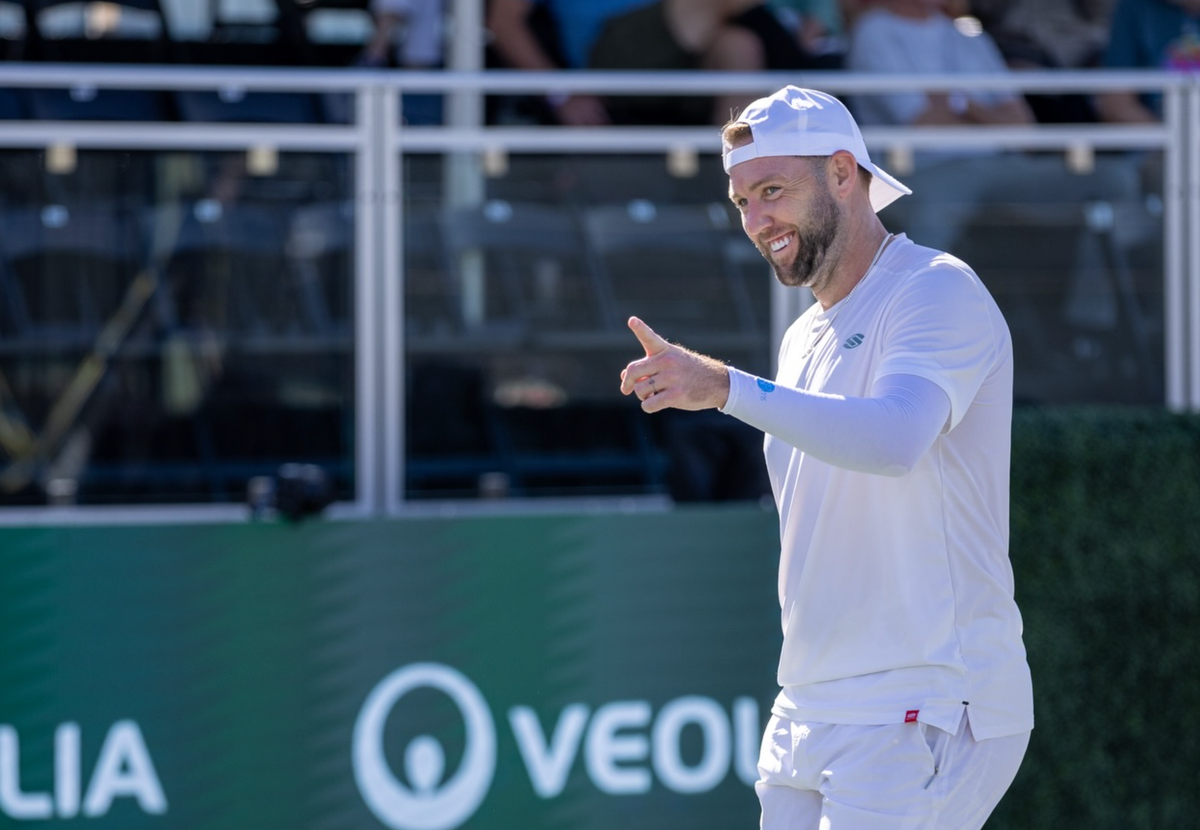
Adjustment 2: Take the Lob Away Before It Ever Goes Up
The second answer to how to defend a lob in pickleball is to stop feeding the lobber lobbable balls.
A lob requires an upward swing path from a comfortable contact point. Take that away and the shot disappears.
Keep your dinks low and heavy over the net. Keep your drives and returns deep, near their baseline.
Coaching guidance is direct on this: low, deep trajectories force the lobber to lift from below the strike zone or hit from behind their own baseline, which wrecks their control and margin.
That's the quiet half of how to defend a lob in pickleball: prevention beats recovery every time. A high floaty dink is an invitation.
A slice dink that stays low is a wall. That difference is the entire rally.
Where Should You Aim to Make the Lobber Uncomfortable?
Aim low to the backhand, deep to the baseline, or straight at their feet in the transition zone. Those three targets remove the easy upward lift.
Think of it this way: a lobber's whole plan depends on getting a ball they can scoop. So make them hit the harder shot every single time.
Deep returns are the highest-leverage version of this, which is why getting real about your return of serve pays off immediately.
From the back, know your three baseline options and pick the one that keeps them pinned.
Rhythm matters too. Lobbers feed on predictability, and pickleball is full of patterns. Change your dink height and pace every few balls.
A little deception makes loading up much harder.
 The Dink Media Team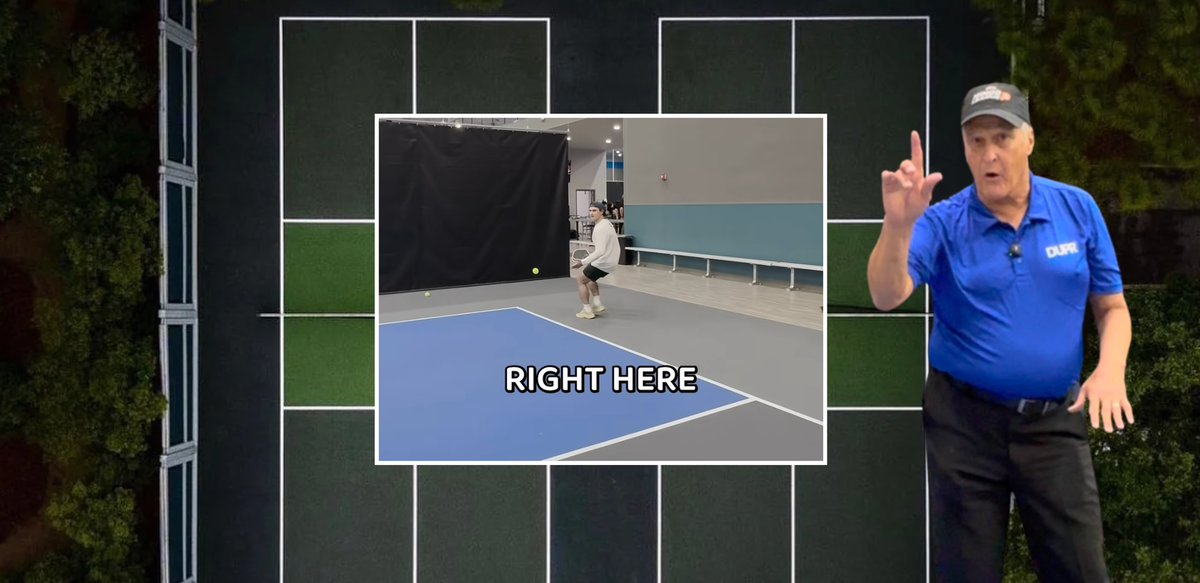
Adjustment 3: How to Defend a Lob in Pickleball When It's Already Over Your Head
Once the ball is up, the goal changes from prevention to damage control, and the biggest mistake is treating every pickleball overhead smash as a must-hit-in-the-air shot.
Instructional frameworks from the USTA and PTR emphasize that players routinely make contact outside their optimal strike zone on deep lobs, which is where the shanks come from.
Patience is the whole skill here, and how to defend a lob in pickleball in the air comes down to letting the ball fall into your window.
Your best contact window sits between hip and shoulder height.
Anything above that gets harder fast, which is worth remembering any time you're thinking about contact height and shot quality.
When Should You Let a Lob Bounce?
Let it bounce when the ball is a true moonball, hit high and steep, or when you're still moving backward and unbalanced.
Take it out of the air when you can get set with the ball in front of you.
Yes, bouncing it hands back court position. It also keeps you in control instead of hoping.
A bounced moonball sits up at a readable height, and that trade beats a mistimed swing while stumbling.
So watch the ball coming and going instead of peeking at your opponents.
How to Defend a Lob in Pickleball and Still Win the Point With Your Overhead
Hit your overhead through the middle or cross-court, not at the sideline.
In doubles, aiming between the two opponents or cross-court gives the highest geometrical margin for error and takes away their counter-attack angles.
The sideline is where a good pickleball overhead smash goes to die.
Deep lobs especially: the farther back you are, the smaller your margin, so the middle becomes the smart target.
Short lobs near the net are the exception, since you're close enough to open up wider angles safely.
One sequencing note. If you're the partner who didn't get lobbed, don't admire it.
Switch or slide by agreement, talk loudly, and remember the middle X rule still applies.
Teams that handle lobs well did the boring work on teamwork and communication long before the ball went up.
Then get back. The transition zone is where lobbers win the next point, so recover forward with intent.
Handling mid-court balls cleanly is the difference between resetting the rally and getting lobbed again.
 The Dink Media Team
Key Takeaways
- Position first. Learning how to defend a lob in pickleball starts with a half step off the kitchen line, not a bigger overhead.
- Drop-step, never backpedal. Turn your hips and run. Backpedaling is the leading cause of non-contact falls on court.
- Low and deep kills the lob. Take away the upward swing path and the shot never happens, the same logic behind the five shots you actually need.
- Let the moonballs bounce. Contact between hip and shoulder height beats a heroic swing while stumbling.
- Aim overheads through the middle. Highest margin, fewest counter-attack angles, especially in doubles court coverage.
- Lobs are legal. Complaining about them is not a strategy. Adjusting is, and so is studying how the lob is actually built so you can read it earlier.
Frequently Asked Questions
What is a lob in pickleball?
A lob is a high, arcing shot hit over an opponent's head, usually aimed toward the baseline. Offensive lobs are disguised out of dinking exchanges to catch net players leaning forward. Defensive lobs are hit from deep in the court to buy recovery time. Both are legal under USA Pickleball rules, and both reward players who stagger their court position.
Is lobbing in pickleball considered bad sportsmanship?
No. The lob is a recognized, legal tactical shot in the official rulebook, and it exists specifically to punish poor court positioning. Plenty of players find it annoying, which is a different thing from illegal. If it's working repeatedly, the problem is your position, not their ethics.
Should you always smash a lob out of the air?
No. High, steep moonballs are difficult to time overhead in the air, and swinging while off balance produces shanks. Let those bounce and hit the overhead with your feet set. Take the ball out of the air when it's within your hip-to-shoulder strike zone and you're balanced.
How far back should I stand to defend against lobbers?
About a half step behind the non-volley zone line, adjusted for the opponent and conditions. You want enough room to drop-step without giving up your net presence. Against a known lobber, wind, or sun glare, back up a little more and be ready to recover forward between shots.
Where should I aim my overhead against a lobber in doubles?
Through the middle between both opponents, or cross-court. Both targets give you the largest margin for error and limit the angles available for a counter-attack. Save the sideline for short lobs where you're close enough to the net to open the court safely.

Love Pickleball? Join 100k+ readers for free weekly tips, news & gear deals.
Subscribe to The Dink