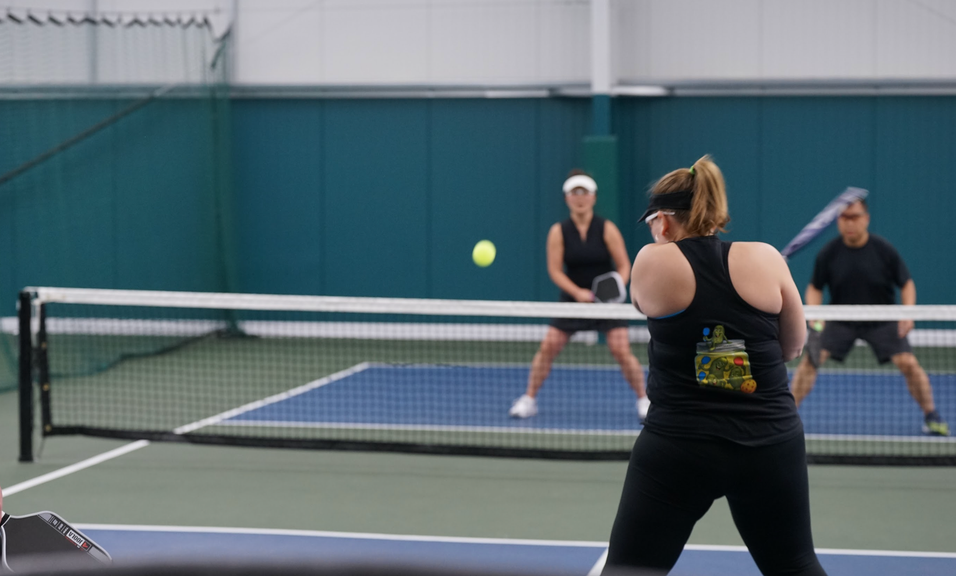
How Do You Play Pickleball? Complete Beginner's Guide to Rules and Shots
Wondering how do you play pickleball? This complete beginner's guide breaks down the rules, scoring system, essential shots, and court setup so you can step on the court ready to play. From the two-bounce rule to mastering your first dink, everything you need to know is right here.
If you've been asking yourself how do you play pickleball, the good news is that the basics are simple enough to learn in a single afternoon.
A plastic ball, a solid paddle, a 44-foot court, and a handful of rules you can memorize before your first game. That's all it takes to get started with the fastest-growing sport in America.
According to USA Pickleball, the sport has grown to over 13 million players nationally. There's a reason for that.
Love pickleball? Then you'll love our free newsletter. We send the latest news, tips, and highlights for free each week.
What Is Pickleball, Exactly?
Pickleball is a paddle sport that blends elements of tennis, ping-pong, and badminton.
It's played on a court roughly one-quarter the size of a tennis court, with a low net, a perforated plastic ball, and solid composite or graphite paddles.
Games are played to 11 points, win by 2, and only the serving team can score. That last part matters a lot once rallies start getting long.
 Jamie Simon
The sport was invented in 1965 on Bainbridge Island, Washington, when three dads cobbled together a game for their bored kids using ping-pong paddles and a perforated plastic ball.
It sat quietly in backyards for decades before exploding into mainstream culture. If you want the full history of pickleball's wild origins, that's a story worth reading.
How Do You Play Pickleball? The Core Setup
The court measures 20 feet wide by 44 feet long for both singles and doubles. The net sits at 36 inches on the ends and 34 inches in the center.
Each side has a non-volley zone, commonly called the kitchen, that extends 7 feet from the net.
You cannot volley (hit the ball out of the air) while standing inside the kitchen. That rule alone shapes the entire strategy of the game.
For a complete breakdown of pickleball court dimensions, including how courts compare to tennis courts and how to set one up yourself, we've got you covered.
The equipment is minimal.
You need a paddle (graphite and carbon fiber are the most popular materials), an outdoor or indoor pickleball depending on where you're playing, and court shoes with good lateral support. That's it. Our pickleball paddle buying guide covers everything you need to choose the right gear.
How Do You Play Pickleball? Serving Rules and Scoring
Every rally starts with a serve, and pickleball serving rules are more specific than most beginners expect.
The serve must be hit underhand with contact made below the waist. The paddle head must be below the wrist at the point of contact.
You serve diagonally cross-court, and the ball must land in the opposite service box beyond the kitchen line.
Serves that land in the kitchen, or on the kitchen line, are faults.
Scoring works like this:
- Only the serving team scores points.
- Games are played to 11, win by 2 (some tournament formats use 15 or 21).
- Both players on a doubles team get to serve before the serve switches, except on the very first service sequence of the game, when only one player serves.
- The server calls the score as three numbers: server's score, opponent's score, server number (1 or 2).
So "4-3-2" means the serving team has 4, the receiving team has 3, and it's the second server's turn.
Learning how to use your return of serve as a weapon is one of the first real skill jumps you'll make as a new player. More on that below.
The Dink Media Team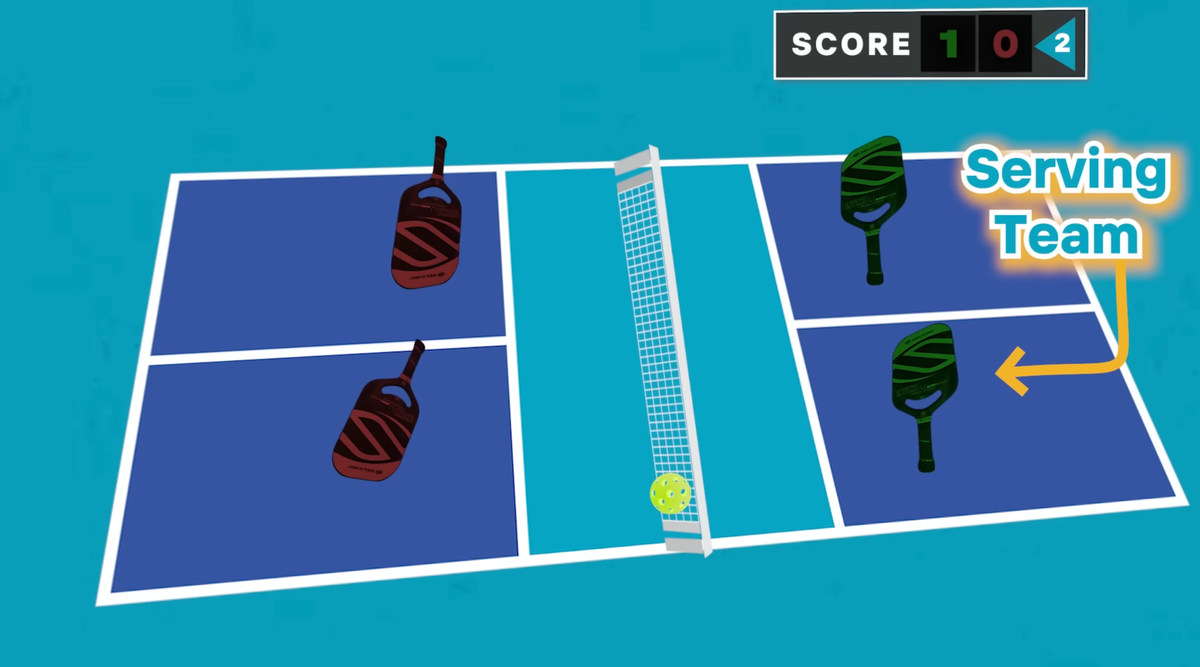
The Two-Bounce Rule: Why It Changes Everything
This is the rule that makes pickleball, pickleball. After the serve, the receiving team must let the ball bounce before returning it.
Then the serving team must also let that return bounce before hitting it. After those two bounces have occurred, both teams can volley freely.
The two-bounce rule, officially called the double bounce rule in the USA Pickleball rulebook, forces the serving team to stay back at the baseline after serving. They can't rush the net immediately.
It creates a built-in transition phase that rewards patience, positioning, and smart shot selection over raw power.
Here's the thing most beginners miss: the two-bounce rule isn't just a restriction. It's an invitation.
It forces a rally structure that rewards players who understand positioning at the kitchen line.
Once you understand that controlling the kitchen is the objective, the whole game makes more sense.
Alex E. Weaver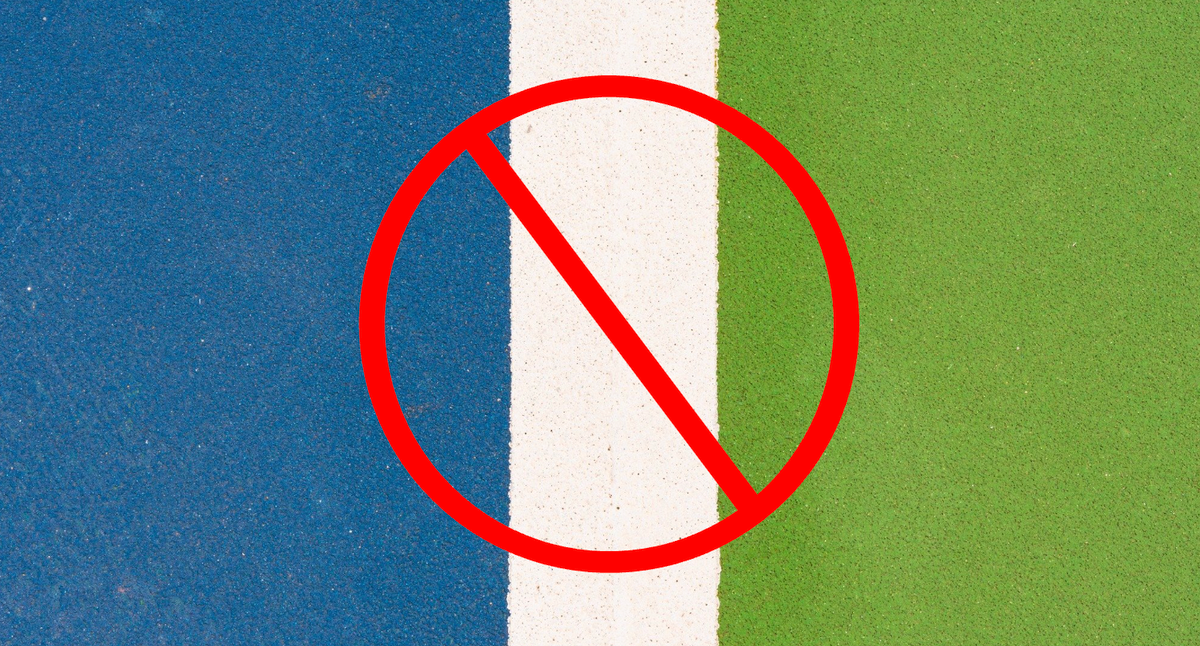
How Do You Play Pickleball? The Essential Shots
You don't need 15 shots to be dangerous on a pickleball court. You need to execute five core shots reliably. Everything else is situational.
The Serve
Consistent and in. That's the entire goal at the start. Don't try to blow the ball past your opponent on the serve, just get it in the service box and start the point.
As you improve, you can weaponize your serve with depth and spin, but early on, reliability wins.
The Dink Media Team
The Return of Serve
Deep returns are your best friend.
Hitting the return deep toward your opponent's baseline keeps them pinned back and gives you time to advance toward the kitchen.
Weak, short returns give the serving team easy transition balls. Where you return the serve is one of the most underrated decisions in the game.
The Dink Media Team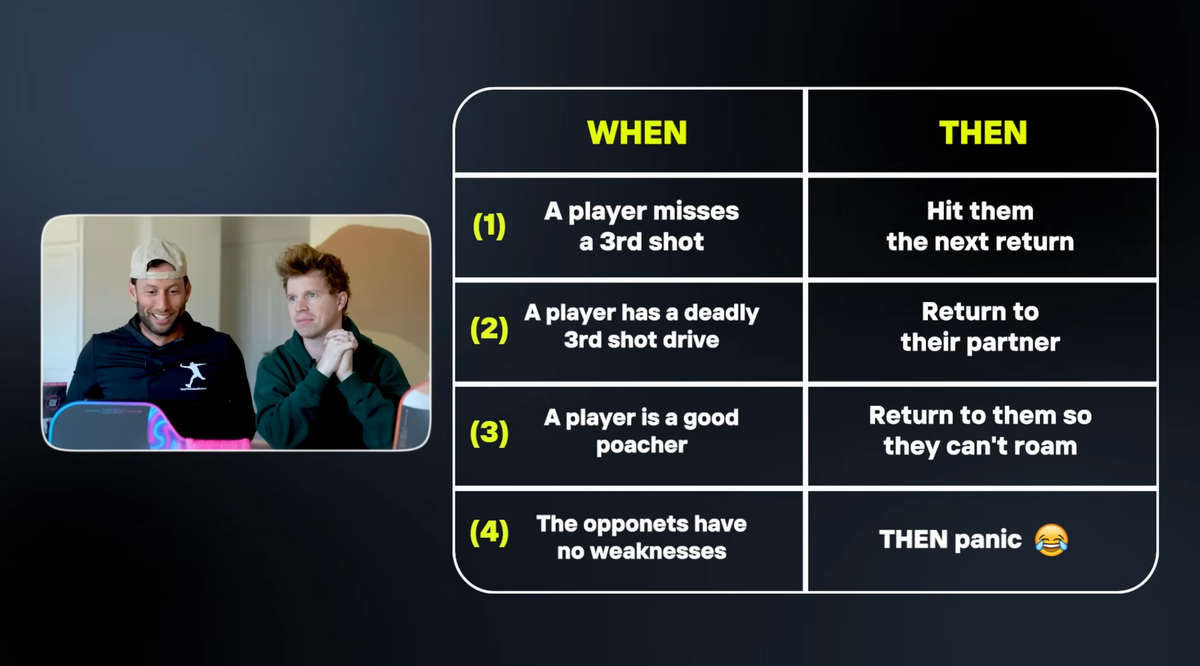
The Third Shot Drop
This is the most important shot in pickleball.
After the serve-return bounce, the serving team faces a third shot, and the best option is usually a soft, arching shot called a third shot drop that lands in the kitchen.
It neutralizes the returning team's advantage at the net and lets the serving team advance.
The third shot drop takes weeks to develop and months to trust.
You'll want to practice it consistently before relying on it in match play.
For newer players, three baseline options exist, the drop, the drive, and the lob, and knowing when to use each one is a genuine skill.
The Dink Media Team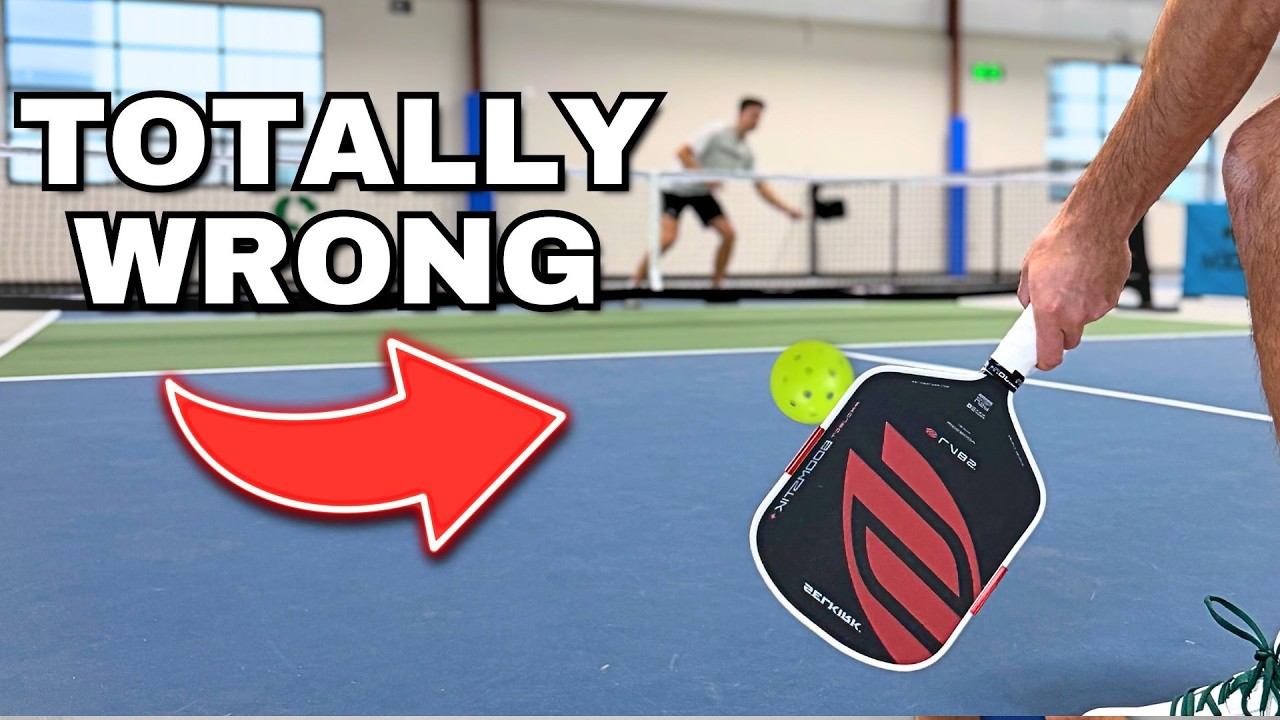
The Dink
The dink is a soft shot hit from near the kitchen line that lands in the opponent's kitchen. It's unattackable when done well.
A well-placed dink forces your opponent to hit upward, keeping you in control of the point. Dinking is not passive, it's calculated pressure.
Mastering your dinks is how you graduate from a casual player to someone who actually understands the game. The kitchen is where points are won and lost. Full stop.
The Dink Media Team
The Volley
Volleys are hit out of the air, and they're most dangerous when you're positioned at the kitchen line.
A compact punch motion, no big backswings, is the standard technique.
Fast hands and backhand volley confidence are what separate good players from great ones at the net.
There are also five shots every player needs in their repertoire, if you want a deeper breakdown of how these all connect in match play, that's worth bookmarking.
The Dink Media Team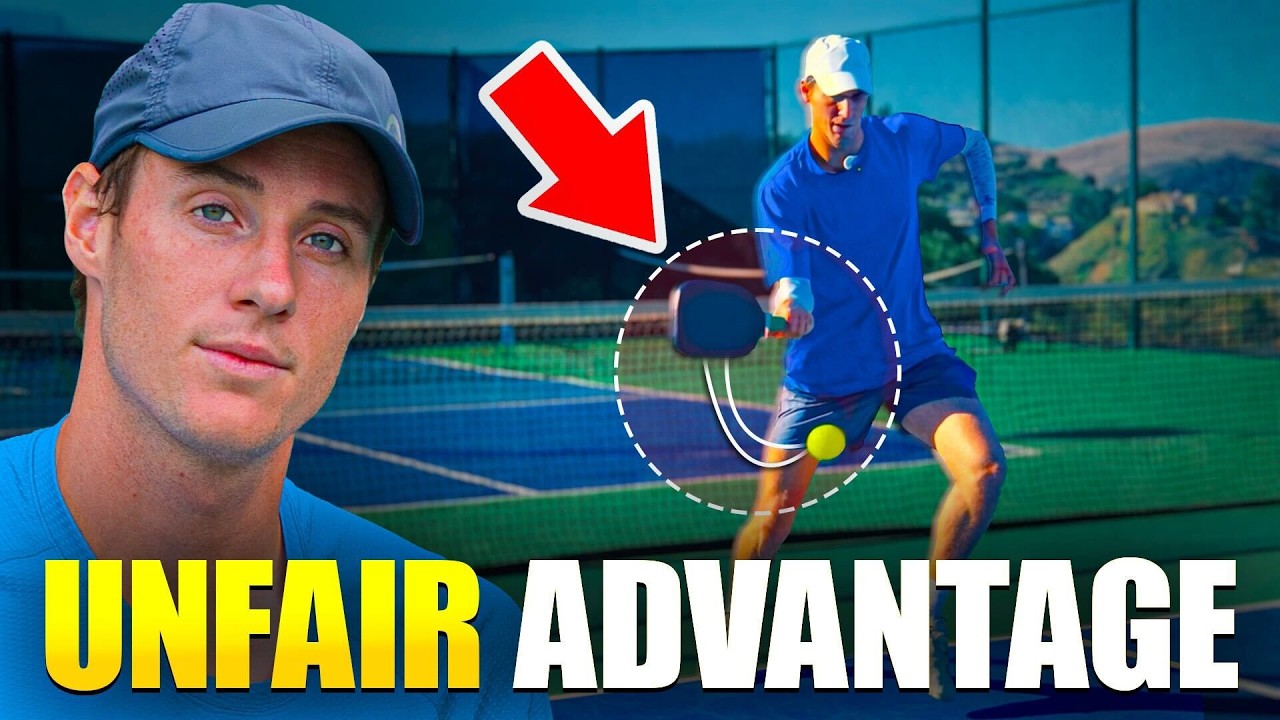
What Are the Most Common Faults in Pickleball?
A fault ends the rally and either scores a point (for the receiving team) or loses the serve (for the serving team).
Here are the most frequent faults you'll commit as a beginner:
- Volleying from the kitchen: stepping into the non-volley zone and hitting the ball out of the air. Doesn't matter if you step out after. If your momentum carries you in, it's a fault.
- Hitting into the net or out of bounds: sounds obvious, but the court is smaller than it looks.
- Violating the two-bounce rule: volleying the serve return or the service team's first shot before it bounces.
- Foot faults on the serve: both feet must be behind the baseline when serving, and neither foot can touch the centerline or sideline.
Eight amateur mistakes worth knowing before they become habits, that article might save you a few arguments on the court. You can also explore why refs struggle to call illegal serves in competitive play.
The Dink Media Team
How Do You Play Pickleball? Singles vs. Doubles
Most people learn how do you play pickleball in a doubles format, four players, two per side.
Doubles is the dominant format at recreational and competitive levels.
The teamwork element, the dinking exchanges, the kitchen battles: that's where pickleball really shines.
Singles pickleball is its own beast. The court is the same size, but one player is covering it alone.
Singles strategy is more physically demanding and more drive-heavy.
Doubles strategy involves communication, positioning as a unit, and understanding how to use court coverage as a team.
If you're just getting started, doubles is the right format. Pick it up, find a regular group, and join a pickleball club to accelerate your improvement.
The Dink Media Team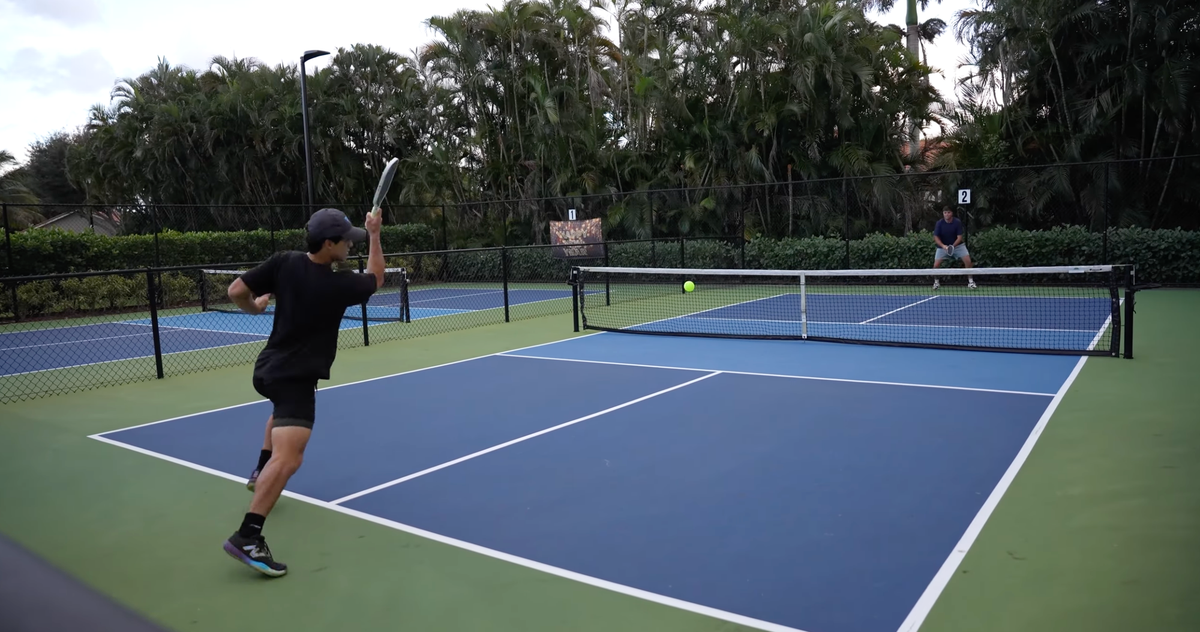
Getting Better: Your First 30 Days of Pickleball
Knowing how do you play pickleball is step one. Actually improving is a different conversation.
Focus on these three things early:
- Get to the kitchen line as fast as possible after the serve. Most beginners camp out at the baseline. The kitchen line is where you want to be. Move up deliberately after every transition shot.
- Keep the ball low. High balls get attacked. Low balls over the net, especially into the kitchen, force your opponents into defensive positions.
- Play more. Solo drills help. But reps in actual games, with real pressure, are irreplaceable. The real reason most players stop improving usually isn't physical, it's strategic complacency.
If you want three beginner tips that fast-track development, that's a solid next read.
And if you're curious about what playing pickleball actually does for your body, the health benefits are significant, particularly for players over 50.
The Dink Media Team
Key Takeaways
- How do you play pickleball: Two to four players, underhand serve, rally to 11 points, win by 2. Only the serving team scores.
- The non-volley zone (kitchen) is 7 feet from the net on each side. No volleying from inside it.
- The two-bounce rule requires the serve and return to each bounce before either team can volley.
- The five essential shots are the serve, return, third shot drop, dink, and volley.
- Get to the kitchen line as your primary positional goal in every rally.
- Doubles is the most popular format. Singles is more physically demanding and drive-heavy.
Frequently Asked Questions
How Do You Play Pickleball for the First Time?
Start with the basics: underhand serve, let both the serve and return bounce (the two-bounce rule), and work your way toward the kitchen line during each rally. Games go to 11 points, win by 2, with only the serving team able to score. Most first-timers pick up the core rules within a single session. Three beginner tips can shorten that learning curve significantly.
What Are the Basic Rules of How Do You Play Pickleball?
The serve must be underhand and cross-court. After the serve, both teams must let the ball bounce once before volleying (the two-bounce rule). You cannot volley from inside the kitchen (non-volley zone), points are scored only when serving, games go to 11 (win by 2), and both doubles partners serve before the serve changes sides, except on the very first serve of the game. For a deeper dive, the complete rules breakdown for doubles covers every scenario you'll encounter.
How Does Scoring Work in Pickleball?
Only the serving team scores. In doubles, the score is announced as three numbers: server score, receiver score, server number. If you're serving and win the rally, you score a point. If you lose the rally, you lose your serve (or your partner gets to serve next). Games are typically played to 11 points, win by 2, with some formats using 15 or 21.
What Is the Kitchen in Pickleball?
The kitchen is the non-volley zone, a 7-foot area on each side of the net. You cannot volley (hit the ball out of the air) while standing inside it. You can enter the kitchen to hit a ball that has bounced inside it. Positioning yourself well at the kitchen line is the single biggest separator between beginner and intermediate players. Check out the essential non-volley zone rules explained if you want the full breakdown.
How Is Pickleball Different From Tennis?
The court is about one-quarter the size. The net is lower. The ball is slower and has holes. The paddle is solid (no strings). Serving is underhand, not overhead. And the kitchen rule creates a soft-game dynamic that doesn't exist in tennis. Many tennis players pick up pickleball quickly, but those who try to play it like tennis often struggle until they embrace the softer game. Common mistakes tennis players make when transitioning to pickleball is worth a read before you step on court.
How Do You Keep Score When You Play Pickleball in Doubles?
In doubles, score is called as three numbers before every serve: your team's score, the opposing team's score, and whether you are server one or server two. For example, "5-3-1" means your team has 5, they have 3, and you are the first server. This three-number system is one of the first things new players need to memorize, and it catches almost everyone off guard during their first few games.

Love Pickleball? Join 100k+ readers for free weekly tips, news & gear deals.
Subscribe to The Dink