
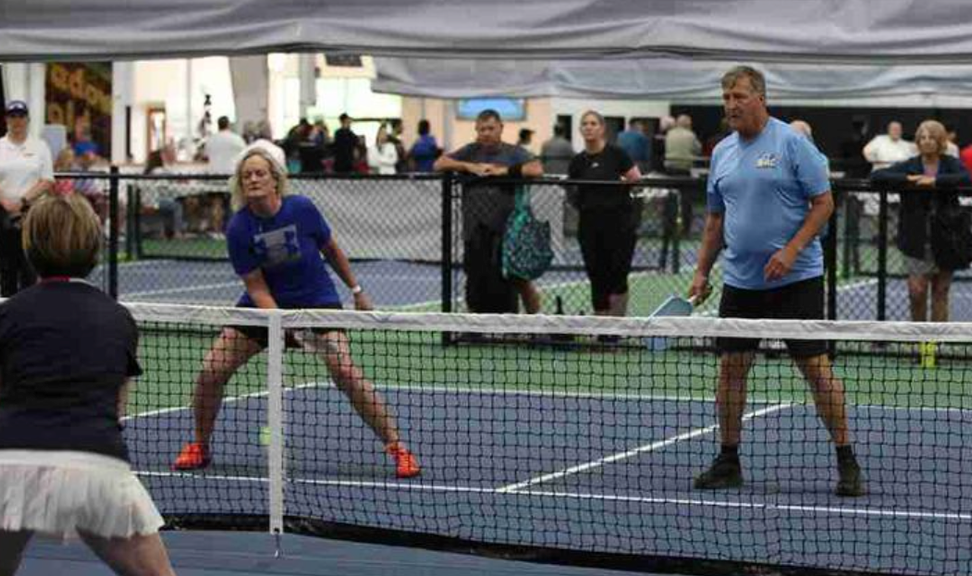
7 Essential Pickleball Tips for Seniors to Master Soft Game Strategy
These pickleball tips for seniors focus entirely on the soft game, where position and patience beat pace. Learn how to hold the kitchen line, hit unattackable dinks, and reset under pressure.
The best pickleball tips for seniors have almost nothing to do with running faster, and everything to do with making your opponent run instead.
That's the whole premise of the soft game.
You slow the ball down, you take away the pace your opponent wants, and you win the point four shots later when they finally miss.
Here's the thing about the soft game: it's the rare part of pickleball where a 68-year-old with good hands genuinely beats a 32-year-old with good legs.
Patience is a skill you've had decades to build. Most bangers haven't. That's why the pickleball tips for seniors below skip the fitness advice entirely.
So let's get tactical.
Love pickleball? Then you'll love our free newsletter. We send the latest news, tips, and highlights for free each week.
Why Do These Pickleball Tips for Seniors Start With the Soft Game?
Because the soft game keeps you at the kitchen line, and the kitchen line is where you're not moving backward.
That's the strategic case and the practical one at the same time.
One analysis of injury data collected between 2014 and 2023 found that players in the 60 to 79 range were about 2.1 times more likely to fall than younger cohorts. Falls, not swings, are where the trouble tends to start.
A game plan built on holding your position rather than chasing pace may reduce how often you're moving backward in the first place.
And it wins. Coaches who work with senior players teach the soft game as the primary strategy for exactly this reason: it converts the match into a contest of consistency.
That's a contest you can win. Learning to stop swinging like a banger is step one.
Own the Line: Pickleball Tips for Seniors That Start at the Kitchen
Get to the kitchen line and stay there.
Almost every soft game problem traces back to being somewhere else on the court, which is why the six skills that make you unattackable at the line are worth more than any new paddle.
Tip 1: Get to the Line, Then Refuse to Leave It
The most common mistake isn't a bad dink. It's a good dink hit from two feet behind the line.
That gap turns every ball at your shoetops into a half-volley you didn't need to hit.
Position is the quiet thread running through every one of these pickleball tips for seniors.
Plant your toes an inch off the line and stay there.
When your partner gets pulled wide, slide with them instead of holding your half of the court like it's assigned seating.
Proper spacing with your partner closes the middle, and the middle is where most senior doubles points get lost. Your stance at the line matters as much as your grip.
Tip 2: Make Every Dink Unattackable
An unattackable ball is one your opponent has to hit upward. That's the whole definition.
If the ball bounces in the kitchen and stays below net height on their side, they physically cannot drive it.
Anything they hit has to travel up, which gives you the next ball.
So stop aiming for winners. Aim for a ball that lands two feet inside the kitchen line and peaks below the net tape.
Dink placement beats dink pace every single time at the 3.0 to 4.0 level.
Watch for the dead dink: the lazy ball that floats up around net height with no depth.
It's the gift shot your opponents are waiting on, and most players hit three or four per game without noticing.
If yours keep floating, the fix is usually in your contact point, not your paddle.
Tip 3: Aim for the Feet, Not the Sideline
Cross-court dinks to the sideline feel aggressive. They're also the shots that pull you out of position and hand your opponent an easy angle back.
Target the feet instead. A ball at someone's shoelaces is awkward for every player at every age, and good posture at contact is what keeps your own dinks low.
The middle dink is the underrated version of this, because it creates hesitation between partners and shrinks the angles available to both of them.
Learn the difference between offensive and defensive dinks and you'll stop hitting the wrong one at the wrong time.
 The Dink Media Team
Win the Patience War
The soft game is decided by whoever gets bored last. That's not a joke. It's the actual mechanism.
Tip 4: The Pickleball Tips for Seniors That Beat Bangers All Come Back to Patience
Direct answer: you beat a banger by giving them nothing to bang. No high balls, no short balls, no pace to redirect.
Count your dinks. If you're averaging three per rally before somebody speeds up, you're speeding up too early.
Push it to six. Then eight. Elite dinkers treat the rally as a setup, not a standoff, and they attack only when the ball sits up. Everything else is a reset.
Honestly, this is where most senior players leave points on the table.
Not in their hands. In their impatience. If you take one thing from these pickleball tips for seniors, take the dink count.
Tip 5: Learn One Reset and Trust It
When you do get attacked, you need one shot you can hit under pressure without thinking.
That's your reset: a soft block that dies in the kitchen and buys you a second to re-establish.
Pick one and drill it until it's automatic.
It's arguably the single highest-value skill in the sport. The reset is the most overlooked defensive shot in the sport, and it's worth more to a senior player than any speed-up.
Five keys to a clean midcourt reset will get you most of the way there.
Then work on knowing when to attack versus when to reset, which is the decision that separates 3.5 from 4.5.
 Eric Roddy
Recover, Don't Scramble
Movement is the third leg of the soft game. Position gets you the shot; recovery lets you hit the next one.
Tip 6: Stop Backpedaling for Lobs
Never walk backward for a lob. Turn your hips, run, and hit the ball facing forward.
Backpedaling is the single most common way players end up on the ground, and the ball is rarely worth it.
If the lob is over your head and you're not confident, let it go and reset the point.
One point is cheaper than six weeks off the court.
Better yet, learn how to hit lobs yourself, because they're a legitimate weapon against opponents who camp on the line.
Tip 7: Warm the Hands Up Before the First Serve
Soft game touch is the first thing to go cold and the last thing to come back. Five minutes of dinking before you play is worth more than any stretch you'll do in the parking lot.
Start with slow cross-court dinks, add a few resets from midcourt, then hit ten serves.
A proper warm-up routine also gives your footwork a chance to wake up, and a five-minute version exists for the mornings when open play starts without you.
Grip and posture fundamentals are worth revisiting here too.
 The Dink Media Team
Key Takeaways
- The best pickleball tips for seniors focus on position and patience, not speed or power.
- The soft game rewards consistency and position, which is why it suits experienced players so well.
- Get to the kitchen line early and hold it; most soft game errors start from bad position, not bad technique.
- Aim dinks at the feet and keep them below net height so your opponent has to hit upward.
- Count your dinks. Six to eight per rally before any speed-up is a reasonable target.
- Turn and run for lobs instead of backpedaling, and let the tough ones go.
Frequently Asked Questions
What are the best pickleball tips for seniors just starting out?
Start with position before technique. Get to the kitchen line, keep your paddle up around chest height, and hit soft dinks that land inside the kitchen. Most beginner points are lost by standing too far back, not by having a weak shot.
How many dinks should I hit before speeding up the ball?
Six to eight is a solid target for most recreational play. Speed up only when the ball sits above net height and you're balanced. If you're attacking after two or three dinks, you're likely giving away points that patience would have won.
Does the soft game actually work against younger, harder hitters?
Yes, and it's often the best option available. Hard hitters need pace to redirect, so a low, slow ball takes away their strength. The rally becomes a consistency contest rather than a speed contest.
Is pickleball hard on the knees for older players?
Research on pickleball injuries suggests falls are the most common mechanism among older players, rather than the swinging motion itself. Playing style and court movement appear to matter. Anyone with existing joint concerns should talk it through with their own healthcare provider.
What's the fastest way to improve my dink consistency?
Cross-court dinking drills with a partner, ten minutes a session. Count how many you can hit in a row without popping one up, and try to beat that number each week. Consistency improves faster with focused reps than with match play alone.

Love Pickleball? Join 100k+ readers for free weekly tips, news & gear deals.
Subscribe to The Dink