
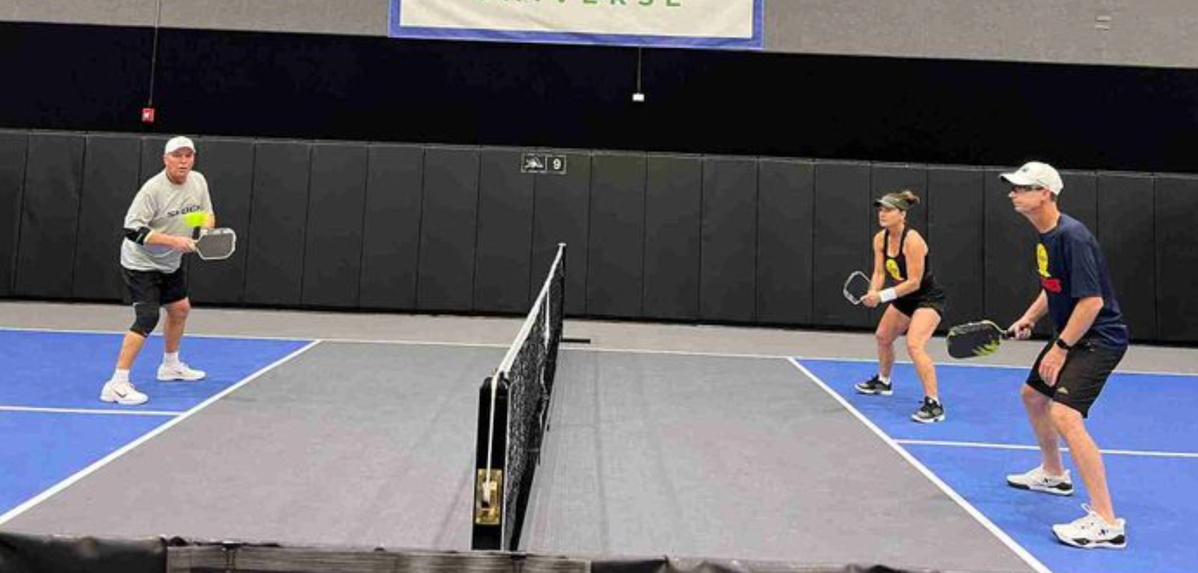
Why Seniors Should Prioritize Pickleball Consistency Over Power
Choosing consistency over power for senior players isn't about playing scared. It's about taking the shots that win points at the rec level, where most rallies end on a mistake rather than a winner.
The argument for consistency over power for senior players starts with a number almost nobody tracks in rec play: how many points you lose versus how many you actually win.
Those are different things. At 3.0 and 3.5, the vast majority of rallies end because somebody missed, not because somebody ripped a winner past two people.
Swinging harder doesn't change that math. It usually makes it worse.
Choosing consistency over power for senior players is less about caution and more about collecting the free points your opponents hand over, and it quietly fixes the doubles habits nobody talks about along the way.
Love pickleball? Then you'll love our free newsletter. We send the latest news, tips, and highlights for free each week.
Why Does Consistency Over Power for Senior Players Actually Work?
Because errors decide rec matches, and power manufactures errors on your own side of the net.
Watch any 3.5 game for ten minutes and count. The drive into the net. The return that sails long. The speed-up from below the knees.
That's the real scoreboard, and it's the whole reason power stops winning around the 4.0 level.
Even at the top of the sport, errors do heavy lifting: one observational analysis of pro women's singles found roughly two-thirds of points ended on an opponent's unforced error, with a separate men's singles study landing near 58%.
Those are pro singles numbers, not senior rec doubles, so treat them as a directional signal rather than proof about your Tuesday league.
Here's the thing. If that holds at the pro level, where the striking is clean, imagine the error rate in a 3.5 game. Playing the percentages isn't boring.
It's the highest-scoring strategy available to you.
There's a physical argument too. Racquet speed and explosive recovery tend to fade with age; touch, anticipation, and shot selection don't.
Research on senior play mostly measures activity intensity and injury patterns rather than tactics, so no study is going to prove a style wins.
What you control is shot choice, and that's where smart mechanics work for senior players.
The Three Shots Doing All the Heavy Lifting
Three shots decide most senior doubles points: the return, the third, and the reset. Get those reliable and your win rate climbs before you ever learn a new weapon.
Start with the return.
A deep return pins the serving team back and buys you time to reach the kitchen line, which is why senior players who sharpen their return of serve see results fast.
You don't need pace. You need depth and height.
A high-arcing return landing three feet from the baseline beats a flat bullet that clips the tape, and where you aim it matters more than how hard you hit it.
Quick definition: a reset is any soft shot hit from a defensive position that drops into your opponents' kitchen and takes the pace off the rally.
Not a dink (that's from the kitchen line), not a drop (that's your third shot).
A reset is what you hit under pressure when you want the point to start over, and it's the most overlooked defensive shot in the sport.
Why Is Your Third Shot the Real Decision Point?
Because the third shot is where most senior players either neutralize the point or gift it away.
The third shot drop gets treated like the only correct answer. It isn't.
A drop from deep behind the baseline is low-percentage for anybody, and the honest move is a drive to buy time, then a fifth-shot drop once you've moved up.
Knowing when to drive and when to drop is the real skill.
The rule: above your waist and inside the baseline, drop it. Below your knees or ten feet back, drive it and get moving.
That logic runs all game, which is why the attack-or-reset decision is worth drilling until it's automatic.
How Consistency Over Power for Senior Players Beats a Banger
By letting the banger play the exact game that eventually beats them.
Everyone has that opponent. Former tennis player, hits every ball at 2,000 miles per hour, refuses to come to the kitchen. The instinct is to match them. Don't.
Beating bangers is a system, and step one is a soft paddle face with a firm wrist, angled slightly up. You're not hitting the ball. You're catching it.
Paddle out front at chest height, and stop swinging at hard-driven balls. The pace is already there.
Blocking instead of countering turns their best shot into your easy dink.
Three or four of those in a row and most bangers start pressing, which is when the errors show up.
Committing to consistency over power for senior players is how you survive that matchup without a slugfest you can't win, and Zane Navratil's rules for beating bangers follow the same logic.
 The Dink Media Team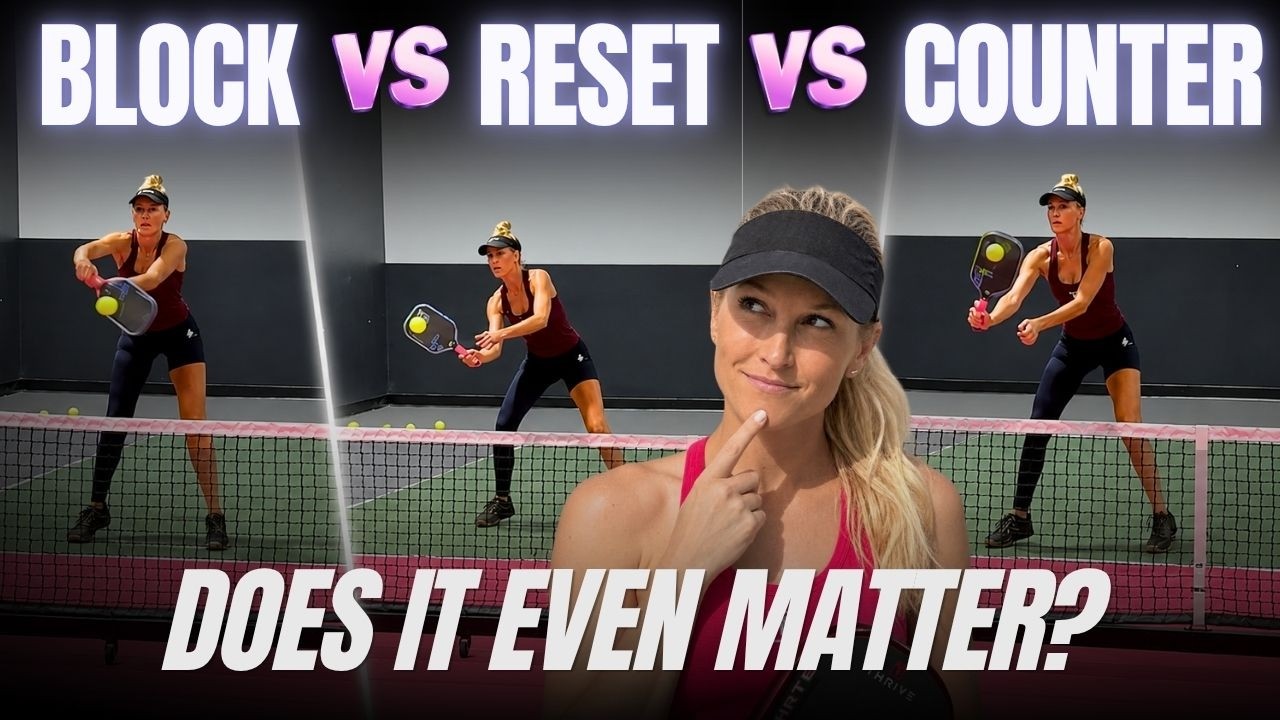
Targets Beat Velocity Every Single Time
Where you hit it matters more than how fast it goes, and the targets are predictable.
This is the part of consistency over power for senior players that shows up on the scoreboard fastest.
Three targets return the most points in senior doubles:
- The feet. A ball at someone's shoelaces cannot be attacked. It's the single highest-value target in pickleball and it requires no pace at all.
- The middle. The seam between two opponents creates hesitation, poaching confusion, and mishits, which is why middle coverage is a pro-level emphasis.
- The backhand. Most rec players have a weak one. Attacking the right spots means finding it early and going back to it often.
None of those require arm speed. They require a plan and a willingness to hit the same boring shot four times in a row because it keeps working.
What Should Senior Players Drill First?
Drill the three shots you just read about, in that order, with reps you can actually count.
Pick a wall and hit fifty controlled dinks in a row without missing; solo drills are underrated for exactly this.
Then run cross-court dinking with a partner for ten straight minutes, no speed-ups allowed, because the hardest dinking drill builds the patience you need in a third game.
Finish with twenty third shots from the baseline, scored out of twenty.
Hit 70% and you've got a match-ready shot. The 70% rule is the cleanest standard I've seen for whether a skill has transferred.
Below that, keep drilling and don't use it under pressure yet. Pair it with training that keeps you playing safely.
 The Dink Media Team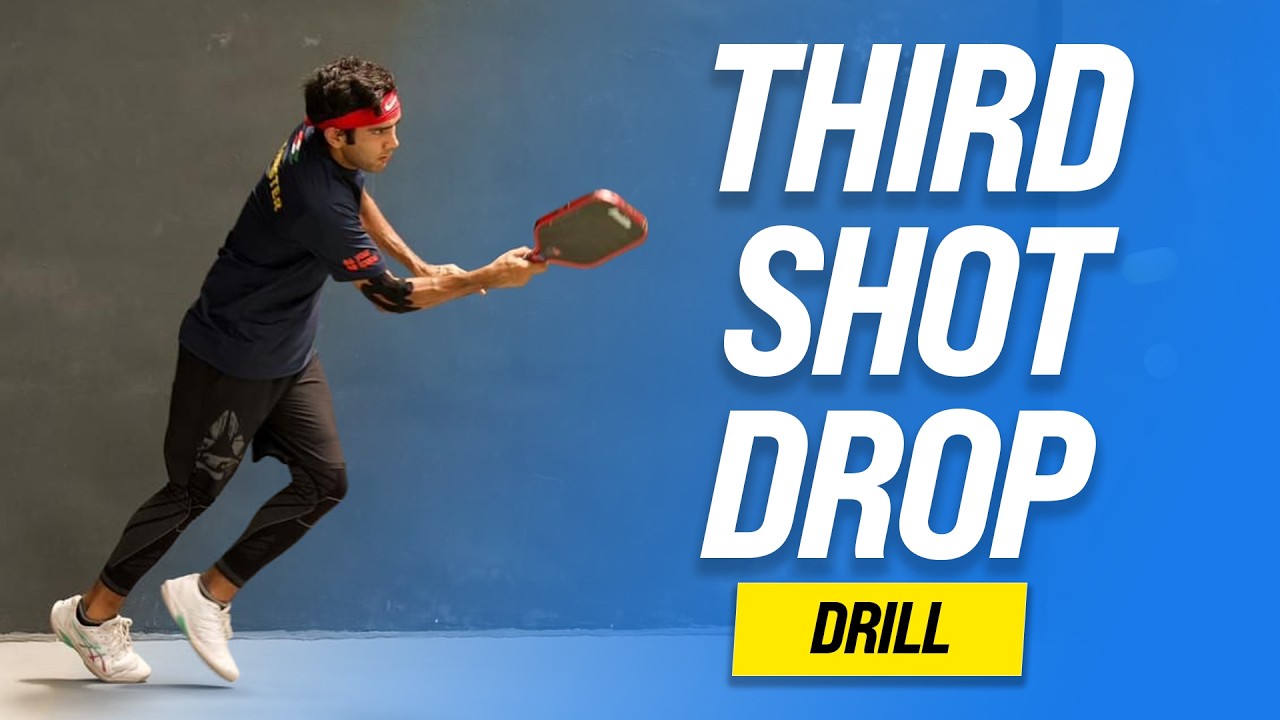
Consistency Over Power for Senior Players Isn't Passive Play
This is the part people get wrong, so let's be direct: consistency is not the same as passivity.
Pushing every ball back and waiting to be attacked is not a strategy. It's surrender with better footwork. Real consistency builds points instead of just surviving them.
Holding your dinks until a genuinely attackable ball shows up is an offensive act on a slower clock.
Become unattackable first, dangerous second.
Master the six skills that make you unattackable at the kitchen line and you earn the right to speed up when the ball floats.
Players who trade banging for a real soft game don't get less aggressive. They get aggressive at the right moments.
Build the habit with eight tips for more consistent play, then add earlier preparation to slow the pace down.
Honestly? The scoreboard settles this faster than any argument will. Play one session where your only rule is "no low-percentage shots" and look at the result.
Most players pick up two or three games they'd normally lose, which is exactly what a simple, repeatable senior strategy is built to produce.
 The Dink Media Team
Key Takeaways
- Most rec points end on an error, not a winner, so cutting your own mistakes is the fastest path to more wins.
- The return, the third shot, and the reset decide most senior doubles points.
- Drive from deep, drop from inside the baseline. Choosing correctly beats executing one shot perfectly.
- Against a banger, block with a soft paddle face instead of countering with pace.
- Aim at feet, the middle, and the backhand. None of those targets require arm speed.
- Consistency is not passivity. Become unattackable first, then attack the floaters.
Frequently Asked Questions
Does choosing consistency over power for senior players mean never hitting hard?
No. Consistency over power for senior players means hitting hard only when the ball is above net height and you're balanced. A hard shot from a good contact point is a high-percentage play. The same shot taken from your shoelaces is a donation.
At what skill level does power start to matter again?
Around 4.5 and above, once players can reset hard-driven balls, pace becomes a weapon instead of a liability. Below that, power mostly produces errors for the person using it. Build the soft game first, add pace later.
How long does it take to see results from playing more consistently?
Most players notice a difference within a few sessions, because the change is tactical rather than physical. You're not building strength, you're choosing different shots. Clean drops and resets take a few months of regular drilling.
What's the single best drill for building consistency?
Cross-court dinking with no speed-ups allowed, ten minutes straight. It trains patience, contact point, and footwork at once, and it's the closest practice equivalent to a long kitchen exchange in a match.
Should senior players use a control paddle instead of a power paddle?
Equipment helps at the margins, and control paddles do make resets and drops more forgiving. Shot selection still matters far more than gear. Fix the decisions first, then test whether a different paddle adds anything.

Love Pickleball? Join 100k+ readers for free weekly tips, news & gear deals.
Subscribe to The Dink