The Paddle Angle Mistake That Kills Your Topspin (And How to Fix It)
If your topspin pickleball shots keep going long or into the net, the problem is probably your paddle angle. Here's how to stabilize it and hit cleaner topspin every time.
If your topspin pickleball shots are inconsistent, landing long one rep and in the net the next, your paddle angle is almost certainly the problem.
Most players focus on swing speed or wrist snap when they try to develop topspin.
But the real issue is what the paddle face is doing through the contact zone, and most players let it rotate way too much.
This breakdown covers the two most common topspin shots where this error shows up, exactly what the correct paddle path looks like, and how to train yourself to stop the variance.
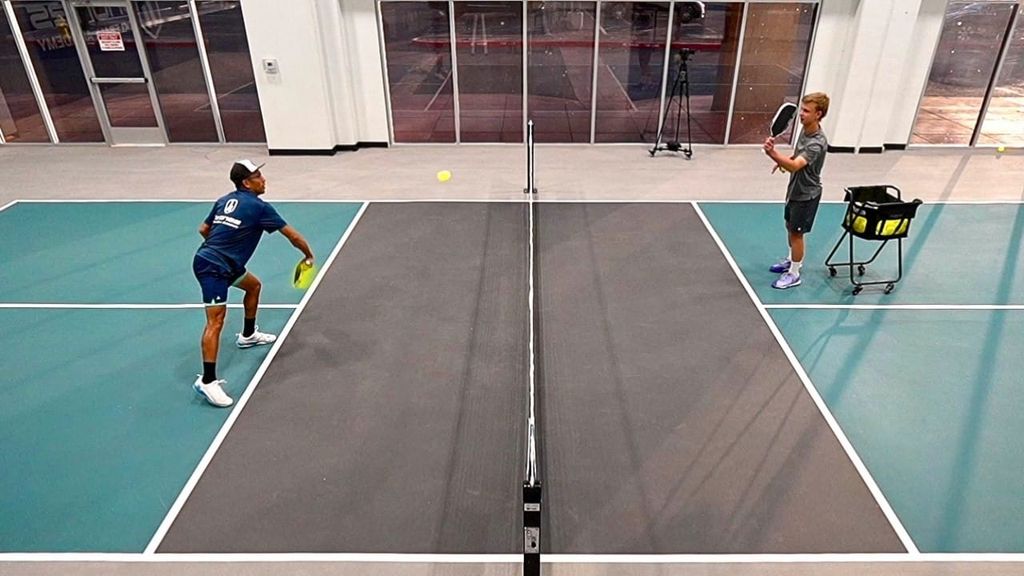
The content comes directly from More Briones Pickleball on YouTube, where the backhand flick and swinging volley are broken down side by side in slow motion.
Love pickleball? Then you'll love our free newsletter. We send the latest news, tips, and highlights for free each week.
What Is Actually Going Wrong With Your Topspin?
The core problem is paddle face variance.
When you swing through a topspin shot and your paddle angle changes dramatically from start to finish, you have to be incredibly precise about exactly where you make contact with the ball.
If contact happens a few inches earlier or later than you planned, the paddle face is in a completely different position.
That's why the ball flies long in one rally and dumps into the net in the next.
- A paddle rotating close to 180 degrees through the swing gives you almost no margin for error.
- A stable paddle face gives you a wide contact window where you can still produce a quality shot.
This is not about swinging slower or softer. It's about controlling what the paddle does through the ball, not just before or after it.
That single fix drives more shot-making consistency than any amount of extra racquet speed.
Why Does the Backhand Flick Expose This Problem So Clearly?
The backhand flick is an advanced shot, but it's one of the best shots to study because the paddle movement is short and fast.
There's nowhere for the error to hide.
When players try to generate topspin in pickleball on the flick incorrectly, the paddle rolls from an open face to a closed face, or dramatically forward.
That rotation is the inconsistency.
Here's what the wrong technique looks like:
- Paddle starts in a random position with no deliberate wrist set
- Swing path is more horizontal than vertical
- Paddle face rotates significantly through and past contact
- Contact point varies widely from rep to rep
- Results are unpredictable even with good timing
The fix is not about using less wrist.
It's about setting the wrist before the swing begins and keeping the paddle face stable while you move vertically through the ball.
The Correct Backhand Flick Setup
Start by positioning the paddle below the ball with the face slightly open.
That slight openness is intentional because it creates the angle that sends the ball up and over the net while the vertical swing path creates the topspin.
From that setup position, your job is simple. Drive the paddle straight up through the ball. The motion is vertical, not rotational.
Here's what the correct technique produces:
- Consistent paddle face angle before, during, and after contact
- A clear vertical swing path that brushes up the back of the ball
- Topspin that comes from the upward motion, not from wrist roll
- A wider contact window because the face stays stable longer
- Results that repeat even when your timing is slightly off
The key phrase here is "slightly open." You are not trying to hit with a wide open face. The angle is subtle, and the upward path does the work.
If you want to see how the paddle face on a backhand flick should look, the mechanics are the same principle applied to every topspin contact.
 The Dink Media Team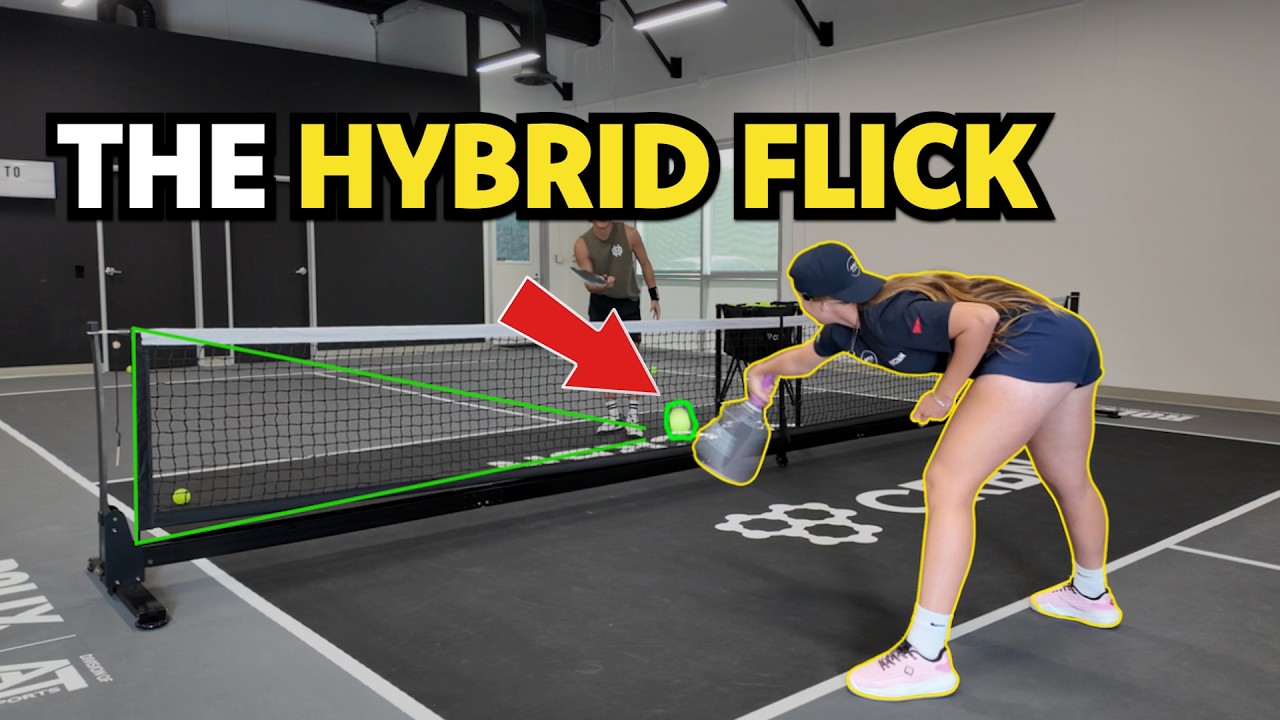
Does This Same Problem Show Up on the Swinging Volley?
Yes, and it's just as damaging. The swinging volley with two hands creates real offensive pressure from the transition zone and even near the kitchen line.
But players chasing topspin in pickleball on the swinging volley make the same mistake they make on the flick.
Too much wrist, and the face rolls aggressively through the shot.
When the paddle face changes that much, you're relying on perfect timing every single time. Against a fast ball, that's nearly impossible to maintain.
The fix is identical. Swing up through the ball and keep the face stable through the contact zone.
Understanding the difference between a topspin dink and a roll dink helps here too.
A stable face through contact applies across every shot where you want repeatable spin.
 The Dink Media Team
What Does "Stable Paddle Face" Actually Mean?
A stable paddle face means the angle of your paddle surface does not change significantly from the moment you start your forward swing to the moment your follow-through ends.
It does not mean the paddle is frozen or rigid. Your arm is still moving. The swing still has speed.
But the face itself is not rotating, rolling, or flipping as it moves through the ball.
Think of it this way.
If you took a photo of your paddle one frame before contact and one frame after contact, the face angle in both photos should look nearly identical. That's the target.
Players who struggle with this usually have too much independent wrist action. The wrist fires through the shot and flips the face.
Dialing back that flip and replacing it with a clean upward path is where the consistency comes from.
If you want to dig deeper into why your pickleball topspin keeps failing, the paddle face angle is almost always the root cause.
 The Dink Media Team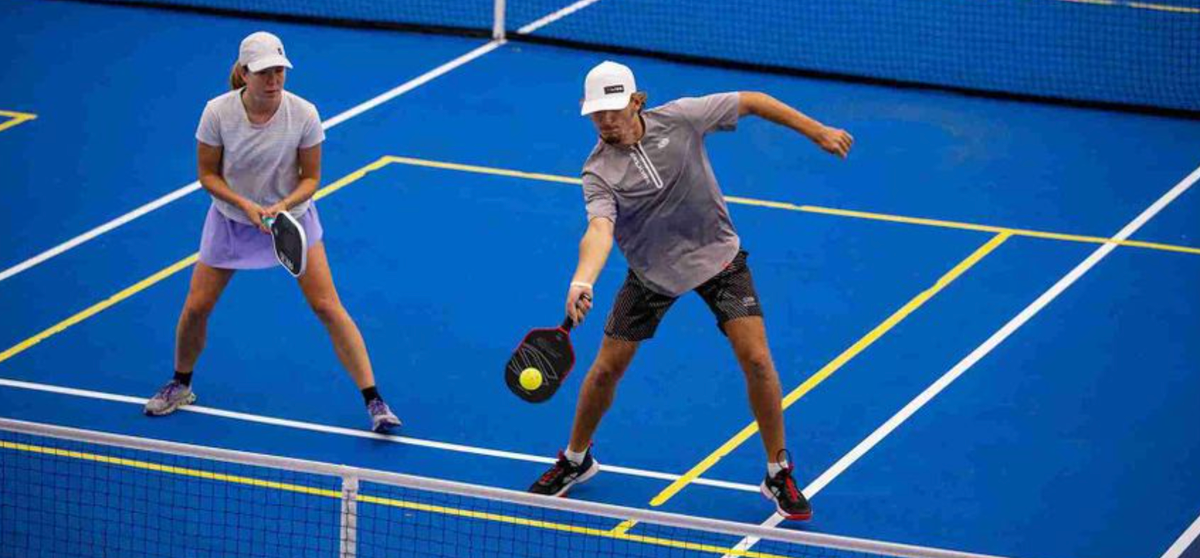
How Do You Train Yourself to Stop Rolling the Paddle?
Slow everything down first. Hit flicks and swinging volleys at 40 to 50 percent pace and watch what your paddle does after contact.
If the face is pointing toward the ground or rolling over, you're doing it wrong.
A simple drill: freeze your follow-through after every rep and check where the face is pointing. It should still face slightly upward or forward, not rolled over.
You can also use wall drills to build the habit without a partner. Hit controlled backhand flicks and focus only on keeping the face stable through contact.
Three cues fix this for most players, and they fold cleanly into the drills you're already running:
- "Set, then swing" — lock the wrist into position before the stroke starts
- "Swing up, not through" — focus on the vertical direction of the swing path
- "Freeze the finish" — hold the follow-through and check the face angle every rep
Footwork matters here more than people expect. When you're out of position, you compensate with extra wrist.
Getting your feet set early kills the urge to flip the paddle.
Fixing your pickleball footwork makes your topspin shots cleaner without changing anything about your arm swing.
 The Dink Media Team
What About Applying This to Other Topspin Shots?
The same principle carries into your topspin drives, topspin dinks, and every shot where you want overspin. Swing path brushes upward, face stays stable.
On a forehand drive, players let the paddle roll over aggressively at the end of the swing.
That works with perfect timing and creates the same contact window problem without it.
Improving your forehand drive consistency almost always means cleaning up the face through the contact zone.
On dinks the motion is smaller, but the concept is identical.
A cleaner dinking technique prevents pop-ups for exactly this reason. Brush up the back of the ball with a face that doesn't flip mid-swing.
The players who generate heavy, repeatable topspin are not doing something magical with their wrists.
They are keeping the paddle face stable and letting the swing path create the spin.
 The Dink Media Team
One More Thing to Watch On Both Shots
When the paddle angle has a lot of variance, players often don't realize it because they're focused on the outcome of the shot, not the mechanics.
The ball goes long and they think "too much power." The ball goes into the net and they think "hit it harder."
Neither of those fixes addresses the actual problem. The issue is the contact angle changing from rep to rep.
If you're struggling to hit consistent topspin, film yourself from the side.
Watch specifically what the paddle face does from the start of the forward swing to the end of the follow-through. That footage will tell you everything.
And if you want to see how this connects to the bigger picture of shot selection and playing aggressively without taking bad risks, stabilizing your paddle face is exactly the kind of mechanical fix that lets you swing confidently without worrying about where the ball ends up.
Stable face, vertical path, set wrist. Those three things will do more for your topspin than any amount of extra swing speed.
Frequently Asked Questions
What causes inconsistent topspin in pickleball?
Inconsistent topspin is almost always caused by a paddle face that changes angle too much through contact. When the face rotates dramatically during the swing, you need perfect timing on every single shot to produce a clean result. Stabilizing the paddle face gives you a much wider margin for error.
How do I generate topspin on a backhand flick without rolling the paddle?
Set your wrist below the ball with the paddle face slightly open before the swing begins. Then drive the paddle straight upward through the ball rather than rolling the face over. The vertical motion creates the spin, not wrist rotation.
What is a swinging volley in pickleball?
A swinging volley is a shot where you take the ball out of the air with a full swing rather than a compact punch volley. It's typically used to create offensive pressure from the transition zone or near the kitchen line. Adding topspin to it requires the same stable paddle face principles as any other topspin shot.
How much should my paddle face change through a topspin swing?
Ideally, the paddle face angle should look nearly the same one frame before contact and one frame after contact. A 180-degree rotation through the swing is the sign of a serious problem. A small amount of natural follow-through is fine, but the face should not be dramatically rolling over.
Can fixing my paddle face angle help my topspin dinks too?
Yes. The same principle applies to every topspin shot in pickleball, including dinks. When the face stays stable and you brush up the back of the ball with a consistent angle, the ball comes off the paddle with predictable spin and trajectory every time.
That's what stops the pop-up dink problem that plagues so many players.

Love Pickleball? Join 100k+ readers for free weekly tips, news & gear deals.
Subscribe to The Dink