Pickleball Rules Explained for Beginners: The Complete 2026 Guide
Pickleball rules can feel overwhelming at first, but they break down into a handful of core concepts that click fast. This guide covers every rule you need to know to step on the court with confidence in 2026.
Pickleball rules are simpler than they look, but there are enough quirks baked into the game that even new players consistently get burned by the same three or four violations.
The kitchen fault. The two-bounce rule. The serve that's technically illegal but nobody calls.
If you're stepping on a court for the first time (or the fiftieth), this is the breakdown you needed before your first real rally.
Love pickleball? Then you'll love our free newsletter. We send the latest news, tips, and highlights for free each week.
The Court, the Equipment, and What You're Actually Playing
Before getting into the rulebook, here's the setup.
According to the official USA Pickleball rulebook, a pickleball court is 20 feet wide and 44 feet long, the same dimensions for both singles and doubles.
It's divided by a net that stands 36 inches at the sidelines and dips to 34 inches in the middle.
The court surface is typically concrete or asphalt outdoors, or a gymnasium floor indoors.
You're hitting a perforated plastic ball (think oversized wiffle ball) with a solid paddle, no strings, no tension adjustments, just a flat face.
USA Pickleball (formerly the USAPA) governs official play and updates the rulebook each year.
The 2026 ruleset includes seven noteworthy rule changes that every player should know.
The non-volley zone, universally called the kitchen, is the 7-foot zone on each side of the net.
It's the most misunderstood part of the court. More on that in a minute.
How Does Scoring Work in Pickleball?
Only the serving team can score points in standard play.
Per the official USA Pickleball rules, games are typically played to 11 points (win by 2), though tournament formats sometimes use 15 or 21.
In doubles, the score is called as three numbers: the serving team's score, the receiving team's score, and the server number (1 or 2).
So "5-3-2" means the serving team has 5 points, the receiving team has 3, and it's the second server's turn.
At the start of every game, the first serving team only gets one server before the serve passes to the other team.
After that, both players on each team get a turn to serve before a side-out occurs.
It's one of the most confusing parts of pickleball scoring for new players, and honestly, it trips up people who've been playing for a year.
Quick tip:
If you're struggling to track the score, say it out loud before every serve.
It keeps everyone honest and cuts down on disputes.
 The Dink Media Team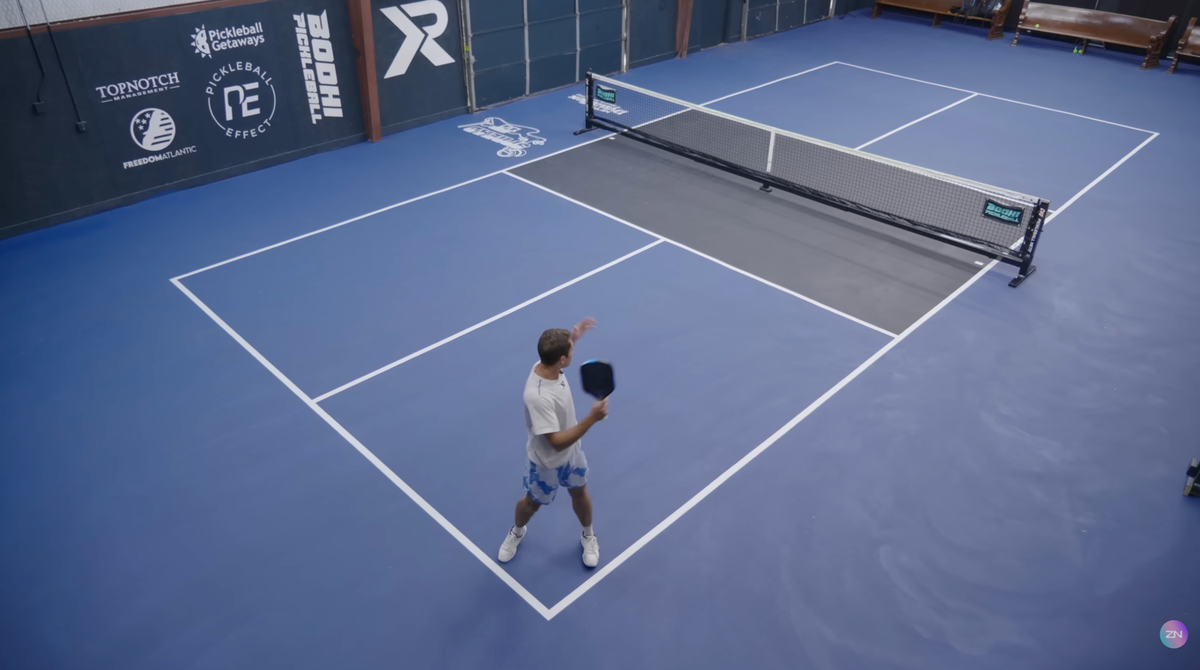
What Are the Pickleball Serving Rules?
The serve is where most first-time players unknowingly break the rules. Here's what the official pickleball serving rules require:
- The serve must be hit underhand, the paddle must contact the ball below the waist.
- The paddle head must be below the wrist at contact.
- The serve must land in the diagonal service box across the net, cross-court, past the kitchen line, inside the sideline and baseline.
- You get one serve attempt (unless the ball clips the net and lands in, that's a let, and you re-serve).
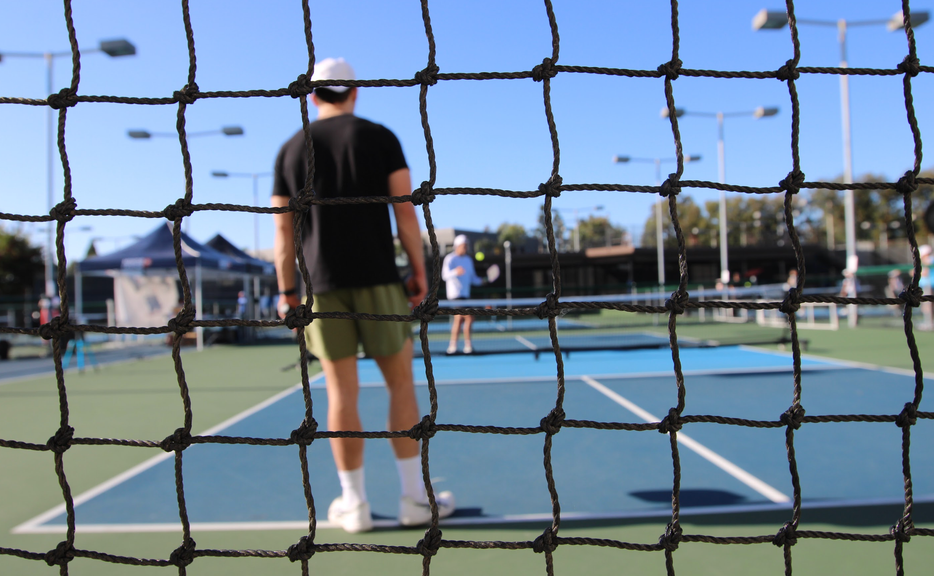
The server must stand behind the baseline, between the centerline and the sideline. Stepping on or over the baseline before contact? That's a foot fault.
Heads up: hundreds of thousands of pickleballers read our free newsletter. Subscribe here for cutting edge strategy, insider news, pro analysis, the latest product innovations and more.
There's also the drop serve, a legal variation where you drop the ball and let it bounce before hitting it.
The drop serve has become popular because it removes some of the underhand-below-the-waist strictness.
But there are specific drop serve rules that are easy to get wrong. Worth reading before you make it your go-to.
For a full technical breakdown, the pickleball serve basics guide is the best place to start.
The Dink Media Team
What Is the Two-Bounce Rule in Pickleball?
The two-bounce rule (sometimes called the double-bounce rule) is the most strategically important rule in the game.
Here's what it means: after the serve, both teams must let the ball bounce once before volleying.
The serve bounces. The return of serve bounces. After that, both teams are free to volley (hit the ball out of the air) or let it bounce.
Simple in writing. Surprisingly hard to remember mid-rally when you want to attack.
Why does the two-bounce rule exist?
It prevents serve-and-volley dominance. Without it, the serving team could rush the net immediately and crush the return.
The rule forces a more neutral start to each point and is one of the main reasons pickleball rewards patience and positioning over pure athleticism.
This is also why the third shot drop became the cornerstone shot of advanced doubles play.
The Dink Media Team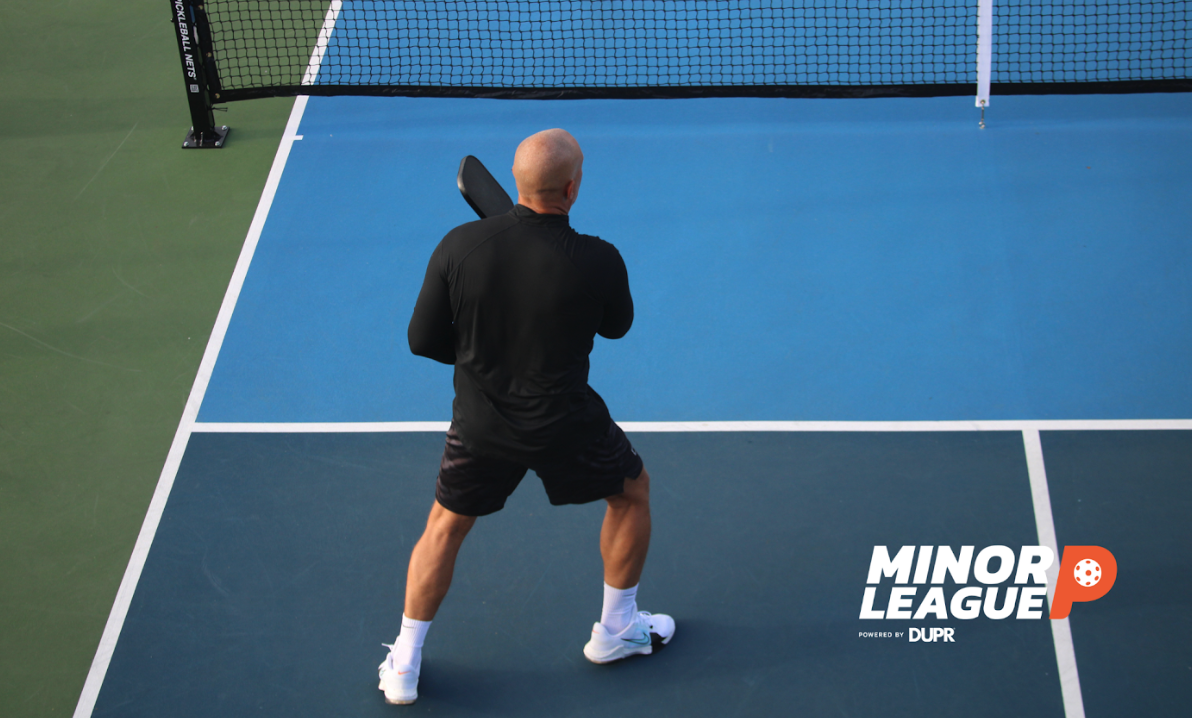
The Kitchen Rules: What Can (and Can't) You Do in the Non-Volley Zone?
The kitchen is where most beginners commit their first fault, and where the rulebook gets genuinely nuanced.
The core rule: you cannot volley the ball while standing in the non-volley zone or touching the kitchen line.
That includes your paddle, your clothing, and any part of your body. If you step on the line while volleying, it's a fault.
Doesn't matter if you thought you were behind it.
Here's where it gets tricky. If you volley the ball and your momentum carries you into the kitchen after the shot? Still a fault.
You can't use forward momentum as a "I didn't mean to" defense.
The rule is about where you were when the ball was struck and what your body does immediately after.
What you can do: step into the kitchen any time the ball bounces first. Kitchen volleys are the violation; kitchen groundstrokes are completely legal.
You can stand in the kitchen all day if you want, you just can't hit the ball out of the air from there.
The non-volley zone rules explained goes deeper into the edge cases, including the ones that cause arguments at every recreational session.
The Dink Media Team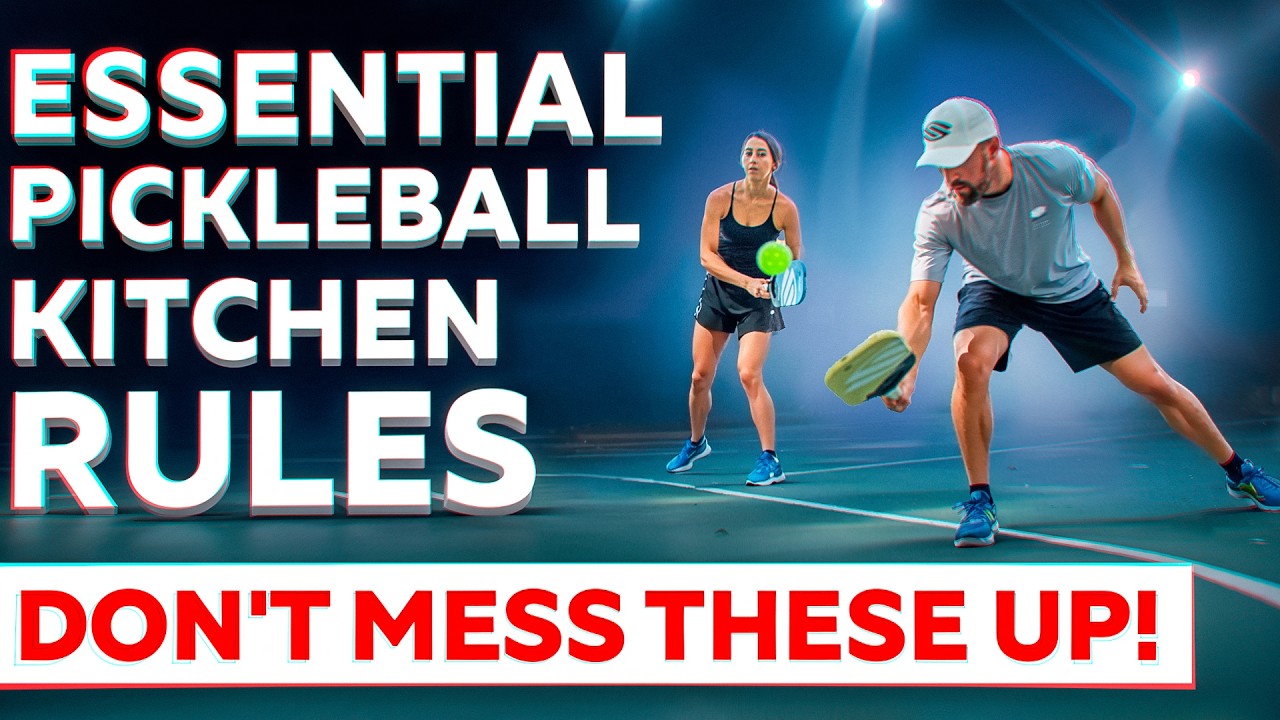
What Counts as a Fault in Pickleball?
A fault ends the rally. Here's a quick rundown of the most common violations under standard pickleball rules:
- Hitting the ball out of bounds
- Hitting into the net
- Volleying before the two-bounce rule is satisfied
- Volleying from the kitchen
- The serve landing in the kitchen or outside the service box
- A player or their clothing/paddle touching the net
- Hitting the ball twice (double hit)
- The ball bouncing twice before being returned
One fault newer players consistently miss: if the ball hits you or your clothing (even before it bounces), it's a fault, whether you're in bounds or not.
The rally is dead.
How Do Pickleball Rules Differ in Singles vs. Doubles?
The core pickleball rules are the same for singles and doubles, with one key difference: serving position.
In doubles, both players take turns serving from their respective positions (right side when the score is even, left side when odd).
In singles, there's only one server per side, so the same player serves the entire term.
The serve-number call ("1" or "2") disappears from the score call in singles, it's just your score, their score.
Doubles also involves stacking and poaching strategies that don't apply to singles, but those are tactical choices, not rules.
For a deeper look at singles-specific strategy, the pickleball singles tips guide breaks down how the game changes one-on-one.
The Dink Media Team
What Are the Most Common Pickleball Rule Violations Beginners Make?
The honest answer: kitchen faults and two-bounce violations account for the vast majority of beginner mistakes.
Beyond those, here's what catches new players off-guard:
- Serving out of turn in doubles, losing track of server 1 vs. server 2 is universal among newcomers
- Foot faults on the serve, standing on the baseline counts; you must be fully behind it
- Hitting a ball that was going out, you don't have to hit every ball. If it's clearly sailing long, let it go
- Net post contact, hitting the ball around the net post is actually legal under USA Pickleball rules, but touching the post itself is a fault
- Calling the wrong score, not a "violation" per se, but it causes more arguments than any actual rule
Even experienced players get caught by the push-off foot fault, a specific ruling that most recreational players don't know exists.
Alex E. Weaver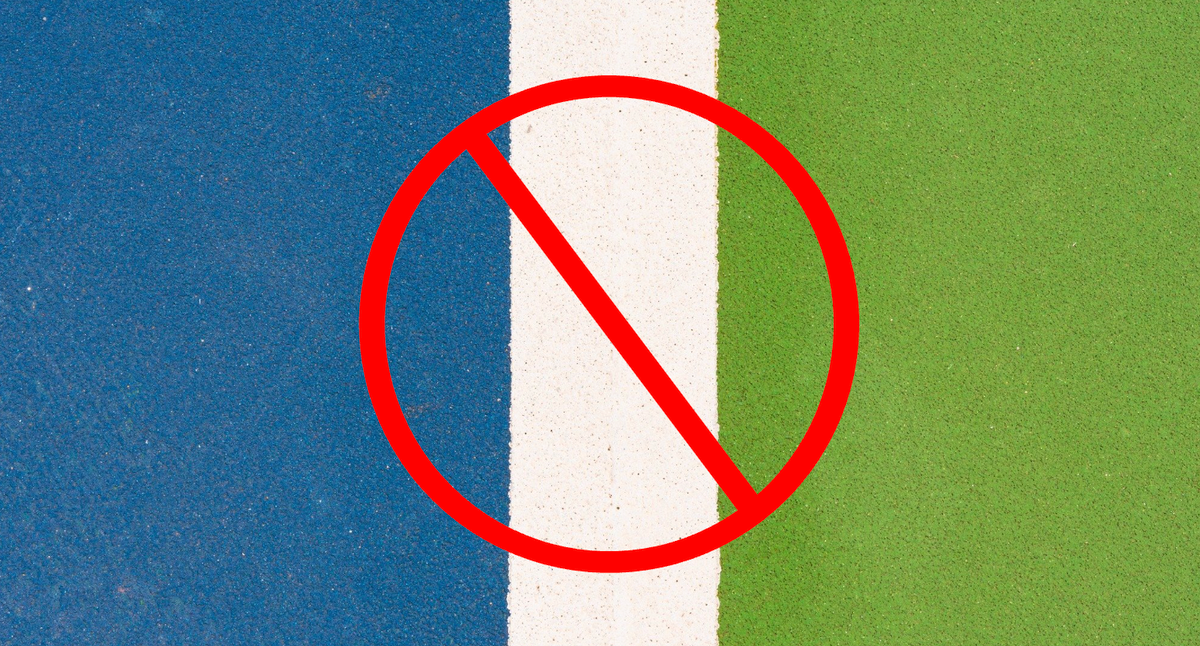
Frequently Asked Questions
What are the basic pickleball rules for beginners?
The basic pickleball rules are: serve underhand into the diagonal service box, let the ball bounce once on each side before volleying (the two-bounce rule), don't volley while standing in the non-volley zone (the kitchen), and score points only when you're serving. Games go to 11, win by 2.
What is the kitchen rule in pickleball?
The kitchen rule states that players cannot volley (hit the ball out of the air) while standing in or touching the non-volley zone, which is the 7-foot area on each side of the net. You can enter the kitchen to hit a ball that has bounced, but stepping in during or immediately after a volley is a fault.
How does the two-bounce rule work in pickleball?
After the serve, both teams must let the ball bounce once before hitting it out of the air. The serve must bounce in the receiving team's service box, and the return of serve must bounce before the serving team can volley. After both bounces have occurred, the ball can be volleyed freely (except from the kitchen).
Can you hit a pickleball before it bounces?
Yes, once the two-bounce rule has been satisfied (serve bounces, return bounces), either team can volley the ball out of the air, as long as the player hitting it is not standing in the non-volley zone. From the kitchen, every ball must be allowed to bounce first.
What is the score called in pickleball doubles?
In doubles, the score is announced as three numbers: the serving team's score, the receiving team's score, and the server number (1 or 2). For example, "4-2-1" means the serving team has 4 points, the receiving team has 2, and it's the first server's turn. At the start of every game, the first serving team starts as server 2 to limit their initial advantage.
Love Pickleball? Join 100k+ readers for free weekly tips, news & gear deals.
Subscribe to The Dink