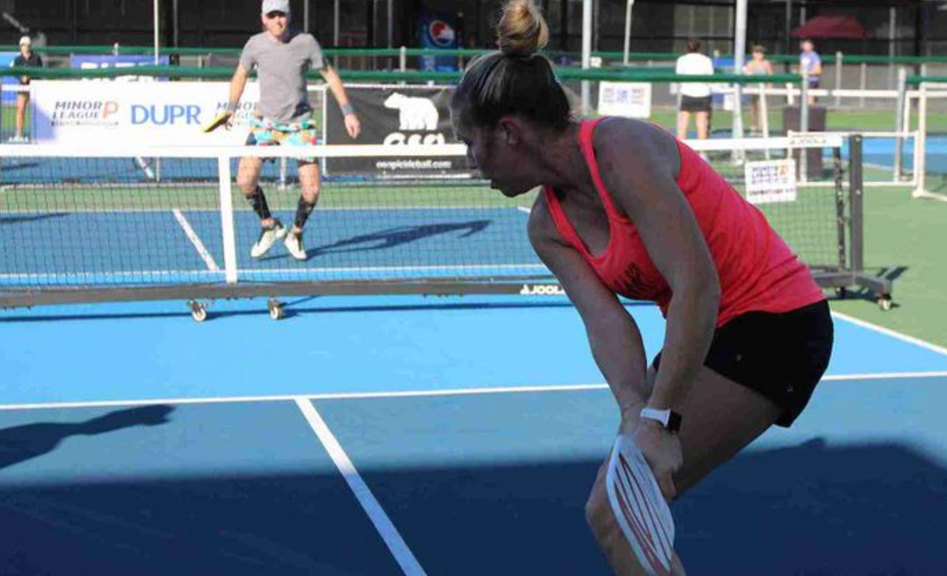
A pickleball deep serve strategy is mostly positioning and patience, not a secret shot. Set up deeper, return deep and crosscourt, and let the two-bounce rule hand you the kitchen line.
A real pickleball deep serve strategy isn't glamorous, and it won't show up on anybody's highlight reel. It shows up in the score.
When the other team pounds the ball within a foot of your baseline on every single point, you aren't losing because your hands are slow or your dinks are soft.
You're losing because you never get to the kitchen line, and pickleball is a game decided almost entirely by who gets there first.
Fix that one thing and the rest of your game suddenly looks a lot better than it did last Tuesday.
The good news: a working pickleball deep serve strategy is mostly positioning and patience, not a secret shot, and it starts with your return of serve.
Love pickleball? Then you'll love our free newsletter. We send the latest news, tips, and highlights for free each week.
Why Does a Deep Serve Cause So Much Damage?
Because it steals the one advantage the rules already handed you.
Under the two-bounce rule, the serve has to bounce, and then your return has to bounce before the serving team can volley.
That second bounce is a gift: it's free time to sprint forward while they're stuck waiting at the baseline.
A deep serve shrinks that gift.
You contact the ball three or four feet behind the baseline instead of inside it, which means you're starting your run from farther away, off balance, and usually reaching.
On a court that's only 44 feet long, those few feet decide whether you arrive at the line set or arrive mid-stride and get caught in the transition zone.
Quick definition: a deep serve is any serve landing in roughly the back third of the service box, close to the baseline but legally inside it.
It still has to clear the non-volley zone and land in the diagonal court, so the server is swinging with very little margin. Remember that. It matters later.
The Pickleball Deep Serve Strategy Starts Before They Even Serve
Stand farther back. That's it. That's the first move, and most rec players refuse to make it.
If you're camped a foot behind the baseline waiting to return, a deep server owns you.
Set up two to three feet back instead, and now the deep ball lands in front of you rather than on top of you.
You move forward into contact instead of backpedaling, which is both faster and much better for your footwork than the awkward shuffle-retreat everybody does at 9-8.
Then split the difference on preparation. Get your paddle up early and take a small split step as they make contact.
Honestly, half the returns that float short against a deep serve aren't technique failures at all. They're late-start failures.
Where Should You Stand on a Deep Serve?
Two to three feet behind the baseline, slightly favoring your backhand side, with weight forward.
From there you can step in on anything shallow and still cover the deep ball without retreating.
If your partner is stacking, make sure your positioning plan accounts for the extra distance you're traveling.
Return Deep, Then Walk In Like You Own the Place
The best counter to a deep serve is a deeper return.
USA Pickleball's own coaching guidance is blunt about it: return the serve deep, prioritize control over power, and a short return hands the serving team an easy path forward.
The numbers back it up.
In The Dink's analysis of nearly 2,000 tournament rallies, return teams above DUPR 3.5 won roughly 70% of rallies after a deep return, versus around 50% after a shallow one.
That's not a small edge. That's the whole ballgame, and it held across every rating band above 3.5.
Here's the catch: against a deep serve, your return has to travel farther, so the temptation is to add power. Don't. Add height and arc instead.
A high, deep, loopy return buys you two extra seconds of walking time and lands in the same spot a flat drive would, without the netted-return risk.
Make the most of that return and you turn their best weapon into your free trip to the kitchen.
What Should a Pickleball Deep Serve Strategy Target?
Crosscourt and deep, aimed at their backhand corner.
The crosscourt ball travels over the lowest part of the net and gives you the longest margin for error, and it pins the server farther from the middle.
If their backhand is a known weakness, a heavy slice return that skids low makes their third shot miserable.
 Alex E. Weaver
Make Them Beat You From the Baseline
Once your return is deep, stop. Breathe.
The serving team now has to hit a third shot from behind their own baseline, which is the hardest version of that shot there is.
Pros will tell you flatly: don't drop from deep behind the baseline, because the drop almost never clears cleanly from there.
So they'll drive. Expect it, and be ready at the line with a reset rather than a counterattack. Your job after a deep return isn't to win the point on shot four.
It's to absorb one drive and keep them stuck in the midcourt.
And if they lob you instead of driving? Handle the overhead cleanly and get right back to the line.
 The Dink Media Team
Drilling a Pickleball Deep Serve Strategy That Actually Holds Up
You can't learn this in a game, and rec play alone won't fix it. The whole thing has to feel automatic at 10-10, which means reps.
- Deep serve feed, deep return. Have a partner serve nothing but deep for 20 balls. You return deep crosscourt and walk to the line every single time, even on the ugly ones.
- Target cones. Drop two cones in the back third of each service box. Every return that lands past the cone line counts; everything else is a miss. Track the number out loud.
- Return and freeze. Return deep, then take exactly four steps and stop in an athletic stance. This teaches you to arrive balanced instead of arriving late.
- Third-shot defense. Switch sides. Now you're serving deep and they're returning, so you get reps on the drive-drop combo from the worst possible position.
Twenty minutes a week. That's genuinely all this takes, and it pairs well with the rest of your return-of-serve work.
Can You Use a Pickleball Deep Serve Strategy on Your Own Serve?
Absolutely, and you should. If deep serves are giving you trouble, they're giving everyone trouble.
Upgrade your own serve by aiming two to three feet inside the baseline rather than painting the line, since the rulebook makes a long serve a fault with no consolation prize.
Depth with margin beats depth with risk, every time, and the 2026 rule updates didn't change that math.
The other half of a good pickleball deep serve strategy is variety. Serve deep eight times, then slide one short and wide, the same way you'd mix up a spin serve.
The returner who has been backing up all game now has to sprint forward, and that's where free points live.
 The Dink Media Team
Key Takeaways
- A deep serve hurts because it shortens your head start under the two-bounce rule, not because it's unreturnable.
- Set up two to three feet behind the baseline so you move forward into the ball.
- Return deep and crosscourt with height, not power: deep returns correlate with roughly 70% rally win rates above DUPR 3.5.
- Expect a drive on the third shot and plan to reset it rather than counter a banger.
- Use their own medicine: serve deep with margin, then mix in a short one.
- A complete pickleball deep serve strategy covers both sides of the ball, returning deep and serving deep.
Frequently Asked Questions
What is the best return in a pickleball deep serve strategy?
A high, deep, crosscourt return aimed at the opponent's backhand corner. Height gives you time to walk to the kitchen line, and depth keeps the serving team pinned at their baseline. Control matters far more than pace here.
Should I stand farther back to return a deep serve?
Yes. Setting up two to three feet behind the baseline lets you move forward into contact instead of backpedaling. Backpedaling costs balance and speed, and it's where most short, floaty returns come from. Senior players especially benefit from the extra setup room.
Is serving deep legal in pickleball?
Yes, as long as the serve clears the non-volley zone and lands inside the diagonally opposite service court. A serve past the baseline is a fault, which is why smart servers aim a couple of feet inside the line rather than at it.
Why do deep returns win more rallies?
Because they keep the serving team behind the baseline, where the third shot drop is hardest to execute. Observational tournament data from The Dink found return teams above DUPR 3.5 won around 70% of rallies after a deep return, compared with roughly 50% after a shallow one.
What should I do if my return keeps landing short?
Add arc, not power. Most short returns come from late preparation and a flat swing path, so start farther back, get the paddle up early, and aim to land the ball in the back third of the court with a higher trajectory. Fixing the serve itself helps too, since the same swing habits show up on both strokes.
Love Pickleball? Join 100k+ readers for free weekly tips, news & gear deals.
Subscribe to The Dink