How to Play Against a Team That Serves Deep Every Time in Pickleball
A pickleball deep serve strategy wins points by forcing weak, short returns rather than hitting aces. Beating it comes down to three positional fixes: start deeper, split step on the server's contact, and return high and deep down the middle.
A pickleball deep serve strategy is the cheapest way to win a point without hitting a winner, and the team across the net has clearly figured that out.
Every serve lands a foot inside the baseline.
You're backing up, reaching, popping the ball up, and by the time you look around, they're already glued to the kitchen line.
Nothing about it is fancy. It just works, over and over, until you fix the thing that's actually broken.
Here's the thing: the problem usually isn't your paddle skills. It's where you're standing when the ball leaves their hand.
Love pickleball? Then you'll love our free newsletter. We send the latest news, tips, and highlights for free each week.
So What Is a Pickleball Deep Serve Strategy, Exactly?
A pickleball deep serve strategy is a serving pattern built on depth instead of pace or spin, where the server aims for the last two or three feet of the service box to push the returner behind the baseline and rush their return of serve.
The goal isn't an ace. It's a weak return.
Depth steals time. A serve that lands short gives you a comfortable step-in and a clean swing.
A serve that lands deep forces you backward, and hitting while moving backward is the single fastest way to lose control of a ball.
Teams that weaponize the serve know this. They're not trying to beat you. They're trying to make your return land short so their partner can pounce.
Depth is a percentage play, not a highlight play. That's why it shows up at every level from 3.0 rec to the pro tour.
Why Does a Deep Serve Wreck So Many Returns?
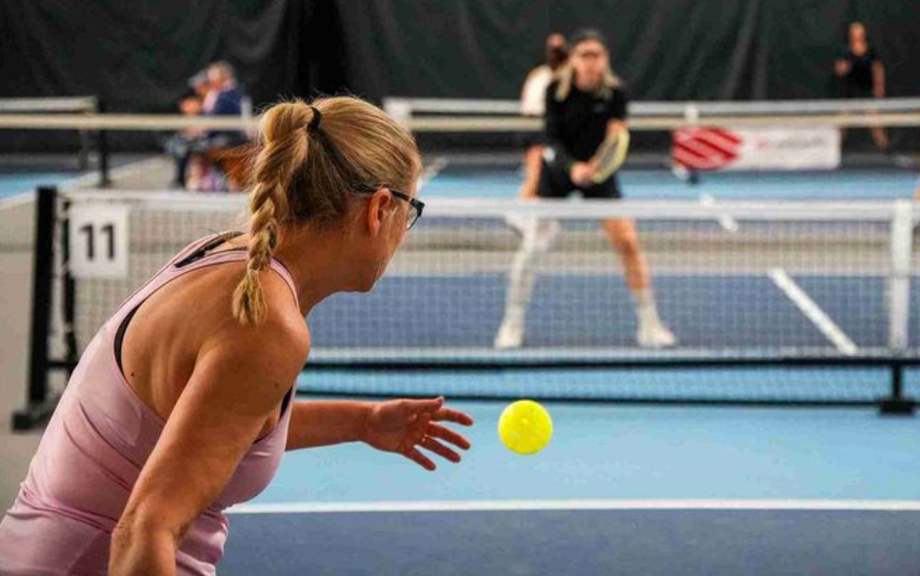
Because most players stand too close to the baseline and then have to solve the problem with their hands instead of their feet.
When you get jammed, your swing shortens, your contact point drifts behind your hip, and the ball comes off soft and short.
That short return is the whole point of a pickleball deep serve strategy.
There's a second cost, and it's the bigger one.
Under the two-bounce rule, you have to let the serve bounce, which means a deep serve buys the serving team an extra beat to get to the kitchen line while you're still recovering.
Check the official USA Pickleball rulebook if you want the exact language, but the practical version is simple: deep serve, slow return, and suddenly they own the net and you don't.
Watch yourself on video sometime. If you're taking your first step backward after the serve is struck, you've already lost the rally's opening exchange.
How Do You Beat a Pickleball Deep Serve Strategy?
You beat it by starting deeper, moving forward through contact, and returning high and deep down the middle.
Three adjustments, all of them positional. None of them require a better paddle.
Start Two Full Steps Behind the Baseline
Stand three to four feet back before every serve. Not one polite half step. Two real ones.
This feels wrong the first few games because you'll occasionally get a short serve and have to sprint in, which is fine.
Running forward to a short ball is easy. Backpedaling to a deep one is not.
Pros return from well behind the line for exactly this reason, and it's the first thing to fix in your return of serve positioning if a team keeps pinning you.
The bonus: starting deep means you're already moving forward at contact, which builds momentum toward the net instead of killing it.
The Split Step That Breaks a Pickleball Deep Serve Strategy
Split step as the server's paddle makes contact, not after the ball bounces. That timing detail is the whole ballgame.
A split step is a small hop that lands you balanced on the balls of your feet, ready to push off in any direction.
Do it early and you can read depth before committing.
Do it late and you're flat-footed, which is precisely what a pickleball deep serve strategy is designed to produce.
Then take a shuffle step back if the ball is deep, or a crossover step forward if it's short.
Loading your feet before the bounce is what separates a clean return from a defensive block, and it's the same footwork logic that makes a drive or a drop repeatable later in the rally.
Return High, Deep, and Down the Middle
Hit your return with more arc and less pace.
A high, deep return does two things: it lands near their baseline, and it hangs in the air long enough for you and your partner to close.
Aim for the middle.
This is the counter-punch that a pickleball deep serve strategy has no answer for: middle returns eat up the seam between two opponents, create a split-second of hesitation, and take away the sharp angles they'd get from a wide ball.
If you want variety, a low slice return that skids and stays under net height forces them to hit up on the third shot.
Either way, depth beats pace here. A flat drive back at a deep server is a coin flip. A floaty, deep return is a plan.
One more note on shot selection from the baseline: when you're pulled back and stretched, take the safe deep return.
Save the aggressive topspin return for the serve that lands short.
 The Dink Media Team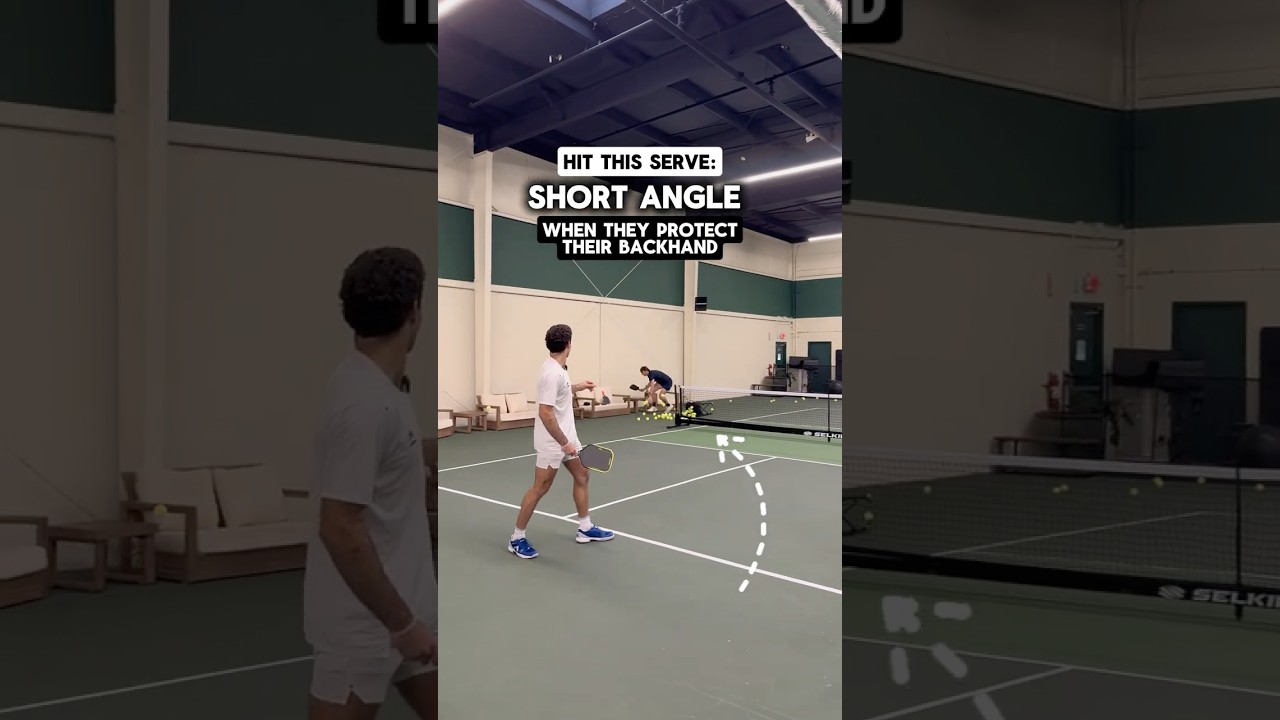
What Should Your Partner Be Doing?
Your partner should already be at the kitchen line, and they should be calling the serve's depth out loud.
That's it. "Deep!" or "Short!" from a partner who has the best view on the court buys you a tenth of a second, and a tenth of a second is enormous when you're reading depth.
Against a pickleball deep serve strategy, that one word does more than any technical tip.
It's the most underrated piece of doubles strategy at the rec level, and almost nobody does it.
After your return lands, close together. Don't let one player charge while the other lingers, which creates the gap a smart team attacks on the fourth shot.
Move as a unit, stop when the opponent is about to strike, and be ready to reset if their third shot is good.
Honestly, the transition zone is where most of these rallies are decided, not the baseline. Talking through transitions with your partner between games will fix more points than any grip change.
 The Dink Media Team
Two Drills to Beat a Pickleball Deep Serve Strategy
Practice the position, not just the swing. These two take fifteen minutes total.
- The Deep Serve Gauntlet. Have a partner serve ten balls in a row, all aimed at the last three feet of the box. Return every one high and deep to the middle, then touch the kitchen line before the next serve. Score yourself out of ten on depth, not winners.
- Split-Step Timing. Same setup, but your partner calls "now" the instant their paddle hits the ball. You split step on the call. Ten reps. It feels silly for about four serves, then it clicks.
No partner? Solo drills work too.
Toss a ball high off a wall, split step as it leaves your hand, and practice the shuffle-back-then-drive-forward sequence until the footwork stops feeling like a decision.
A last thought on adapting mid-match: if you fix your position and they still keep serving deep every time, good. A predictable server is a readable server.
You now know where the ball is going before it's hit, which is a bigger edge than anything a pickleball deep serve strategy gives them.
Start cheating back a half step earlier and take the return early on the rise.
 The Dink Media Team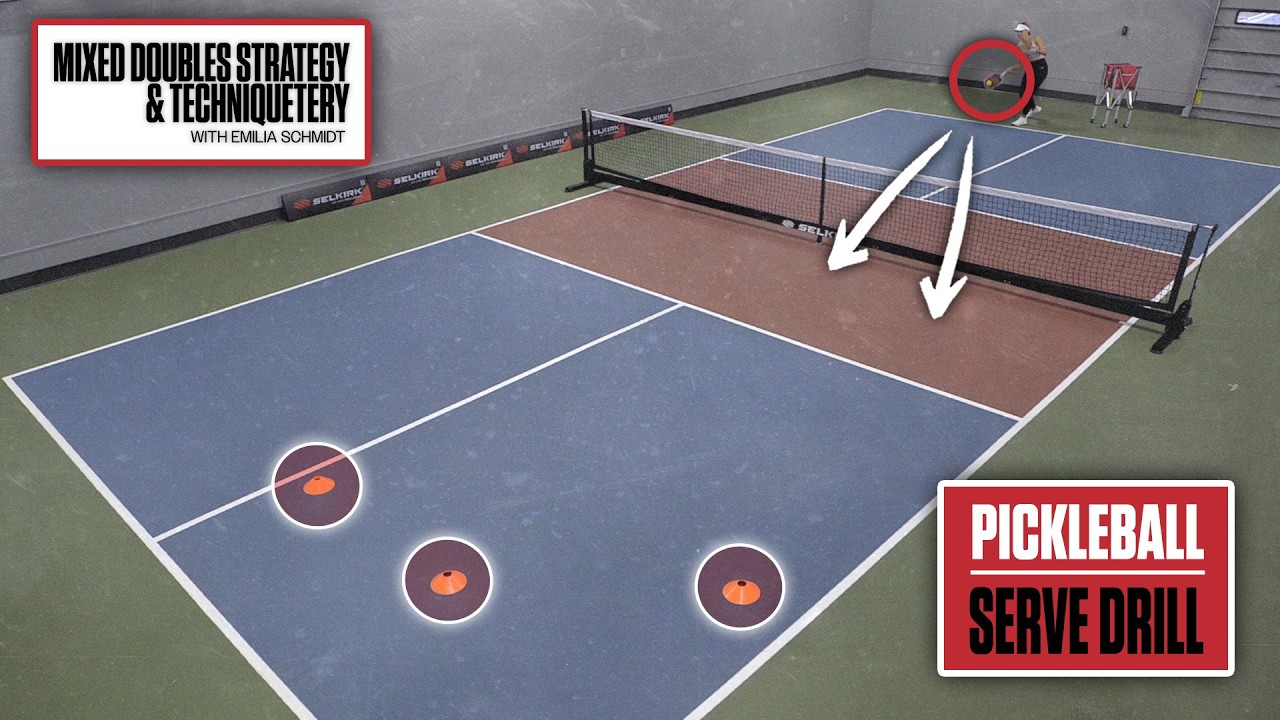
Key Takeaways
- A pickleball deep serve strategy wins by forcing weak, short returns, not by hitting aces.
- Start three to four feet behind the baseline before every serve.
- Split step when the server's paddle contacts the ball, not after the bounce.
- Return high, deep, and down the middle to buy time and kill angles.
- Your partner should call "deep" or "short" out loud on every serve.
- Predictable servers become readable servers. Use the pattern against them.
Frequently Asked Questions
How far back should I stand against a pickleball deep serve strategy?
Three to four feet behind the baseline, which is roughly two full steps. You want to be moving forward at contact rather than backward. If you occasionally get caught by a short serve, that's an acceptable trade, since running forward is much easier than backpedaling.
Should I drive or float my return against a deep serve?
Float it. A high, deep return gives you and your partner time to reach the kitchen line and pushes the servers back behind their own baseline. Drives are better against short serves where you're already stepping into the ball with balance.
Where is the best place to aim a return of serve?
Down the middle, deep. Middle returns create confusion between opponents and remove the sharp cross-court angles they get from a wide return. Going for the sideline against a deep serve is high risk for very little reward.
Does a deep serve have to bounce before I return it?
Yes. The two-bounce rule requires the serve to bounce before the return, and the return to bounce before the serving team's third shot. This is exactly why deep serves are effective, since the extra bounce gives the serving team time to advance.
Can I stop a team from serving deep every time?
Not directly, but you can make it unprofitable. Once your returns consistently land deep and you're arriving at the kitchen line on time, the depth stops producing free points, and most teams start mixing in short serves out of frustration.
Love Pickleball? Join 100k+ readers for free weekly tips, news & gear deals.
Subscribe to The Dink