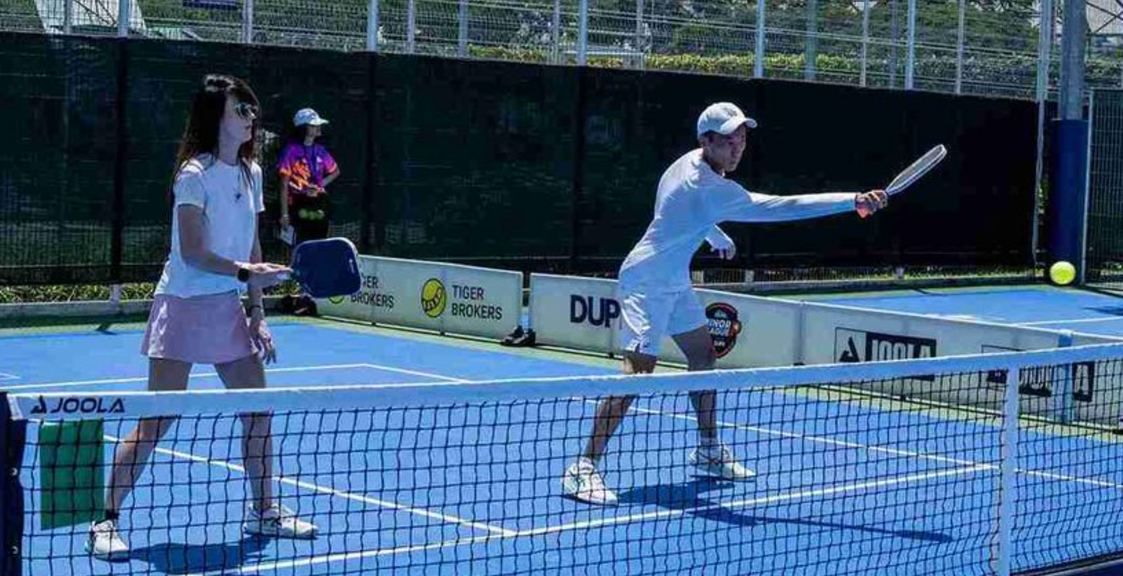
Pickleball mixed doubles strategy comes down to one thing more than any other: where you and your partner are standing. Get the positioning right (stacking, middle coverage, and transition zone movement) and you turn a two-person team into a single, coordinated weapon.
Pickleball mixed doubles strategy starts before you ever hit a ball : it starts with where you put your feet.
Most teams lose points not because their shots are bad, but because their positioning is off.
Wrong side, wrong depth, wrong angle. The other team doesn't even have to do anything special; they just aim where you aren't.
Fixing that? That's what this article is for.
Love pickleball? Then you'll love our free newsletter. We send the latest news, tips, and highlights for free each week.
What Makes Pickleball Mixed Doubles Strategy Different?
Mixed doubles has its own positioning logic, its own tactical conventions, and, honestly, its own psychological layer compared to standard doubles.
The biggest structural difference: most mixed doubles teams have a power gap between partners.
One player is typically more aggressive, more experienced, or has a harder drive.
Smart doubles strategy is about designing your positioning so that player sees more balls, not fewer.
 The Dink Media Team
At the recreational level, opponents almost always target the player they perceive as weaker. At the pro level, it's the same thing, just faster.
Watch any top mixed doubles match and you'll see teams methodically directing traffic toward one player until they generate an error.
Your positioning either protects that player or exposes them.
The other key element: court geometry and stacking.
Because of how serving rotation interacts with preferred sides, mixed doubles teams have to actively manage which player ends up where.
This requires a pre-agreed system, not improvisation.
How Should You Stack in Pickleball Mixed Doubles Strategy?
Stacking is the single most important positioning tactic in pickleball mixed doubles strategy.
Get comfortable with it and your team becomes structurally harder to attack. Ignore it and you're at the mercy of the score.
What Is Stacking in Pickleball?
Stacking is when both players line up on the same side of the court before the serve or return, then shift to their preferred sides once the ball is in play. It lets teams control which player lands on which side, regardless of the score rotation. Stacking is fully legal under the USA Pickleball 2025 Official Rules, no rule restricts where players stand before the ball is in play. Without stacking, you're locked into whatever side the scoring system puts you on. With stacking, you choose.
The most common use case: a right-handed team wants to keep both forehands down the middle. If the score puts the stronger player on the left side (ad court), stacking lets them start there and then cut across to the right after the serve. Here's how kitchen positioning connects to that movement.
 The Dink Media Team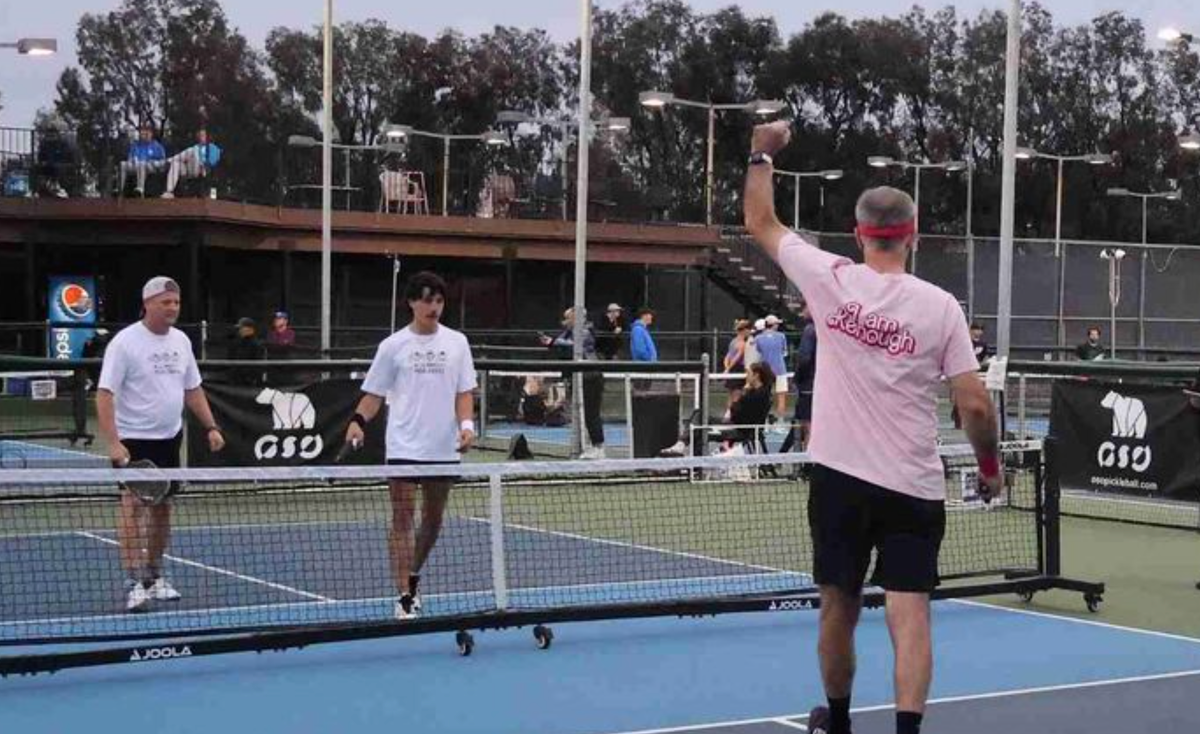
When Should You Stack, and When Should You Not?
Stack when you have a clear strength imbalance: one player has a significantly stronger forehand, or one player is a dominant attacker who benefits from being in specific positions. Also stack when your natural rotation puts you in an uncomfortable spot after the serve.
Don't stack if it's creating hesitation. A bad stack with communication breakdowns is worse than just playing your natural side. Stacking is a tool, not a rule. Some teams play better without it. The pros use it constantly; watch how the top pairs position off the serve and you'll see the pattern clearly.
One key detail: the non-stacking player (the one staying put) is responsible for the wide ball. If both players cut to the center during a stack, the opponent will rip it wide every time. Define your coverage before you serve.
Who Covers the Middle in Pickleball Mixed Doubles Strategy?
This is the question that causes more arguments between partners than any other.
Here's the direct answer: the player with the forehand in the middle takes the middle.
That's the rule almost all high-level teams use, and it works because forehands generate more power, are more consistent under pressure, and offer wider cross-court redirection angles than backhands, a principle backed by court sport biomechanics research published in the Journal of Sports Sciences.
The Forehand-Takes-Middle Rule
When both players are at the NVZ and a ball splits the middle, the player whose forehand faces that gap gets the shot. For two right-handed players, that's usually the player on the left (even) side. Their forehand crosses the center. For a right-left combination, it gets more contextual, but the principle holds.
This piece on court coverage in doubles breaks down the geometry in detail. The short version: middle balls go to the forehand, wide balls belong to whoever is already positioned there. Simple. Consistent. Followed by almost no recreational team, which is why the middle is where most points get won.
Poaching and Calling Your Shot
Poaching (crossing in front of your partner to steal a ball) is legal, effective, and underused. The USA Pickleball 2025 Official Rules place no restrictions on a player moving to any part of the court during a rally. A well-timed poach at the NVZ can end a rally immediately. But it only works if your partner knows it's coming (or at least doesn't freeze when you move).
Call "mine" early and loud.
If your partner calls it first, respect it and recover. Good teamwork in doubles comes down to pre-agreed conventions, not improvised reactions.
Decide before the point starts who has the middle in a given formation. Then stick to it.
 The Dink Media Team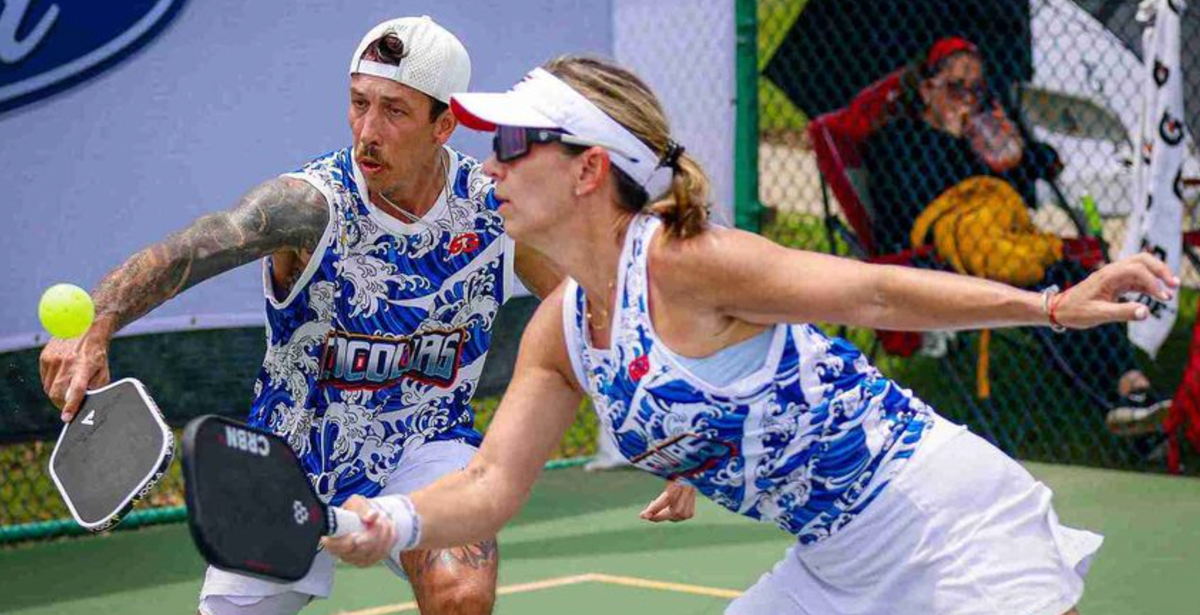
How Do You Move as a Unit in Pickleball Mixed Doubles Strategy?
Here's the thing most recreational teams completely miss: positioning in pickleball mixed doubles strategy isn't about where you stand at one moment.
It's about how you move together across every moment of the rally.
Think about it this way. You and your partner are connected by an invisible rope about 10 feet long.
When you move left, they move left. When you advance to the kitchen, they advance with you. When you get pushed back, they get pushed back.
If that rope goes slack (one player at the NVZ, one player in no-man's-land), the other team wins. Every time.
Navigating the Transition Zone Together
The transition zone (also called no-man's-land or the mid-court) is the area between the baseline and the NVZ. It's the most dangerous place to stop. Research on racket and paddle sport movement patterns, including biomechanical studies on court positioning indexed on PubMed, consistently shows that mid-court players face the widest range of shot angles with the least reaction time, producing higher error rates than players at either the baseline or NVZ.
The goal is always to get both players to the NVZ simultaneously. The transition game is covered extensively here: the key principle is that you should only advance when the ball you hit gives you time to move. A good third-shot drop buys that time. A floated drive does not.
If one player gets forced back, both players should reset rather than leaving one stranded. That's the invisible rope again. It feels counterintuitive when you're the player at the NVZ: you don't want to retreat. But splitting the court vertically is a death sentence against any team that knows how to exploit it.
Staying Connected During Lateral Movement
At the NVZ, the connected movement rule applies horizontally. When the point moves to your left, both players shade left. Not dramatically, just a few steps to close the obvious gap without opening a new one on the other side. Mid-court positioning tips cover this geometry well.
No more than a paddle's width of gap between you and your partner at the NVZ. Anything wider is an invitation for a speed-up right through the middle.
 The Dink Media Team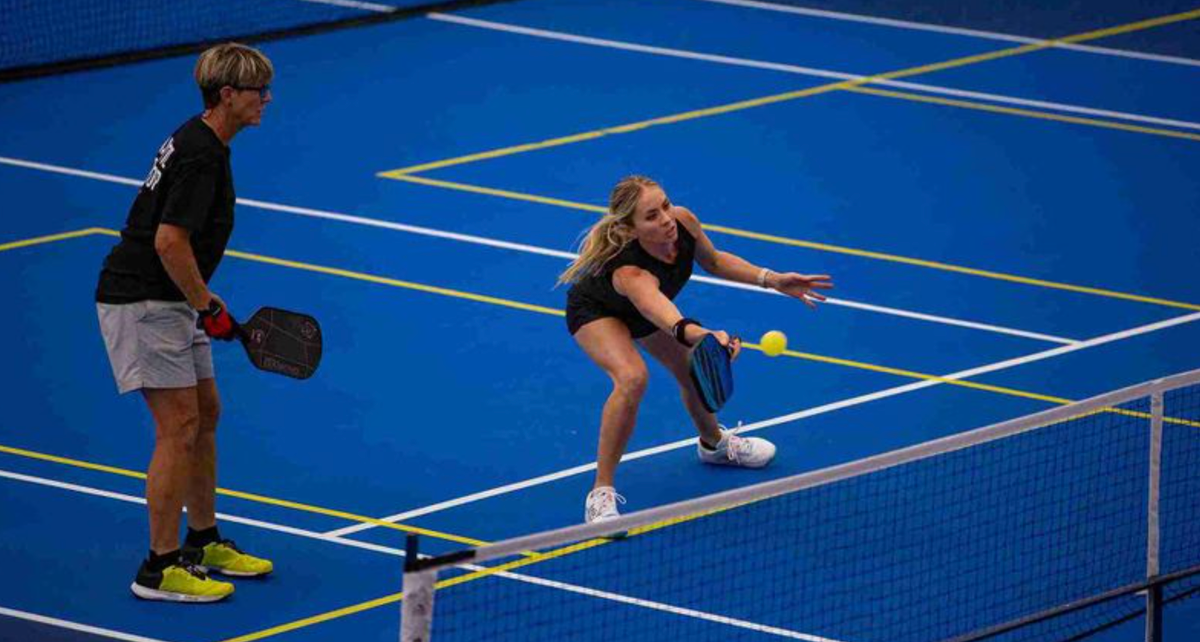
What Pickleball Mixed Doubles Strategy Do the Pros Use?
Watch a high-level mixed doubles showcase for thirty minutes and you'll see the same positioning tactics run repeatedly.
- The ATP (Around-the-Post). When a dink pulls you wide, your opponent can legally go around the post without clearing the net. This is explicitly permitted under Rule 11.M of the USA Pickleball 2025 Official Rules. The counter: stay disciplined at the NVZ. Lunging after a wide ball opens the middle for the put-away.
- The Erne. One player positions near the post and jumps to take a volley from outside the NVZ, legal under USA Pickleball 2025 Official Rules provided the player lands out of bounds without touching the NVZ. The defensive answer: vary your dink placement and attack into the body when you see someone creeping toward the post.
- Speed-ups targeting the weaker player. The offensive team will use deception to direct fast attacks at the less dominant partner. Counter: shade your formation to give that player better angles and keep their backhand protected.
- The reset game. Pro mixed doubles isn't just attacks. The pros will reset 8-10 shots in a row, waiting for the right ball. Position yourself to reset, not just to attack.
 The Dink Media Team
Common Positioning Mistakes in Mixed Doubles
A few patterns show up at every skill level. Fixing them is faster than developing new shots.
- 1. Both players stacking to the same side without assigning the wide ball. This creates a massive gap that any competent opponent finds in about two points. Assign the wide coverage every single time you stack.
- 2. One player camping at the NVZ while the other is stuck in transition. This shot-or-positioning breakdown explains the cost. You're essentially playing 1v2 until your partner catches up.
- 3. Not shading toward the player being targeted. When opponents start routing everything at your partner, both players need to adjust, not just the player under pressure. Shade the formation toward that side, close the middle, and make them work harder for the same angle.
- 4. Poaching without calling it. Quick tips on teamwork in doubles: communicate early, communicate often. Surprise poaches lead to two players staring at each other while the ball lands between them.
- 5. Standing too far from the NVZ line after advancing. Get all the way up. Hovering two feet back from the kitchen gives your opponent an easier angle and makes your volleys weaker. Crowd the line. It's uncomfortable at first, but it's the correct position.
 The Dink Media Team
Key Takeaways
- Stacking lets you control which player is on which side regardless of the score. Use it to keep stronger forehands in the middle.
- The forehand takes the middle rule applies to most situations at the NVZ; the player with the middle forehand wins more exchanges.
- Move as a connected unit : if one player shifts, the other must shift too. The "invisible rope" concept is the easiest way to think about it.
- In pickleball mixed doubles strategy, targeting the weaker player is standard at every level; your positioning must account for this pressure.
- The transition zone is the most dangerous place to stop moving. Keep advancing together, or reset together. Never split.
Frequently Asked Questions
What is the basic positioning rule in pickleball mixed doubles strategy?
Both players should aim to reach the non-volley zone (NVZ) line together as quickly as possible. Once there, move as a unit: when one player shifts laterally, the other shifts to match. The most important rule at the NVZ: the player whose forehand faces the middle takes middle balls.
Should the stronger player always cover the middle in mixed doubles?
Generally, yes, but "stronger" here means the player with the better forehand in the middle position, not simply the more skilled player overall. A right-handed player on the left (even) side usually has the forehand angled toward the middle, making them the natural choice for middle balls in a right-right team formation.
When should a mixed doubles team use stacking?
Use stacking when the default scoring rotation puts players on the wrong side, typically when you want to keep a dominant forehand in the middle, or when you want to avoid putting a weaker player in a high-pressure position. If stacking is causing confusion or hesitation, simplify and play your natural side until the mechanics feel automatic.
How do you stop opponents from targeting the weaker player in mixed doubles?
First, shade your formation so the weaker player has better defensive angles and their backhand isn't exposed down the line. Second, have the stronger player poach more aggressively to intercept directed attacks. Third, keep opponents from getting comfortable by varying your third-shot selection. They're less likely to target anyone when they're dealing with unpredictable serve patterns and drops.
What's the biggest positioning mistake recreational mixed doubles teams make?
Splitting the court vertically: one player up at the NVZ, one player stuck in the transition zone. It turns every rally into a 1v2 situation for the player stuck in no-man's-land. Both players should advance together on a quality third shot and retreat together when the situation calls for it. The invisible rope concept: if one player moves, both players move.

Love Pickleball? Join 100k+ readers for free weekly tips, news & gear deals.
Subscribe to The Dink