Common Pickleball Injuries in Senior Players (And How to Avoid Them)
Discover the most common pickleball injuries in seniors and how to avoid them. Learn key research-backed strategies, safe footwork rules, and essential gear adjustments to protect your knees, Achilles, wrists, and elbows so you can stay active and injury-free on the court.
Pickleball has taken the recreational sports world by storm, becoming an absolute favorite for older adults looking for high-energy exercise, sharp competition, and vibrant social connection.
According to industry reports from the Sports & Fitness Industry Association, millions of active players are flocking to courts nationwide.
With its smaller court size, lightweight plastic ball, and underhand serve, it feels naturally more accessible than traditional tennis or racquetball.
However, as participation swells, orthopaedic clinics and emergency rooms are witnessing an unfortunate parallel trend: an uptick in pickleball injuries in seniors.
While pickleball is lower-impact than many court sports, the rapid lateral shifts, sudden stops, and swift overhead motions place unique demands on aging joints and tendons.
Recent clinical research published on NCBI PubMed Central reveals that adults aged 50 and older account for roughly 80% to 90% of all medical visits related to pickleball injuries.
If you want to stay competitive at the kitchen line without taking an unexpected trip to the physical therapy clinic, understanding your body's biomechanics is vital.
This comprehensive guide breaks down the latest medical data, details the most common pickleball injuries in seniors, and provides actionable, expert-approved strategies to keep you playing pain-free.
Love pickleball? Then you'll love our free newsletter. We send the latest news, tips, and highlights for free each week.
Why Injury Prevention Matters More After 50
Most players over 50 make the same mistake: they step onto the court assuming their tendons and balance reflexes are identical to what they were two decades ago.
They sprint for deep lobs, twist hard on planted feet, and play three hours straight without a proper warm-up.
Then they wonder why their knees swell or their elbows burn for days after a session. The answer is simple.
Your body is adapting, and your court habits need to adapt with it.
When players visit orthopaedic specialists, many present with real athletic potential: clean strokes, solid dinking, and great court awareness.
But they end up sidelined because they are reacting impulsively instead of playing protectively.
Comprehensive medical reviews available on ResearchGate tracking sports injury presentations highlight a sharp increase in clinic visits, with most non-emergency cases seeking care in outpatient orthopaedic settings.
 The Dink Media Team
Here is what clinical data reveals about who is getting hurt:
- The Demographics: Over 60% of injured players fall between the ages of 50 and 69, with an additional high-risk demographic aged 70 to 79.
- Lower Extremity Dominance: Lower extremity issues (knees, ankles, feet, hips) make up 60% of all diagnosed injuries, while upper extremity issues (shoulders, wrists, elbows) account for 35%.
- Overuse vs. Acute Trauma: Overuse complaints (like tendinitis and joint arthritis flare-ups) represent the majority of clinic visits, while acute mechanical falls lead to the most severe diagnoses.
- The Gender Distinction: Studies show that men are more statistically prone to soft-tissue tears (like Achilles ruptures and meniscus tears), whereas women over 65 experience a significantly higher rate of bone fractures caused by falls.
The 6 Most Common Pickleball Injuries in Seniors
Injury 1: Osteoarthritis Exacerbation & Meniscus Tears (Knee Joint)
The knee bears the brunt of pickleball's constant short-burst movements.
Clinical analyses published in PMC note that exacerbation of knee osteoarthritis and meniscus tears are among the most frequent clinical diagnoses among pickleball players.
When you lunge low for a soft "dink" or quickly pivot to cover a cross-court shot, immense rotational force is applied to the knee joint.
If pre-existing, asymptomatic joint wear is present, this sudden twisting can tear meniscal cartilage or trigger severe joint inflammation and swelling.
Injury 2: Wrist and Forearm Fractures (FOOSH)
Falling on an Outstretched Hand (known in the medical community as a FOOSH injury) is the leading cause of upper extremity fractures in senior pickleball players.
Wrist fractures occur almost exclusively when players backpedal to hit an overhead lob. Walking or running backward shifts your center of gravity behind your heels.
If your heel catches on the hardcourt surface, you trip backward, instinctively extending your hand to break the fall and transmitting hundreds of pounds of impact force directly into the delicate distal radius bone.
Data reviewed on ResearchGate shows senior women are particularly susceptible to wrist fractures during fall events.
Injury 3: Achilles Tendon Strains & Ruptures
The Achilles tendon is the thickest tendon in the body, but its blood supply decreases as we age.
Sudden, explosive push-offs from a completely static position at the kitchen line place extreme tension on an inelastic Achilles.
Achilles ruptures represent one of the most common lower-extremity soft-tissue injuries requiring surgical intervention.
Players often describe feeling a sudden "pop" or a sensation like someone kicked them in the back of the calf.
 The Dink Media Team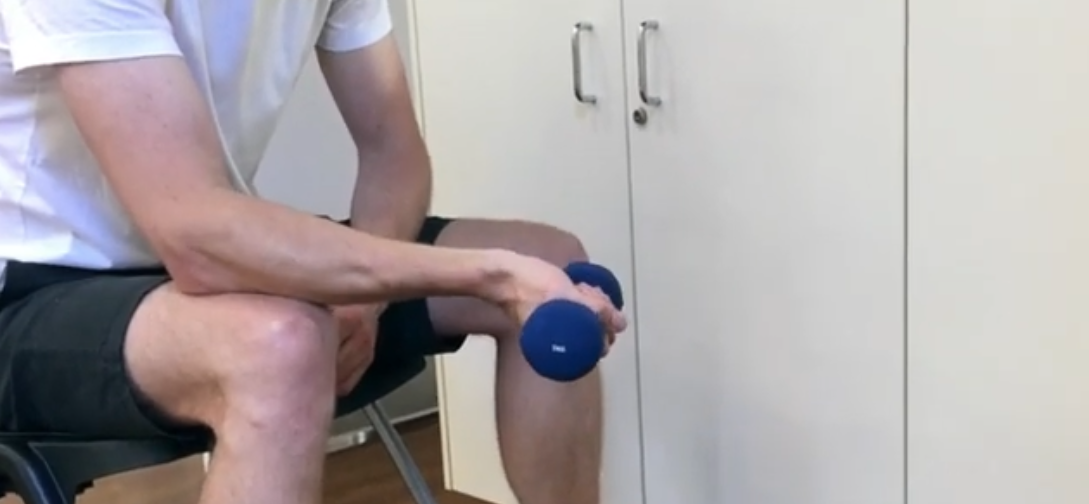
Injury 4: Lateral Epicondylitis ("Pickleball Elbow")
Unlike tennis, where power is generated through full-body rotation and a long backswing, pickleball relies on quick, reactive wrist flicks and short paddle strokes.
Over-gripping a paddle handle that is too small, using a paddle that is too heavy, or repeatedly snapping the wrist to put spin on the ball creates micro-tears in the forearm extensor tendons.
This results in lateral epicondylitis, causing burning pain on the outside of the elbow that makes gripping a coffee cup or shaking hands painful.
Injury 5: Rotator Cuff Strain & Shoulder Impingement
Nationwide sports medicine surveys evaluating upper extremity injury prevalence among pickleball players report that shoulder pain consistently tops the list of upper-body complaints.
Repeatedly reaching overhead for smashes pinches the rotator cuff tendons (specifically the supraspinatus) against the bones of the shoulder joint.
Over time, this mechanical impingement degrades the tendon, turning mild soreness into partial- or full-thickness rotator cuff tears.
Injury 6: Acute Eye Trauma
An often-overlooked surge in injuries involves ocular safety.
Medical literature highlights that pickleball-related eye injuries have risen among older adults, largely due to high-velocity paddle snaps and hard plastic ball strikes from close-range kitchen play.
 Alex E. Weaver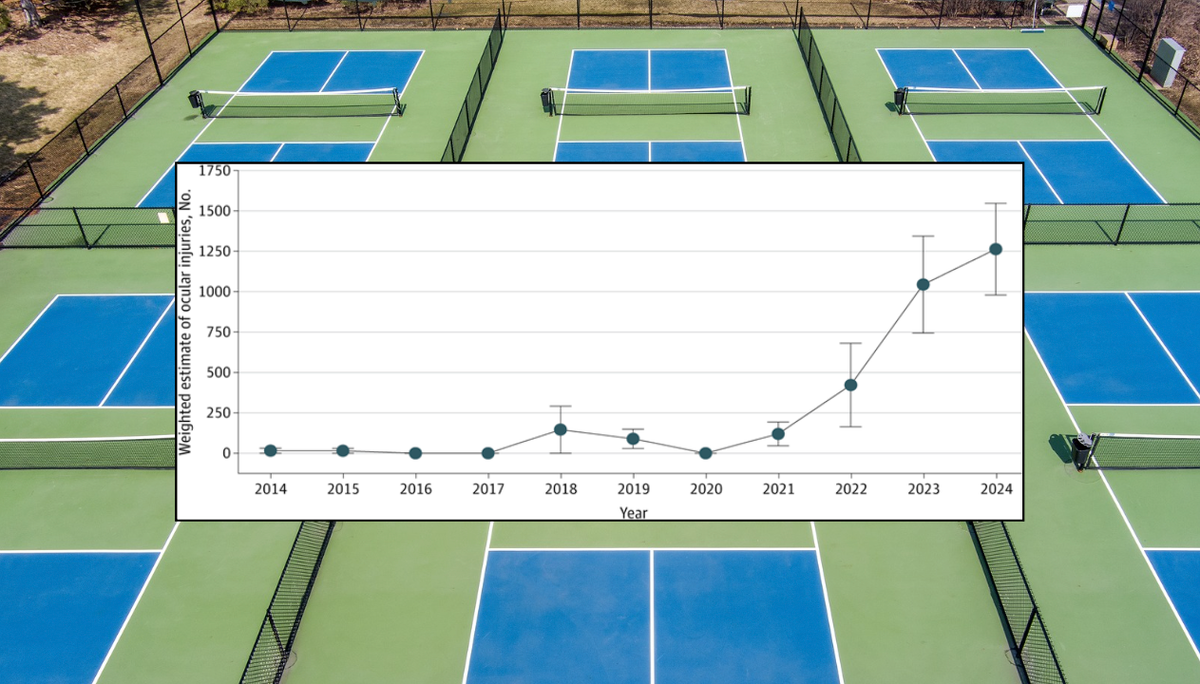
5 Essential Adjustments to Prevent Pickleball Injuries in Seniors
Preventing pickleball injuries in seniors does not mean playing less competitively: it means playing smarter.
Incorporate these five science-backed adjustments into your routine to safeguard your body.
Adjustment 1: Eliminate the Backpedal (Prevent Falls)
The single biggest environmental risk for senior players on the court is backpedaling for a deep ball.
When an opponent lofts a ball over your head, your natural instinct might be to walk backward while keeping your eyes on the ball.
This shifts your weight behind your heels and leads directly to backward falls and wrist fractures.
Official player guidelines from USA Pickleball emphasize proper footwork positioning to maintain balance on court.
Instead, shift your footwork immediately:
- Turn your hips sideways toward the sideline.
- Drop-step with your back foot.
- Side-shuffle or sprint backward in a sideways stance.
If a ball is completely out of reach, let it go. Losing a point is vastly better than suffering a wrist fracture or concussion.
 The Dink Media Team
Adjustment 2: Wear True Court Shoes (Protect Ankles & Knees)
Running shoes are built strictly for forward motion. They feature high stack heights, plush cushioning, and deep forward tread.
On a pickleball court, these features invite injury.
High cushioning stacks make ankles unstable during lateral movements, and deep forward tread catches on the hardcourt surface, causing the foot to stop while the knee keeps turning.
Upgrade your footwear to dedicated court or tennis shoes:
- Flat, wide outsoles: Keep your foot low to the ground to prevent rolling your ankle.
- Reinforced lateral sidewalls: Support sudden side-to-side shuffling.
- Hardcourt rubber treads: Allow smooth sliding stops without catching abruptly.
Adjustment 3: Commit to a 10-Minute Dynamic Warm-Up
Never walk straight out of your car and onto the court to serve.
Cold tendons are stiff and brittle, making them significantly more prone to tearing during explosive movements.
Before hitting your first ball, complete a 10-minute dynamic warm-up to circulate fluid into your joints and increase muscle temperature:
- Brisk walking or light jogging (3 minutes) to elevate heart rate.
- Side-shuffling along the baseline (2 minutes) to prep your lateral stabilizer muscles.
- Arm circles and shoulder hugs (2 minutes) to lubricate the shoulder joint.
- Bodyweight squats and calf raises (3 minutes) to prime the knees and Achilles tendons.
 The Dink Media Team
Adjustment 4: Right-Size Your Gear & Lighten Your Grip
To avoid "pickleball elbow," choose a paddle that weighs between 7.5 and 8.0 ounces.
Heavier paddles place excessive torque on your elbow extensors during fast kitchen exchanges.
Additionally, check your grip size.
If your grip is too small, your hand will automatically squeeze harder to keep the paddle from twisting, creating chronic tension in your forearm extensors.
Use an overgrip to build up the handle until you can comfortably fit one index finger between your fingertips and palm when holding the paddle.
Adjustment 5: Protect Your Vision at the Kitchen Line
Given the speed of balls coming off modern composite paddles at a distance of just 14 feet across the kitchen, reaction time is minimal.
Wearing clear, shatterproof polycarbonate court glasses or protective athletic eyewear is one of the simplest and most effective ways to shield your eyes from high-velocity strikes.
 The Dink Media Team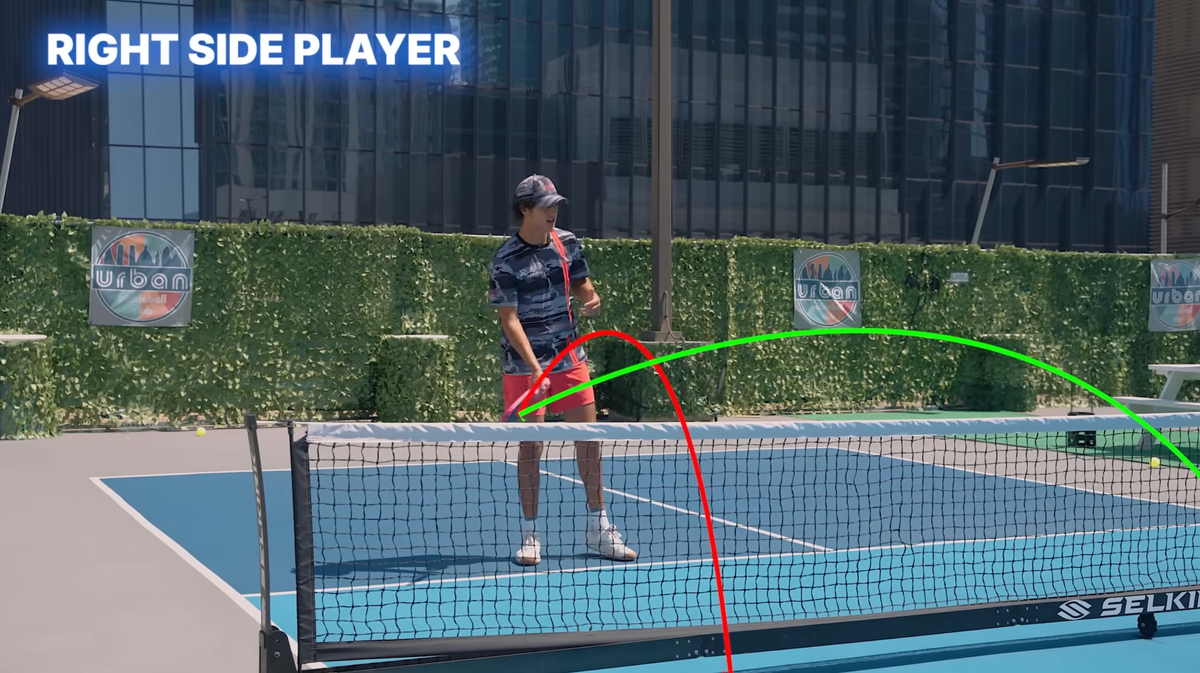
How to Structure Your Injury Prevention Routine
Knowing what to do is one thing; making it a habit is another.
Here is a simple 30-minute structured conditioning and safety breakdown you can perform twice a week to keep your joints resilient.
Block 1: Balance & Proprioception (10 Minutes)
Perform single-leg balance holds on court or at home. Stand near a wall, lift one foot off the ground, and hold for 30 seconds on each side.
This strengthens the stabilizing muscles in your ankles and hips, training your body to catch its balance automatically before a fall occurs.
Block 2: Eccentric Strength (10 Minutes)
Target the tendons most vulnerable to pickleball movements:
- Eccentric Calf Drops: Stand on the edge of a step, raise up on two feet, shift your weight to one leg, and slowly lower your heel below the step level over 3 to 5 seconds. Repeat for 3 sets of 10 reps on each leg to build Achilles resilience.
- Wrist Extension Exercises: Use a light resistance band or 2-lb dumbbell to perform slow wrist curls, strengthening the forearm muscles that protect against elbow tendinitis.
Block 3: Footwork & Recovery Drills (10 Minutes)
Practice side-shuffling along the baseline without crossing your feet ("crossover steps").
Shuffling keeps your base wide and stable, allowing you to cover the court efficiently while minimizing the risk of tripping over your own feet during fast rallies.
 The Dink Media Team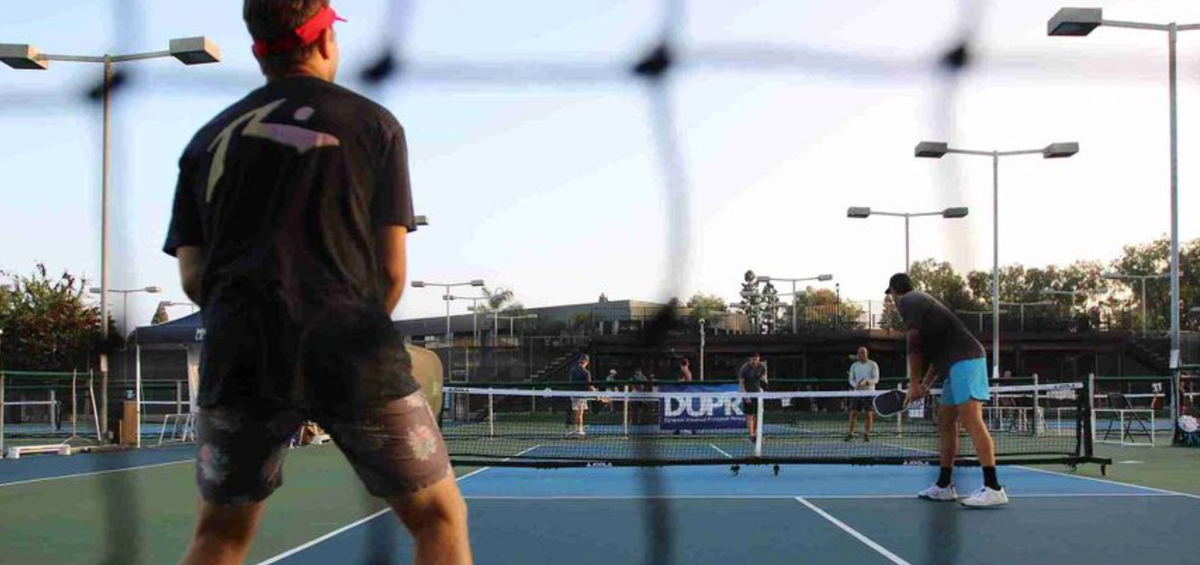
What Happens When You Play Smart
Seniors who implement these footwork adjustments, gear upgrades, and warm-up routines notice an immediate difference in how their bodies feel both during and after play.
By reading the court early, moving sideways instead of backpedaling, wearing appropriate court footwear, and protecting their joints with targeted exercises, they eliminate the unnecessary physical wear that leads to sidelined months in physical therapy.
Speed and joint elasticity change over time, but positioning, footwork discipline, and smart preparation only get better with practice.
That's the real story behind pickleball injuries in seniors: most of them are entirely preventable.
You do not need to risk injury to play high-level pickleball.
You just need to be the player who prepares smartest, moves safely, and stays on the court for years to come.
Frequently Asked Questions
Why are pickleball injuries in seniors so common?
As we age, tendons lose elasticity, joint cartilage thins, and balance reflexes slow slightly. When combined with the high-frequency lateral cuts, sudden stops, and overhead reaches required in pickleball, aging joints and soft tissues face higher stress, leading to overuse inflammation and acute fall injuries.
What is the most dangerous movement on a pickleball court for older adults?
Backpedaling backward to hit a deep lob. Walking or running backward shifts your center of gravity behind your heels, making it extremely easy to catch your heel, lose your balance, and fall backward onto an outstretched wrist or shoulder.
Are running shoes okay to wear for pickleball?
No. Running shoes feature high stacks and forward-facing tread designed solely for straight-line motion, and on a pickleball court, that combination makes ankles unstable during lateral shuffles. Dedicated court or tennis shoes are strongly recommended.
How can I tell if my paddle grip is causing elbow pain?
If your paddle grip is too small, your hand has to squeeze excessively hard to keep the paddle face stable during contact. This constant "death grip" creates chronic tension in the forearm extensor muscles, leading to lateral epicondylitis ("pickleball elbow").
What should I do if I experience sudden joint pain or swelling during a game?
Stop playing immediately. Playing through acute joint pain, sharp pops, or sudden swelling in senior years can transform a mild, short-term strain into a severe, chronic injury requiring surgical intervention or months of rehabilitation.
What is the best way to prevent pickleball injuries in seniors?
The biggest wins come from eliminating the backpedal, wearing true court shoes, and committing to a 10-minute dynamic warm-up before every session. Combined with a properly weighted paddle and eye protection, these adjustments address the most common pickleball injuries in seniors at their root cause.

Love Pickleball? Join 100k+ readers for free weekly tips, news & gear deals.
Subscribe to The Dink