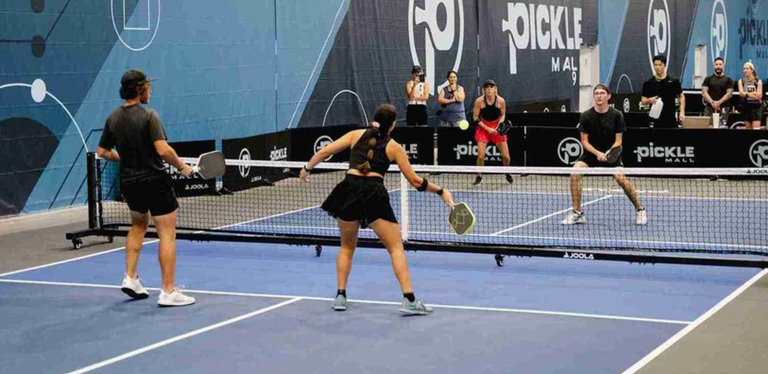


How to Keep Score in Pickleball: A Simple, Clear Guide for New Players
Keeping score in pickleball trips up most beginners, but the system is actually straightforward once you understand the three-number call. This guide walks you through exactly how to keep score in pickleball as a beginner, from your first serve to match point.
If you've ever stepped onto a pickleball court and heard someone yell "4-2-1" before serving, you already know the number one thing that confuses every beginner trying to keep score in pickleball: the three-number scoring call.
It sounds like a secret code. It's not. And once you get it, the whole game clicks.
Love pickleball? Then you'll love our free newsletter. We send the latest news, tips, and highlights for free each week.
What Is Pickleball Scoring, Exactly?
Pickleball scoring is a side-out system, which means only the serving team can score a point on any given rally.
If the receiving team wins the rally, they don't get a point, they just earn the right to serve. That shift of possession is called a side-out.
This is different from rally scoring (used in most recreational volleyball leagues), where every rally produces a point regardless of who served.
Traditional pickleball keeps it old-school: you have to serve to score.
Most casual games go to 11 points, win by 2. USA Pickleball's official rulebook confirms that tournament matches are typically played to 15 or 21, also win by 2. If you're curious whether rally scoring will change how you keep score in pickleball going forward, rally scoring: how to win at pickleball's latest format breaks down what's coming. One more thing: there's no cap.
If you're tied at 10-10, you keep playing until someone goes up by two.
How Does the Three-Number System Work in Doubles Pickleball?
The three numbers are: your team's score, the other team's score, and your server number (1 or 2).
That's it. All three get announced out loud before every serve.
Here's what that looks like in practice:
- "3-5-2" means: serving team has 3 points, receiving team has 5 points, and the player currently serving is Server 2.
Every time a team wins the serve back, the player on the right side of the court starts as Server 1. Their partner is Server 2.
When Server 1 faults or loses the rally, the serve passes to Server 2. When Server 2 also faults, the serve goes to the other team. That's a side-out.
The only exception: at the very start of the game, the first serving team only gets one server before the side-out.
This is called the "first server exception" and it exists to prevent the first team to serve from having a massive early advantage.
According to USA Pickleball Rule 4.B.6, the starting server calls "0-0-2," signaling they're already on Server 2.
Understanding doubles strategy becomes a lot easier once you have this serving rotation locked in and can finally keep score in pickleball without hesitation.
Rotations, stacking, switching sides, all of it flows from knowing who has the serve and what number they are.
Why Does the Server Number Matter So Much When You Keep Score in Pickleball?
Server number determines who serves and who switches sides within a team. This is the piece that trips up most beginners.
Here's the rule: in doubles, each player serves from the correct side of the court based on their team's score.
Even score = right side. Odd score = left side.
So if your team has 4 points, you serve from the right. If your team has 5 points, you serve from the left.
This means after every rally you win, the partners swap sides, because the score just changed.
The server number doesn't change; the server switches position with their partner.
It sounds like a lot to track, but here's a simple self-check: look at your score. Right is even, left is odd.
If you're on the wrong side, switch before you serve.
Forgetting this is the most common scoring mistake beginners make, and it leads to a fault called a "wrong position" fault.
Watching the pickleball scoreboard live in a pro match is a great way to see exactly how to keep score in pickleball play out in real time.
 The Dink Media Team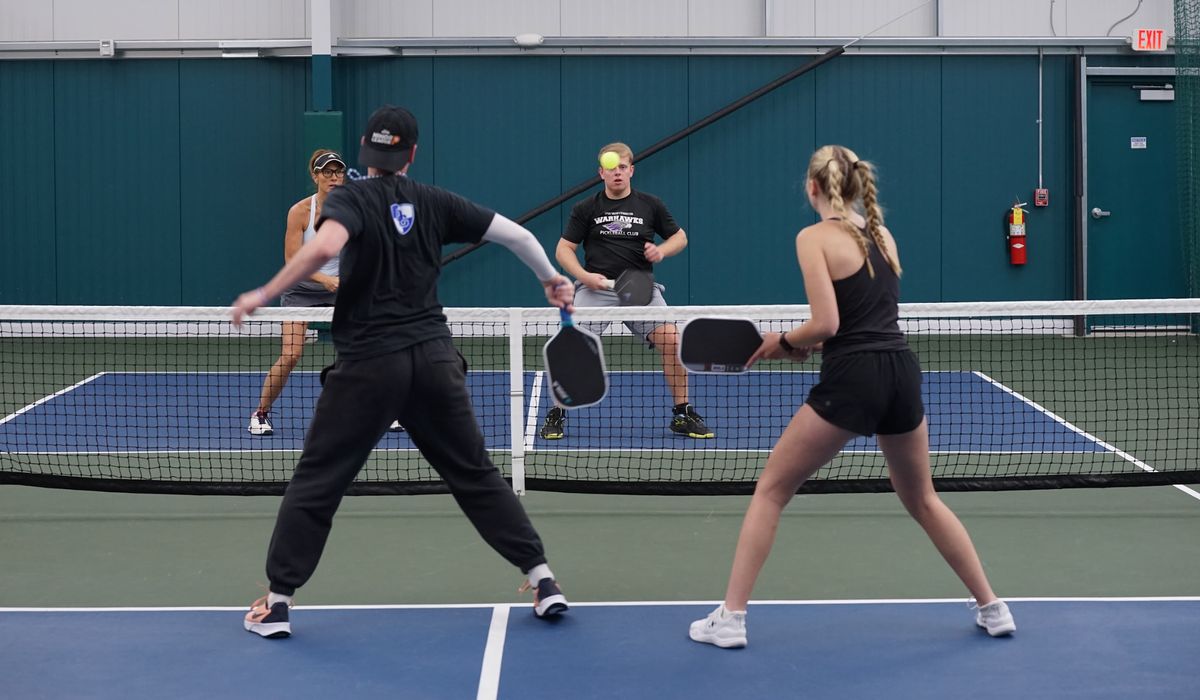
How to Keep Score in Pickleball as a Beginner: Step by Step
For beginners learning to keep score in pickleball, follow this four-step sequence before every single serve:
- Check the score. Know your team's score and the other team's score.
- Identify your server number. Did your team just win the serve? Then you're Server 1.
- Get on the right side. Even score = right side. Odd score = left side.
- Call the score loud and clear. "Serving team score – receiving team score – server number."
That's the whole system. Do it consistently and the court will sort itself out.
One more detail that helps: the server is always responsible for calling the score before each serve.
The receiving team has the right to question the call if it sounds wrong.
This is covered in depth in USA Pickleball's official rules, and it's worth bookmarking if you plan to keep score in pickleball at recreational or tournament events.
 The Dink Media Team
What's Different About Keeping Score in Pickleball Singles?
In singles, scoring pickleball is simpler: only two numbers are called. Your score first, your opponent's score second.
No server number needed since there's only one server per team.
The side-switching rule still applies. Even score = serve from the right. Odd score = serve from the left. And just like doubles, only the server can score.
Singles pickleball is a very different game from doubles, both physically and strategically.
Pickleball scoring rules: the complete guide for 2026 covers the singles tiebreaker format and every edge case you'll encounter once you've mastered the basics of how to keep score in pickleball.
 The Dink Media Team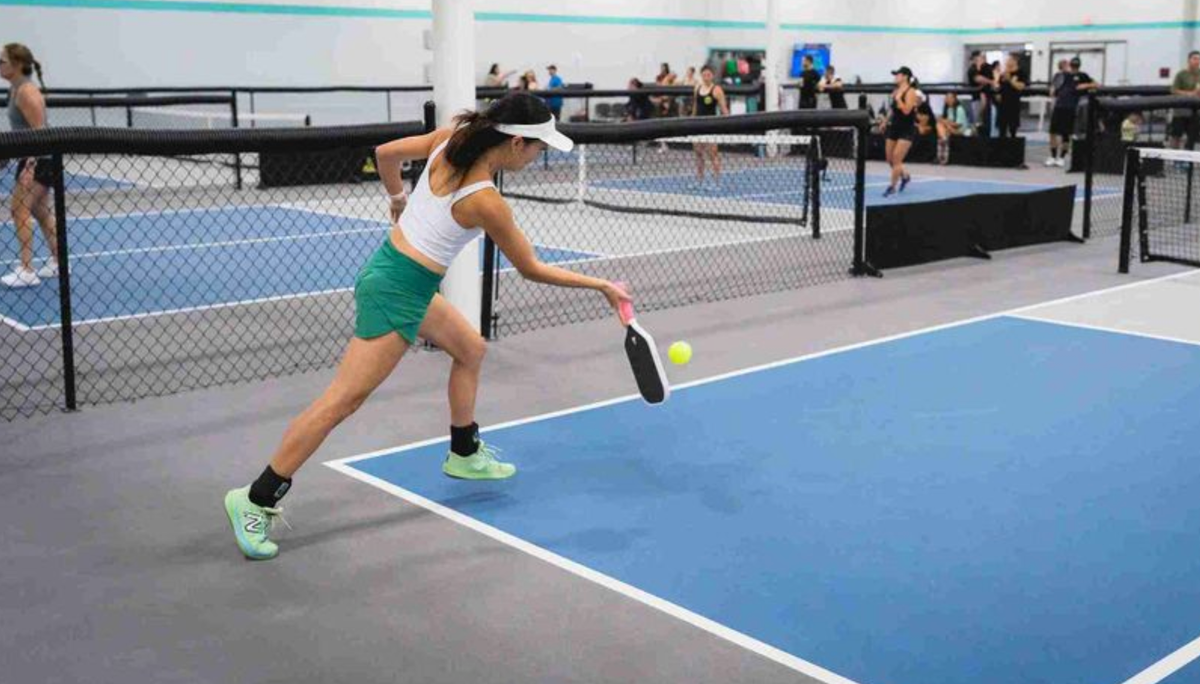
The Kitchen, the Fault, and Scoring Consequences
Here's something that surprises beginners: in pickleball, a fault doesn't automatically give a point to the other team.
It only gives them the serve. The point goes to whoever is serving when the rally ends.
A fault is any rule violation that ends a rally. Common faults include:
- Volleying from the non-volley zone (the kitchen). Step inside the kitchen to hit a ball in the air and it's a fault, even if you're just catching your balance. How to position yourself at the kitchen line is a skill worth developing early alongside learning to keep score in pickleball — the two go hand in hand.
- Failing to let the ball bounce on the return. Both the serve and the return of serve must bounce before anyone volleys. This is the two-bounce rule.
- Serving out of bounds. The serve must land in the correct service box, diagonally opposite from the server.
- Hitting the ball out of bounds or into the net. Pretty self-explanatory, but it's always the server's team losing the rally that matters.
Faults are the mechanism that makes side-out scoring tick. The serving team scores off a fault by the receiving team.
The receiving team earns the serve back off a fault by the serving team. No fault, no change. Rally scores the point for the server if they win it cleanly.
For beginners building their first game, understanding what counts as a fault is just as important as knowing how to keep score.
 The Dink Media Team
Does Pickleball Ever Use Rally Scoring?
Rally scoring, where every rally produces a point regardless of who served, is occasionally used in recreational and recreational league play, but it is not the standard format in sanctioned USA Pickleball competition.
Some recreational facilities and clubs use rally scoring to move games along faster, especially during open play sessions.
If you're playing with a group that uses it, just know: every rally ends with someone getting a point, serving and receiving included.
The three-number call becomes just two numbers in that format.
According to USA Pickleball's official scoring guidelines, side-out scoring remains the standard for all sanctioned events as of 2025. If you want a player's-eye view of the debate, how the MLP Commissioner changed Christian Alshon's mind on rally scoring is a great read once you've figured out how to keep score in pickleball the traditional way.
 The Dink Media Team
Tips for Memorizing How to Keep Score in Pickleball
It clicks faster than you'd think. A few habits that speed it up:
- Say the score out loud before every serve, even in casual games. It builds the muscle memory fast.
- Track your position as a scorecard. Right side = your team has an even score. Left side = odd score. If you're confused about the score, look at your feet.
- Watch the pros. Watching a live match and following along with the scoring is genuinely one of the fastest ways to internalize the system.
- Play singles first. Two numbers instead of three. Less complexity, same fundamentals.
The tips that separate 3.0 from 3.5 players include understanding how to keep score in pickleball well enough that you stop thinking about it during play. That's the goal. That's the goal.
 Alex E. Weaver
Key Takeaways
- Pickleball uses a three-number scoring system: serving team score, receiving team score, server number (1 or 2)
- Games are typically played to 11 points, win by 2; tournament matches may go to 15 or 21
- Only the serving team can score a point in traditional (side-out) scoring
- The server number resets to Server 1 every time a new team wins the serve
- In singles, only two numbers are called: your score, opponent's score
Frequently Asked Questions
What does "0-0-2" mean in pickleball scoring?
"0-0-2" is the opening call of every doubles game. It means the score is 0-0 and the serving player is Server 2. This is the first-server exception, the first team to serve at the start of a game only gets one server before the side-out, which levels the playing field at the start of the match. USA Pickleball Rule 4.B.6 covers this in full.
Can the receiving team score a point in pickleball?
No, in traditional side-out scoring, only the serving team can score a point. If the receiving team wins the rally, they earn the serve but not a point. The moment they become the serving team and win a rally, that's when points start accumulating for them. This is what makes getting and holding serve so strategically important.
How do you know which side to serve from in pickleball?
Even score = right side. Odd score = left side. This applies to both singles and doubles. Your team's score is what determines the side, not the rally count or the game clock. If your team has 4 points, serve from the right. If you have 5, serve from the left. The server must be positioned correctly before the serve lands, or it's a fault.
What happens if you call the wrong score in pickleball?
If you call the wrong score before serving, the receiving team has the right to stop play and correct it before the serve is struck. If a wrong score is called and play continues without correction, the point typically stands. The best habit is to pause, agree on the score with both teams, then serve. In tournament settings, a referee handles score disputes, but in recreational play, just sort it out before the ball is in the air.
What is the difference between pickleball scoring in singles vs. doubles?
In doubles, three numbers are called: serving team score, receiving team score, server number (1 or 2). In singles, only two numbers are called: server's score, receiver's score. The side-switching rule (even = right, odd = left) applies to both formats. Singles is simpler to track but significantly more physically demanding because you're covering the whole court alone.

Love Pickleball? Join 100k+ readers for free weekly tips, news & gear deals.
Subscribe to The Dink