
Most players need a pickleball lesson long before they book one, and the tell is rarely bad play; it's repeating the same errors every week. These five signs show when coaching will move your game faster than more reps.
You probably need a pickleball lesson long before you think you do, and the tell is almost never that you're playing badly.
It's that you're playing the same way you did six months ago. More reps feel productive because they're fun and sweaty and social.
But reps only lock in whatever you're already doing, good or bad, which means a player with the wrong paddle grip who hits 500 dinks a week is mostly just getting better at the wrong grip.
Here's the thing: the gap between "I play a lot" and "I'm getting better" is where most rec players live, and it's the exact gap a good instructor closes in about twenty minutes.
These five signs tell you which side of it you're on.
Love pickleball? Then you'll love our free newsletter. We send the latest news, tips, and highlights for free each week.
Why More Reps Stop Working
Volume stops paying off the moment you're repeating something broken, which is how good players end up stuck in neutral for a year.
That's the whole idea, and it's worth sitting with before you book anything.
Your body is very good at making a motion automatic, and it doesn't check whether the motion is any good first.
A top pro ran the actual math on drilling versus playing and landed nowhere near "just play more."
So the question isn't how much you practice. It's whether anyone has ever checked your inputs.
Most players have gone years without that, which is why the same handful of amateur habits keep sabotaging games across every court in the country.
Sign 1: You've Been Stuck at the Same Level for Six Months
If your rating hasn't moved in half a year despite regular play, that's a diagnostic problem and a lesson is the fastest fix.
Six months is long enough to rule out a bad stretch. It's the classic reason most players plateau: they've maxed out what unguided repetition can give them.
USA Pickleball's own descriptors make the ceiling visible.
Those aren't vague vibes; they're specific, testable skills.
If you can rate your real skill level honestly and keep landing in the same bucket, you already know the answer.
The players who break through the plateau almost always changed what they practiced, not how often.
Sign 2: You Keep Making the Exact Same Error
When one specific mistake shows up in every session, you need outside eyes, because you've already proven you can't self-correct it.
Popping up the third shot. Floating the return. Getting caught flat-footed in the transition zone.
You've probably read the fixes. You might even be able to recite them.
But reading that you should stop botching your third shot drop doesn't tell you whether your version is a paddle-face problem or a footwork problem, and those need opposite corrections.
An instructor watches four reps and knows.
Honestly, this is the sign people ignore longest. It feels like a discipline issue. It's an information issue.
 The Dink Media Team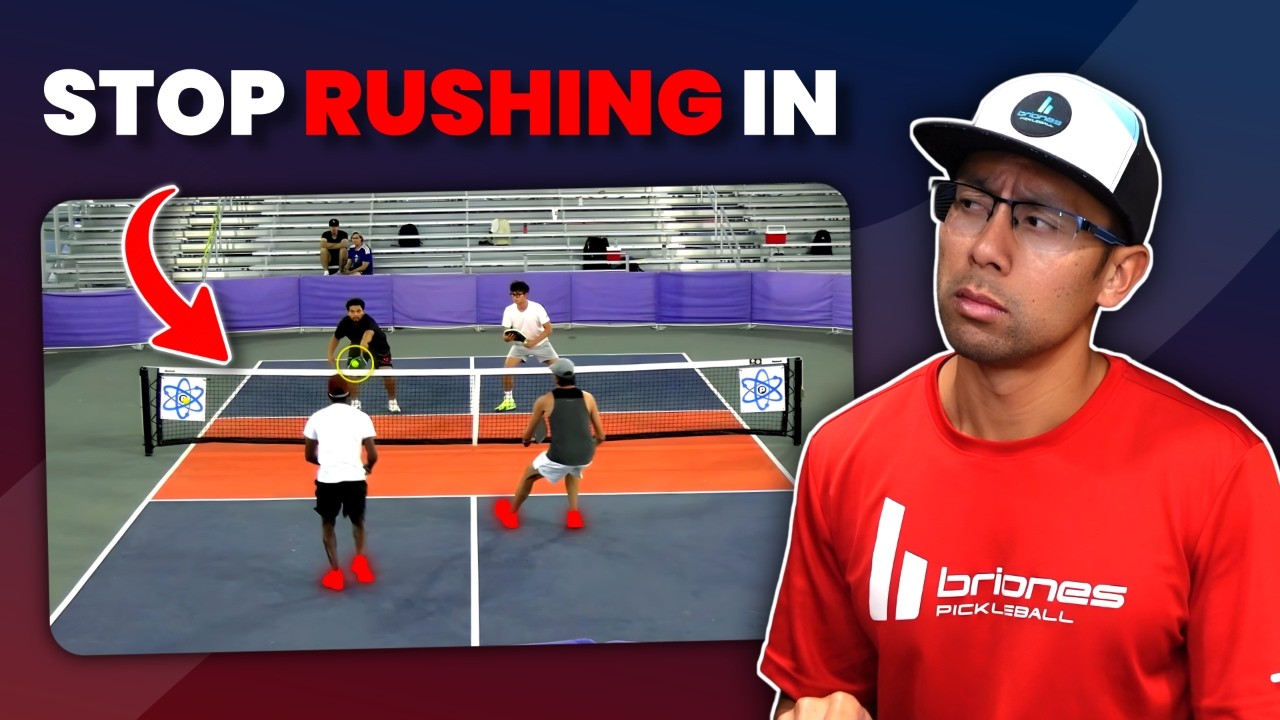
Sign 3: It Works in Drills and Falls Apart in Games
If you can hit the shot cleanly with a feeder and never in a match, your problem is decision-making under pressure, not mechanics.
That's a coaching conversation, not a drilling one.
This gap is so common it has its own framework: the 70% rule for making practice skills stick in real matches. Drilling builds the motion.
Games test the choice, and choices are where a good instructor earns their money. They'll put you in the exact situation that breaks you and make you solve it live.
Same story in the midcourt. Plenty of players can execute a perfect midcourt reset in isolation and then panic-drive the same ball at 4-4 in a third game.
 The Dink Media Team
Sign 4: You Can Feel It's Wrong but Can't Name It
Vague dissatisfaction is the loudest signal on this list.
When you finish a match knowing something's off but can't name the shot, the pattern, or the moment, you've hit the limit of self-diagnosis.
Video helps a little. Genuinely, filming your games is the cheapest upgrade in the sport, and it catches the obvious stuff like a slow split step or lazy footwork between shots.
But video shows you what happened. It doesn't tell you what to do instead. That's the part you're paying for.
Your rec partners can't help here either, and they shouldn't try.
There's a reason we've argued you should stop coaching during rec play: well-meaning advice from a 3.5 is usually just their own bias in a different hat.
 The Dink Media Team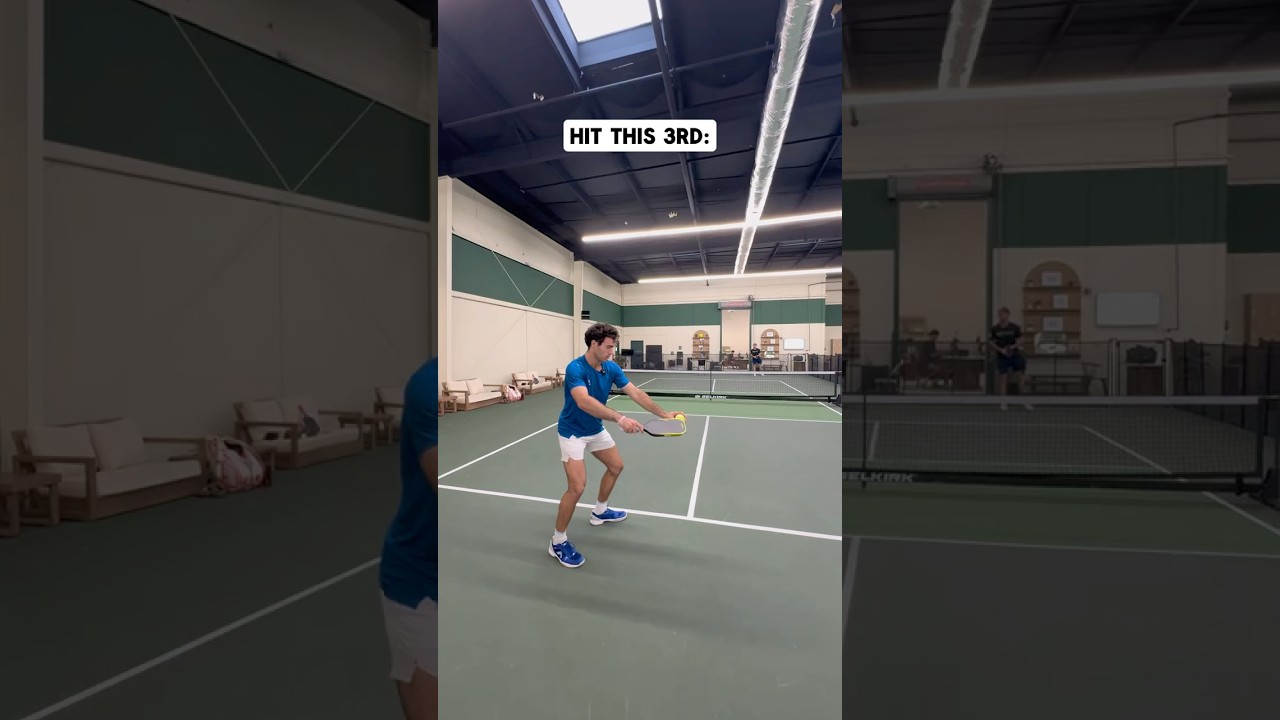
Sign 5: You've Quietly Stopped Hitting a Shot
Avoidance is the sign almost nobody self-reports, and it's the most valuable thing you can bring to an instructor.
Run the check: when did you last hit a backhand roll on purpose? An overhead you weren't sure about? A reset from the transition zone instead of a desperate drive?
If the answer is "a while," you haven't removed a weakness.
You've built your whole game around hiding it, and every opponent above 4.0 will find it inside two games.
The difference between a 4.0 and a 5.0 is rarely one spectacular shot. It's the absence of a hole.
Bring the avoided shot to your lesson. Not the shot you like practicing.
 The Dink Media Team
What Does a Pickleball Lesson Actually Do?
A pickleball lesson diagnoses the cause of a specific problem and gives you a corrected rep you can repeat on your own.
That's it. It is not a magic hour that transfers skill into your hands, and it won't rescue a game that's stuck for strategic reasons rather than technical ones.
What Is a Pickleball Lesson, Exactly?
A pickleball lesson is a paid, structured session with a certified instructor who watches your mechanics and decisions, identifies the root cause of a specific weakness, and gives you a corrected pattern to drill.
Private lessons run one-on-one and target your individual flaws.
Clinics run in groups, cost less, and work better for tactics and positioning than for technique. Both beat another round of unfocused rec play if you're stuck.
Certification matters more than reputation here.
The Professional Pickleball Registry requires instructors to pass written, skills, and teaching assessments, with the PRO written exam set at 90% and skills demonstrated at a 3.5 playing level minimum.
Our breakdown of why PPR is backing the best instructors covers what those tiers mean in practice.
Is One Pickleball Lesson Enough?
For most recreational players, yes. One or two beats a standing weekly slot. Here's the sequence that actually works:
- Book one diagnostic lesson. Bring your single worst recurring problem and nothing else.
- Leave with a drill, not a feeling. If you can't describe the corrected rep, you didn't get your money's worth.
- Drill it solo for three weeks. Wall drills and solo work handle most corrections without a partner.
- Test it inside real games. Then book the follow-up only when a new ceiling appears.
Costs vary widely by market, so treat quoted rates as local, not national. Group clinics are the cheaper entry point if a private session feels steep.
 The Dink Media Team
How Do You Get the Most Out of a Pickleball Lesson?
Show up with one problem, not five.
The single biggest waste in a pickleball lesson is asking an instructor to review your entire game in sixty minutes, which guarantees you leave with a pile of notes and no corrected rep.
Two more rules.
- First, subtract before you add: the fastest gains usually come from cutting your two worst habits rather than bolting on a new shot.
- Second, be willing to walk. If your instructor talks more than you hit, or hands you the same generic advice you'd get from any coach or instructor in the building, it's fine to fire your pickleball coach and find someone sharper.
And if the whole thing feels heavier than it should, that's worth naming too.
Sometimes the fix isn't technical at all, and resetting your approach to the game does more than any lesson would.
Reps aren't the enemy. Unexamined reps are.
 The Dink Media Team
Key Takeaways
- A pickleball lesson fixes causes; reps reinforce symptoms. If you can't name why a shot fails, more volume won't tell you.
- Six months at the same rating is the clearest signal. Plateaus are diagnostic problems, not effort problems.
- Drill-to-game breakdown means it's a decision issue, not a technique issue, and that's coaching territory.
- One or two lessons plus targeted solo work usually beats a standing weekly slot for recreational players.
- Shots you've quietly stopped hitting are the highest-value thing to bring to an instructor.
Frequently Asked Questions
How do I know if I need a pickleball lesson or just more practice?
If you can name the problem and the fix, practice. If you can only name the symptom, take a lesson. The clearest test is whether your errors repeat in a predictable pattern; repeating errors mean you're reinforcing a flaw rather than fixing it, and no amount of court time corrects that on its own.
Are pickleball lessons worth it for intermediate players?
Yes, and arguably more than for beginners. Beginners improve from almost any court time, while 3.0 to 4.0 players are the ones who stall, because their errors are subtle enough to hide and consistent enough to become permanent. One diagnostic lesson at that stage often unsticks months of flat progress.
How much does a pickleball lesson cost?
Rates vary a lot by region, facility, and instructor certification level, so ask locally rather than trusting a national average. Group clinics cost meaningfully less than private sessions and are a reasonable first step if you want coaching without committing to one-on-one pricing.
Can I improve without a coach?
Absolutely, as long as your practice is structured. Filming your matches, running targeted solo and wall drills, and testing one specific change at a time will move most players forward. The limit shows up when you can feel something's wrong but can't identify it, which is the point where outside eyes save you months.
What should I bring to my first lesson?
One specific problem, a few recent match clips if you have them, and your actual paddle. Tell the instructor your goal in a single sentence, something like "my third shot drop floats high under pressure," and ask them to give you a drill you can run alone. Leaving with a repeatable rep is the whole point.
Love Pickleball? Join 100k+ readers for free weekly tips, news & gear deals.
Subscribe to The Dink