
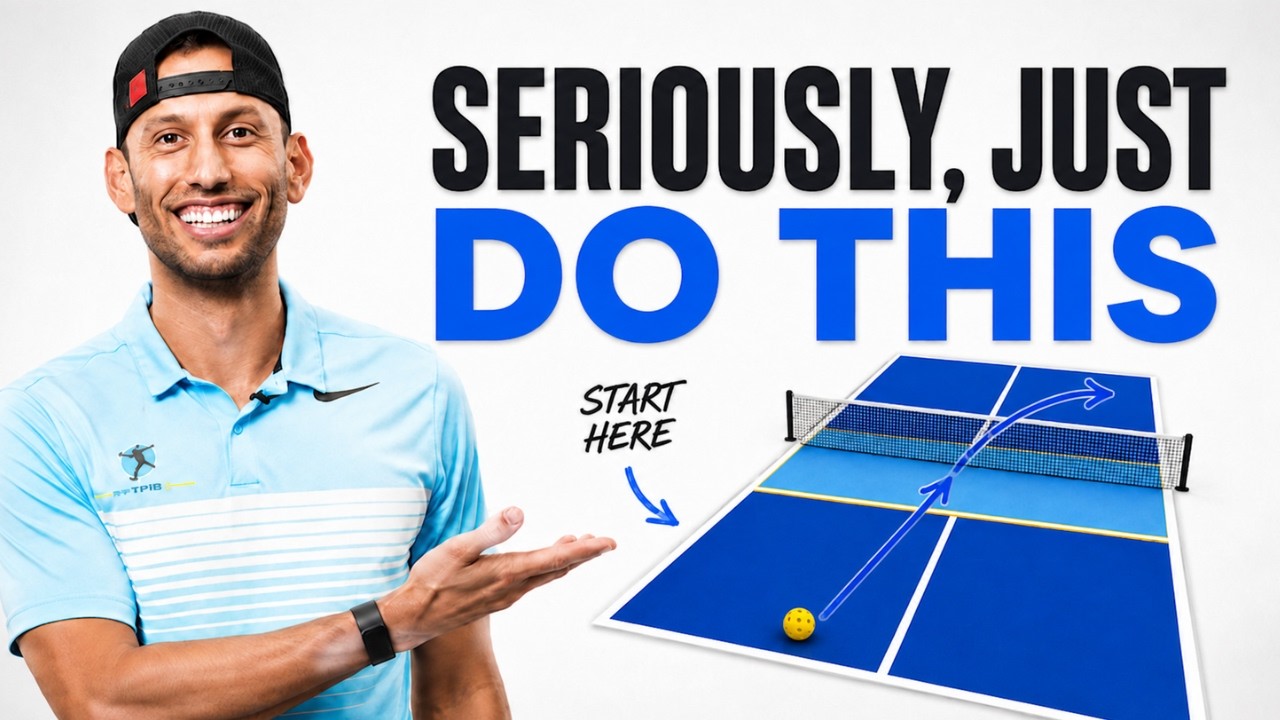
The 3 Pickleball Strategy Sequences Every Beginner Needs to Know
Most beginners learn pickleball tips in isolation and forget them the moment they step on court. These 3 pickleball strategy sequences give you a simple system that actually sticks.
Most pickleball strategy advice falls apart the second you walk onto the court.
You hear a tip, it makes sense in the moment, and then your brain goes blank when it's actually time to use it.
The fix is thinking in sequences.
When you connect your first shot to your second shot to what comes after, the whole thing becomes a system you can actually remember and repeat.
This breakdown comes from ThatPickleballGuy - Kyle Koszuta, a pro pickleball player who has medaled multiple times on the pro tour.
His framework covers the three strategy sequences that show up in 80% of every point you will ever play.
Love pickleball? Then you'll love our free newsletter. We send the latest news, tips, and highlights for free each week.
Why Sequences Beat Isolated Tips
A tip like "hit to the backhand" sounds useful until you realize you have no idea what to do next.
Pickleball strategy works best when each shot is connected to the shot that follows it.
Think of a sequence as a specific order of events. Shot one sets up shot two, and shot two creates the conditions for shot three.
When you frame it that way, every decision on court has a logical next step.
This is the same approach Kyle uses when teaching beginners, and it is why players who learn this way start applying pickleball strategy in actual play instead of just nodding along in lessons.
Sequence 1: The Serve Strategy (Shots 1 and 3)
Your serve and your third shot are one connected sequence. Treat them separately and you will keep making avoidable mistakes on both.
Here is what the serve sequence looks like in practice:
- Hit deep to the backhand side. Depth keeps your opponent away from the kitchen line longer, which gives you more time and more options on your third shot. Most backhands are weaker than forehands, so you are attacking a vulnerability while also disrupting their timing.
- Serve and stay. Do not step into the court after you serve. If you step in and the ball comes back quickly, you end up hitting your third shot while you are backing up, which is one of the worst positions in pickleball. Stay put, let the point develop, then move forward intentionally.
- On your third shot, aim at the person who is still moving. If one player is already stable at the kitchen line and the other is still transitioning in, attack the one who is moving. A player who is off balance and worried about their footwork is far more likely to hit a weak ball than someone who is set and ready.
On the third shot itself, you have two options. The first is a drop into the kitchen, which is the more precise shot.
The second, and the one Kyle recommends for most beginners, is an 80% pace ball aimed directly at the body of the incoming player.
It is not glamorous, but it creates real pressure without requiring the control of a tour-level drop.
For a deeper look at where exactly to aim that third shot, this breakdown on where to aim your third shot drop every time is worth reading before your next session.
What Is the Advantage Scale?
The advantage scale measures who controls the kitchen line at any point in a rally.
It is one of the most useful pickleball strategy concepts for beginners because it gives you a way to read every point in real time.
Here is how it breaks down:
- Plus two advantage: Both you and your partner are at the kitchen line while your opponents are still back. This is the best position to be in.
- Plus one advantage: The receiving team starts every point here because one player is already at the kitchen line while both opponents are at the baseline.
- Neutral: Both teams have one player at the kitchen line.
- Disadvantage: Your opponents control the kitchen while you are stuck back, and you are now trying to dig out of a hole.
Every decision you make should be aimed at moving up this scale or holding your position on it.
When you return and immediately run to the kitchen, you are turning a plus one into a plus two.
When you stay back after your return, you are giving the serving team a free path to flip the advantage.
If you want to understand how kitchen arrival percentage defines your skill level, that stat alone will change how you think about every point.
 The Dink Media Team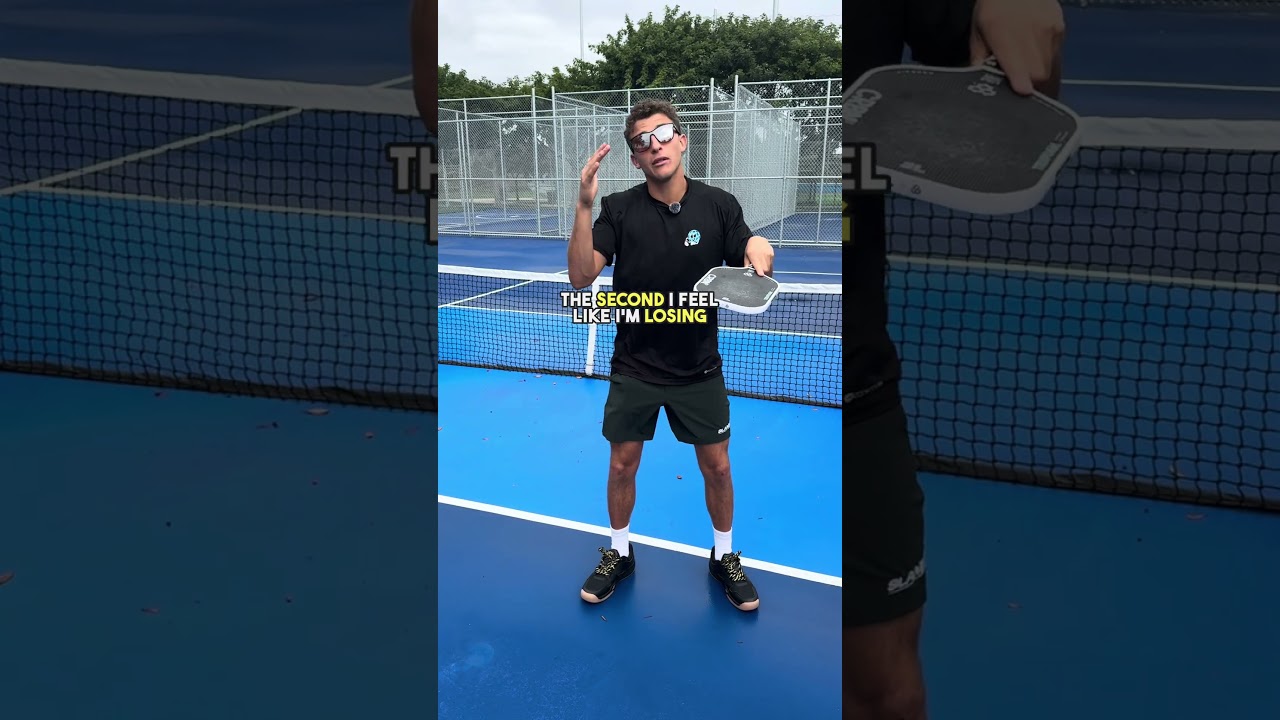
Sequence 2: The Return Strategy (Shots 2 and 4)
The return sequence is just as important as the serve sequence, and most beginners get it completely wrong.
The two most common mistakes are standing on the baseline and staying back after the return.
Both kill your advantage before the point even develops.
Here is the correct return sequence:
- Stand one to two feet behind the baseline. This gives you room to handle a deep serve without being jammed, and if the serve is short, you can move forward to get it. If you are standing on the line and the ball comes at your feet, you are already in trouble.
- Return deep to the middle. You do not need to chase sideline targets, because deep to the middle gives your opponent less angle to work with on their third shot. If you want to get more specific, push the ball toward the backhand side.
- Return and run to the kitchen. The moment your return leaves your paddle, start moving forward. Getting to the kitchen line is where the money is made in pickleball.
Staying back gives your opponent a massive target to aim at and leaves your partner exposed. Think of it like throwing a dart.
If your opponent has a large target because you are still near the baseline, their accuracy improves.
The moment you close the distance, you shrink the target and force them to be more precise.
For more on fixing common return problems, these six fixes for your serve and return cover exactly what goes wrong for most recreational players.
 The Dink Media Team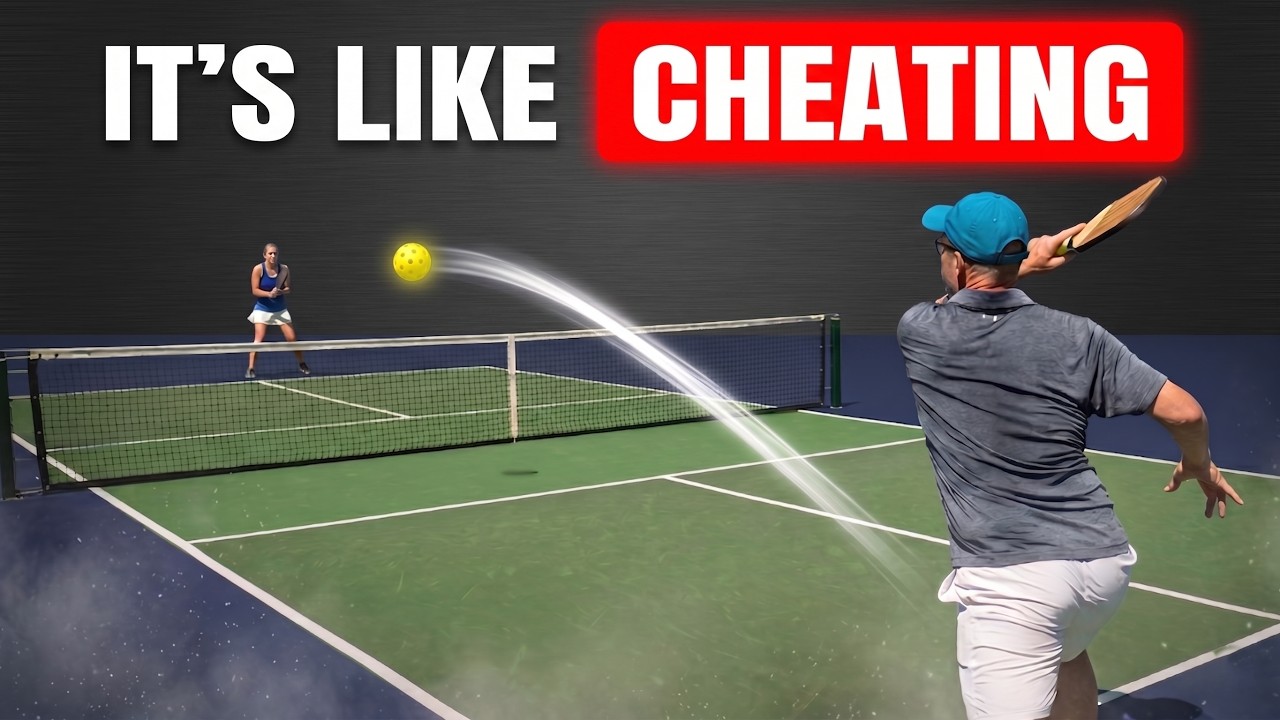
Sequence 3: The Power Strategy
Hitting harder than your skill level allows is one of the fastest ways to lose points you should be winning.
Every player has a power threshold. Below that threshold you have control and accuracy, and above it both fall apart quickly.
The dopamine hit of smashing a ball feels great, but it consistently produces errors that compound over the course of a match.
Kyle uses two phrases worth memorizing:
- "Above the face, hit it with pace." When a ball is sitting up high, above your face, that is a ball you have earned the right to attack.
- "Below the chin, hit it with spin." When the ball is at or below chin height, pace is not your friend. Use spin to control the ball and keep it in play rather than forcing a low-percentage shot.
The third phrase is the simplest and arguably the most important: "Keep it in and you'll win."
It sounds too simple until you watch how many points are lost in recreational play because someone swung too hard on a ball they should have redirected.
This is not about playing passive pickleball.
It is about being disciplined enough to attack only the balls that deserve it, and shot selection based on ball height is the skill that separates players who plateau from players who keep improving.
 The Dink Media Team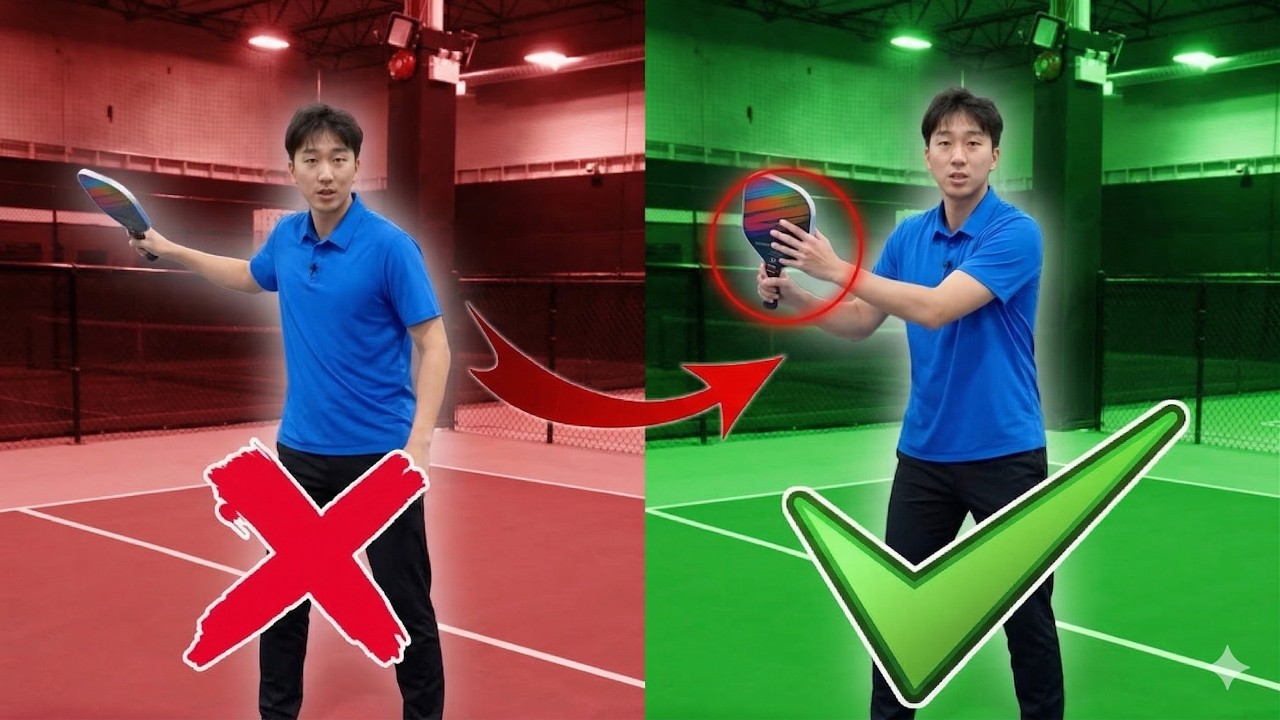
How Do You Put All Three Sequences Together?
The three sequences stack on top of each other and create a complete point structure.
Once you understand them individually, they start to feel automatic.
- On the serve side you are thinking: deep to the backhand, serve and stay, then attack the player who is still moving at 80% pace.
- On the return side you are thinking: give yourself space, return deep to the middle, and run to the kitchen immediately.
Across all of it, you are managing your position on the advantage scale. Every shot decision gets filtered through whether you are up, down, or even.
Players who build this into habit stop feeling lost on court. They are not reacting randomly to whatever the ball does.
They are executing a plan and keeping pressure on opponents through consistency rather than highlight shots.
Want to see how this doubles pickleball strategy plays out at a higher level?
Look at how certain habits instantly reveal your skill level to anyone watching, because most of them connect directly to sequence thinking.
For beginners who want more structured practice around these concepts, these beginner pickleball lessons will help you build the right habits faster.
And if bangers are blowing these sequences apart, these three fixes for stopping a banger give you a plan for those situations.
For anyone curious about the drop specifically, these six third shot drop techniques give you options depending on where you are on the court.
The whole system is simple by design. Simple enough to remember under pressure, specific enough to actually work.
Frequently Asked Questions
What is the most important pickleball strategy for beginners?
The most important pickleball strategy for beginners is learning to think in sequences rather than treating each shot as separate. The serve and third shot are one sequence, and the return and fourth shot are another. Connecting those decisions gives you a system instead of a collection of random tips.
Where should you aim your serve in pickleball?
You should aim your serve deep to the backhand side of your opponent. Depth keeps them away from the kitchen line longer, and the backhand is typically the weaker side. Both factors create better conditions for your third shot.
Should you run to the kitchen after your return?
Yes, you should always run to the kitchen line after your return. Staying back gives your opponent a large target and leaves your partner without a partner at the net. Moving forward shrinks that target and maintains your plus one advantage from the start of the point.
What is the power threshold in pickleball?
The power threshold is the point at which hitting harder starts to cost you accuracy and control. Every player has one, and exceeding it consistently leads to unforced errors. The fix is using the right amount of pace for each ball: aggressive on high balls, controlled with spin on low ones.
What does "advantage" mean in pickleball strategy?
In pickleball strategy, advantage refers to which team controls the kitchen line. A plus two advantage means both players on your team are at the kitchen while both opponents are back. Managing your position on this scale is how you read a point and decide whether to be aggressive or patient.
Love Pickleball? Join 100k+ readers for free weekly tips, news & gear deals.
Subscribe to The Dink