
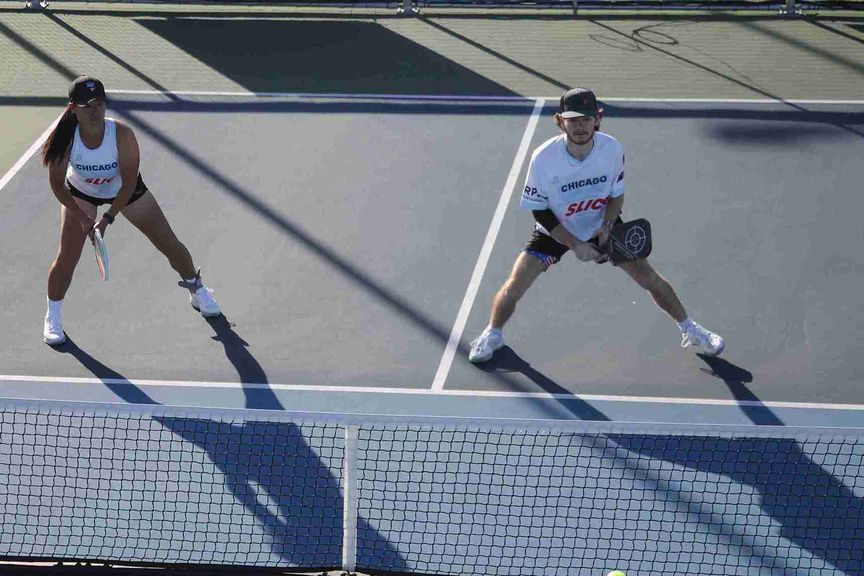
How to Stay Loose When You're Trying Too Hard to Win Pickleball
Trying too hard to win pickleball points is the fastest way to lose them, and it shows up in your grip before it shows up on the scoreboard. Here's how to spot the tightening early and reset it in the ten seconds between rallies.
Trying too hard to win pickleball points is the quickest way to stop winning them. You know the feeling.
It's 9-9, your partner has that look, and the paddle in your hand suddenly weighs eleven pounds.
Your dinks pop up. Your drops turn into drives. The harder you push, the worse it gets.
Here's the thing. You didn't get worse at pickleball in the last ninety seconds. You got tight.
Trying too hard to win pickleball points is a physical problem before it's a mental one, and it's fixable in roughly ten seconds once you know which pressure points to watch.
Love pickleball? Then you'll love our free newsletter. We send the latest news, tips, and highlights for free each week.
What Does Trying Too Hard to Win Pickleball Actually Look Like?
It looks like effort showing up in all the wrong places. Trying too hard to win pickleball matches almost never looks like laziness.
It looks like too much: too much grip, too much backswing, too much thinking in the half-second between the bounce and your contact point.
Sport psychology has a term for the performance side of this.
Choking is generally described in the research as suboptimal performance under pressure despite strong motivation to succeed, a pattern some scholars summarize as trying too hard to win.
Sit with that definition, because it means the problem isn't that you stopped caring. It's that caring took the wheel from a skill that was driving fine on its own.
Pickleball's scoring structure doesn't help.
Under the official USA Pickleball rules, games go to 11 and you have to win by two, which means the last two points of a game can stretch out for ten minutes.
Every one of those rallies feels heavier than the first nine.
That's not in your head, that's just math, and it's the same reason staying calm under pressure is a separate skill from hitting a clean third shot.
Trying Too Hard to Win Pickleball Starts in Your Hand
Check your grip before you check anything else. It's the first thing to go and the easiest thing to fix, whichever of the three standard grips you play with.
Rate your grip pressure from 1 to 10, where 1 is the paddle falling out of your hand and 10 is strangling it.
You want a 4 or a 5 for dinks and resets, maybe a 6 when you're driving. Most players at 9-9 sit at an 8 without knowing it.
A tight hand kills touch, shortens the follow-through, and turns a soft drop into the pop-up your opponent has waited on all game.
If you've never audited how you hold the thing, start there.
Honestly, this one cue fixes more pressure problems than any strategy adjustment I've seen.
Why Does Your Swing Shrink When It Matters?
Because you start steering it, and a steered swing is a short swing.
Here's the mechanism. When you learned the third shot drop, you talked yourself through it: knees bent, paddle low, push don't hit.
Eventually that chatter went quiet and the shot became automatic.
Then the score gets tight, anxiety climbs, and research on what's called reinvestment suggests skilled athletes start consciously controlling movements they'd already automated, effectively running the beginner's instruction manual on an expert's swing.
You can spot it from fifty feet away. The follow-through gets stubby. The feet stop resetting.
Players who floated drops all morning start placing each one like a vase on a high shelf.
If that's become a season-long pattern instead of a one-game pattern, it's closer to hitting a mental wall than a technique problem.
Give Yourself One Cue, Not Five
One swing thought per game. That's the rule.
Not "bend your knees and get the paddle up and watch the ball and move your feet." That's four jobs for a brain with about 400 milliseconds to work with.
Pick the single cue that's failing today, say it in three words or fewer, and let the rest run on autopilot. "Paddle out front." "Soft hands." "Feet first."
This is the same logic behind subtracting your two worst habits instead of adding new skills.
Less input, better output. The pros aren't thinking more than you during a dink rally, they're thinking far less and far more specifically.
 The Dink Media Team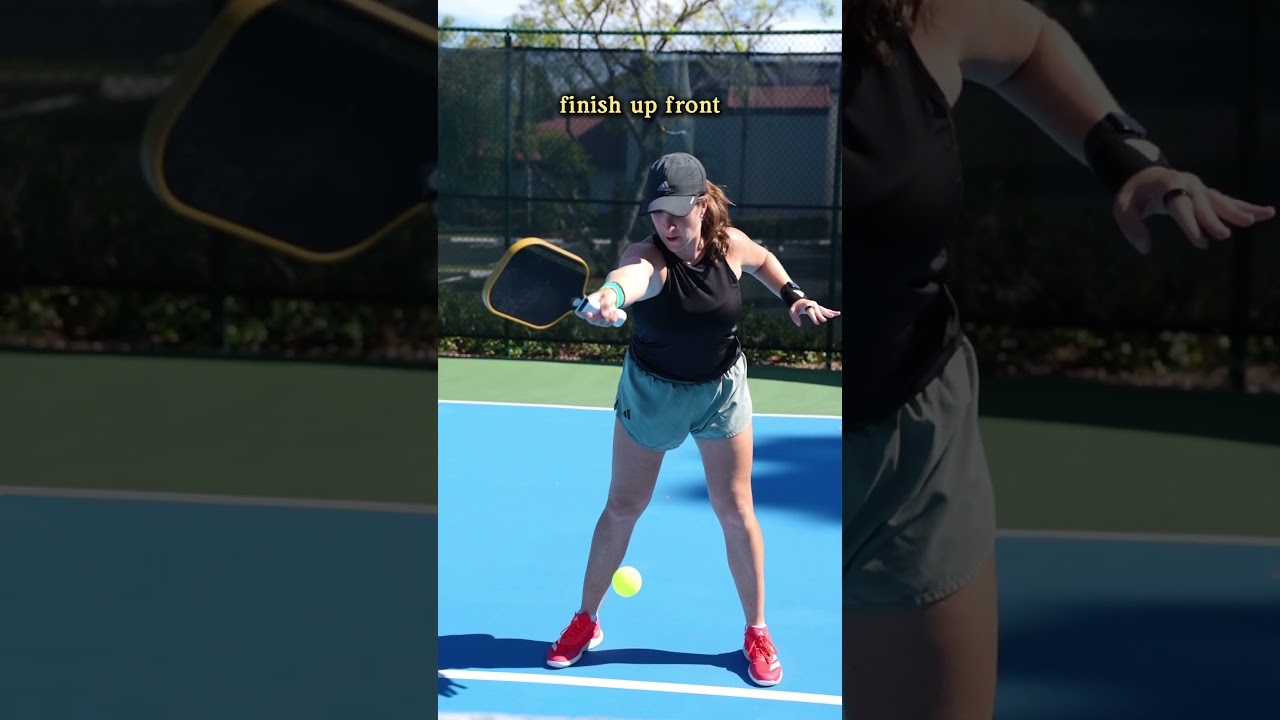
How Do You Stop Trying Too Hard to Win Pickleball Mid-Match?
You build a ten-second routine and run it every point, not just the ugly ones.
Trying too hard to win pickleball games is a momentum problem, and the between-point window is the only place you get to interrupt it.
Here's the sequence:
- Turn and walk. Face the back fence for two steps. Breaking eye contact with the net breaks the replay loop.
- Exhale longer than you inhale. Four counts out, two counts in. Long exhales settle the hands.
- Spin the paddle once. It's a physical reminder to drop back to a 4 or 5 on the grip.
- Say your one cue. Out loud if you're that guy. Nobody cares.
- Split step on their contact. Loose feet, loose everything.
Most players run some version of step 1 and skip the rest. Build the whole thing and you've got a repeatable mental reset after a bad mistake instead of a vague intention to calm down.
It works before you step on court too, which is why mental clarity before a match matters as much as a physical warm-up.
One more thing: tell your partner. "I'm gripping it too tight, say something if you see me rushing."
Doubles is a two-person nervous system, and getting on the right side of your partner includes the mental side.
 The Dink Media Team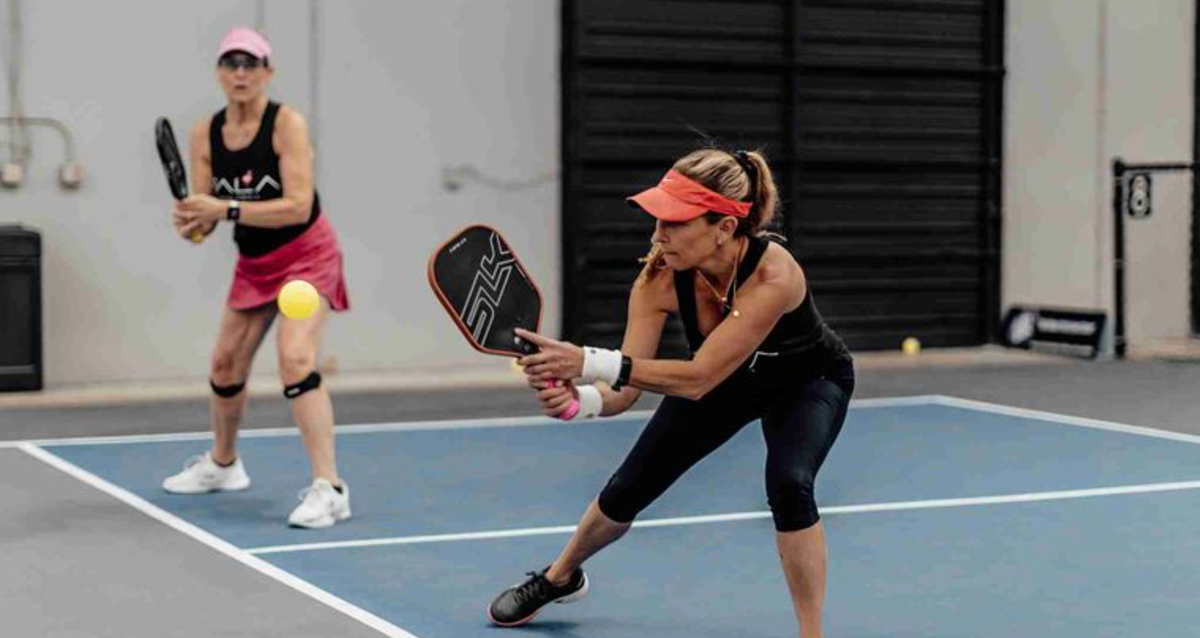
Does Playing Tight Cost You More Than Points?
Possibly, though the evidence is softer than the internet makes it sound.
In emergency department data, overexertion accounts for roughly 16% of pickleball injury mechanisms, behind falls and non-contact movement.
Across sports generally, a meta-analysis found a small but significant association between stress history and injury, with an effect size of r = .12.
Small is the operative word. None of that says playing tense will hurt you.
What it suggests is that the lunging, over-rotating version of you at 9-9 isn't your most efficient version.
Worth knowing the most common pickleball injuries before you chase a ball you had no business chasing.
 The Dink Media Team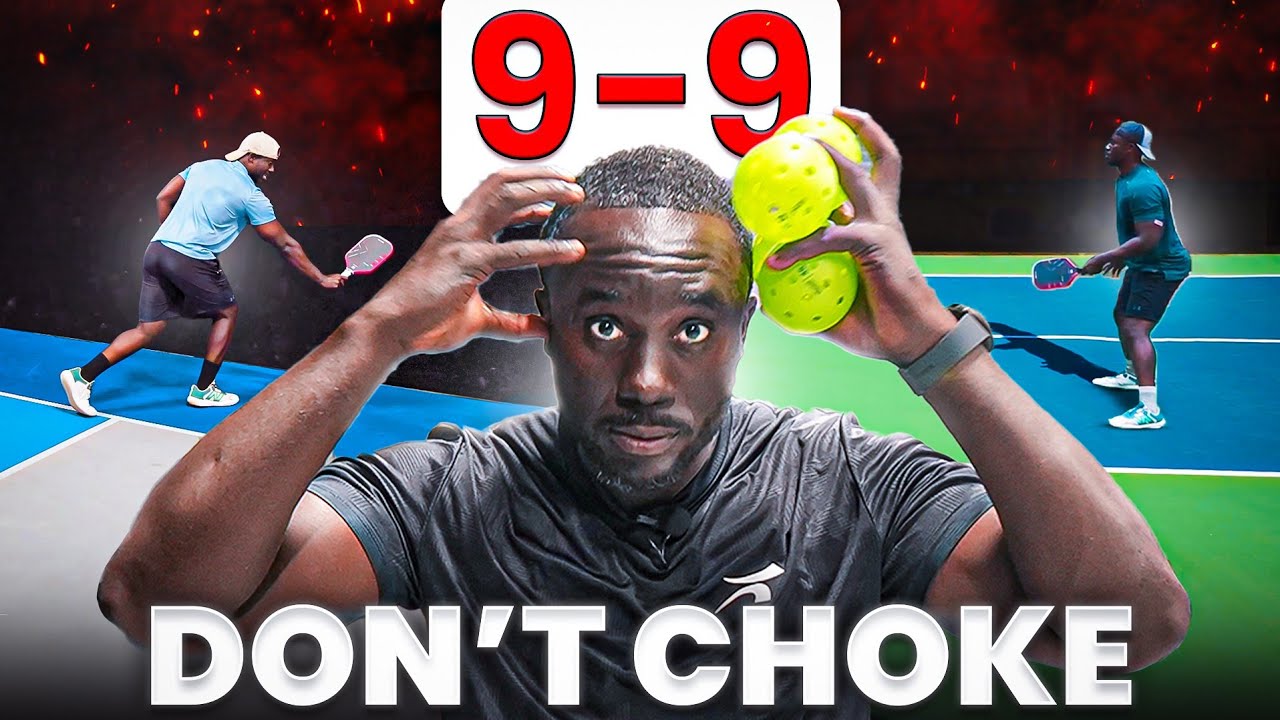
How Do You Practice Staying Loose Before It Matters?
You rehearse the pressure instead of avoiding it. Nobody learns to stay loose at 9-9 by playing a hundred relaxed games to 11.
Start your next practice game at 9-9. Every game. You'll play twenty tight points in an hour instead of two, and tight points are the reps you're actually missing.
Then add stakes that cost something: loser buys coffee, first team to lose two kitchen rallies does ten push-ups. Mild, silly, effective.
Layer in the 70% rule so what you drill survives a real opponent, and be honest about whether your drills are helping at all.
Half the people grinding dinks on a Tuesday are reinforcing the exact habit that breaks on Saturday.
Playing free isn't playing reckless. It means committing fully to a shot you've already chosen, which is the premise behind controlled aggression.
And if trying too hard to win pickleball games only bites you against hard hitters, that's tactical as much as mental; there's a system for beating bangers that beats white-knuckling it.
 The Dink Media Team
Key Takeaways
- Trying too hard to win pickleball points shows up physically first: tighter grip, shorter swing, frozen feet.
- Grip pressure belongs at a 4 or 5 out of 10 for soft shots. Most players climb to an 8 under pressure.
- Research on reinvestment suggests anxiety pushes skilled players back into consciously steering automatic motions.
- Run a five-step reset between every point, not just after errors.
- Start practice games at 9-9 so tight points become familiar instead of rare.
Frequently Asked Questions
How do I know if I'm trying too hard to win pickleball points?
Watch your grip and your follow-through. If the paddle feels heavy, your dinks are popping up, and your swing is finishing shorter than it did in warm-ups, you're tightening. Another tell is talking to yourself in full sentences mid-rally instead of using one short cue.
Why do I play better in rec games than in tournaments?
Rec play has no scoreboard weight, so your skills run automatically. Tournament play adds consequence, which tends to pull your attention back onto mechanics you'd already mastered. The fix is rehearsing pressure in practice rather than hoping it feels different on the day.
What's the fastest way to loosen up mid-game?
Exhale longer than you inhale, spin the paddle once, and drop your grip pressure to a 4 or 5. Then give yourself a single three-word cue for the next point. The whole thing takes under ten seconds and fits neatly between rallies.
Does being tense actually cause pickleball injuries?
The research is suggestive rather than conclusive. Overexertion accounts for about 16% of pickleball injury mechanisms in emergency department data, and stress history has been associated with slightly higher injury rates across sports, but the effect is small. Playing loose is better for your results first and foremost.
Should I tell my partner I'm getting in my head?
Yes, and earlier than feels comfortable. A partner who knows you're tightening can call a timeout, slow the pace, or simply remind you of your cue. Keeping it secret just means two people playing badly instead of one person fixing it.

Love Pickleball? Join 100k+ readers for free weekly tips, news & gear deals.
Subscribe to The Dink