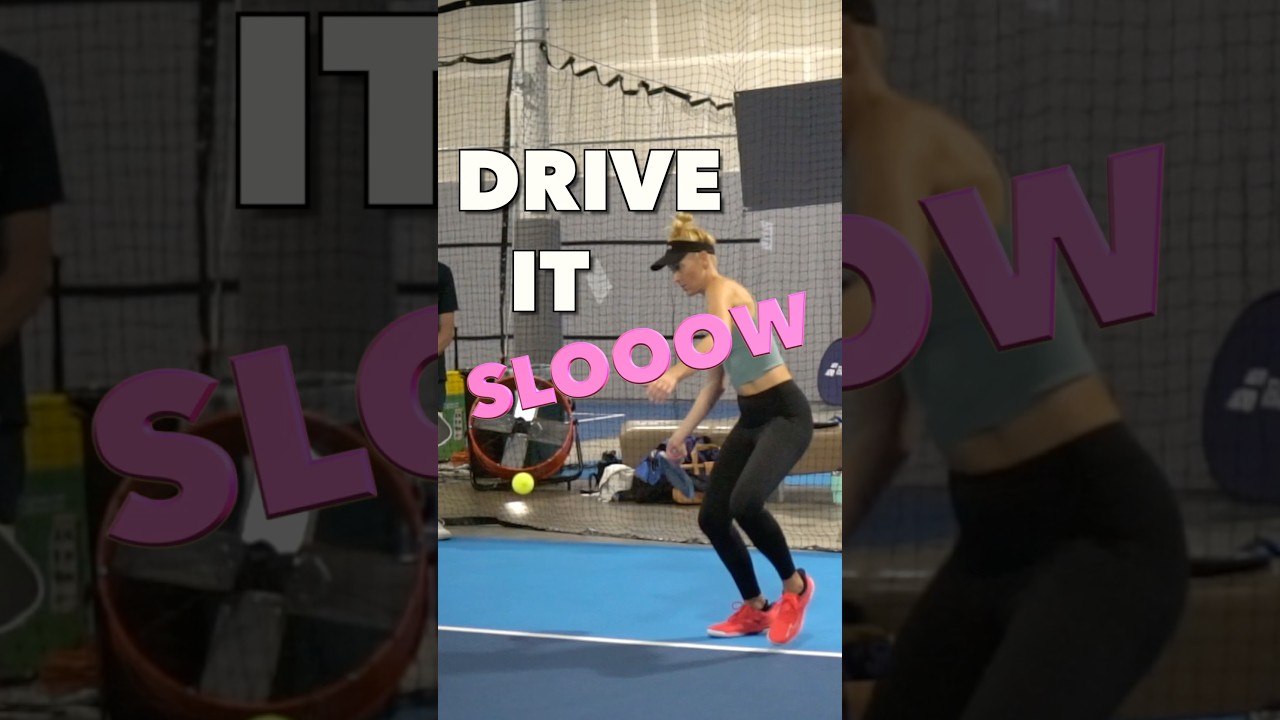
Raising your floor in pickleball means playing your worst-day game at a higher level. Richard Livornese breaks down the exact habits and techniques that separate consistent players from those who swing wildly between good and bad matches.
Every pickleball player knows the feeling. You walk onto the court one day and everything clicks.
Your dinks are soft, your drives are crisp, your volleys are clean. You're playing at your ceiling, and it feels incredible.
Then you play a tournament the next weekend, and suddenly you're making unforced errors left and right.
Your level swings so dramatically from match to match that you can't figure out who the real player is anymore.
Here's the thing: raising your floor in pickleball isn't about hitting more winners or adding flashy shots to your arsenal.
It's about playing your worst-day game at a higher level. It's about consistency, reliability, and simplicity when the pressure is on.
According to Richard from Richard Pickleball, a content creator focused on pickleball strategy and technique, this is the single most important concept for players at the 3.0 to 5.0 level who want to improve.
"When you're playing at your best, you're going for shots, it's working, it's awesome," Richard explains.
"But if you play a tournament, it's rare that you're able to keep that level for the whole tournament."
The solution?
Stop chasing your ceiling and start raising your floor.
What Does Raising Your Floor Actually Mean?
Your ceiling is the best you can play on your best day. Your floor is the worst you play on your worst day. For most competitive players, the gap between these two is enormous.
You might play like a 4.5 one day and a 3.0 the next, depending on how you're feeling, the conditions, or the pressure of the moment.
Raising your floor means narrowing that gap.
It means that even on your worst day, you're still playing solid, reliable pickleball. You're not trying to hit winners you can't hit.
You're not taking risks you shouldn't take. You're playing a simpler, more sustainable game.
Think about the best players in the world. Ben Johns, widely considered the GOAT of pickleball, doesn't win because he has the flashiest shots.
He wins because his worst day is still a really good day. He plays simple when he needs to, and that consistency is what separates him from everyone else.
1. The Drive Drop: Your Transition Game's Best Friend
The first place to raise your floor is in your transition game, and the tool you need is the drive drop.
Most players struggle with their drop shots. They roll, they slice, they try to add spin, and half the time the ball doesn't even land in the kitchen.
When you're tight in a big match, that inconsistency kills you. You need a transition shot that works every single time, no matter what.
Enter the drive drop.
Here's how it works: instead of trying to hit a delicate drop shot off the return, you hit a firm drive at your opponent's chest, get an easy volley back, and then push that volley into the net.
It sounds simple because it is.
"When I get tight, I hit this drive a hundred times. I make it a hundred times," Richard says.
"That's because there's no variables. There's no timing or anything. I'm just pushing the ball right at my opponent's chest."
The key is to keep it simple. Get low, put your paddle in front of you, and push forward. Don't swing. Don't try to dip it. Just push. Aim at your opponent's chest, not one inch over the net. This ensures you don't miss the ball, and it makes the timing easier for you when they volley it back.
Once they volley it, you use the push drop to get to the net. Open your paddle face, get under the ball, and lift it softly into the kitchen. No wrist action. No big swing. Just a simple push at a 45-degree angle.
This two-shot sequence (drive, then push drop) is your safety net when you're not feeling your best.
It's high percentage, it's repeatable, and it builds the kind of pickleball consistency that holds up in pressure situations.
 The Dink Media Team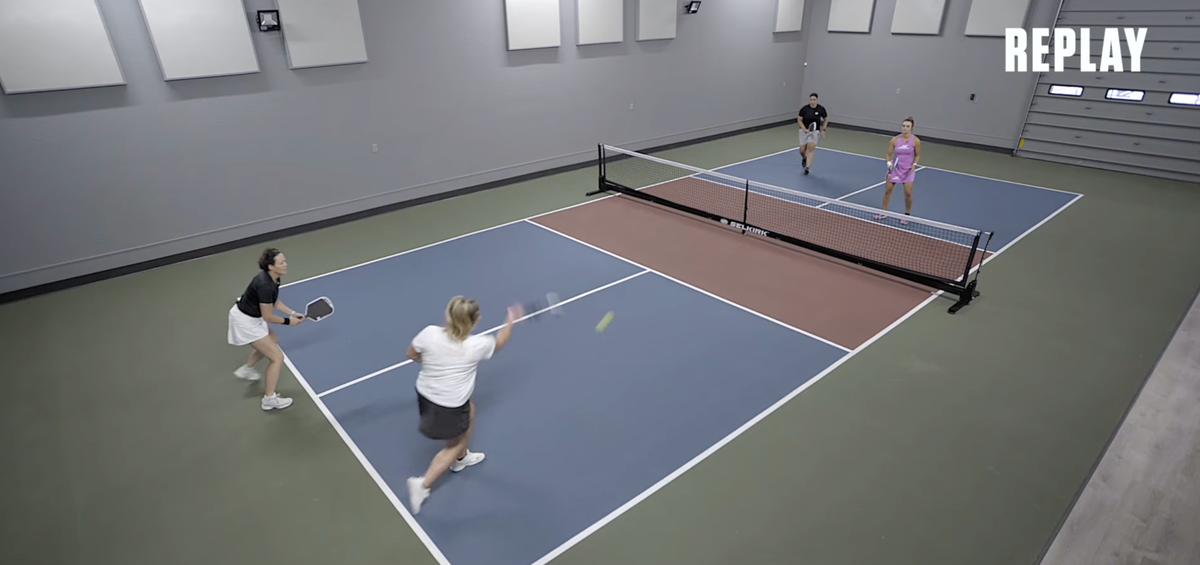
2. Simplifying the Net Game: Where Most Players Crack Under Pressure
The second place to raise your floor is at the net, and this is where most players make their biggest mistakes in big moments.
When everything's going well, you love to roll the ball. You're working on your topspin, your touch, your creativity.
But when the match is tight, when the points are big, rolling becomes a liability. You pop balls up. You miss. You give your opponent easy put-aways.
Richard learned this the hard way at the US Open finals. His paddle broke mid-match, and he had to use a brand new paddle he'd never hit with before.
So what did he do? He pushed more balls. He didn't roll. He didn't try to be fancy. He kept it simple, and he still won.
Here's the strategy: be quick to push or slice dinks instead of rolling them.
When you're not feeling great, pushing and making balls in the big moments will prove huge. You're not trying to hit winners.
You're trying to stay in the point and let your opponent make the mistake.
The second part of simplifying your net game is finding offense through movement, not aggression.
Instead of speeding up your rolls, move the ball around. Change locations. Make your opponent move their feet. Then reach for the ball when it comes back.
"I find all my offense in those big moments when that floor comes into play," Richard explains.
"Reaching, not speeding up off the bounce."
Why does this work? Because when you're tight, your opponent is tight too. If you keep dinking and moving the ball around, they'll eventually pop one up or miss.
You don't need to force a 50/50 ball. You just need to be patient and let them beat themselves.
The Dink Media Team
3. The Mental Game: Allowing Your Opponent to Make Mistakes
Here's something that sounds counterintuitive but is absolutely true:
Sometimes the best way to raise your floor is to allow your opponent to beat themselves.
When you get a dead ball at the net, your instinct is to speed it up and put it away.
But if you're in a tight match and you're not feeling your best, that's exactly when you should slow down and dink three more balls.
Your opponent is tight too. They're feeling the pressure. If you just keep dinking, they might pop one up or miss a dink.
"Sometimes you just get a popup," Richard says. "You need to allow your opponents to give you that.
That's how you raise your floor, allowing your opponent's mistakes to kind of propel you through."
This is especially true at lower levels. Players at the 3.0 to 4.0 range will give you freebies if you just stay patient.
They'll pull off the bounce when they shouldn't. They'll get risky on low balls. Your job is to not force the issue and let them make the error.
The key is to never pull off the bounce when you're tight, it's windy, or the points are big.
That's when everything goes wrong. Instead, reach for the ball, move it around, and wait for the popup.
Research published by CBS Sports on pickleball's mental game shows that patience and shot selection under pressure are the defining traits separating recreational players from competitive ones. It's not power. It's poise.
The Dink Media Team
4. Positioning and Patterns: The Foundation of Consistency
Raising your floor also means understanding the positioning and patterns that keep you in points longer.
When you're playing at your floor, you're not trying to hit winners off the bounce.
You're reaching for balls, moving your feet, and staying at the net. You're using crosscourt dinks to move your opponent side to side.
You're slicing the ball to change the pace and keep them guessing.
The number one tip for this? Move your feet.
A lot of players struggle to move their feet, so if you just move the ball around and let your opponent move theirs, you'll get pop-ups and easy balls. It's that simple.
Smart shot decisions and reliable pickleball consistency come down to court positioning as much as technique. Know where to be, and the right shot becomes obvious.
The Dink Media Team
Why This Matters for Your Game
The gap between your ceiling and your floor determines how good you really are.
You might know lots of players who can play really good pickleball, but a lot of them can't consistently play really good pickleball.
It's more about how good you are on your worst day.
That's what separates the great players from the good ones.
It's not the ceiling. It's the floor.
If you're somebody who's speeding up balls and trying to hit winners when you're not feeling your best, you're going to make tons of errors.
If you're somebody who's pushing, moving the ball around, and reaching when you're not playing well, you're going to make way less errors and not give your opponents freebies.
The choice is yours. You can keep swinging for the fences and hoping your ceiling shows up on tournament day.
Or you can raise your floor and become the kind of player who wins matches even when they're not at their best.
Frequently Asked Questions
What's the difference between my ceiling and my floor in pickleball?
Your ceiling is the best you can play on your best day. Your floor is the worst you play on your worst day. Raising your floor means playing better on your worst days, which narrows the gap between these two levels and makes you a more consistent, reliable player overall.
Why is the drive drop better than a regular drop shot?
The drive drop is high percentage because it removes variables like timing and feel. You're simply pushing the ball at your opponent's chest with no swing, getting an easy volley back, and then pushing that volley into the net. It works consistently, even when you're tight or uncomfortable.
Should I stop rolling the ball at the net?
Not entirely, but when you're in a big match or not feeling your best, pushing and slicing dinks is more reliable than rolling. Rolling requires more touch and timing, which breaks down under pressure. Pushing keeps the ball in play and forces your opponent to make the mistake.
How do I know when to reach versus when to let the ball bounce?
Reach for balls when your opponent isn't being aggressive and you have time to get to the net. If they're rolling you off the court or hitting hard, you might reach less. But for most players at the 3.0 to 4.0 level, reaching and moving the ball around is the safest strategy.
What's the best way to practice raising my floor?
Focus on the drive drop sequence and pushing dinks in practice. Play points where you're not allowed to roll or speed up balls. Force yourself to move your feet and reach for balls. The goal is to build habits that work even when you're not feeling your best.

Love Pickleball? Join 100k+ readers for free weekly tips, news & gear deals.
Subscribe to The Dink