


Pickleball brackets determine how players advance through a tournament, and knowing how to read them gives you a real competitive edge. This guide breaks down every format you'll encounter, from single elimination to round robin, and shows you exactly how to use bracket platforms before your next event.
Pickleball brackets are the backbone of every tournament you'll ever enter, and yet most players show up on match day without a clue how their path to the podium actually works.
That's a problem. Knowing the bracket format before you compete isn't just useful information - it changes how you warm up, pace yourself, and mentally prepare for what's ahead.
Whether you're chasing gold at a local rec tournament or tracking a PPA event from your couch, understanding how pickleball brackets are structured is the foundation of being a serious competitor.
Love pickleball? Then you'll love our free newsletter. We send the latest news, tips, and highlights for free each week.
What Are Pickleball Brackets, Exactly?
A pickleball bracket is a structured draw that maps out how players or teams compete against each other throughout a tournament.
It shows the match schedule, who advances, and the path to the championship.
Think of it as the tournament's roadmap - every match result feeds into the next round, and the bracket updates in real time as games finish.
Most platforms that host pickleball brackets display them as a tree-style diagram.
You start on the left side (or the top, depending on the layout), and winning teams move right toward the final.
Losers either drop to a consolation bracket or are eliminated entirely, depending on the format.
At USA Pickleball-sanctioned events, the bracket draw is typically released a few days before competition begins, giving players time to scout their first-round opponent.
That window matters. Use it.
Why Pickleball Brackets Look Different Than Other Sports
Here's the thing: pickleball tournament formats aren't standardized the way tennis or basketball brackets are.
You might show up to one event and play a pure double elimination draw.
The next weekend, it's a round robin pool feeding into a single elimination final.
Some events even run hybrid formats where the pool stage determines seeding for a separate bracket stage.
The variation is real. And it's exactly why reading the tournament details before you register is non-negotiable.
The Three Tournament Formats You'll See on Pickleball Brackets
Every pickleball bracket you encounter falls into one of three categories.
Knowing each one tells you how many matches to expect, how to budget your energy, and what a loss actually costs you.
Single Elimination: Fast, Clean, Unforgiving
Single elimination is exactly what it sounds like. You lose once, you're out. Full stop.
This format is less common in recreational play but shows up in medal rounds, consolation brackets, and some smaller local events where court time is tight.
The upside is simplicity: the bracket is easy to read, every match has maximum stakes, and the whole thing wraps up quickly.
The downside is zero margin for error. One bad game on a slow morning can end your day before it really starts.
For bigger pickleball tournaments, single elimination is usually reserved for the final rounds after a double elimination or round robin stage has already winnowed the field.
Double Elimination: How Most Pickleball Brackets Work
Double elimination is the dominant format at most USA Pickleball-sanctioned events, and for good reason.
You get two chances before you're eliminated. Lose your first match, and you drop to the consolation (or "losers") bracket.
Win there, and you can fight your way back to the gold medal match.
This is what gives pickleball tournament play its distinctive rhythm.
The "winners bracket" and the "losers bracket" run simultaneously, and a player who drops to the consolation side early can absolutely work their way back and win the whole thing.
It happens more often than you'd think.
Reading a double elimination bracket requires tracking two trees at once.
When you look at the draw, find your name in the main bracket first, then identify where you'd land in the consolation bracket if you lose.
That tells you how long your day could potentially be.
Round Robin: The Format That Guarantees More Play
Round robin pools are common at beginner and intermediate events, and for good reason: every player in the pool plays every other player, regardless of wins and losses.
No one gets knocked out after one bad match.
You accumulate points, and standings determine who advances to the single or double elimination stage.
This format is great for newer competitors or anyone who wants more court time per dollar of entry fee.
It's also more forgiving physically - you know exactly how many matches you'll play in the pool stage, so pacing is easier to manage.
The DUPR collegiate individual national championship has used pool play formats with a bracket finale, which reflects the growing trend of hybrid structures at higher-level events.
 The Dink Media Team
How Do You Read a Pickleball Bracket Without Getting Lost?
Reading pickleball brackets is straightforward once you know the structure.
Start by identifying your name in the draw, then trace the line to your first-round opponent. A win moves you up (or right, depending on the layout).
A loss in double elimination moves you to the consolation bracket, which is usually displayed below the main draw.
Look for the bracket legend - most tournament software includes color coding or labels.
Winners bracket matches are typically marked differently from consolation matches, and the bracket will indicate at which point the two sides converge for the final.
Pay attention to the "bracket byes." If a bracket has an odd number of players, some seeds will receive a bye in the first round, meaning they advance automatically without playing.
Byes are awarded based on seeding, so higher-seeded players benefit most.
The other thing to scan: match times.
Most platforms like PickleballBrackets.com will populate projected start times as the bracket fills in.
Those times are estimates, but they'll give you a workable warm-up window.
How Seeding Works in Pickleball Brackets
Seeding in pickleball brackets is the process of ranking players before the draw is set, so that the strongest competitors don't meet until the later rounds.
The primary seeding tool for most competitive pickleball events is the DUPR rating system (Dynamic Universal Pickleball Rating), a globally standardized metric that rates players on a 2.000 to 8.000 scale based on actual match results.
When you register for a pickleball tournament, you'll either submit your DUPR profile or self-report your skill level.
Tournament directors use those inputs to build the bracket and assign seeds.
The highest seed (No. 1) is typically placed at the top of the bracket, with the second seed at the bottom, to ensure they'd only meet in the final.
If you want to understand how your DUPR rating is calculated and why it matters for bracket placement, it's worth reading up on the system before you register.
Going in with an accurate rating puts you in the right skill division, which makes for better competition across the entire bracket.
 The Dink Media Team
Where to Find and Use Pickleball Brackets Online
The dominant platform for pickleball brackets is Pickleballtournaments.com, a tournament management tool specifically built for the sport.
It handles registration, bracket generation, scheduling, and live score updates in one place.
Most local clubs and regional tournament directors use it as their primary software.
Think of it as the Bracket HQ for the recreational and competitive amateur side of the sport.
You create an account, search for tournaments in your area, register for your skill division, and then access your bracket once it's published.
Other platforms you'll encounter:
- The Dink Minor League Pickleball - the best amateur play in the nation with the most unique format
- DUPR - Integrated directly with your DUPR profile for rating-based draws
- USA Pickleball Tournament Management - Required for sanctioned national events
For tracking pro events, the PPA Tour and APP Tour each maintain their own bracket and results pages.
The MLP (Major League Pickleball) runs a team format rather than individual brackets, which is a different structure entirely.
One more tip: bookmark your bracket URL before tournament day.
Cell service at outdoor venues can be unpredictable, and having the page loaded ahead of time has saved more than a few players from scrambling to find their court assignment mid-warm-up.
 Jason Flamm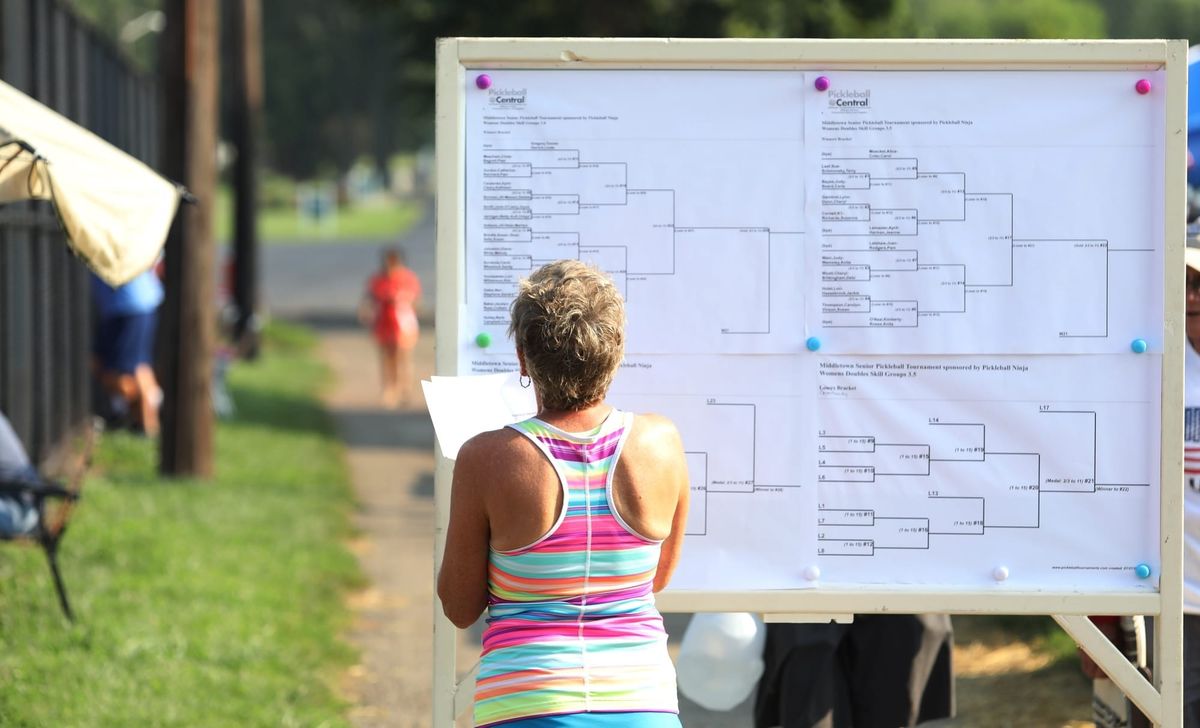
Should You Register for Your First Tournament?
Yes. Honestly, the answer is yes - and Zane Navratil has made this point publicly: average players consistently underestimate how much tournament experience accelerates their development.
The competitive pressure, the structured scoring, the stakes of every rally - it forces a different level of focus that casual play just doesn't replicate.
Start with a local round robin event if you're not sure about your skill level.
The format guarantees you multiple matches and gives you a feel for tournament pace without the gut-punch of an early single elimination exit.
Check pickleball tournaments near you on PickleballBrackets.com or the USA Pickleball tournament finder.
A few things to do before you register:
- Get your DUPR rating by logging results from your current games. Even a few matches give you a working number.
- Check the bracket format in the event details - you want to know if it's double elimination, round robin, or a hybrid before you commit.
- Read the skill division descriptions. Entering the wrong division is worse than not entering at all.
The bracket is just a map. The sooner you learn to read it, the sooner you stop being intimidated by it.
For players looking to sharpen their game before competing, investing in key skill areas and understanding doubles strategy fundamentals will translate directly to tournament results.
 The Dink Media Team
Key Takeaways
- Pickleball brackets come in three main formats: single elimination, double elimination, and round robin.
- Double elimination is the most common format at USA Pickleball-sanctioned events.
- Seeding in pickleball brackets is based on your DUPR rating or self-reported skill level at registration.
- Pickleballtournaments.com is a widely used platform for finding, entering, and following tournament draws.
- Reading your bracket before tournament day tells you how many matches you'll play and who you're likely to face.
Frequently Asked Questions
What are pickleball brackets and how do they work?
Pickleball brackets are tournament draw structures that map out how players compete and advance toward a championship. After registration closes, the tournament director seeds players based on DUPR ratings or self-reported skill levels, then generates the bracket. Players follow their path through the draw by winning matches, with the format (single elimination, double elimination, or round robin) determining what happens after a loss.
What is the most common pickleball bracket format?
Double elimination is the most common format at USA Pickleball-sanctioned events. It gives every player two chances before elimination by running a winners bracket and a consolation (losers) bracket simultaneously. A player can lose in the first round and still win the gold medal by working through the consolation side.
How do I find my name in a pickleball bracket?
Log in to the platform where you registered (most commonly PickleballBrackets.com) and navigate to your event. Brackets are usually published a few days before competition. Use the search or filter function to find your name, then trace your match path from the first round forward. Most platforms send an email or notification when the bracket goes live.
Does my DUPR rating affect which bracket I'm placed in?
Yes, directly. Your DUPR rating determines both your skill division placement and your seeding within the bracket. A higher DUPR rating means you're seeded higher, which typically places you opposite lower-rated players in the early rounds. Accurate ratings create fairer brackets for everyone, so keeping your DUPR current before registering for events matters.
Can I compete in pickleball brackets without a DUPR rating?
Most recreational and local events allow self-reported skill levels (2.5, 3.0, 3.5, etc.) instead of a verified DUPR score. However, USA Pickleball-sanctioned tournaments increasingly require or strongly encourage DUPR verification to ensure accurate division placement. For your first event, self-reporting is usually fine; as you compete more, getting a verified DUPR rating becomes increasingly important.

Love Pickleball? Join 100k+ readers for free weekly tips, news & gear deals.
Subscribe to The Dink