
How to Hit a Speed Up in Pickleball Without Gifting Away the Point
Most rec players lose points because they speed up on the wrong ball, not because their hands are slow. Here's how to hit a speed up in pickleball using the ball-height rule, a disguised compact motion, and body targets the pros actually aim at.
If you've been searching for how to hit a speed up in pickleball, the honest answer starts before your paddle ever moves. The shot isn't a swing.
It's a decision, and most rec players lose points because they make that decision with their ego instead of their eyes.
You dink four times, get bored, and rip one into the tape. Sound familiar? That's the most common way speed ups fail, and it has nothing to do with your hands.
The good news: this is fixable in about two practice sessions.
The speed up is one of the most learnable shots in the game once you stop treating it as a winner and start treating it as a setup.
Love pickleball? Then you'll love our free newsletter. We send the latest news, tips, and highlights for free each week.
What Exactly Is a Speed Up, Anyway?
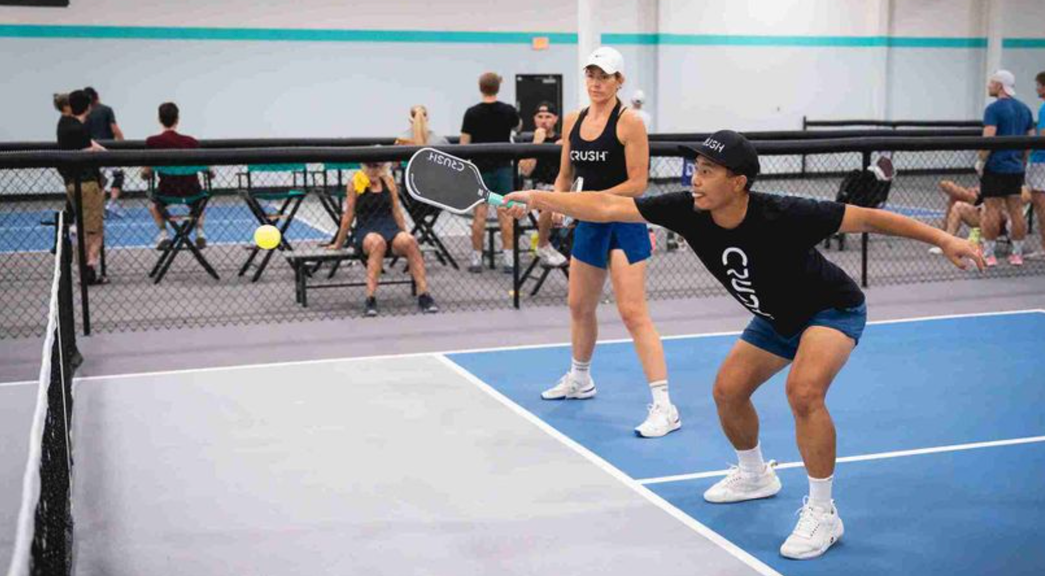
A speed up is any shot that converts a soft kitchen exchange into a fast one. You're dinking, the ball sits up slightly, and you accelerate it at your opponent's body or hip to force a rushed reply.
That's it. No overhead, no drive from the baseline. Just a sudden gear change from the kitchen line.
Here's the part most players miss. The speed up almost never ends the rally by itself.
Pros use it to start a hands battle they expect to win, not to hit a clean winner.
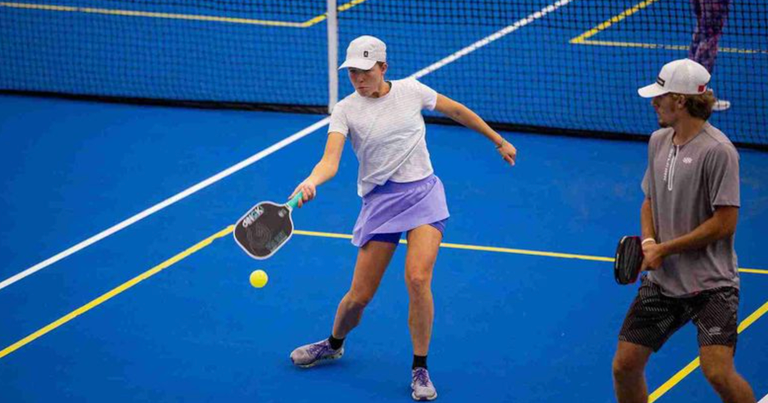
PPA pro Ava Ignatowich has made this exact point: the shot is designed to force a weak reply you can put away on the next ball.
Once you accept that, everything about how to hit a speed up in pickleball changes. You stop swinging for winners and start attacking with a plan.
How to Hit a Speed Up in Pickleball: Read the Ball First
The ball tells you whether to attack. You don't get a vote.
This is the single biggest separator between a 3.5 and a 4.5, and it's why ball height and court position matter more than paddle speed.
The rule is simple. Off the bounce, never attack a ball below your knee. Waist height or higher is your window.
Out of the air, anything below hip level in front of you is a trap.
If the ball is dropping below the net tape at contact, you're hitting up, and hitting up at a set opponent is how you feed them a free putaway.
That height rule is the backbone of every pro speed up strategy worth copying.
Coaches at Pickleball.com describe three green lights worth memorizing: the ball sits slightly above net height, your opponent is leaning or reaching, or the ball lands clean in your strike zone out front.
One of those, you go. None of those, you keep dinking. Learning to spot that floaty dead dink is half the battle.
Why Does Balance Matter as Much as Ball Height?
Because an off-balance attack is just a fancy unforced error.
If you're stretched wide, lunging, or still recovering from the last dink, the ball height doesn't matter.
You've already lost the exchange you're about to start. Pros check two boxes before pulling the trigger: feet set, ball up.
Miss either one and they reset instead. That's the whole attack-or-reset decision in one sentence, and it's worth more to your rating than any new paddle.
Honestly? Most players would win more points by speeding up half as often, and by trusting their dink placement to create the opening instead.
The Mechanics: Small Beats Strong
Your speed up should look exactly like your dink until the last four inches. That's the whole trick.
Disguise does more damage than power, because a telegraphed attack at 40 mph gets countered while a hidden one at 30 mph gets popped up.
Keep the same setup, the same paddle path, the same shoulder line. Then snap the wrist.
No backswing. No arm. If your opponent can see your elbow load up, they're already stepping into the counter.
The set-and-snap technique covers this better than anything else on the site.
Contact happens out in front of your body, between waist and chest. Behind your hip, you lose both angle and control.
Learning how to hit a speed up in pickleball with a disguised motion beats adding ten mph every time.
This is where the backhand flick shines, because the compact backhand motion hides intent naturally.
Where Should You Actually Aim?
At the body. Specifically the hip or the paddle-side shoulder. Not the open court.
The open court looks tempting and it's a trap: your opponent's paddle is already out there, and you've given them a clean swing.
Aim at a right-hander's right shoulder instead and they're jammed between forehand and backhand with nowhere good to go.
There's a reason target selection shows up in every advanced coaching session.
Want a cheat sheet? Here are the three targets, ranked:
- Paddle-side shoulder. Forces the chicken wing, produces the most pop-ups.
- Hip and belly button. Nowhere to swing, minimal reaction space.
- Dominant foot. Sneaky effective against players who stand tall.
And a fourth worth knowing: the spots that generate the most pop-ups shift depending on whether your opponent sits in a low athletic stance or stands upright.
 The Dink Media Team
How to Hit a Speed Up in Pickleball and Survive What Comes Back
Assume the ball is coming back, then position for it. Most players attack and freeze, admiring their work.
That half-second of admiration is where the point gets lost, and it's why counterattacking is a separate skill worth its own practice time.
There's a simple geometry rule here. Speed up straight ahead, the counter comes back straight. Speed up crossbody, the counter ricochets back diagonally.
Know which one you just hit and you know where to have your paddle.
That awareness is what separates players who win kitchen line hands battles from players who get bullied in them.
Paddle up, out front, roughly chest height, before your follow-through even finishes.
Half of learning how to hit a speed up in pickleball is learning what to do in the second after you hit it.
If you're getting beaten in fast exchanges, your paddle position is usually the culprit, not your reflexes.
How to Hit a Speed Up in Pickleball Off the Bounce vs Out of the Air
Out of the air is the higher-percentage play.
You take time away, you contact the ball higher, and your opponent gets a shorter window to block or push back.
Off the bounce, the ball has already lost height and pace, which means you're generating everything yourself and usually contacting lower.
It works when the dink bounces up to your waist. It fails when you force it on a good, low dink.
USA Pickleball's Level 3 guidance frames the same principle from the other side: practice soft blocks to reset speed ups rather than trying to out-hit them.
If you only change one thing this week, make it this: hunt air balls, leave the low bouncers alone.
 The Dink Media Team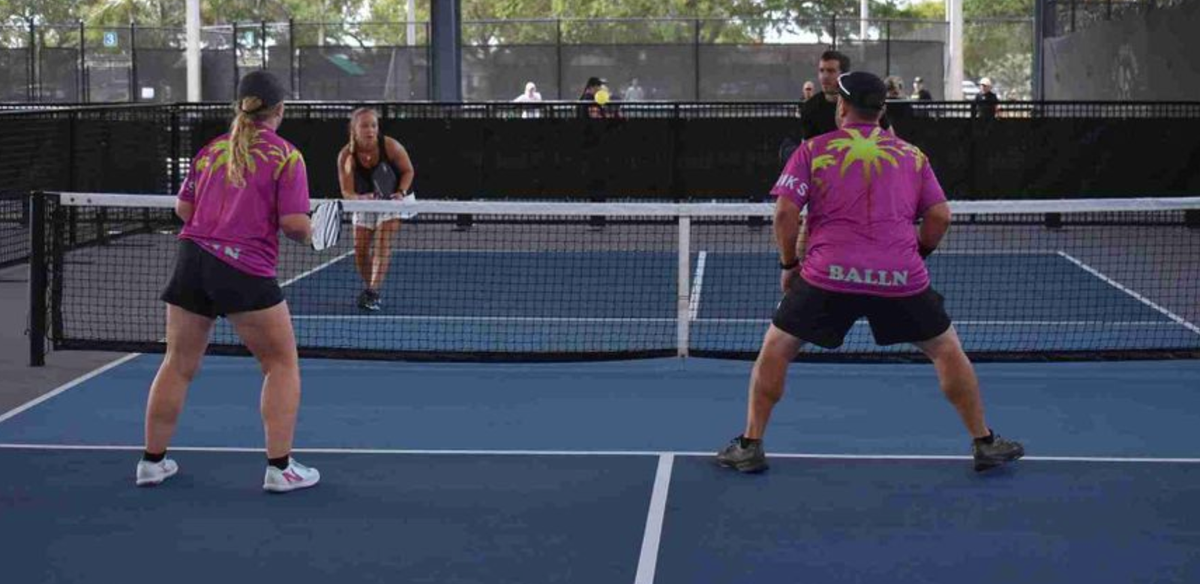
Drilling It So It Shows Up on Game Day
Practice the decision, not just the swing. Here's the drill that fixes this fastest.
Dink crosscourt with a partner. Your partner randomly feeds one ball slightly high every eight to ten dinks. Your job is to attack only that ball.
Everything else, you dink. You'll be shocked how often your hand twitches at a ball that wasn't there. That twitch is the habit speed up training is meant to kill.
Then add the counter. After you speed up, your partner blocks it back and you play the point out.
This trains the second and third ball, which is where the real hands work lives.
Finally, work the other side of it. Being hard to attack is its own skill, and staying unattackable means your dinks stay low enough that nobody gets this green light against you.
The best attackers are usually the best dinkers first, and they're just as comfortable choosing the reset when the ball says no.
 The Dink Media Team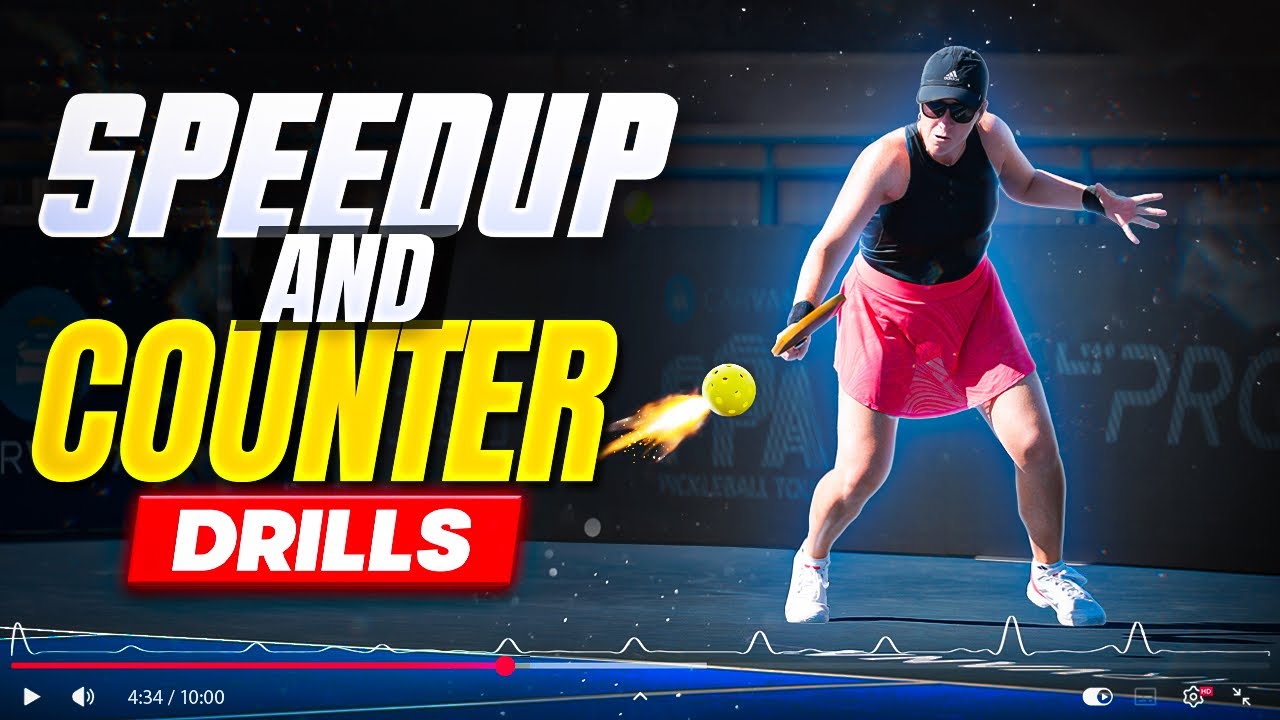
Key Takeaways
- How to hit a speed up in pickleball starts with ball height: waist or higher off the bounce, hip or higher out of the air.
- Balance is a hard requirement. Feet set or you reset.
- Disguise beats power. Same setup as your dink, then a compact wrist snap with no backswing.
- Aim at the body, specifically the paddle-side shoulder or hip, never the open court.
- Expect the counter. Straight attacks come back straight; crosscourt attacks come back crosscourt.
- Out of the air is higher percentage than off the bounce.
Frequently Asked Questions
How often should I speed up in a rally?
Far less than you think. At the pro level, speed ups make up a small slice of kitchen exchanges precisely because the conditions for a good one don't show up often. Most rec players would improve immediately by cutting their attack frequency in half and waiting for a genuinely high ball.
What's a realistic success rate for a speed up?
Coaches generally put it around 60% for solid 4.0-plus players, and that number counts rallies where the speed up created a put-away on the next shot rather than winning outright. If you're measuring success by clean winners, you'll be disappointed and you'll start swinging harder, which makes things worse.
Should I speed up with my forehand or backhand?
Backhand, more often than most players expect. The backhand flick has a shorter, more compact motion, which makes it easier to disguise and harder to read. Forehand speed ups are powerful but telegraph more because of the bigger takeback.
How do I know if I'm ready to learn how to hit a speed up in pickleball?
If you can dink twenty balls in a row crosscourt without popping one up, you're ready. Attacking is a skill you add on top of a reliable soft game, not a shortcut around building one. Players who chase the speed up before their dinks are consistent just find faster ways to lose points.
Why do my speed ups keep hitting the net?
You're attacking balls that are too low. If the ball is below your knee off the bounce or below your hip out of the air, you have to hit upward to clear the net, and there's almost no margin. Raise your contact-point standard and the net errors disappear.
How do I defend against a good speed up?
Paddle up and out front, soft hands, and aim to block the ball back into the kitchen rather than counter-attacking. Trying to out-hit a well-struck speed up is how you lose the exchange. Reset it, get back to neutral, and make them do it again.

Love Pickleball? Join 100k+ readers for free weekly tips, news & gear deals.
Subscribe to The Dink