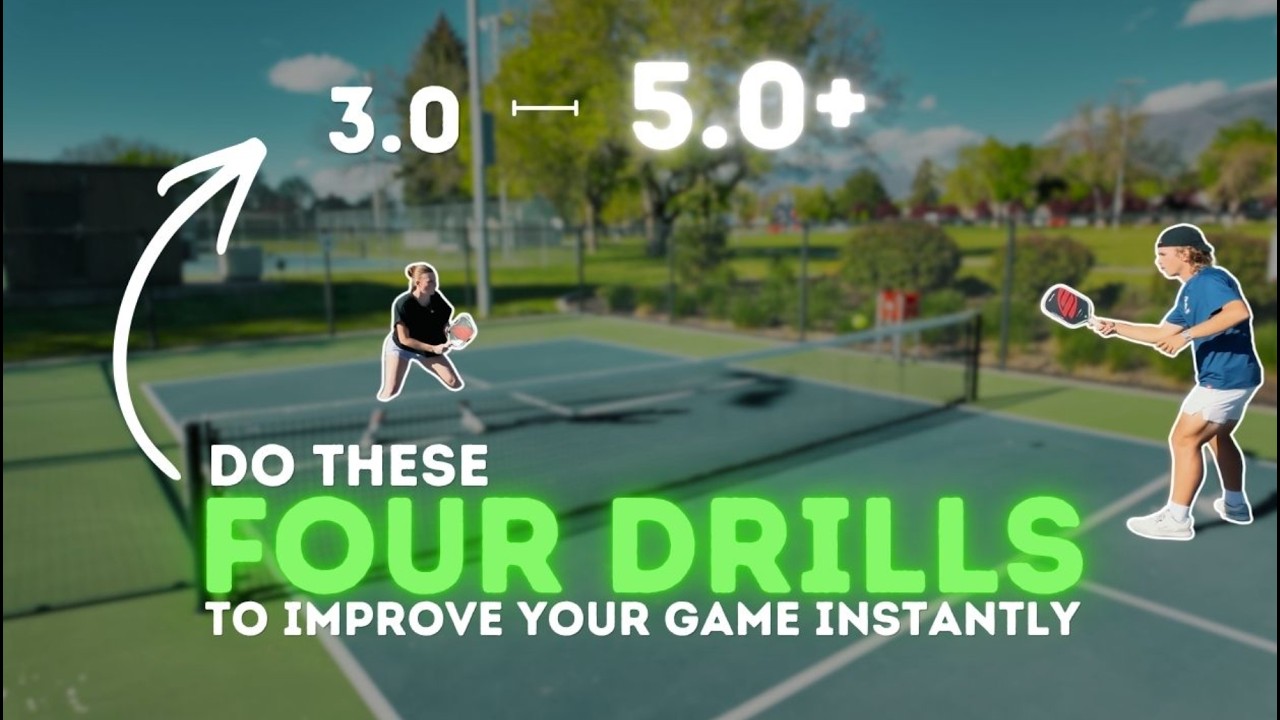
If you want to get better at pickleball fast, these are the 4 essential pickleball drills you should actually be doing. Every single one translates directly into real games.
If you want to get better at pickleball fast, these are the 4 essential pickleball drills you should actually be doing.
Not the flashy Instagram highlight reels. Not the trick shots that look cool but don't translate to match play.
The real drills that professional players use to sharpen their games.
Liam Duffin, a professional pickleball player on the PPA Challenger Tour and collegiate competitor, along with Mary Monson, a retired collegiate player and recently signed professional, break down exactly which pickleball drills matter most and why they work.
Love pickleball? Then you'll love our free newsletter. We send the latest news, tips, and highlights for free each week.
Why These Pickleball Drills Actually Matter
Here's the thing: most players waste time on drills that don't transfer to real matches.
They hit balls mindlessly, go through the motions, and wonder why their game doesn't improve.
The difference between a good player and a great one isn't talent. It's intentionality.
Duffin and Monson emphasize that every pickleball drill should serve a specific purpose. You're not just hitting balls.
You're building decision-making skills, muscle memory, and court awareness that directly apply when you're in a competitive match.
The four pickleball drills they recommend aren't random either. Each one targets a critical skill:
- Consistency
- Control
- Pressure management,
- Precision
Master these, and your game will skyrocket.
Drill #1: The 7-Eleven Game (Skinny Singles)
The 7-Eleven drill is where most players should start. It's simple in concept but brutal in execution.
One player starts at the baseline (trying to reach 7 points), while the other starts at the net (trying to reach 11 points).
The baseline player must work their way to the kitchen line while hitting every type of shot: volleys, drives, drops, and transition zone balls.
Why does this pickleball drill work? Because it forces you to make real-time decisions under pressure.
You're not just practicing one shot. You're practicing all of them, in sequence, while managing the disadvantage of starting at the baseline.
Monson explains the mental side: "7-Eleven is a high-pressure game.
If you're at the baseline, you're at an automatic disadvantage because your opponent's at the net.
You have to have great shot selection and be patient and calculated with all your decisions."
The net player, meanwhile, has to score four more points than their opponent to win. Every shot matters.
This teaches you to go for high-percentage shots you trust, not wild attempts that end up in the net.
 Alex E. Weaver
Drill #2: Cross-Court Dinking with Purpose
Most players think dinking is boring. They're wrong.
Cross-court dinking is where matches are won and lost.
But here's the catch: you can't just dink anywhere. You need to dink with intention.
Duffin and Monson focus on hitting dinks down the middle of the court, not pushing angles out wide.
Why? Because middle dinks are high-percentage shots. They take away your opponent's angles and set you up to attack your signature shot.
"When we push angles out wide, that's more of a weapon that we keep in our tool belt rather than a go-to shot," Monson says.
"We focus on really perfecting these dinks in the middle of the court. These are going to be our go-tos when the game gets close."
This pickleball drill teaches you patience. You're not trying to win the point immediately.
You're setting it up. You're moving your opponent around. You're creating an opportunity for your best shot.
The net is two inches lower in the middle than it is down the sideline.
That means you'll make more balls by hitting middle dinks. Simple math. Better percentages. More wins.
The Dink Media Team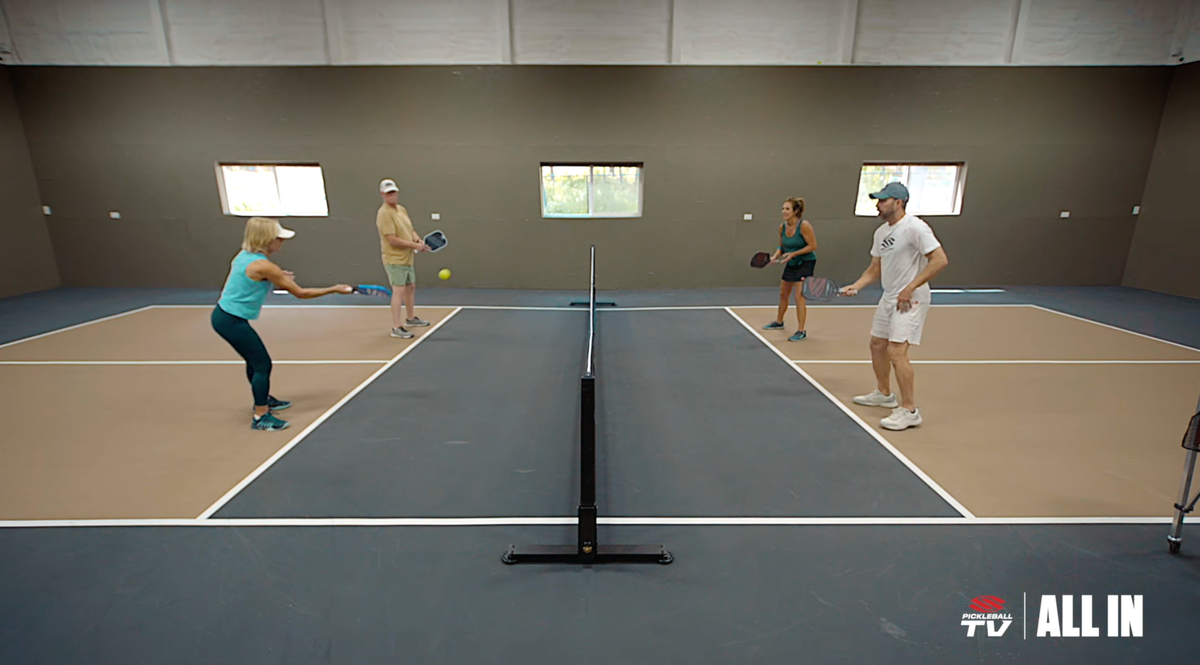
Drill #3: The Third Shot Drop to the Middle
The third shot is the most important shot in pickleball. It's the transition from the baseline to the net. Mess it up, and you're on defense.
Execute it well, and you control the point.
Duffin emphasizes hitting your third shot drop to the middle of the court, not out wide. "It takes away your opponent's angles.
It's a little bit easier for you to come up to that kitchen line," he explains.
When executing this pickleball drill, focus on two things.
- First, hit the ball on the descending part of the bounce, not on the way up. This lets you get underneath the ball and push it softly over the net.
- Second, use your body momentum. Let your body move through the shot. Your biggest muscles do the work, not just your arm.
Duffin also recommends standing near the middle T when practicing this drill. "This is something you don't see a lot of people doing," he says.
"I'm going to hover on both the left and right side, hitting forehand and backhand drops from this area."
This teaches you to be comfortable hitting the third shot drop from anywhere on the baseline, not just from your preferred side.
The Dink Media Team
Drill #4: Volley Control and Target Practice
The final essential pickleball drill focuses on volleys. You can grab a partner or even hit against a wall. The key is focusing on your target area.
"If you can master your target on where you're hitting these balls out of the air, you're going to be controlling the point so much more often than if you have to let that ball bounce and take it off the bound," Duffin says.
When hitting volleys, think about your knuckles (on backhand) and your palm (on forehand). Your knuckles or palm should face your target the entire time.
If they don't, your paddle face won't be facing the right direction.
Monson adds another critical element: staying compact.
"The game right now with such hot paddles and it's getting very fast. If we're doing these big ridiculous swings, we won't have time to reset for the next ball."
Keep your volleys short and controlled. Don't glue your elbows to your sides, though.
That tightens your shoulders. Instead, keep a fist's distance between your elbow and your body. This keeps your volleys out in front, where you can control them.
If you're struggling, hit softer. Control the ball. Get it to your partner. Once you've got the hang of it, speed it up.
The Dink Media Team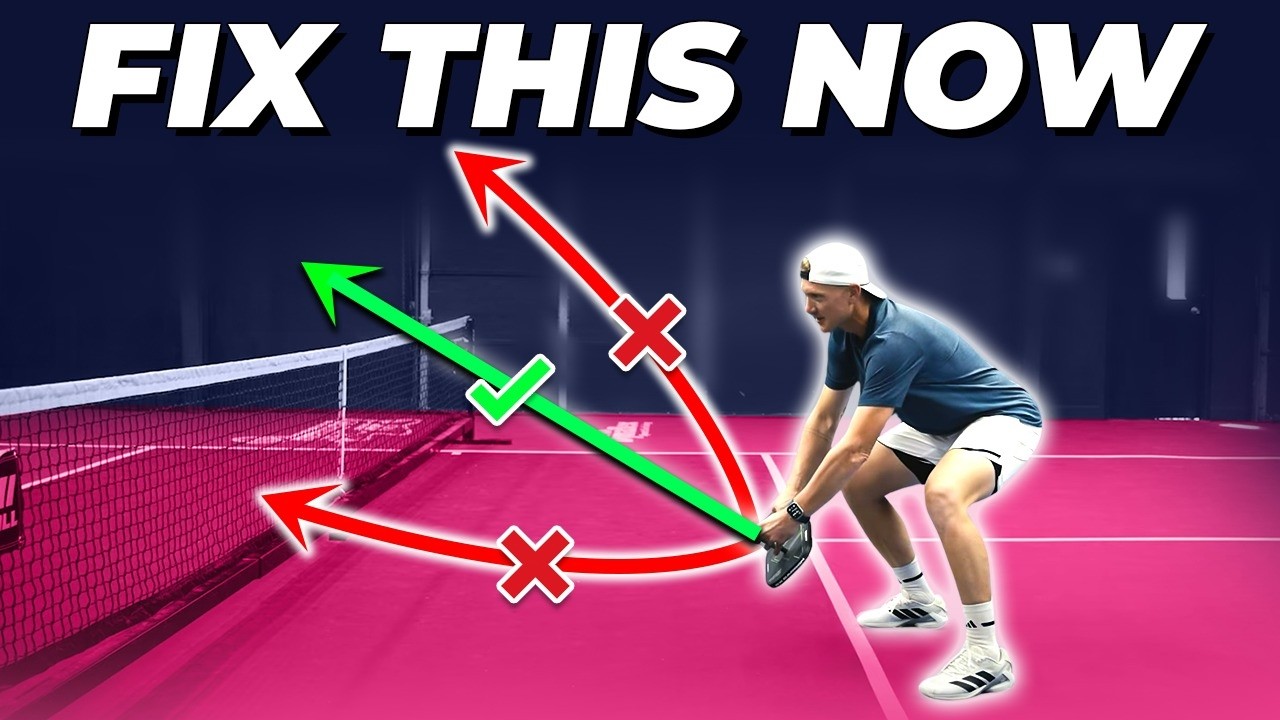
Putting It All Together
The beauty of these four pickleball drills is that they build on each other. The 7-Eleven game teaches you decision-making.
Cross-court dinking teaches you patience and setup. The third shot drop teaches you transition. Volleys teach you control and precision.
Do these drills consistently, and you'll see improvement in your actual matches.
Not because you're hitting more balls. But because you're hitting the right balls, with the right intention, under the right conditions.
"If you can master these drills, your game will skyrocket," Duffin promises.
And based on what he and Monson demonstrate, he's not exaggerating.
Frequently Asked Questions
What's the best pickleball drill for beginners?
Start with the 7-Eleven game. It forces you to hit all types of shots and teaches you decision-making under pressure. Even though you start at a disadvantage, that's exactly why it works. You'll learn to stay patient and make smart choices.
How often should I do these pickleball drills?
Consistency matters more than frequency. If you can do these drills two to three times per week, you'll see noticeable improvement within a month. The key is staying intentional and focused during each session.
The Dink Media Team
Can I do these pickleball drills alone?
Some of them, yes. You can practice the third shot drop and volleys against a wall. But the 7-Eleven game and cross-court dinking really need a partner. Find someone at your local court who's willing to drill with you.
How long should a pickleball drill session last?
Quality over quantity. Thirty minutes of focused drilling beats two hours of mindless hitting. Focus on one or two drills per session, execute them with intention, and you'll get more out of it.
What's the difference between drilling and playing matches?
Drilling is controlled. You're isolating specific skills and repeating them. Matches are chaotic. You're dealing with different opponents, different styles, and different pressure. Drills build the foundation. Matches test it.

Love Pickleball? Join 100k+ readers for free weekly tips, news & gear deals.
Subscribe to The Dink